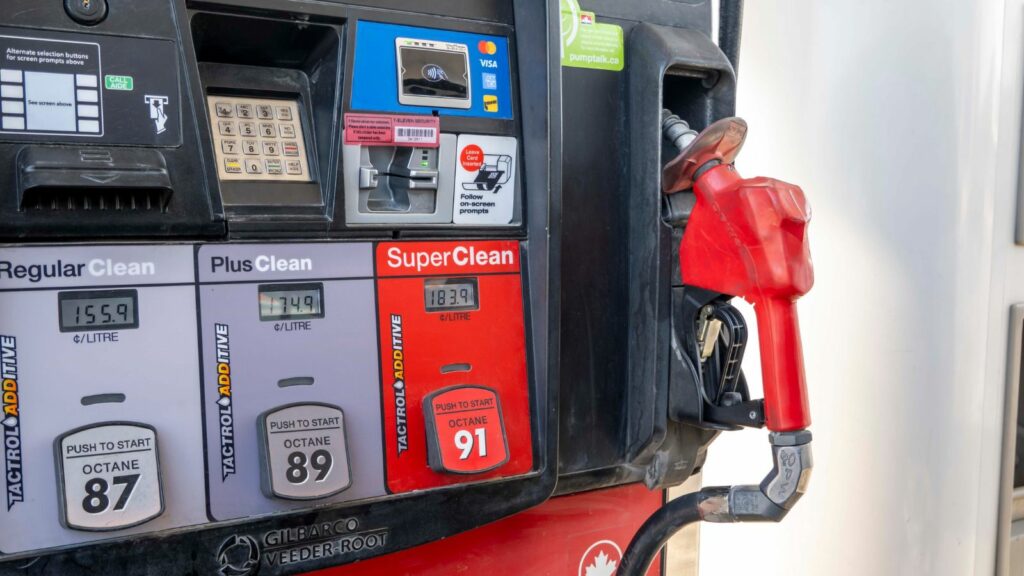
With Labour Day now only a month away, a temporary break at Canadian gas pumps is turning into a fresh federal-provincial affordability fight. Ontario Premier Doug Ford is urging Prime Minister Mark Carney to extend Ottawa’s suspension of the federal fuel excise tax until at least January 1, 2027, or make the relief permanent. The measure currently removes 10 cents per litre from the federal excise tax on gasoline and four cents per litre from diesel, but it is scheduled to expire after September 7.
Ford is framing the decision as a test of whether governments will keep costs down while families and businesses absorb high fuel prices, inflation pressures and uncertainty from U.S. tariffs. Ottawa, meanwhile, designed the tax holiday as temporary emergency relief rather than a permanent rewrite of federal fuel taxation.
Ford Puts a Clear Deadline in Front of Carney
Ford’s request puts a clear deadline in front of the Carney government. In a letter released August 7, the Ontario premier argued that the tax suspension has offered meaningful relief during a period of elevated living costs and trade uncertainty. His immediate proposal is not necessarily permanent abolition: Ford asked Ottawa to keep the suspension in place until at least January 1, 2027. But he also went further, saying the federal government could follow Ontario’s lead and remove the tax indefinitely. That makes the dispute about more than the price posted on gas-station signs. It is also about whether a crisis measure should become a lasting affordability policy.
The timing gives the request political force. The federal suspension runs through Labour Day, September 7, meaning the statutory tax is set to return the next day unless Ottawa changes the law again. For a driver, the issue is easy to understand because the tax is charged by the litre. For governments, the calculation is harder: extending the holiday means keeping billions of dollars of projected tax relief in place, while ending it would restore a highly visible charge just as Canadians return to work and school after summer.
What the 10-Cent Federal Tax Actually Is
The federal tax at the centre of Ford’s demand is the fuel excise tax, not the consumer carbon tax that Ottawa set to zero in 2025. Under the Excise Tax Act, the normal federal rate is 10 cents per litre on unleaded gasoline and four cents per litre on diesel. The levy is generally paid earlier in the supply chain by a manufacturer, producer, wholesaler or importer, but it is embedded in the retail price consumers see at the pump. That structure is why suspending the tax can translate quickly into a lower per-litre cost even though motorists do not pay a separate “excise tax” line on a receipt.
Parliament has already legislated the current break. Bill C-30, which received royal assent on June 19, temporarily sets the applicable rates to zero for fuel delivered or imported after April 19 and before September 8, 2026. The federal government estimated the measure would provide more than $2.4 billion in relief. Unless Ottawa acts again, the full 10-cent gasoline rate and four-cent diesel rate return on September 8, creating a clean before-and-after date that makes the policy unusually visible to households and businesses.
Carney Introduced the Cut During an Energy Shock
Carney originally presented the tax holiday as an emergency bridge through a global energy shock, not as a permanent tax philosophy. When the suspension was announced in April, Ottawa pointed to conflict and supply disruptions in the Middle East as the reason gasoline and diesel costs were climbing. The government said the temporary measure would help households while also lowering operating costs for trucking, agriculture, food, housing, construction and delivery businesses. It also suspended the excise tax on aviation fuels during the same period, underscoring that the policy was designed around a broad fuel-price shock rather than just commuter frustration.
The inflation data show why Ottawa felt pressure to act. Statistics Canada reported that gasoline prices were 33.2% higher in May 2026 than a year earlier, with uncertainty around the Strait of Hormuz contributing to the increase. By June, gasoline prices were still 20.5% above year-earlier levels even after falling sharply from May. Headline inflation eased to 2.8% in June from 3.2% in May, but gasoline remained one of the most volatile items in the consumer basket. That backdrop strengthens Ford’s affordability argument, while also raising the question of whether a temporary shock still justifies permanent tax relief.
Ontario Has Already Made Its Own Gas Tax Cut Permanent
Ford’s strongest political argument is that Ontario has already done what he is asking Ottawa to consider. The province first cut its gasoline tax by 5.7 cents per litre and its diesel tax by 5.3 cents per litre on July 1, 2022. After extending those reductions several times, Ontario made them permanent effective July 1, 2025. The provincial gasoline and diesel tax rates are now both nine cents per litre. In practical terms, Ontario motorists entered the 2026 federal tax holiday with a provincial fuel-tax reduction already locked in, giving Ford a concrete example to point to rather than a hypothetical promise.
Ontario’s 2026 budget says the provincial reductions have delivered about $2.1 billion in gasoline and fuel-tax relief since 2022 and save households roughly $115 per year on average. Those are provincial government estimates, but they show the scale of the policy Ford has embraced. They also explain his language about Ottawa “matching” Ontario’s ambition. If the federal suspension ends, Ontario’s nine-cent provincial rate remains in place. If Ottawa makes its own 10-cent gasoline suspension permanent, drivers in Ontario would effectively keep both the provincial and federal reductions that have shaped pump prices over the past year.
What 10 Cents a Litre Means for a Driver
For households, the appeal of a 10-cent-per-litre cut is its simplicity. A 50-litre fill-up carries a $5 difference before considering the sales-tax interaction; 60 litres translates into $6. A household buying 1,000 litres of gasoline over a year would see a $100 difference from the federal excise tax alone if the full amount is reflected in pump prices. That may not transform a family budget, but the savings are immediate, recurring and easy to notice. Unlike an annual tax credit, the benefit appears every time fuel is purchased, which helps explain why fuel-tax changes attract outsized political attention.
There is also a tax-on-tax effect. Natural Resources Canada notes that GST or HST is applied to the federal excise tax and provincial road taxes as part of the taxable price of fuel. In Ontario, where the HST rate is 13%, the return of a 10-cent excise tax would therefore raise the tax-inclusive pump price by slightly more than 10 cents per litre if the underlying tax is fully passed through. Actual retail prices can still move by much more on any given day because crude costs, refining conditions, wholesale margins and retail margins fluctuate independently. The tax change sets one component of the price; it does not freeze the rest.
Businesses Can Feel the Cut Differently
The case for extending the holiday is not only about private vehicles. Ottawa’s own rationale in April emphasized businesses that burn large quantities of fuel, including truckers and companies in agriculture, construction, food distribution and delivery. The diesel suspension is smaller at four cents per litre, but high-volume commercial users can still see meaningful dollar savings. A fleet purchasing 1,000 litres of diesel avoids $40 in federal excise tax during the suspension; at 10,000 litres, the arithmetic becomes $400. For a single business those figures may be modest beside payroll, insurance and equipment costs, but across the economy they accumulate quickly.
That is why the federal government costed the overall temporary measure at more than $2.4 billion. Lower fuel costs can also matter indirectly because transportation is embedded in the price of moving groceries, building materials and other goods. Still, the size of any downstream price effect is much harder to isolate than the direct pump saving. Freight contracts, wages, vehicle efficiency, competition and commodity prices all influence what ultimately reaches consumers. Ford’s argument is strongest on the immediate tax reduction itself; broader claims that the policy will substantially lower the price of everything require more caution.
Tax Cuts Do Not Control the Entire Pump Price
One important question is whether the full tax cut actually reaches motorists. International evidence suggests that fuel-tax reductions can be passed through substantially, but not always uniformly. A 2023 Energy Economics study of Germany’s three-month 2022 fuel-tax reduction found the gasoline cut was fully passed on to consumers in its preferred estimates, while diesel showed at least partial pass-through and weakened later in the program. Other research using detailed station-level data has found high but incomplete average pass-through, with results varying across regions and over time.
That matters because governments can control the tax rate but not the entire retail price. If global oil prices rise at the same time a tax is cut, motorists may barely notice the relief even if the tax change is technically reflected in the pump price. The reverse is also true when commodity prices fall. Canada’s own 2026 experience has included unusually large swings in gasoline prices linked to geopolitical events, making simple before-and-after comparisons risky. The most defensible conclusion is that removing a 10-cent tax reduces one component of the price by 10 cents; it does not guarantee the posted price will remain 10 cents lower than it was weeks earlier.
Economists See a Problem With Making Broad Relief Permanent
The strongest economic criticism of making the cut permanent is that it is broad rather than targeted. The OECD’s 2026 assessment of Canada described the temporary federal fuel-tax suspension as relatively broad-based and insufficiently targeted, arguing that support could be better tailored to households and businesses most exposed to the energy shock. In a separate policy brief on the 2026 energy crisis, the OECD recommended clear sunset clauses, targeted help for vulnerable households and firms, and policies that preserve incentives to conserve energy. That framework cuts directly against the idea that an emergency tax holiday should automatically become permanent.
Distribution also matters. A per-litre tax cut gives more total dollars to people and businesses that purchase more fuel. That does not mean lower-income households never benefit; many depend on cars for work and have few transit alternatives. But it does mean the program cannot distinguish between a household struggling with commuting costs and a high-income household buying far more gasoline. Research on Germany’s 2022 discount found that a majority of estimated financial relief accrued to above-median-income households. The Canadian distribution could differ, but the study illustrates why economists often prefer targeted transfers when the goal is specifically to protect vulnerable families.
Poilievre Is Adding Pressure From the Federal Opposition
Ford is not the only politician pressing Carney on fuel taxes. Pierre Poilievre and the federal Conservatives had already called for a broader package earlier in the 2026 energy-price surge. Their proposal sought to suspend both the federal fuel excise tax and GST on gasoline and diesel through the end of 2026, while also permanently eliminating federal clean-fuel and industrial carbon-pricing measures. The Conservatives estimated their package would reduce gasoline costs by roughly 25 cents per litre and diesel by about 21 cents, although those figures combine several different policy changes rather than the excise tax alone.
Carney’s April decision narrowed some of the political distance by adopting the excise-tax suspension while leaving the GST and other measures in place. Now Ford is adding provincial pressure from a different angle: he is not merely asking for a longer summer holiday, but pointing to Ontario’s permanent nine-cent tax rate as a model. That alignment gives the federal government a difficult political choice. Letting the tax return allows Conservatives and Ford to characterize September 8 as a tax increase at the pump; extending it means accepting a larger fiscal cost and moving a temporary crisis response closer to permanent policy.
September 8 Is Now the Date to Watch
The next key date is September 8. Under the law already passed by Parliament, that is when the federal excise tax returns to 10 cents per litre on gasoline and four cents on diesel unless Ottawa intervenes. Ford’s preferred near-term compromise would push that date to at least January 1, 2027, buying several more months to see whether global fuel markets and inflation normalize. A permanent suspension would be a much bigger decision because the fiscal cost would continue beyond the current energy shock and would effectively rewrite a longstanding federal revenue source.
That leaves Carney with three broad paths: allow the tax to return as scheduled, extend the temporary suspension, or make some form of reduction permanent. The government’s own April language stressed that the measure was temporary and aimed at bridging short-term pressures, while Ford is arguing that affordability and tariff uncertainty have made the relief worth preserving. With gasoline still materially more expensive than a year ago in the latest Statistics Canada data, the issue is unlikely to fade before Labour Day. Whatever Ottawa chooses, motorists will see the result quickly because this is one tax decision that shows up litre by litre.
