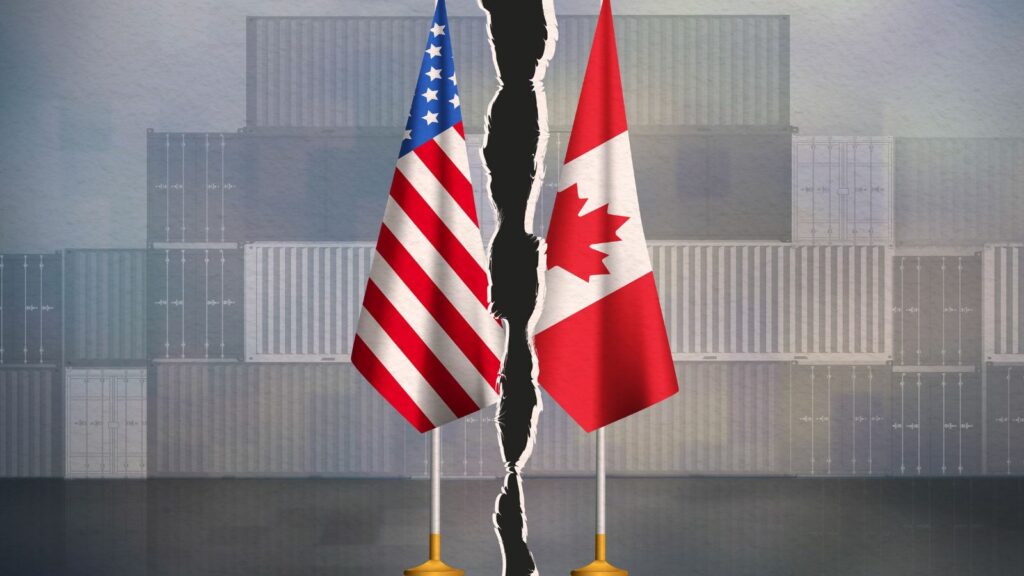
Within hours of a fresh rupture in Canada-U.S. trade relations, two routine pre-match ceremonies became public protests. Fans at BC Place in Vancouver booed “The Star-Spangled Banner” before the Whitecaps faced FC Dallas on August 22, 2026, while similar jeers were heard at Stade Saputo before CF Montréal hosted the LA Galaxy.
The timing was impossible to miss: Prime Minister Mark Carney had just suspended negotiations with Washington, recalled Canada’s negotiators and announced a dollar-for-dollar response after new U.S. tariffs took effect. The scenes revived a pattern first seen during the tariff confrontation of early 2025, when American anthems were booed in Canadian hockey and basketball arenas. What happened in Vancouver and Montreal showed how a high-level economic dispute had again reached ordinary cultural spaces.
Vancouver’s Protest Played Out Before More Than 25,000 Fans
Vancouver’s protest unfolded before a large Saturday-night crowd at BC Place. As singer Emma Currie began the opening notes of “The Star-Spangled Banner,” jeers and boos were audible ahead of the Whitecaps’ Major League Soccer match against FC Dallas. The Canadian Press described the reaction as another expression of frustration with deteriorating trade relations, rather than an isolated soccer-rivalry stunt. The distinction matters because the opposing club was from Texas, but the anger being expressed had been generated in Washington and Ottawa. In a cross-border league built around routine travel between Canadian and American cities, the anthem became the most visible national symbol available to a crowd that otherwise had little direct role in the negotiations.
The sporting context made the scene unusually prominent. Vancouver later reported an attendance of 25,398, the club’s fifth home match of the season above 25,000 and its 22nd consecutive MLS game at BC Place with more than 20,000 spectators. The Whitecaps then beat Dallas 5-0 and moved back into first place in the Western Conference. Those numbers should not be read as evidence that every person in the stadium participated in the booing. They do show, however, that the protest occurred in a major public setting, in front of one of Vancouver’s stronger soccer crowds, rather than at a small or obscure event.
Montreal Heard the Same Message Before the Galaxy Match
Hours earlier, the same political mood surfaced in Montreal. The U.S. anthem was booed at Stade Saputo before CF Montréal hosted the LA Galaxy, giving the day’s protests a cross-country quality that made them harder to dismiss as a local Vancouver phenomenon. The Canadian Press linked both demonstrations directly to the collapse of trade talks. The Montreal setting was also significant because it was a normal MLS regular-season fixture, not a Canada-versus-United States international match. Supporters were watching a Canadian club play an American club inside a shared professional league, yet the pre-game ceremony briefly carried the weight of a diplomatic confrontation.
Once play began, the match produced its own drama. CF Montréal and the Galaxy drew 2-2. Nineteen-year-old Ruben Ramos Jr. scored his first career MLS goal for Los Angeles, while Prince Owusu equalized for Montréal in the 79th minute after the Galaxy had been reduced to 10 men. It was the Galaxy’s first road match at Montréal since 2018. That ordinary sporting detail is part of what makes the anthem episode revealing: a routine cross-border competition, involving young players and club loyalties, was momentarily reframed by national politics before returning to the familiar rhythms of league play.
The Boos Came Just Hours After Trade Talks Collapsed
The timing of the stadium protests explains much of their intensity. Late on August 21, Carney said Canada was suspending trade negotiations with the United States and ordered the negotiating team back to Ottawa. At 12:01 a.m. Eastern on August 22, previously announced U.S. duties of 50 per cent took effect on roughly US$20 billion worth of Canadian goods. The White House had delayed the tariff start by three days to allow more negotiations, but the talks still failed. Unlike many earlier measures, the new Section 338 tariffs applied to covered products even when they otherwise qualified for preferential treatment under the U.S.-Mexico-Canada Agreement.
Ottawa’s response was equally direct. Carney said Canada would match Washington’s new tariffs “dollar for dollar,” with countermeasures scheduled to take effect September 8. He identified steel, dairy, appliances, agricultural equipment, pulp and paper, and electronics among the sectors that would be targeted. The dispute had therefore moved beyond threats by the time fans arrived at the stadiums. Businesses were facing actual new border costs, governments were preparing retaliation, and negotiators had left the table. Booing an anthem did not change any tariff rate, but it gave spectators an immediate way to register anger at a conflict with real economic consequences.
Canadian Crowds Had Already Done This During the 2025 Tariff Shock
The Vancouver and Montreal scenes were a revival, not a new invention. In early February 2025, Canadian crowds began booing the U.S. anthem after President Donald Trump announced tariffs on Canadian imports and repeatedly raised the idea of Canada becoming the 51st state. The reaction appeared at NHL games in Ottawa, Vancouver and Calgary, at Toronto Raptors games, and later at other venues. At Rogers Arena in Vancouver, boos were heard during much of the American anthem before Canucks games, while “O Canada” received louder cheers. The pattern continued even after a temporary tariff pause reduced the immediate economic pressure.
That earlier wave established a recognizable form of spectator protest. Fans did not need signs, organized marches or a formal statement from a supporters’ group; the pre-game anthem offered a synchronized moment when thousands of people were already silent and focused on the same symbol. It also generated debate inside Canada. Some fans considered the booing a legitimate expression of frustration with U.S. policy, while others argued that an anthem represented ordinary Americans and athletes rather than the president. The same unresolved tension returned in August 2026: the protest was easy to understand politically, but its target was broader than the officials actually making trade decisions.
Montreal’s 4 Nations Showdown Turned Anthem Booing Into a National Story
Montreal had already become the most vivid stage for this kind of cross-border emotion during the 2025 4 Nations Face-Off. Fans booed the U.S. anthem before the Americans played Finland on February 13, even after the Bell Centre public-address announcer asked spectators to respect the anthems and the players. Two nights later, before Canada faced the United States, the reaction was louder and lasted through the anthem. The game drew a sellout crowd of 21,105, turning the ceremony into a nationally televised display of political frustration at a tournament intended to showcase best-on-best hockey.
The hockey itself then became famously combustible. Canada and the United States fought three times in the first nine seconds, and the Americans eventually won 3-1. The fights had their own competitive logic—players later described them as deliberate attempts to set a tone—so it would be misleading to say the booing caused the violence. Still, the combination of a jeered anthem, packed arena and immediate physical confrontation made that night a powerful cultural reference point. When soccer crowds in Montreal and Vancouver booed again in August 2026, they were reviving a protest language Canadian sports audiences had already seen become headline news.
Why National Anthems Become Such Powerful Political Symbols
National anthems carry unusual force in sports because they compress politics, identity and ritual into a few highly visible minutes. Academic research on sport and nationalism has long treated stadiums as places where national belonging can be displayed and reinforced. University of Victoria scholar Scott Watson, writing about international hockey, argued that Canadian hockey narratives often define the national community in contrast with external “others,” including the United States. More recent research in Nations and Nationalism has similarly examined large sporting events as public performances that can reaffirm pre-existing feelings of national solidarity.
That does not mean every boo represents a carefully considered political ideology. Crowds are social environments: people react to one another, emotion spreads quickly, and a short ritual gives thousands of spectators a common cue. Research also cautions against assuming that a sporting event automatically creates stronger nationalism from scratch. The more defensible interpretation is that stadiums can make existing attitudes unusually visible. In the Canada-U.S. dispute, the anthem has become a convenient symbolic stand-in for frustration about tariffs, sovereignty and presidential rhetoric. The sound is simple; the meaning behind it is layered, and different spectators may be booing for different reasons.
Anger at Trump Does Not Automatically Mean Anger at Americans
The booing also should not be treated as proof that Canadians uniformly dislike Americans. An Angus Reid Institute study released in August 2026 found a much more complicated picture. Forty-five per cent of Canadians surveyed had a favourable view of the American people, while 48 per cent had an unfavourable view. By contrast, 79 per cent held an unfavourable view of Trump. On the U.S. side, 79 per cent of respondents viewed Canadians favourably. The polling therefore suggests a substantial gap between attitudes toward the administration driving the tariff policy and attitudes toward people across the border.
The same research found that 59 per cent of Americans opposed the latest tariff threat against Canada, compared with 24 per cent who supported it. It also recorded an attention gap: 54 per cent of Canadians said they were following the tariff dispute closely, versus 23 per cent of Americans. Those figures help explain why a Canadian stadium may feel politically charged even when an American visiting player, coach or fan has little connection to the policy being protested. The anthem is a national symbol, but public opinion on both sides is fragmented. Treating every boo as simple anti-American sentiment would flatten that distinction and overstate what the evidence shows.
The Political Rift Has Already Changed How Canadians Travel
The trade dispute has already influenced behaviour beyond sports venues. Statistics Canada reported that Canadian residents made 23.1 million trips that included a visit to the United States in 2025, down 23.5 per cent from 2024 and 26.7 per cent from 2019. In the fourth quarter alone, Canadian-resident visits to the United States fell 24 per cent year over year. Statistics Canada explicitly noted that travel patterns shifted alongside the political tensions that began in early 2025, providing a measurable example of how diplomatic friction moved into household decisions about where to spend time and money.
There were signs of partial recovery in 2026, but the longer comparison remained weak. In April 2026, Canadian residents returned from 2.4 million trips to the United States, up 1.8 per cent from a year earlier, yet still 26.7 per cent below April 2024. That context makes the stadium protests easier to place. Booing lasts roughly as long as an anthem; changes in travel, purchasing and trade flows can persist for months. The public mood reflected in arenas and stadiums is therefore one visible piece of a broader realignment in how some Canadians are responding to the United States.
Shared North American Leagues Make the Protest More Complicated
The protests are especially complicated inside leagues that depend on cross-border integration. Major League Soccer routinely sends Canadian clubs to U.S. cities and American clubs to Canada, while rosters themselves are multinational. In March 2025, Whitecaps supporters booed the U.S. anthem before a home game against the LA Galaxy even after the in-house announcer reminded the crowd that the teams included players from many countries and encouraged respect for the singers. Reports said the jeers faded partway through the anthem before cheers rose for “O Canada.” The episode showed that many fans were willing to direct anger at a national symbol without necessarily sustaining hostility through the game itself.
That distinction matters for Vancouver’s 2026 match with FC Dallas and Montréal’s game with the Galaxy. The visiting clubs were not representatives of the U.S. government, and the players did not negotiate tariff schedules. Yet professional sport deliberately surrounds club competition with national rituals, particularly when teams cross an international border. That creates an unavoidable opening for politics. The same structure that normally celebrates neighbourly familiarity can, during a dispute, expose how fragile that familiarity feels. The leagues remain shared institutions even when the countries’ governments are arguing.
The Stadiums May Stay Political as the Trade War Continues
For now, the economic confrontation remains unresolved. The new U.S. tariffs are already in force on roughly US$20 billion of covered Canadian goods, while Canada’s promised countertariffs are scheduled for September 8. Carney has argued that the U.S. asked too much and offered too little, while the Trump administration has defended its tariff measures as a response to what it calls discriminatory Canadian treatment of American products. Reporting after the breakdown indicated that no further negotiations were scheduled, and the dispute has added uncertainty around the future of the continental trade framework.
Whether anthem booing continues through the rest of the sports calendar cannot be known. What can be said is that Canadian crowds have now used the same tactic in two distinct phases of the trade conflict: first during the tariff shock of 2025, and again immediately after negotiations collapsed in August 2026. That repetition gives the incidents significance beyond a single night. Stadiums are not negotiating rooms, and crowd noise does not set trade policy, but they can function as unusually sensitive barometers of public emotion. When diplomacy deteriorates, the response can sometimes be heard long before it appears in an economic data release.
