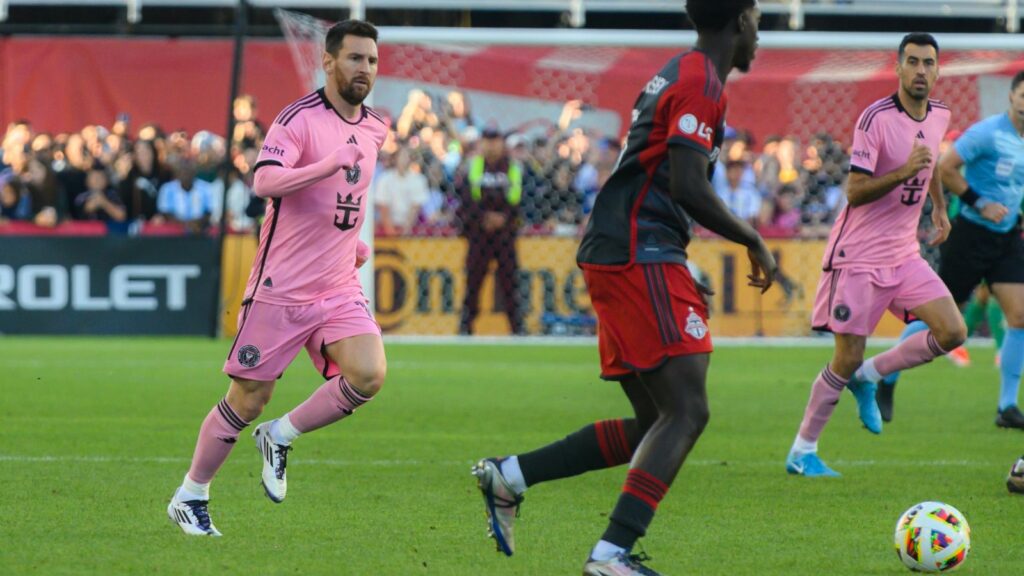
Toronto FC finally found a way to leave Miami with three points, and it came against an Inter Miami side led by Lionel Messi. The Reds earned a 2-1 victory at Nu Stadium on August 22, 2026, ending a road drought against the Herons that had stretched across their previous six visits. Josh Sargent and Derrick Etienne Jr. struck only three minutes apart after halftime, giving Toronto a cushion that proved just large enough.
Messi eventually answered with his 14th MLS goal of the season in the 82nd minute, turning the closing stages into a test of Toronto’s composure. The equalizer never arrived. Instead, Toronto completed one of its most meaningful results of the season, combining timely finishing with the kind of defensive resistance required to survive a late push from the reigning MLS Cup champions.
A Breakthrough Seven Trips in the Making
Toronto’s 2-1 victory carried more historical weight than an ordinary three-point night. Before Saturday, the Reds had visited Inter Miami six times without winning, losing five of those matches and drawing the other. The seventh trip finally changed the pattern. It was also Toronto’s first visit to Nu Stadium, giving the club a memorable introduction to Miami’s new home. Toronto entered the evening with only one road victory from its first nine away matches of the 2026 season, making the breakthrough even less predictable.
The history between the clubs had generally leaned heavily in Miami’s direction. Toronto entered the contest with only two victories through its first 13 regular-season meetings with the Herons, and Miami had won 4-2 at BMO Field earlier in May. That made the result more than a statistical curiosity. Toronto had repeatedly discovered how difficult this opponent could be, particularly away from home. This time, the Reds survived the difficult stretches and capitalized decisively when Miami became vulnerable.
The Match Looked Lopsided on Paper
The standings suggested Toronto faced one of its toughest assignments of the summer. Inter Miami entered with an 11-3-6 record and 39 points, good for second place in the Eastern Conference. Toronto arrived at 4-7-9 with only 21 points. Miami was also the reigning MLS Cup champion, while Toronto was still trying to build enough consistency to return to the postseason conversation after years outside the playoffs.
Then there was Messi. Before kickoff, the Inter Miami captain led his club with 13 regular-season goals and was also among its leading creators. Miami could surround him with Rodrigo De Paul, Luis Suárez, Casemiro and Germán Berterame, giving Toronto a collection of experienced international players to contain. Yet there were warning signs around the hosts. Miami had been going through a difficult run across MLS and Leagues Cup competition, while Toronto had earned results in three consecutive league matches. The gap between the teams was substantial on paper, but their immediate trajectories were beginning to move in opposite directions.
Toronto Refused to Let the First Half Get Away
The opening 45 minutes were not an exhibition of free-flowing attacking soccer, but that suited Toronto. Miami generated early danger through Berterame and Suárez, with Suárez receiving one of the clearer opportunities in the 19th minute before sending his effort wide. Toronto also believed it had found an early breakthrough when Richie Laryea finished an attacking move in the 11th minute, only for the goal to be ruled out for offside.
Keeping the score at 0-0 mattered because Miami had the personnel to punish a team forced to chase the match. Toronto instead stayed close enough to make one decisive sequence count. Miami also had to reorganize its defence when Gonzalo Luján went off injured in the 26th minute and Facundo Mura replaced him. By halftime, neither side had scored. Toronto had not silenced Miami completely, but it had prevented the hosts from establishing the kind of early advantage that could have allowed Messi, Suárez and company to dictate the remainder of the night.
Josh Sargent Produces the Moment Toronto Needed
The game changed in the 59th minute. Toronto recovered a loose ball after Miami failed to completely clear the danger, and Derrick Etienne Jr. helped move possession toward Dániel Sallói. Sallói found Josh Sargent near the edge of the penalty area, where the forward took a touch before driving a low left-footed effort into the bottom corner. After nearly an hour without a goal, Toronto suddenly had the lead.
It was Sargent’s fourth MLS goal of the season, and it arrived at a moment when the Reds needed precision rather than volume. Match statistics showed Toronto finished with only 38% possession, illustrating how important individual opportunities became. Sargent did not require a lengthy spell of dominance to change the scoreboard. His finish rewarded a Toronto side that had stayed organized through Miami’s periods on the ball and remained ready to attack space when the chance appeared. For a club that had struggled to turn competitive performances into victories, it was exactly the kind of efficient moment that had often been missing.
Derrick Etienne Jr. Turns One Goal Into Two
Miami barely had time to process Sargent’s opener before Toronto struck again. Three minutes later, Djordje Mihailovic delivered a ball into the danger area, and goalkeeper Dayne St. Clair could not completely eliminate the threat. Etienne reacted quickly to the loose ball and finished from a difficult angle, suddenly giving Toronto a 2-0 lead in the 62nd minute. A match that had been scoreless only moments earlier had been transformed by a three-minute burst.
Etienne’s influence extended beyond the goal. His involvement in Sargent’s opener represented the 50th MLS goal contribution of his career, and his own finish pushed that total to 51 — 24 goals and 27 assists. He also moved to three goals and three assists in the 2026 regular season. Milestones can sometimes feel detached from the outcome of a match; this one did not. Etienne was involved in both goals that built Toronto’s winning margin, combining experience, awareness and opportunism during the most decisive stretch of the night.
Messi Needed Only One Opening to Change the Mood
A two-goal advantage against Inter Miami rarely feels comfortable while Messi remains on the field. Toronto discovered why in the 82nd minute. Rodrigo De Paul split the defence with a sharply weighted pass, and Messi ran into the space before finishing at the far post. The goal cut Toronto’s advantage to 2-1 and immediately changed the atmosphere inside Nu Stadium. What had looked like a controlled closing stretch became a fight to protect two points that were suddenly in danger of disappearing.
The goal was Messi’s 14th of the 2026 MLS regular season and his 64th in 71 Inter Miami appearances, according to Associated Press reporting. It also left him among the league’s leading scorers, behind FC Dallas striker Petar Musa, who entered the weekend with 16. Messi’s numbers explain why Toronto could not relax even after building a two-goal cushion. One accurate pass and one composed finish were enough to revive Miami. The final minutes became less about adding another Toronto goal and more about denying Messi and his teammates a second opening.
Toronto Won Without Needing to Dominate Possession
One of the more revealing features of the result was how little Toronto needed the ball to be dangerous. Match data showed Miami held 62% possession compared with Toronto’s 38%, yet both teams finished with three shots on target. Toronto converted two of those attempts. Miami converted one. Dayne St. Clair finished without recording a save, while Toronto goalkeeper Luka Gavran made two.
Those numbers tell the story of efficiency better than possession alone. Miami spent more time controlling the ball, but Toronto created and converted the moments that ultimately mattered. The Reds were also willing to make the contest uncomfortable, committing 15 fouls compared with Miami’s eight. That did not make the performance flawless, but it reflected a willingness to disrupt rhythm and defend through pressure rather than chase stylistic superiority. For Toronto, a team that has dropped points after promising stretches in other matches, the value was in understanding what the night required. Beautiful possession was less important than being clinical when Miami finally offered space.
Toronto Survives the Late Siege
Messi’s goal left Toronto with more than eight minutes of regulation plus a substantial amount of stoppage time to negotiate. Miami pushed bodies forward, but Toronto’s back line largely prevented the late pressure from becoming a succession of clear scoring opportunities. Field Level Media reported that Miami’s only shot on target after Messi’s goal was a stoppage-time effort from David Ayala that Gavran handled.
The closing sequence highlighted a quality Toronto has frequently needed more of: the ability to protect a narrow advantage when the opponent knows exactly what is coming. Toronto made defensive substitutions late, with Jackson Gilman and Nicksoen Gomis entering as the Reds attempted to see out the match. The final whistle eventually arrived with the score still 2-1. For supporters who have watched promising Toronto performances turn into draws or defeats, the emotional difference was considerable. The Reds had not simply scored twice against Messi’s Miami. They had absorbed the inevitable response, dealt with the pressure and finished the job.
Toronto’s Form Is Starting to Look Different
One major victory cannot repair an entire season, but Toronto’s recent record is increasingly difficult to dismiss. The Miami result improved the Reds to 2-0-2 over their last four MLS matches. Their broader record since July 1 moved to 2-1-4. Saturday was also just their second away victory in 10 road matches this season, underscoring both how unusual the result was and how important it could become if the improved form continues.
Toronto climbed to 24 points with a 5-7-9 record after the victory. A post-match standings snapshot placed the club 10th in the Eastern Conference, close enough to the playoff fight for upcoming matches to carry significantly more weight. The improvement has not been built entirely on wins — Toronto has accumulated plenty of draws — but avoiding defeat consistently is an important first step for a team trying to change its season. Taking three points away from one of the conference’s strongest sides provides a much stronger signal than another respectable draw would have done.
Miami’s Slump Deepens as Toronto Looks Ahead
The result created a very different set of questions for Inter Miami. The Herons remained on 39 points and second in the Eastern Conference, but the Toronto defeat extended their winless run to five matches across competitions. Reports after the game noted four defeats and one draw over that stretch. Even Messi’s scoring form has not been enough to prevent Miami from losing momentum during a difficult August.
Toronto now returns to BMO Field to face New York City FC on August 29 in its annual Canadian National Exhibition matchup. Inter Miami hosts CF Montréal the same evening. Those matches will help show whether Saturday represented a turning point for Toronto or simply one exceptional performance. The Reds still have substantial work ahead if they want to transform improved form into a playoff berth. Yet historic victories can alter the mood around a team. Toronto had travelled to Miami repeatedly without ever winning. On its seventh attempt, against a side featuring Messi and several international stars, it finally found a way.
