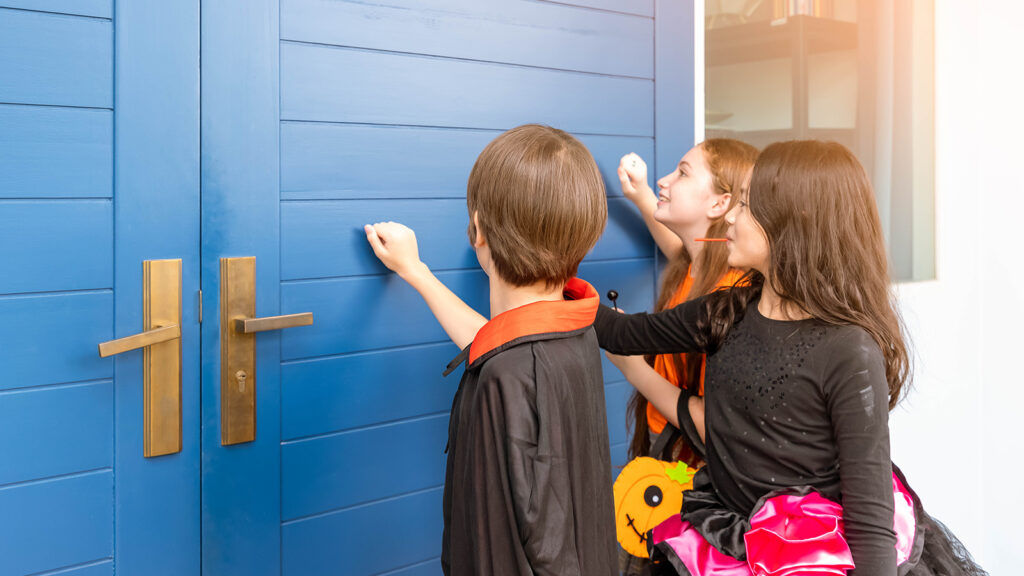
Halloween in Canada has always mixed imported customs with distinctly local habits, and some of the rituals that once felt perfectly ordinary now sound like stories from another world. Children shouted regional phrases at front doors, collected fruit and homemade food, wore costumes that would struggle to meet modern safety advice, and sometimes carried a donation box alongside the candy bag.
Technology changed the night as well. Halloween plans once revolved around household telephones, television schedules and trips to the video store rather than group chats and streaming menus. Some customs disappeared because tastes changed; others faded because safety standards, municipal rules or technology moved on. These 19 Canadian Halloween memories capture just how different October 31 could look within only a few generations.
Shouting “Halloween Apples!” Instead of “Trick or Treat”
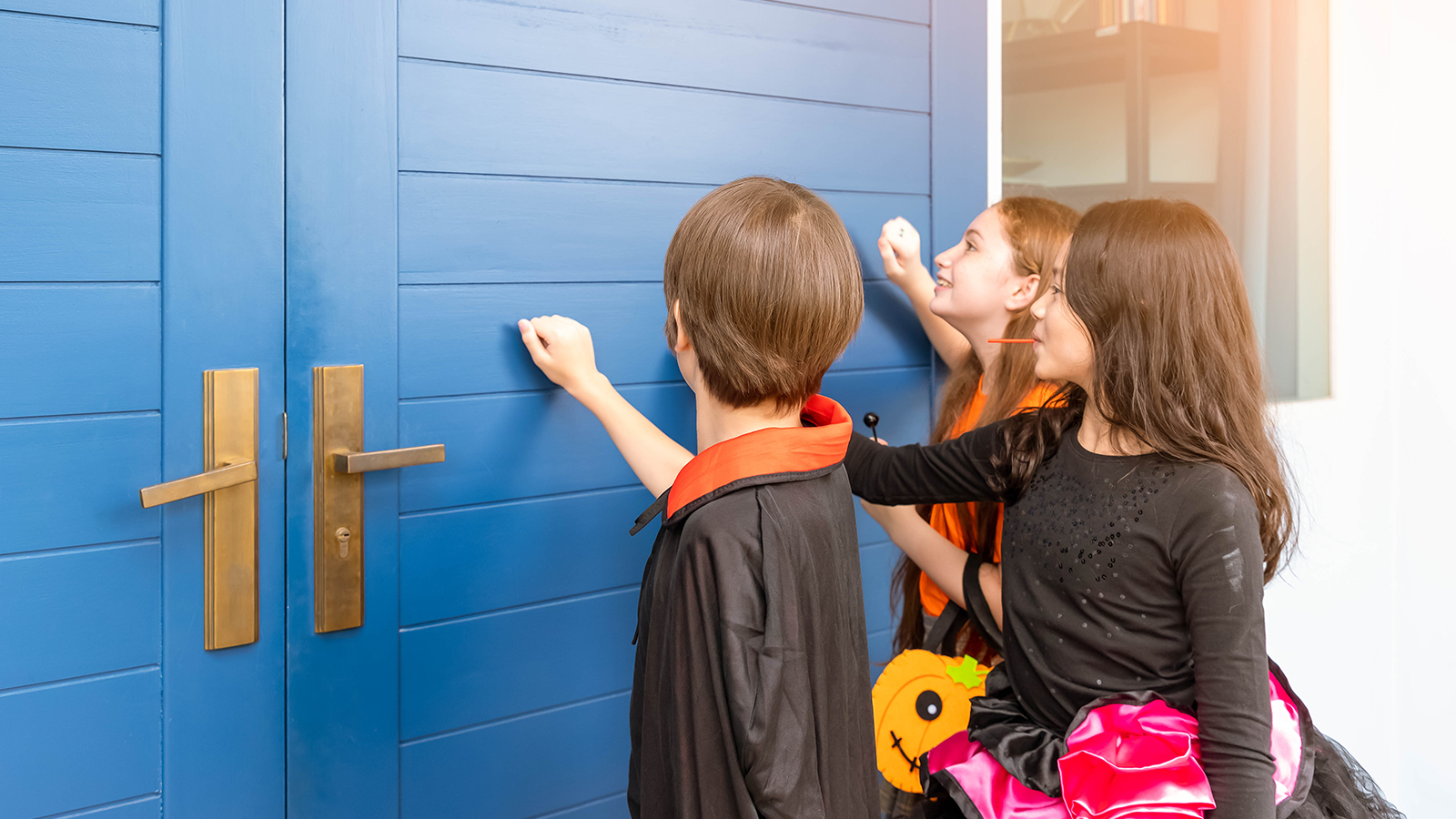
For children growing up in parts of the Prairies, the familiar phrase at the front door was not always “trick or treat.” A distinctly Canadian alternative was the sing-song call of “Halloween apples!” The Dictionary of Canadianisms on Historical Principles records the expression in Canadian usage and notes that it was particularly associated with western Canada. The Manitoba Museum also preserves the phrase in its collection of Halloween memories, describing children racing from house to house while calling it out.
That would likely puzzle many children today, especially because candy has become so closely identified with trick-or-treating that explicitly asking for apples sounds almost backwards. Yet the expression reflects a period when fruit genuinely was part of the Halloween haul. The phrase also shows how regional Halloween culture once varied more visibly across Canada. A child in Manitoba or Saskatchewan could use a call that sounded completely normal locally while relatives elsewhere might have relied on the increasingly standardized “trick or treat.”
Actually Getting Apples in the Treat Bag

The shout was not purely symbolic. Apples really did land in Canadian Halloween bags. The Manitoba Museum notes that apples were still among the items being handed to neighbourhood children in the 1970s. For families surrounded by orchards, gardens or inexpensive seasonal produce, giving away fruit could make considerably more sense than buying several boxes of individually packaged chocolate bars.
Today, finding a loose apple beside miniature candy bars would probably trigger questions rather than excitement. Modern Halloween food-safety advice emphasizes commercially wrapped products, particularly when children have allergies or when parents cannot determine where an item came from. An apple is not inherently dangerous, of course, but Halloween habits changed as parents became more cautious about unsealed food. The result is an unusual reversal: something once ordinary enough to inspire a regional trick-or-treating chant has become unusual enough that an apple appearing in a modern candy bucket might be treated as a curiosity.
Neighbours Handing Out Homemade Popcorn Balls

There was once a time when a neighbour could spend the afternoon making popcorn balls and then distribute them to every costumed child who appeared at the door. The Manitoba Museum specifically recalls homemade popcorn balls as part of an earlier Halloween era and says homemade treats were still offered to neighbourhood children during the 1970s. Cookies, squares and other kitchen-made sweets could serve the same purpose in communities where families knew one another.
Modern guidance makes that scene look remarkably different. Health Canada advises families not to accept—or especially consume—items that are not commercially wrapped and recommends throwing away homemade treats collected while trick-or-treating. That guidance reflects the difficulty of confirming ingredients, food handling and allergens in an unidentified homemade item. A carefully wrapped popcorn ball from a familiar neighbour may still exist in some communities, but handing dozens of anonymous children loose homemade food is no longer the casual Halloween gesture it once was. Factory-sealed miniature candy has largely become the safer default.
Treats Arriving in Little Paper Bags
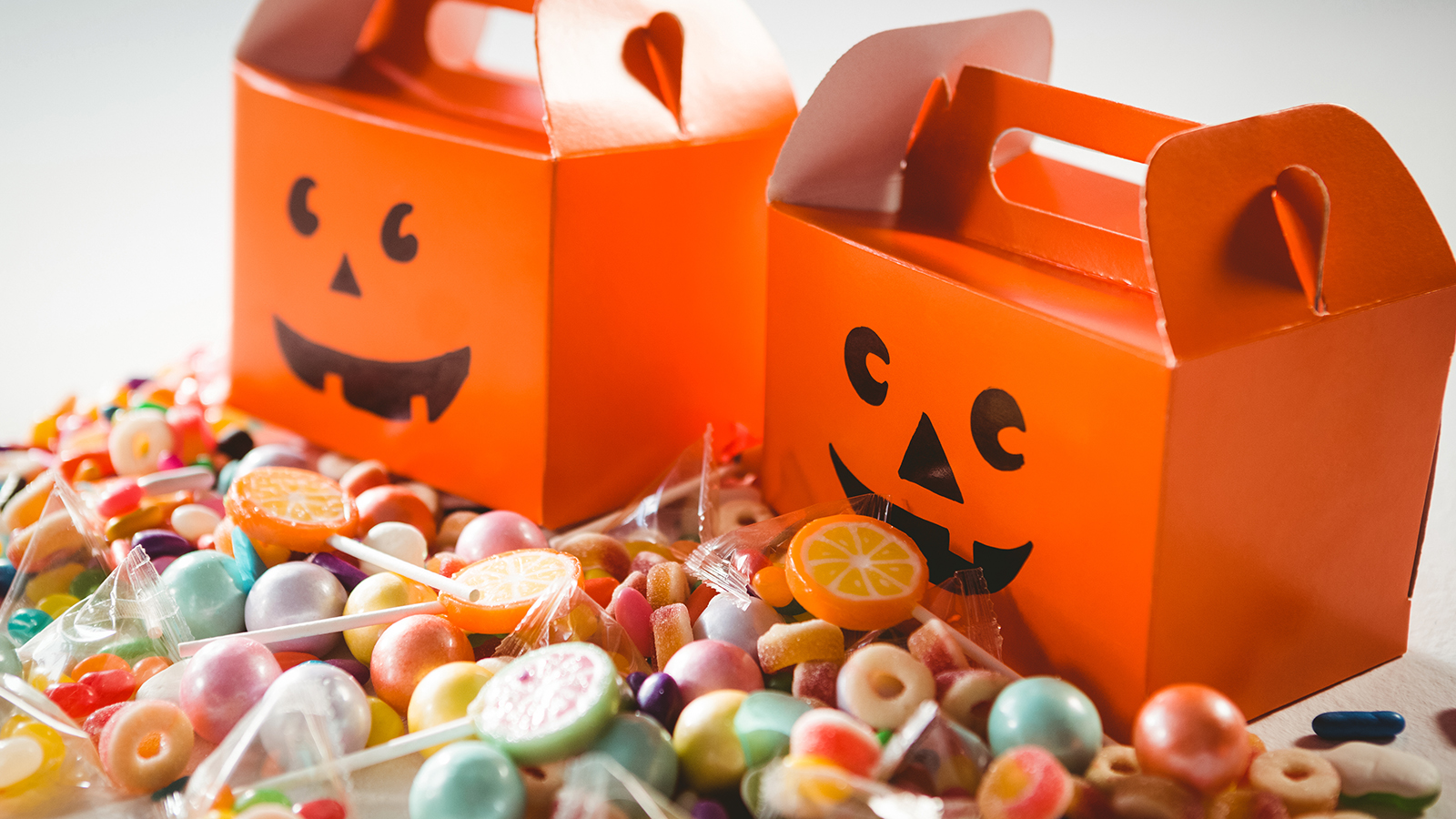
Not every Halloween treat came with a logo, nutrition label and factory-sealed wrapper. The Manitoba Museum holds small vintage Halloween treat bags decorated with jack-o’-lanterns, bats and seasonal greetings. Its collection describes a period when homemade treats or a handful of sweets might simply be placed inside a small paper bag before being handed to a child at the door.
That kind of mystery package would receive considerably more scrutiny today. Health Canada recommends checking Halloween treats, discarding loose or damaged packages and paying particular attention to ingredient information for children with food allergies. Modern miniature candy solves several of those concerns because each piece generally arrives sealed and labelled by its manufacturer. The old paper bag belonged to a more neighbourly and informal version of trick-or-treating, when the identity of the person filling it could matter almost as much as the contents. Today, an unlabelled paper packet from an unfamiliar house might be the first thing a parent removes from the haul.
Wearing Plastic Masks With Tiny Eyeholes
Some of the most memorable Canadian Halloween costumes of the 1970s would be difficult to market as premium costume technology today. The Manitoba Museum preserves children’s plastic masks from that period and describes their small eye openings, limited visibility and tendency to collect condensation as children ran from house to house. A thin elastic strap often did most of the work keeping the mask attached to the face.
Modern federal safety guidance goes in almost the opposite direction. Health Canada recommends face paint or makeup instead of a poorly fitting mask because masks can interfere with vision or breathing. When masks are used, they should fit properly and provide clear sight and airflow. That makes the old full-face plastic design seem remarkably unforgiving. Many Canadians remember periodically lifting a mask to see where they were walking or wiping moisture from inside it. The disguise might have looked impressive from the sidewalk, but navigation through dark driveways could become its own Halloween challenge.
Wearing a Plastic Smock as the Entire Costume

A costume did not necessarily need layers of foam, realistic armour or movie-quality accessories. The Manitoba Museum describes 1970s masks that were frequently paired with matching plastic smocks. Often, the printed image on the front did most of the storytelling: a character mask on the face, a brightly illustrated plastic garment over ordinary clothes, and the costume was essentially complete.
Canadian weather added another layer of improvisation. Modern Health Canada advice explicitly notes that costumes should fit over warm clothing so children can handle cold or wet conditions. Families have been dealing with that problem for generations. A thin store-bought costume might therefore end up stretched over a sweater, winter jacket or several layers of clothing, changing the intended appearance considerably. Compared with today’s elaborate costumes, insulated bodysuits and specialized accessories, the combination of a flimsy plastic smock, regular shoes and whatever warm clothes could fit underneath has an unmistakably old-fashioned practicality. The goal was often getting outside quickly rather than achieving perfect screen accuracy.
Building a Costume From Whatever Was Already at Home
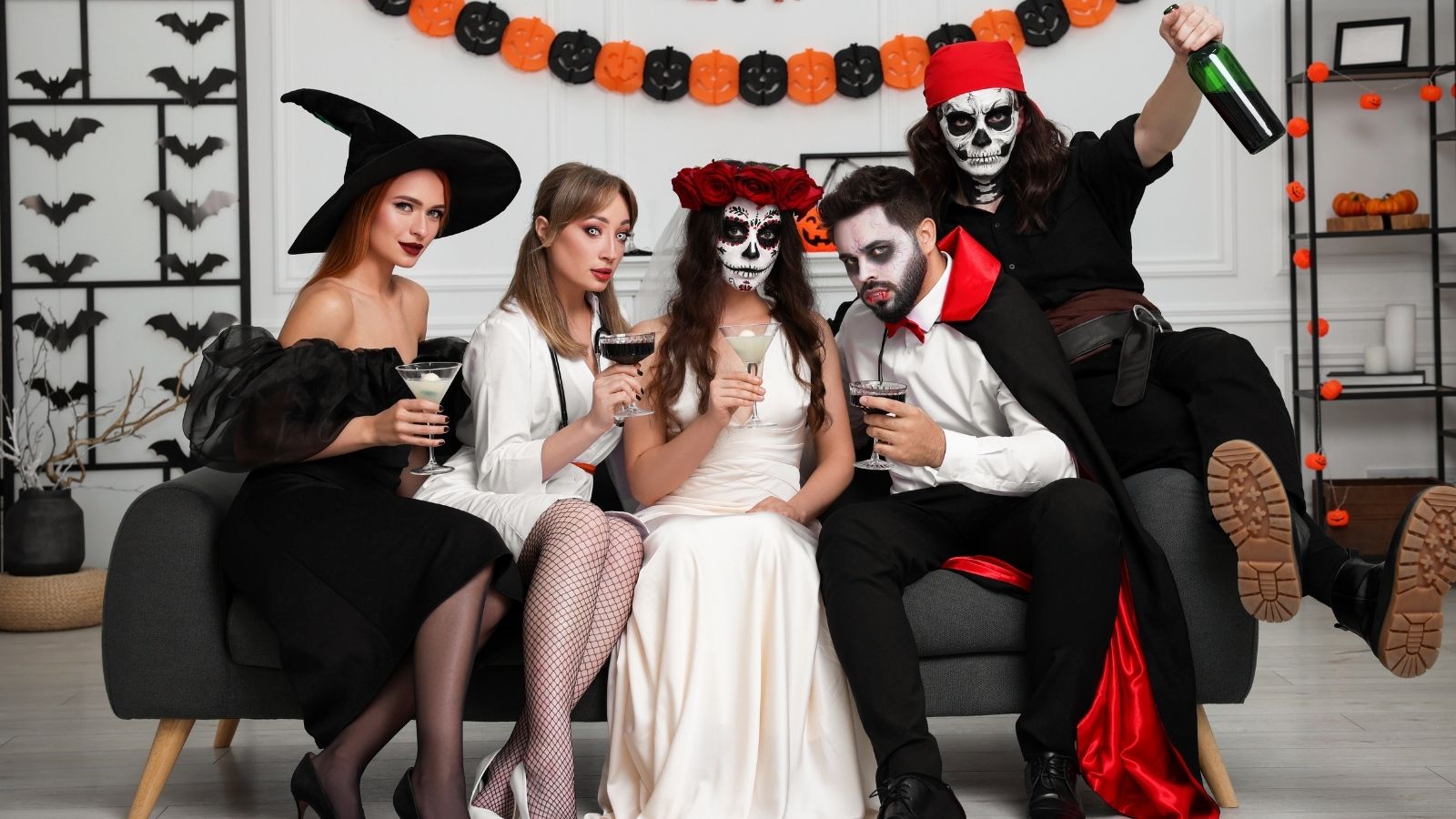
Not every costume began in a store. Homemade disguises assembled from old clothes, fabric, cardboard, makeup and whatever else could be found around the house were a major part of Halloween memory. UNICEF Canada evokes the 1990s as an era of streets filled with homemade costumes alongside its famous orange fundraising boxes. More recent Canadian coverage of do-it-yourself costumes still recommends searching closets and second-hand stores, but DIY now competes with an enormous commercial costume industry.
The homemade approach could produce wonderfully imperfect results. A bedsheet became a ghost, an oversized coat could create a detective or hobo-style costume, and cardboard could become almost anything with enough paint and tape. The costume sometimes made sense only after the child explained it at every doorway. That was part of the charm. Modern families certainly still make costumes, but online ordering, licensed characters and inexpensive ready-made outfits have transformed the process. Once, the creative challenge often started with a simple question: what can be made without buying much at all?
Wearing an Orange UNICEF Box Around the Neck
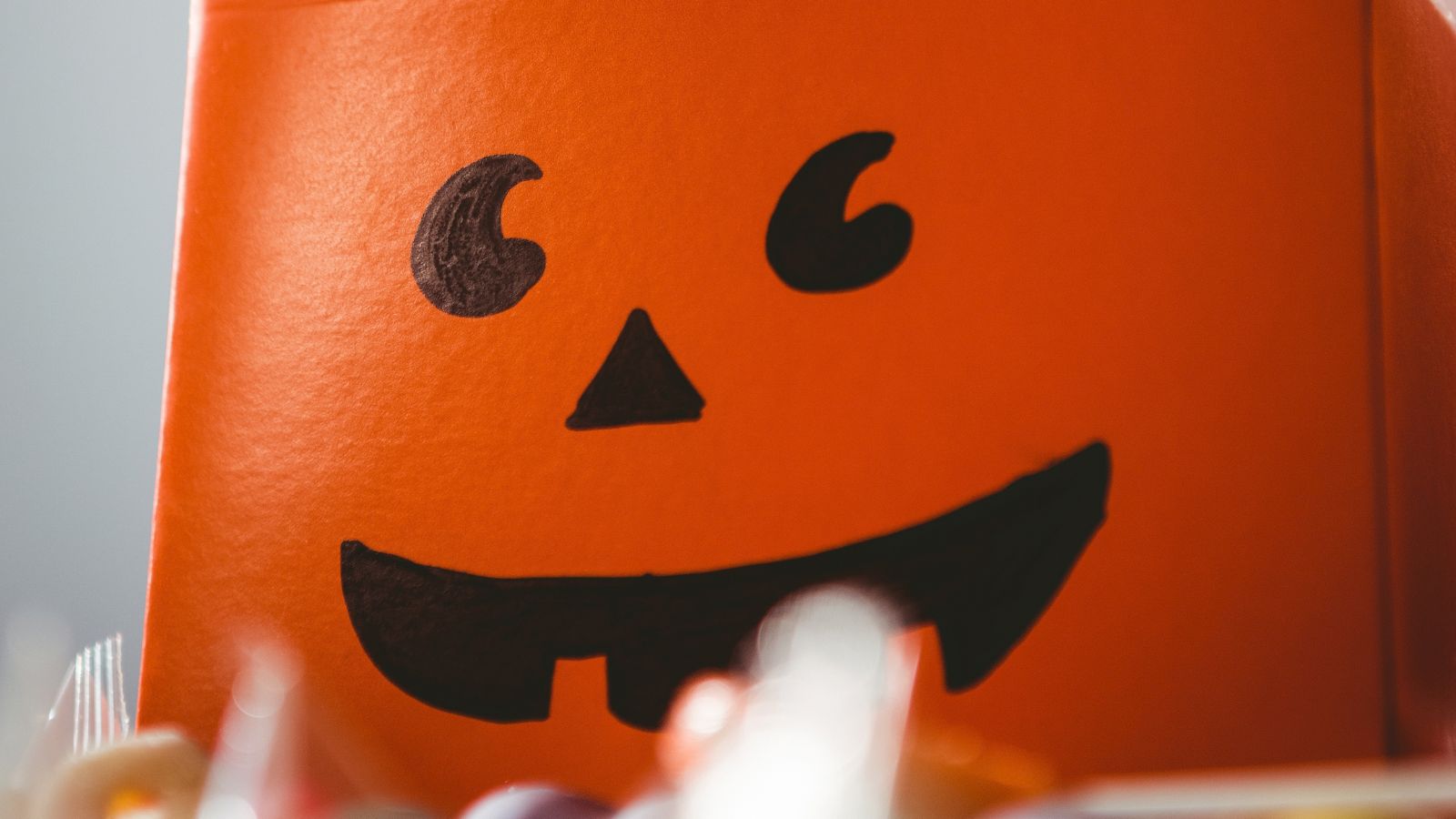
For generations of Canadians, trick-or-treating involved collecting two different kinds of treasure. Candy went into the bag while coins went into a small orange UNICEF box. UNICEF Canada says Canadian children began participating in Halloween fundraising in 1952, and enthusiasm for the campaign helped lead to the establishment of UNICEF Canada in 1955. At its peak, close to one million boxes were distributed across the country.
The sound was distinctive: pennies, nickels, dimes and quarters rattling as children walked between houses. Adults often kept change beside the candy specifically for the UNICEF box. UNICEF says the school campaign once raised close to $3.1 million, with roughly 80% coming through Halloween fundraising. The physical orange box is no longer part of the traditional door-to-door program; UNICEF eventually moved its fundraising resources online. For younger Canadians accustomed to digital donations and tap payments, thousands of children physically carrying cardboard boxes full of coins through the neighbourhood can sound surprisingly distant.
Mailing Halloween Postcards
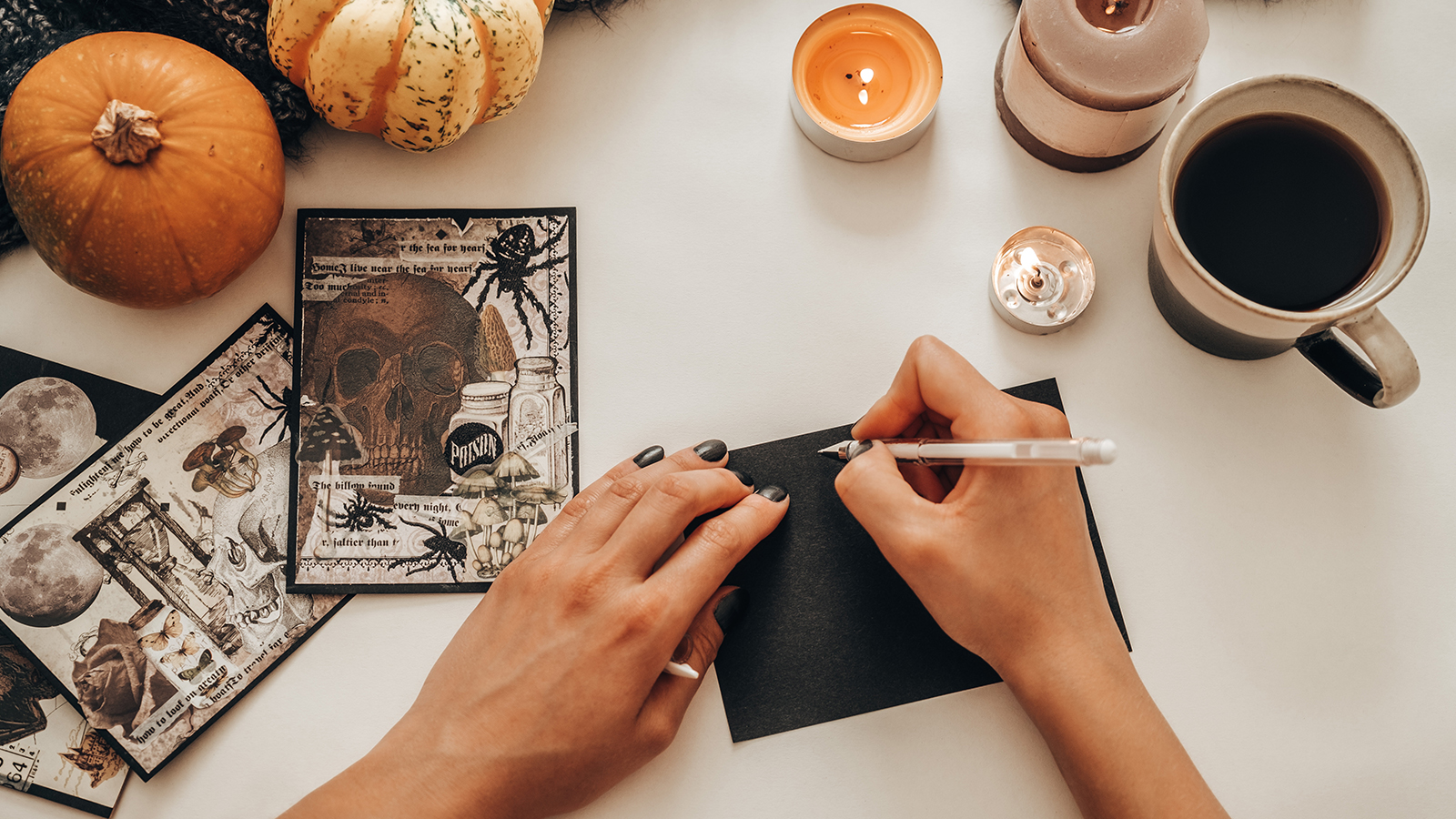
Halloween once generated its own correspondence. The Manitoba Museum preserves early twentieth-century Halloween postcards decorated with imagery such as black cats and jack-o’-lanterns. Instead of simply sending a text, photo or animated message on October 31, a person could mail a physical seasonal greeting to a friend or family member.
The custom reveals how much celebration once happened beyond the night of trick-or-treating itself. A postcard had to be chosen, written, addressed, stamped and mailed early enough to arrive around Halloween. That turned a brief seasonal greeting into a small ritual. Digital communication has made the equivalent nearly instantaneous, and physical Halloween cards never maintained the cultural prominence of Christmas cards. Still, museum collections show that Halloween was once part of the postcard economy in Canada. For someone accustomed to sending a pumpkin emoji seconds before a party begins, the idea of planning a mailed Halloween greeting several days ahead can feel unexpectedly formal—and surprisingly charming.
Bobbing for Apples at Halloween Parties

Few traditional Halloween games required participants to voluntarily put their faces into a basin of water. Yet apple bobbing was once familiar enough to appear repeatedly in Canadian historical accounts. The University of British Columbia’s Digitization Centre found references in B.C. newspapers from the 1880s identifying apple bobbing as an important Halloween activity alongside ghost costumes and seasonal mischief.
The setup was simple: apples floated in a tub or basin while participants tried to grab one with their teeth, usually with their hands kept out of the way. It created laughter, soaked faces and, by modern standards, an unusually communal approach to hygiene. The game has not completely disappeared, but sharing a tub of water with a succession of other faces is far less attractive after decades of growing attention to infection control and personal hygiene. Modern Halloween parties can reproduce the basic challenge in cleaner ways, but traditional apple bobbing illustrates an era when a successful party game was expected to be messy as well as competitive.
Treating “Mischief Week” as an Actual Tradition
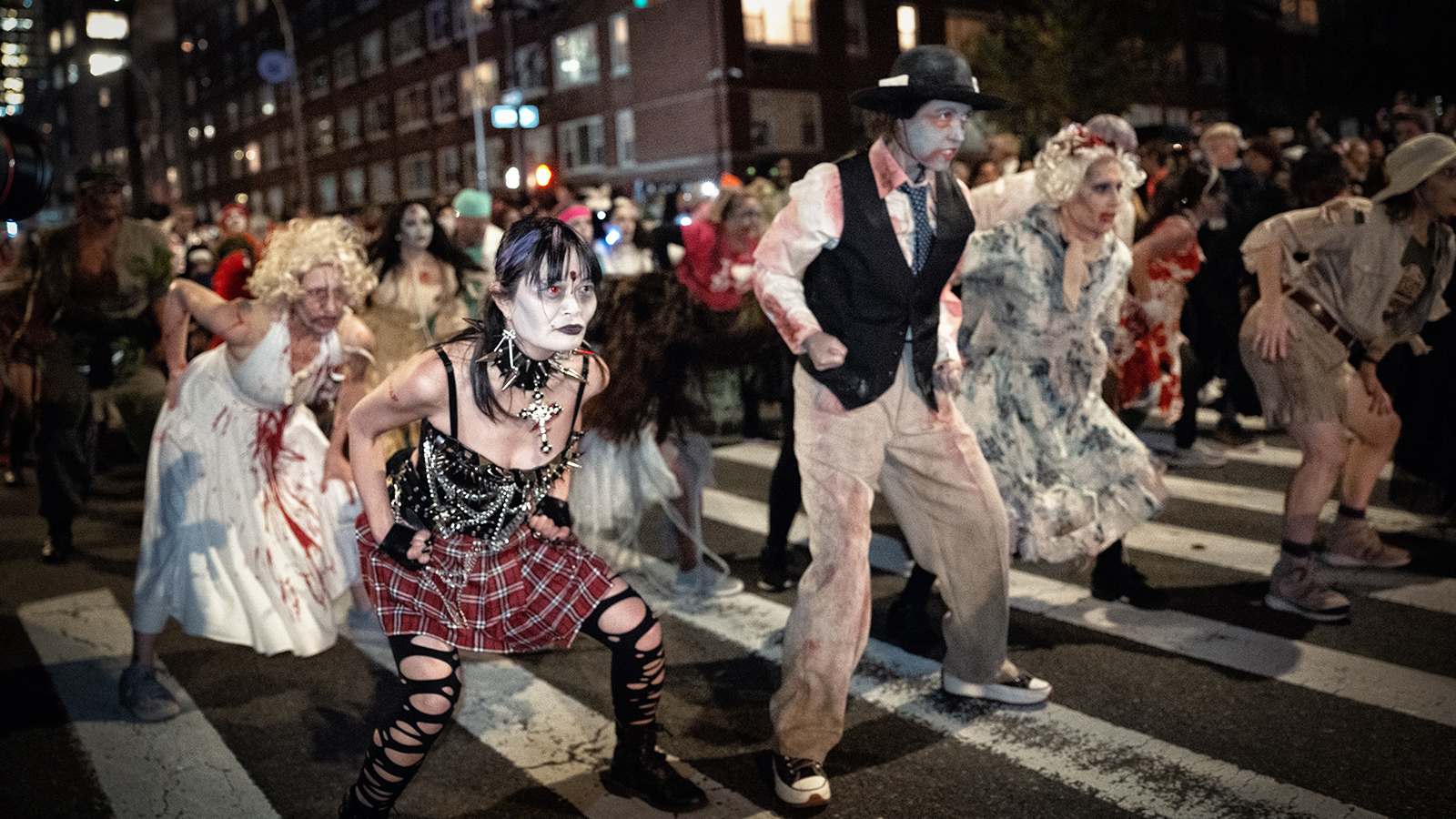
In parts of Newfoundland and Labrador, Halloween mischief was once organized enough to have its own name. The province’s heritage resources describe “Mischief Week,” or “Mischief Night” where the custom lasted only one evening. Traditional activities could include soaping windows, stuffing sods into chimneys and removing pins from gate hinges. Children sometimes operated under the assumption that Halloween temporarily permitted behaviour that would normally result in immediate trouble.
The distinction between a harmless prank and property damage was not always especially clear. What one generation regarded as seasonal mischief could easily produce a call to police, an insurance claim or an angry neighbourhood social-media post today. Halloween still generates pranks, but the idea that a community might informally tolerate a designated period for tampering with gates or household property feels much stranger now. The tradition is also a reminder that Halloween historically emphasized the “trick” at least as much as the treat, particularly before candy collection became the overwhelmingly dominant children’s activity.
Carrying Flaming or Tarred Torches Through Town

Some Newfoundland Halloween customs went far beyond pumpkins on front steps. Heritage Newfoundland and Labrador documents a custom known as Torch Night in Trinity Bay North, where young men participated in a torch procession around Halloween. Historical versions used objects such as old boots soaked in fish oil, tarred mops and half-barrels containing wood and oil. A related practice in the White Bay region was known as Tar Mop Night.
These traditions belonged to communities where open fire played a much larger role in public celebrations. The heritage account notes that the custom disappeared from many places as electricity arrived. From a modern safety perspective, the scene sounds extraordinary: people deliberately carrying burning, oil-soaked objects through a community as part of a seasonal event. Current fire regulations and liability expectations make informal torch processions far harder to imagine. Yet the custom demonstrates that Canadian Halloween history was not always dominated by candy and plastic decorations. In some communities, the night was literally illuminated by fire.
Setting Off Fireworks Because It Was Halloween

For many people outside British Columbia, associating fireworks with Halloween can still sound unusual. Yet Vancouver had a longstanding regulatory system specifically allowing consumer fireworks around October 31. A 2020 City report described an online permit process for adults and allowed licensed vendors to sell consumer fireworks from October 25 through Halloween. The city subsequently prohibited public sale and use, with the ban taking effect in 2021.
That means a relatively recent Vancouver Halloween could involve the same explosive sounds that other Canadians associate more closely with Canada Day. City officials later cited concerns including fires, injuries and property damage, and Vancouver Fire Rescue Services now reminds residents that consumer fireworks remain banned. The old Halloween-fireworks tradition has not disappeared everywhere in British Columbia, since rules vary among municipalities, but Vancouver’s shift shows how quickly a familiar local ritual can become prohibited. Younger residents may eventually find it difficult to imagine ordinary neighbourhood shops selling fireworks specifically for Halloween night.
Putting a Real Candle Inside Every Jack-o’-Lantern
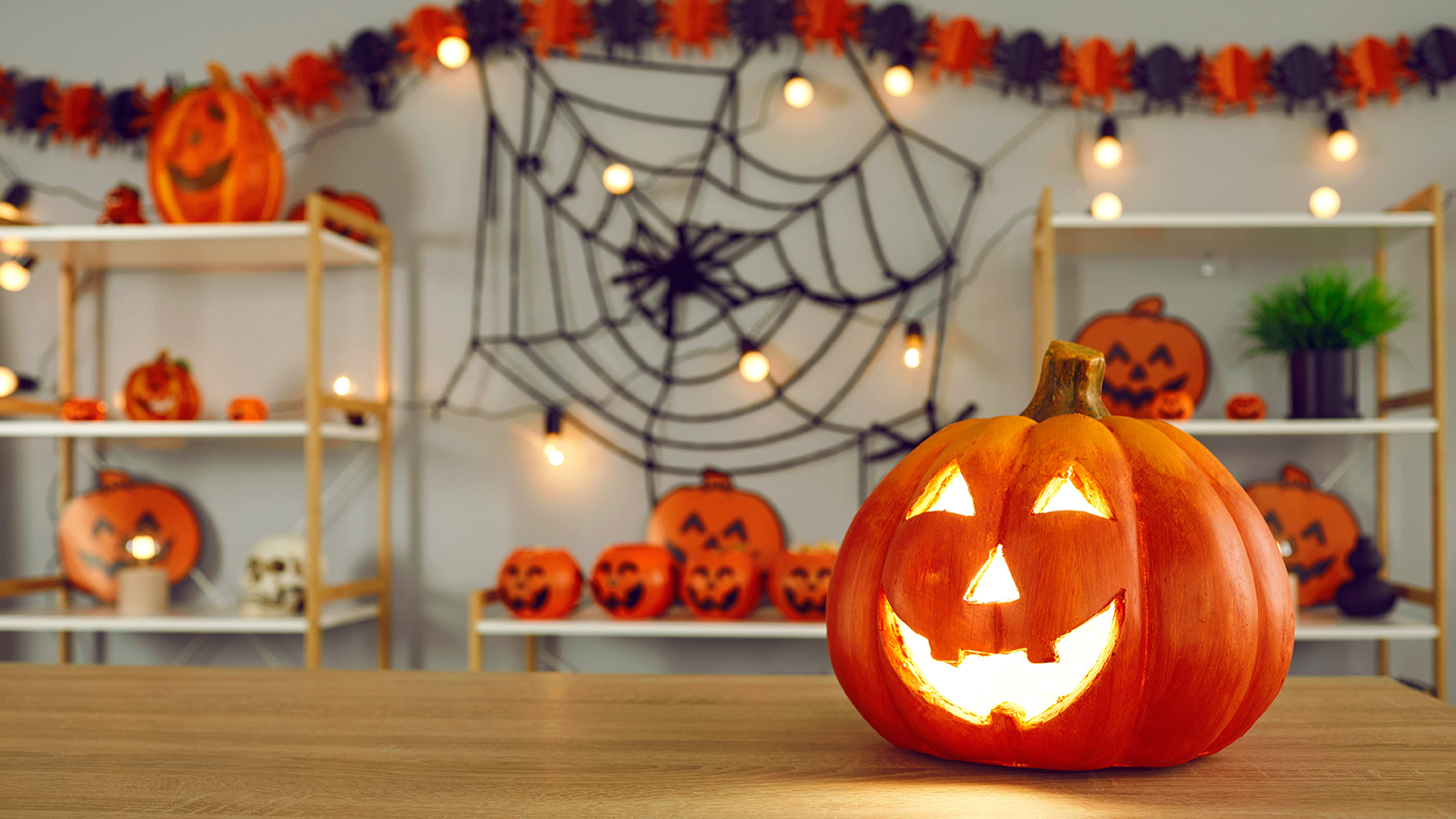
The warm, flickering glow inside a carved pumpkin was once created the obvious way: with an actual flame. Candles gave jack-o’-lanterns their uneven light and distinctive smell, but they also placed an ignition source beside porches crowded with children wearing costumes. Long capes, wigs, loose sleeves and paper decorations could make that combination especially risky.
Health Canada now recommends considering flashlights or battery-powered candles rather than open flames in jack-o’-lanterns. It also warns that flowing costume pieces can become hazardous near candles and other ignition sources. Battery LEDs have made the transition easy because they can imitate candlelight without burning down or being extinguished by wind. Plenty of Canadians still use real candles carefully, so the tradition has not vanished. What has changed is the assumption that a carved pumpkin automatically requires a flame. A generation raised on inexpensive LED tea lights may eventually find it odd that families once placed small fires inside hollow pumpkins beside the front door.
Saying “Treat or Trick” or “Tricks or Treats”
Even the most famous Halloween phrase was once less standardized. The Dictionary of Canadianisms on Historical Principles documents early Canadian variations including “tricks or treats,” recorded in Sault Ste. Marie in 1917, and “treat or trick,” reported in Owen Sound. An Edmonton newspaper later recorded another forceful version, “treat up—or tricks,” during the 1920s.
Modern children rarely need instructions on what to say. Movies, television, books and advertising have made “trick or treat” nearly universal across English-speaking North America. The older Canadian variants therefore sound almost like someone remembering the phrase incorrectly. In reality, they capture a period when door-to-door Halloween customs were still developing and local language had not been flattened by national mass media. Combined with regional calls such as “Halloween apples,” the evidence suggests that Canadian doorsteps once heard considerably more linguistic variety on October 31. The modern chant may be iconic, but it was not always the only version in circulation.
Going to the Video Store for the Halloween Movie

For families in the 1980s and 1990s, creating a Halloween movie night could require an actual trip. Statistics Canada found that only 35% of Canadian households had a VCR in 1986, but ownership had risen to 84% by 1996. Canadians spent about $1 billion renting videotapes in 1996, and households with children were especially important to the rental market.
That meant choosing the night’s entertainment from shelves rather than typing a title into a search bar. Popular horror movies could already be rented, forcing families to settle for a second or third choice. Tapes had to be returned, sometimes rewound first, and late fees could turn a cheap Halloween rental into an annoyance. Streaming has largely removed those constraints. A modern household can move between dozens of Halloween movies in seconds, while the 1990s version often required everyone to agree before leaving the store. The scarcity was inconvenient, but it also made selecting the movie part of the evening itself.
Organizing Halloween Through the Family Landline

Before every child carried a phone, Halloween logistics often passed through one household telephone. Friends called one another’s homes to decide where to meet, parents answered and handed the receiver over, and changing plans once everyone had left the house was considerably harder. The phone stayed home even when the children did not.
Statistics Canada data show how dramatically that communications environment has changed. In 2010, only 13% of Canadian households were cellphone-only. By 2021, 52.2% reported having cellphones but no landline, while 93.9% of households had at least one cellphone. The shift changes Halloween in subtle ways. Families can now share locations, send photos, alter pickup times and call instantly when someone separates from the group. Earlier generations often relied on an agreed return time and a route discussed before leaving. For children accustomed to real-time messaging, heading into the neighbourhood with no personal communication device can sound less like Halloween nostalgia and more like an exercise in trust.
Planning the Night Around Whatever Television Was Showing

Halloween television once operated on somebody else’s schedule. If a network aired a favourite animated special, horror movie or seasonal episode at 8 p.m., viewers either watched at 8 p.m. or found another solution. The timing could dictate when dinner happened or how quickly trick-or-treating needed to finish. Missing the broadcast could mean waiting a long time for another opportunity.
Canada’s viewing habits are substantially more flexible now. The CRTC reports a continuing shift from traditional broadcasting toward online services, with streaming-only households accounting for 33% of Canadian households in 2025. Traditional television viewing has been declining while streaming use has grown. That makes the old Halloween television ritual feel increasingly foreign. There was no endless menu of seasonal programming waiting on demand, and searching meant consulting listings or changing channels. Appointment television sometimes created shared cultural moments because millions of people watched the same program at roughly the same time, but viewers had to accommodate the schedule rather than the other way around.
Playing Games Like “Pin the Tail on the Black Cat”

Long before elaborate haunted attractions and immersive entertainment became common, a Halloween party could be built around very simple parlour games. UBC’s survey of historical British Columbia newspapers found that celebrations in the 1920s included activities such as “Pin the Tail on the Black Cat,” along with masquerade events, tea parties, witch-themed decorations and general mischief. It was essentially a spooky adaptation of familiar party games.
The simplicity is what makes it memorable. A paper cat, a blindfold and a group of children could provide an entire round of entertainment without electronics, special effects or purchased attractions. Halloween games certainly still exist, but expectations around parties have expanded to include elaborate decorating, professional haunted houses, escape rooms, video games and social-media-ready activities. “Pin the Tail on the Black Cat” belongs to an earlier version of Halloween in which the entertainment often came from whatever could be assembled in a living room. By modern standards it sounds quaint, but that modesty was once part of the celebration.
16 Costco Canada Habits That Could Be Costing Shoppers More Than They Save

The Executive Membership can feel like an obvious upgrade because the 2% annual reward sounds straightforward. For households that spend heavily at Costco Canada, the extra fee may be easy to justify. But the habit becomes costly when shoppers upgrade first and calculate later. A Gold Star Membership costs less, while Executive costs more and only pays off if eligible annual spending is high enough to offset the difference.
16 Costco Canada Habits That Could Be Costing Shoppers More Than They Save
