Canada’s LNG ambitions just became considerably larger. LNG Canada and its five joint-venture partners have approved Phase 2 of the massive Kitimat, British Columbia, export terminal, committing to an expansion that will double the facility’s production capacity from roughly 14 million tonnes of liquefied natural gas annually to 28 million tonnes.
The decision comes little more than a year after LNG Canada shipped its first commercial cargo from Canada’s Pacific coast. Phase 2 will add two processing trains, new storage and loading infrastructure, while a corresponding expansion of the Coastal GasLink system will move substantially more natural gas from northeastern British Columbia to Kitimat. The result is a project that could reshape Western Canada’s gas industry, deepen Canada’s access to Asian energy markets and trigger another major construction cycle across northern B.C.
Phase 2 Turns Kitimat Into a Four-Train LNG Complex
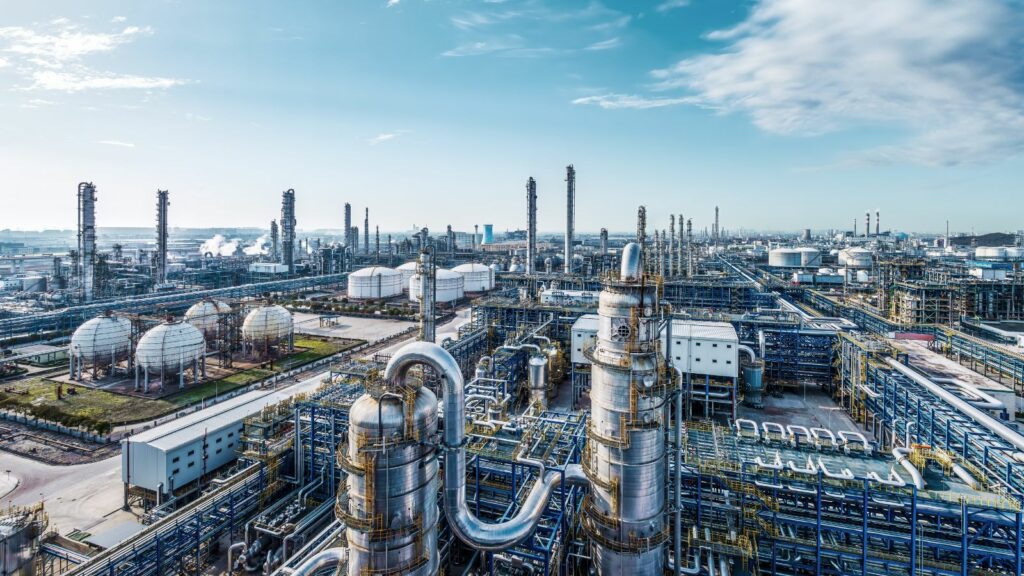
The final investment decision moves LNG Canada Phase 2 from years of planning and engineering into the execution stage. The existing Kitimat operation has two LNG processing units, commonly called trains, with combined production capacity of approximately 14 million tonnes per annum. Phase 2 will add another two trains, raising the plant’s total capacity to 28 million tonnes annually. The work goes considerably beyond adding liquefaction equipment. Plans also include another LNG storage tank, a condensate tank, an additional loading berth and expanded utility and processing systems needed to support the larger operation.
One advantage is that LNG Canada was designed with expansion in mind. Much of the underlying site planning and infrastructure anticipated an eventual four-train facility, meaning Phase 2 can build on an operating industrial complex rather than start entirely from scratch. Shell, the largest partner in the joint venture, says commercial operations from the expansion are expected to begin in the early 2030s. That still leaves years of construction ahead, but the investment decision represents the crucial point at which an optional expansion becomes a committed development program.
Coastal GasLink Can Expand Without Building Another 670-Kilometre Pipeline
Doubling LNG production requires substantially more natural gas to reach Kitimat. Coastal GasLink currently transports approximately 2.1 billion cubic feet of gas per day along its 670-kilometre route from the Dawson Creek area to the coast. Rather than constructing another pipeline alongside it, the Phase 2 plan will increase throughput by installing five new compressor stations and upgrading facilities along the existing corridor. TC Energy says those additions will nearly double the system’s current transportation capacity.
The construction arrangement is also unusual. LNG Canada will serve as execution manager for the Coastal GasLink expansion, while Coastal GasLink will remain the pipeline’s owner, operator and permit holder. TC Energy will provide technical, procurement and operational expertise. That structure allows the LNG terminal expansion and its gas-supply infrastructure to be planned more closely together while limiting TC Energy’s direct exposure to construction costs and schedule risk. Pipeline expansion work is expected to begin in early 2027, with service targeted for the early 2030s. For communities along the route, that means another significant construction cycle without another entirely new long-distance pipe being installed.
The Expansion Represents an Estimated C$33 Billion Investment
The federal Major Projects Office has estimated that LNG Canada Phase 2 could attract approximately C$33 billion in private-sector capital. That makes the expansion significant even by the standards of Canada’s resource sector. LNG Canada, working with the federal and B.C. governments, has separately estimated that Phase 2 could ultimately be associated with more than C$50 billion in government revenues over the project’s operating life through taxes, royalties and economic activity. Those figures remain projections and will depend on construction costs, production, commodity markets and decades of operating results.
The near-term impact will be much easier to see on the ground. LNG Canada expects as many as 4,000 new construction jobs in Kitimat at peak activity, while the Coastal GasLink expansion is expected to employ as many as 2,100 people across five construction sites. Once the expanded plant is operating, LNG Canada expects roughly 90 additional full-time positions and 150 contractor roles, on top of a permanent workforce that currently exceeds 400. Contractors, tradespeople and northern B.C. suppliers therefore stand to feel the project’s effects well before additional LNG begins leaving the terminal.
Canada’s Pacific Coast Provides a Much Shorter Route to Asia
Geography remains one of LNG Canada’s strongest commercial advantages. The Kitimat terminal shipped its first cargo on June 30, 2025, establishing Canada’s first large-scale LNG export connection directly to overseas markets. Canada Energy Regulator data show LNG Canada exported an average of about 0.295 billion cubic feet per day during 2025 when averaged across the entire year, even though exports did not start until June. Those LNG volumes went to East Asia, demonstrating the new trade route almost immediately.
The sailing distance is important. Canadian regulators estimate an LNG shipment from Canada’s Pacific coast can reach Asian markets in roughly 10 days, compared with around 20 days for cargo travelling from the U.S. Gulf Coast through the Panama Canal. That gives Kitimat a transportation advantage when targeting Japan, South Korea, China and other Pacific markets. It also gives Canadian natural gas producers something they historically lacked: meaningful access to customers outside the United States. In 2025, Canada still exported about 8.6 billion cubic feet per day of conventional natural gas, excluding LNG Canada, with nearly all of those pipeline volumes going south to the U.S.
Phase 2 Will Pull More Western Canadian Gas Toward the Coast
The expansion arrives as Canadian natural gas production is already setting records. According to the Canada Energy Regulator, national production averaged approximately 19 billion cubic feet per day in 2025 and reached 20 billion cubic feet per day in November. Alberta produced an average of 11.3 billion cubic feet per day during the year, while British Columbia averaged roughly 7.4 billion. Much of the recent growth has been concentrated in the Montney formation stretching across northeastern B.C. and northwestern Alberta.
A 28-million-tonne LNG terminal creates another enormous outlet for that supply. The relationship between LNG exports and future production is significant enough that the Canada Energy Regulator identifies LNG assumptions as one of the major variables determining the country’s long-term gas output. In its 2026 energy outlook, Canadian production in 2050 varies from roughly 21 billion to 32 billion cubic feet per day depending on the scenario, with LNG exports accounting for roughly 20% to 25% of production. Phase 2 therefore matters far beyond Kitimat. Producers, drilling contractors, pipeline operators and processing plants hundreds of kilometres inland could ultimately respond to the additional coastal demand.
Five Global Energy Companies Will Divide the Additional LNG
LNG Canada is not controlled by a single company. Shell owns 40% of the venture, Malaysia’s PETRONAS holds 25%, PetroChina owns 15%, Mitsubishi Corporation holds another 15%, and South Korea’s KOGAS owns the remaining 5%. Shell’s share means it expects to receive nearly six million tonnes per year of additional LNG once Phase 2 reaches full production.
The commercial structure is important because LNG Canada uses what is known as an equity-lifting model. Each joint-venture participant is responsible for supplying gas corresponding to its ownership position and taking its proportional share of LNG production. The terminal therefore feeds several established international energy portfolios rather than relying on a single company to market all 28 million tonnes. PETRONAS has a substantial international LNG business, while PetroChina, Mitsubishi and KOGAS provide direct commercial links to some of the largest energy-consuming markets in Asia. For Canada, that structure effectively embeds the Kitimat facility within several global gas and LNG networks at the same time, potentially providing additional flexibility as regional demand and prices change.
Indigenous Ownership Could Become Part of Phase 2’s Infrastructure
Phase 2 also includes a major potential Indigenous investment. In July 2026, LNG Canada reached an equity-option agreement with MNT Investments LP, representing the economic development organizations of the Gitga’at, Gitxaała, Haisla, Kitselas and Kitsumkalum First Nations. The agreement gives MNT the opportunity to invest as much as C$1 billion for a majority ownership position in a special-purpose entity that would purchase the new LNG storage tank planned for Phase 2. That asset would then be leased back to LNG Canada for the operating life of the project.
The arrangement is one part of a much more complicated Indigenous landscape surrounding LNG development in northern B.C. Coastal GasLink says it has long-term agreements with 20 elected Indigenous communities along its route and reports that more than C$1.8 billion in contracts were awarded to Indigenous and local businesses during the original pipeline construction. At the same time, Wet’suwet’en hereditary chiefs have opposed Coastal GasLink and have also raised objections to financing and expansion of the system. Phase 2 therefore combines expanding Indigenous commercial participation with continuing disagreements over land, authority and resource development.
Lower Emissions Intensity Does Not Eliminate the Climate Debate
Federal and project documents describe LNG Canada as having comparatively low greenhouse-gas emissions intensity. Government materials project Phase 2 emissions intensity at roughly 35% below what they describe as the world’s best-performing LNG facilities and about 60% below the global average. LNG Canada points to factors including British Columbia’s relatively clean electricity system, efficient equipment and Western Canadian gas production as reasons for the lower intensity.
Those percentages need context. They describe the amount of emissions associated with producing a unit of LNG; they do not mean that doubling LNG production will reduce the facility’s total emissions. Environmental groups continue to question whether decades of additional gas production and LNG exports are compatible with longer-term climate targets. Phase 1 has also faced more immediate scrutiny. Documents reported by The Canadian Press in April 2026 showed periods of flaring substantially above permitted volumes during the plant’s startup period, while LNG Canada said startup and commissioning can involve elevated flaring and that it was working through operational issues. Phase 2 will consequently be judged not only by its designed emissions intensity but by its actual operating record.
The Biggest Uncertainty May Be What the LNG Market Looks Like in the 2030s
Phase 2 is being approved during an unusually volatile period for the global gas market. Shell’s 2026 LNG outlook forecasts global LNG demand rising from 422 million tonnes in 2025 to nearly 700 million tonnes annually by 2050, an increase of roughly 65%. Asian growth and energy-security concerns underpin much of that expectation. Shell is effectively committing capital today based partly on a market it expects to exist for decades after the new Kitimat trains begin operating.
Independent forecasts underline how uncertain that path can be. The International Energy Agency’s third-quarter 2026 gas report expects global natural gas demand to decline by about 0.5% this year after Middle East disruptions, high LNG prices and reduced consumption in important Asian markets. At the same time, large amounts of new liquefaction capacity are being developed in North America, creating more competition for future buyers. That makes Phase 2 both a large expansion and a long-duration wager: Canada will have 28 million tonnes of annual capacity in Kitimat, but its ultimate economic impact will depend on global prices, Asian demand, competing projects, operating costs and how the energy system changes through the 2030s and beyond.
