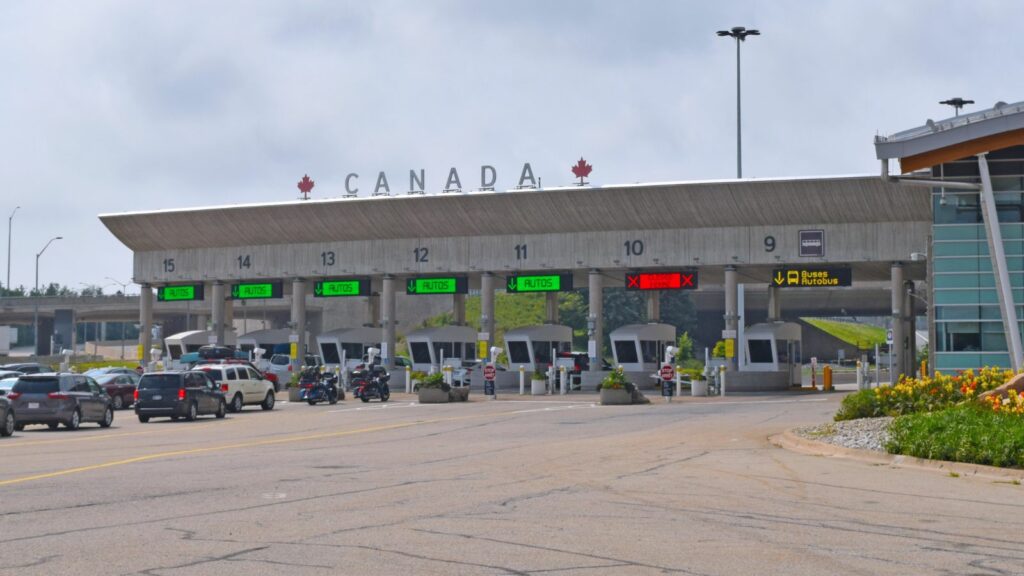
A routine trip across the Canada–U.S. border is about to require some additional planning. Ottawa has announced new operating hours at 26 land border crossings after British Columbia, Alberta and Manitoba decided to eliminate seasonal clock changes.
The Canada Border Services Agency confirmed the adjustments on October 9, 2026, with the new schedules taking effect November 1. The changes are intended to keep Canadian border services synchronized with neighbouring American checkpoints, where clocks will continue moving backward and forward each year.
For families visiting relatives, businesses transporting goods and travellers returning from the United States, the changes could affect when crossings are available.
The new schedules cover nine crossings in British Columbia, four in Alberta and 13 in Manitoba, with some locations maintaining different hours for personal and commercial traffic.
Aldergrove, British Columbia: Border Services Will Continue Until 1 A.M.
One of the most recognizable crossings affected by Ottawa’s announcement is Aldergrove, which connects British Columbia with Lynden, Washington. Beginning November 1, the Canadian port will operate from 9 a.m. until 1 a.m. the following morning, seven days a week. These hours apply to both personal travellers and commercial traffic. The 16-hour service window makes Aldergrove one of the affected locations with comparatively generous operating hours, particularly for motorists who need to return to Canada late in the evening.
For residents who regularly cross the border for family visits, shopping or business, the important change concerns how the operating schedule is displayed on Canadian clocks. British Columbia will remain on permanent Pacific Time, while Washington will return to standard time for the winter. The Canadian schedule therefore shifts to maintain coordination with American services. Travellers should remember that a crossing’s advertised closing time refers to the Canadian port, and U.S. entry requirements and operating arrangements must be checked separately.
Carson, British Columbia: Commercial Traffic Faces a Shorter Daily Window
Carson, located near Grand Forks and connected to Danville, Washington, will operate from 9 a.m. to 9 p.m. for personal travellers every day. Commercial services will follow a considerably narrower schedule, opening at 9:30 a.m. and closing at 5:30 p.m., Monday through Friday, excluding holidays. This distinction is particularly important because the availability of a border crossing for passenger vehicles does not necessarily mean commercial shipments can be processed at the same time. The two schedules serve different needs and should not be treated as interchangeable.
For a family returning from Washington during the evening, the Canadian port’s 9 p.m. closing time provides a larger window than the one available to businesses transporting commercial goods. A trucking company planning an afternoon delivery, however, must account for the 5:30 p.m. commercial cutoff and weekday restrictions. Ottawa’s adjustment is intended to preserve alignment with American border services despite the provinces adopting different clock policies. Drivers should confirm which category applies to their trip before deciding when to depart.
Cascade, British Columbia: Travellers Get a 12-Hour Service Window
The Cascade border crossing, which connects British Columbia with Laurier, Washington, is another location receiving updated operating hours. Starting November 1, personal travellers will be able to enter Canada between 9 a.m. and 9 p.m., seven days a week. Commercial processing will be available from 9 a.m. until 6 p.m., Monday through Friday, excluding holidays. Although the traveller schedule spans 12 hours, commercial users have only a nine-hour daily service window on eligible weekdays. The difference could influence how businesses schedule deliveries during the winter season.
Cascade was among the locations affected by Canada’s earlier border-service adjustments in January 2025, when the federal government revised hours at 35 land ports of entry nationwide. The latest announcement has a different stated purpose: coordinating Canadian and American opening times after British Columbia’s decision to stop changing clocks. For travellers, the practical concern remains straightforward. Arriving outside the posted hours can mean finding another crossing, which may require changing a route or delaying a trip until the following day.
Chopaka, British Columbia: An Eight-Hour Schedule Requires Careful Planning
Chopaka, opposite Nighthawk in Washington state, will maintain an eight-hour daily window for personal travellers under the new winter schedule. The Canadian crossing will open at 10 a.m. and close at 6 p.m., seven days a week. Commercial services will operate during those same hours but only from Monday to Friday, excluding holidays. Compared with crossings that remain staffed well into the evening, Chopaka provides a relatively limited period for completing an international journey, making accurate travel planning particularly important.
The revised schedule illustrates how permanent daylight saving time affects smaller border operations. British Columbia’s clocks will remain unchanged in November, but Washington will move back one hour. Rather than allowing the two sides of the crossing to become misaligned, Canadian authorities are adjusting their published service hours. For motorists using Chopaka, this means relying on the new Canadian times rather than a familiar schedule from previous winters. Commercial drivers must also account for weekends and holidays, when the posted commercial service window does not apply.
Fraser, British Columbia: Late-Night Access Remains Available on the Alaska Route
Fraser, which connects with the Skagway crossing in Alaska, is among the locations receiving one of the longest operating windows in the announcement. Beginning November 1, both personal and commercial travellers will be served from 9 a.m. until 1 a.m. the following morning, seven days a week. The 16-hour daily schedule provides considerably more flexibility than the eight-hour windows announced for several other British Columbia crossings. It is particularly relevant to travellers coordinating journeys involving Alaska, northern British Columbia and connecting routes.
The time-zone adjustment matters because British Columbia has adopted permanent Pacific Time, while Alaska continues observing seasonal clock changes. Travellers crossing between the two jurisdictions must account for differences in local time as well as the availability of border services. An advertised 1 a.m. closing time on the Canadian side should not automatically be interpreted as the same clock time in Alaska. The CBSA says the adjustments are designed to maintain coordination between neighbouring checkpoints, reducing situations where one country can process an arriving traveller while the other cannot.
Midway, British Columbia: Personal Travel Remains Available Seven Days a Week
The Midway crossing, opposite Ferry, Washington, will open at 10 a.m. and close at 6 p.m. under the revised schedule. Personal travellers will be accommodated seven days a week, while commercial processing will be restricted to Monday through Friday, excluding holidays. This produces an eight-hour daily service window, but the distinction between personal and commercial traffic remains important. A passenger vehicle may be permitted to cross on a Saturday or Sunday, while a commercial shipment requiring ordinary freight processing faces a different availability schedule.
For people living near smaller border communities, a change of even one hour on the clock can affect familiar travel routines. A morning departure that previously seemed comfortably within operating hours may need to be reconsidered once the November schedule begins. The CBSA says its changes are intended to keep Canadian service windows aligned with American counterparts, not to eliminate cross-border access. Nevertheless, travellers are responsible for confirming that their chosen port is operating when they expect to arrive. Anyone unable to use Midway during its posted hours will need to consider an appropriate alternative crossing.
Nelway, British Columbia: Commercial Processing Ends Earlier Than Passenger Service
Nelway, which connects British Columbia with Metaline Falls, Washington, will operate from 9 a.m. to 7 p.m. for personal travellers every day. Commercial processing will begin at 9:30 a.m. and end at 5:30 p.m., Monday through Friday, excluding holidays. The difference creates a two-hour gap between the commercial closing time and the end of passenger services. Businesses that routinely move goods through the area must therefore coordinate around a shorter window than the one available to ordinary motorists.
The latest change follows earlier federal adjustments affecting Nelway, including the January 2025 revision to operating hours at numerous smaller Canadian border crossings. The October 2026 announcement is specifically connected to British Columbia’s transition to permanent daylight saving time. For businesses, that distinction matters because it helps explain why the local Canadian clock may show a different opening or closing time without necessarily indicating that the American side has changed its service pattern. Travellers should check current schedules directly with border authorities, especially when arranging freight movements near weekends, holidays or the end of the business day.
Pleasant Camp, British Columbia: Extended Hours Support Travel Between Canada and Alaska
Pleasant Camp, located opposite the Dalton Cache crossing in Alaska, will operate from 9 a.m. until 1 a.m. the following morning, seven days a week. The hours apply to both personal travellers and commercial traffic. Along with Fraser and Aldergrove, Pleasant Camp is among the British Columbia crossings included in the announcement with a 16-hour daily operating window. That extended schedule provides flexibility for people travelling between Alaska and the Canadian highway network, where border timing can become an important part of a longer journey.
Although British Columbia is eliminating the November clock change, travellers should not assume that the same policy applies throughout their route. Alaska will continue switching between daylight and standard time under the existing American system. This creates a seasonal difference between the clocks used on opposite sides of the border. Ottawa’s revised operating hours are intended to preserve coordination between Canadian and American border services despite that difference. Travellers planning multi-stage journeys should distinguish between local time, border operating hours and their expected arrival time before setting out.
Waneta, British Columbia: Commercial Services Close at 5:30 P.M.
Waneta, opposite Boundary, Washington, will provide personal traveller services from 10 a.m. until 6 p.m., seven days a week. Commercial processing will also begin at 10 a.m. but will end at 5:30 p.m., Monday through Friday, excluding holidays. That creates a relatively narrow seven-and-a-half-hour weekday window for commercial traffic. The difference may appear minor compared with the passenger schedule, but it becomes meaningful when a business must coordinate shipments, transportation schedules and border clearance requirements.
The arrangement demonstrates why Ottawa’s announcement involves more than simply replacing one set of clock times with another. Each crossing has its own published service categories, and those categories can affect the availability of inspection services. A motorist arriving shortly before 6 p.m. may be within the personal traveller window, while a commercial vehicle arriving at the same time could already be outside the scheduled processing period. The CBSA recommends using another port of entry when the chosen crossing is unavailable. However, travellers should confirm that the alternative supports their particular type of crossing and is open at the intended time.
Aden, Alberta: A Later Opening Time Comes With Weekday Freight Restrictions
Aden, located opposite Whitlash, Montana, will begin operating under its revised schedule at 10 a.m. on November 1. Personal travellers will be served until 6 p.m., seven days a week. Commercial services will follow the same opening and closing times but will operate only Monday through Friday, excluding holidays. The eight-hour service window makes Aden one of Alberta’s more time-sensitive crossings in the announcement, particularly for commercial operators coordinating shipments across the provincial border with Montana.
Alberta’s decision to eliminate seasonal clock changes is the reason for the adjustment. The province has adopted permanent Alberta Time, abbreviated ABT, which corresponds to the former Mountain Daylight Time and remains six hours behind Coordinated Universal Time. Montana will continue switching to Mountain Standard Time during winter. The result is a one-hour seasonal difference between their clocks. Instead of expecting motorists to reconcile conflicting posted schedules, the CBSA is adjusting Canadian operating hours to remain aligned with American services. Travellers must still consider the weekday commercial restrictions independently of the time-zone change.
Carway, Alberta: A Midnight Closing Time Offers Greater Flexibility
Carway, across from Piegan, Montana, will be open from 8 a.m. until midnight under the revised winter schedule. Both personal travellers and commercial traffic will be accommodated seven days a week. Its 16-hour daily operating window distinguishes Carway from Alberta’s smaller crossings, such as Aden and Del Bonita, where Canadian passenger services end at 6 p.m. The extended hours may be especially useful for travellers whose plans involve longer drives or who need flexibility when returning to Canada during the evening.
Despite that relatively generous schedule, motorists should be careful about the meaning of midnight. The published closing time refers to Alberta’s local clock, which will remain on permanent Alberta Time after November 1. Montana, meanwhile, will return to standard time. The Canadian and American clocks will therefore display different local times during the winter months. Ottawa’s adjustment is intended to keep the actual operating periods coordinated. Anyone planning to use Carway close to closing time should still verify the hours on both sides of the border and allow sufficient time for inspection and processing.
Del Bonita, Alberta: Border Access Is Limited to Eight Hours a Day
Del Bonita, which connects with a Montana port carrying the same name, will operate from 10 a.m. to 6 p.m. for personal travellers every day. Commercial services will be available during those hours on weekdays, excluding holidays. Like Aden, Del Bonita has an eight-hour daily passenger schedule, meaning travellers have less flexibility than at Carway. The updated times become effective November 1 and are intended to remain in place through the winter until the United States returns to daylight saving time in March 2027.
For motorists unfamiliar with the area, the safest approach is to treat the announced hours as a firm planning requirement rather than an approximate guideline. The Canadian port cannot be assumed to accommodate routine arrivals after its published closing time. Commercial operators should be especially attentive to the weekday restrictions because the availability of passenger processing does not automatically authorize a commercial crossing. The CBSA says travellers can use alternative ports when their preferred location is unavailable, while arrangements with emergency services are maintained separately to support emergency crossings.
Wild Horse, Alberta: Passenger Services Extend Into the Evening
Wild Horse, on the Alberta–Montana border, will have different operating windows for personal and commercial traffic. From November 1, passenger services will be available from 9 a.m. until 10 p.m., seven days a week. Commercial processing will run from 9 a.m. until 6 p.m., Monday through Friday, excluding holidays. The distinction provides personal travellers with a 13-hour daily window, compared with nine hours for eligible weekday freight movements. Businesses therefore need to be particularly careful not to mistake the evening passenger schedule for commercial availability.
The Alberta crossing is one of four in the province affected by Ottawa’s announcement. The changes reflect Alberta’s decision to remain on permanent daylight saving time while neighbouring Montana continues observing America’s seasonal system. During winter, Alberta Time will be one hour ahead of Mountain Standard Time. The CBSA is adjusting the local hours so that services remain coordinated across the international boundary. For motorists, a 10 p.m. Canadian closing time provides considerable evening flexibility, but only after accounting for the time difference and the operating conditions of the corresponding American port.
Cartwright, Manitoba: Border Services Will Close at 5 P.M.
Cartwright, opposite Hansboro, North Dakota, will operate from 9 a.m. until 5 p.m. for personal travellers, seven days a week. Commercial processing will also be available during those hours, but only Monday through Friday, excluding holidays. The relatively early closing time makes Cartwright one of the Manitoba locations where advance planning is particularly important. A late-afternoon departure from a distant location could leave a traveller arriving after Canadian border services have ended for the day.
Manitoba announced its move to permanent daylight saving time on September 17, 2026, with Premier Wab Kinew citing the disruptions that seasonal clock changes create for families and businesses. The provincial decision means local clocks will not move backward on November 1. North Dakota, however, will return to Central Standard Time under American rules. Ottawa’s operating-hour adjustments are intended to maintain coordination between both sides. For people using Cartwright, the practical takeaway is to follow the newly published Central Time schedule rather than relying on an operating pattern remembered from previous winter seasons.
Coulter, Manitoba: A Shorter Crossing Window Places Emphasis on Timing
Coulter, connected to Westhope, North Dakota, will share Cartwright’s revised operating hours. Personal travellers may cross through the Canadian port between 9 a.m. and 5 p.m., seven days a week. Commercial services will operate from 9 a.m. to 5 p.m. on weekdays, excluding holidays. The announcement does not indicate that Coulter is being permanently closed or that travellers are losing access throughout the week. Rather, the CBSA is changing the clock times attached to its operating schedule in response to Manitoba’s new time policy.
The reason for the adjustment is straightforward but easy to overlook. When Manitoba remains on daylight saving time this November, North Dakota will move its clocks backward. That creates a one-hour difference between two jurisdictions that have traditionally followed closely aligned seasonal schedules. For a driver approaching Coulter near closing time, the displayed hour on a phone or vehicle navigation system matters. A clock configured for North Dakota may not reflect Manitoba’s local time. Checking both countries’ schedules before travelling will help avoid unnecessary delays or the need to find another crossing.
Crystal City, Manitoba: The New Schedule Runs From 10 A.M. to 6 P.M.
The Crystal City crossing, opposite Sarles, North Dakota, will open at 10 a.m. and close at 6 p.m. under the new winter schedule. Personal travellers will be served seven days a week, while commercial processing will be available Monday through Friday, excluding holidays. Its eight-hour passenger window is identical to several other Manitoba crossings included in the announcement. For motorists crossing between local communities, the schedule is relatively straightforward, but the later clock opening could affect familiar morning travel routines after November 1.
Crystal City’s new operating times reflect Manitoba’s adoption of permanent Central Daylight Time rather than an independent decision to eliminate border services. The neighbouring American state will continue its seasonal transition to standard time. By adjusting the Canadian hours, officials intend to preserve coordination between both countries. This also matters when travellers are refused entry and must return across the border, since both sides need to be available to manage the movement properly. The CBSA has specifically identified that type of situation as one reason coordinated opening and closing times remain important.
Goodlands, Manitoba: Commercial Operators Must Watch Weekend Restrictions
Goodlands, located opposite Carbury, North Dakota, will operate from 10 a.m. to 6 p.m. for personal travellers, seven days a week. Commercial services will be available during the same hours, Monday through Friday, excluding holidays. That schedule gives ordinary motorists an eight-hour daily window throughout the week, but commercial operators must plan around weekday limitations. Businesses moving goods between the two countries should confirm that the type of shipment they are transporting can be processed at the intended time.
Goodlands is one of several smaller Manitoba crossings included in Ottawa’s October 9 announcement. Although the new schedule is presented in local Central Time, Manitoba will no longer make the November transition back to Central Standard Time. North Dakota will continue doing so. The resulting clock difference can cause confusion for people accustomed to treating both sides of the border as though they operate on the same time. The CBSA’s adjustment is intended to prevent that mismatch from disrupting coordinated border operations. For travellers, the most reliable approach is to confirm the Canadian and American schedules separately before leaving.
Gretna, Manitoba: Evening Travel Continues Until 7 P.M.
Gretna, which connects Manitoba with Neche, North Dakota, will operate from 9 a.m. until 7 p.m. for personal travellers every day. Commercial processing will be available from 9 a.m. until 6 p.m., Monday through Friday, excluding holidays. The 10-hour passenger service window gives Gretna more evening flexibility than Manitoba crossings such as Cartwright and Coulter, where operations end at 5 p.m. Nevertheless, businesses transporting commercial goods must account for the earlier freight cutoff.
The distinction between personal and commercial operating hours is important for planning trips involving vehicles carrying goods for business purposes. A driver who reaches Gretna at 6:30 p.m. may still be within the published passenger schedule, but commercial processing will already have ended on an ordinary weekday. Manitoba’s transition to permanent daylight saving time adds another consideration because the province will remain one hour ahead of North Dakota during the winter. The CBSA says the revised times are designed to keep service hours aligned, helping travellers and border officers manage crossings more predictably.
Lena, Manitoba: The 5 P.M. Closing Time Could Catch Travellers Off Guard
Lena, located opposite St. John, North Dakota, will operate from 9 a.m. to 5 p.m. for personal travellers, seven days a week. Commercial services will be provided from 9 a.m. until 5 p.m., Monday through Friday, excluding holidays. The eight-hour passenger window leaves relatively little room for delays during longer journeys. Travellers planning an afternoon return to Manitoba should therefore consider how far they will be from the crossing and whether their arrival will fall within the published hours.
Under Manitoba’s new time policy, local clocks will remain on daylight saving time throughout winter, while North Dakota will return to standard time. That change affects how Canadian border opening and closing times appear on a local clock. The CBSA is adjusting the schedule to preserve coordination with American operations rather than treating the two countries’ clock differences as an obstacle to crossing. For Lena users, the most important practical detail is that 5 p.m. is the Canadian closing time. Anyone unable to arrive before then should identify another appropriately staffed crossing rather than assume services will remain available.
Lyleton, Manitoba: One of the Latest Closing Times in the Province
Lyleton, opposite Antler, North Dakota, stands out among Manitoba’s affected crossings because of its late closing time for personal travellers. The Canadian port will operate from 10 a.m. until 11 p.m., seven days a week, providing a 13-hour daily passenger window. Commercial processing will be available from 10 a.m. until 6 p.m., Monday through Friday, excluding holidays. That means personal travellers have five additional evening hours after commercial services end on an ordinary weekday.
For families or motorists returning to Manitoba after a longer trip, Lyleton’s evening availability offers more scheduling flexibility than the province’s eight-hour crossings. However, the distinction becomes especially important for businesses, which cannot assume that late passenger access includes freight processing. Manitoba’s permanent daylight saving time policy will keep provincial clocks unchanged on November 1, even as North Dakota moves back one hour. Ottawa’s revision seeks to maintain operational coordination despite that difference. Anyone arriving close to 11 p.m. should still confirm the corresponding American port’s hours and allow sufficient time for the required border procedures.
Piney, Manitoba: The Crossing With Minnesota Gets Updated Hours
Piney, connected with Pinecreek, Minnesota, is one of Manitoba’s affected crossings along the eastern portion of the province’s international border. Starting November 1, the Canadian port will operate from 10 a.m. until 6 p.m. for personal travellers, seven days a week. Commercial processing will follow the same hours from Monday to Friday, excluding holidays. With an eight-hour passenger window, Piney requires advance consideration from motorists planning same-day visits, particularly when a return trip might extend into the evening.
The new schedule results from Manitoba remaining on daylight saving time throughout the winter, while Minnesota continues following the seasonal clock-change system. Beginning November 1, clocks on the Manitoba side will be one hour ahead of those in Minnesota. The CBSA’s approach is intended to maintain coordinated service availability rather than allow the difference to create conflicting operating windows. For travellers, the adjustment makes it important to distinguish between the time displayed in Minnesota and the official Canadian hours. Checking both ports before setting out can prevent a routine journey from becoming an unexpected detour.
Snowflake, Manitoba: Travellers Have an Eight-Hour Daily Window
Snowflake, opposite Hannah, North Dakota, will operate from 10 a.m. to 6 p.m. for personal travellers every day. Commercial services will be available during the same hours Monday through Friday, excluding holidays. The schedule matches those of several other Manitoba crossings affected by the policy change. While the operating hours may appear uncomplicated, travellers accustomed to previous winter schedules will need to recognize that Manitoba’s clocks are no longer following the same seasonal pattern as neighbouring North Dakota.
The change could be particularly confusing during the first weeks of November, when mobile devices and vehicle clocks may display different times depending on their settings and current location. Manitoba’s official time will remain on daylight saving time, while North Dakota will move back one hour. The CBSA’s revised hours are designed to maintain alignment between the actual service periods on each side. Snowflake’s 6 p.m. Canadian closing time should therefore be treated as the definitive local deadline for ordinary passenger arrivals. Commercial users must also remember that the announced processing schedule excludes weekends and holidays.
South Junction, Manitoba: A 9 P.M. Closing Time Offers More Flexibility
South Junction, opposite Roseau, Minnesota, will serve personal travellers from 9 a.m. until 9 p.m., seven days a week. Commercial processing will operate from 9 a.m. to 5 p.m., Monday through Friday, excluding holidays. The 12-hour passenger window gives motorists considerably more flexibility than the shorter schedules established at some nearby Manitoba crossings. However, commercial users have a narrower eight-hour processing window, making the distinction important for anyone moving goods through the border.
The revised hours reflect a broader effort to ensure Canadian and American border operations remain synchronized even when their clocks no longer change together. South Junction is among the Manitoba crossings where the American counterpart is located in Minnesota rather than North Dakota, but the practical time-zone issue is the same. Both states will continue observing seasonal clock changes while Manitoba remains on permanent daylight saving time. Ottawa’s revised schedule is intended to prevent mismatched operating periods from complicating travel or border enforcement. Families planning an evening return may benefit from the later closing time, but commercial drivers must organize their trips around the earlier weekday deadline.
Tolstoi, Manitoba: Passenger Services Extend Two Hours Beyond Freight Processing
Tolstoi, which connects with Lancaster, Minnesota, will operate from 9 a.m. until 7 p.m. for personal travellers, seven days a week. Commercial processing will be available from 9 a.m. until 6 p.m., Monday through Friday, excluding holidays. The crossing therefore provides a 10-hour daily passenger schedule, while businesses have a nine-hour weekday processing window. That extra hour for personal travellers may be useful for motorists returning from afternoon activities across the border, but it does not extend the commercial cutoff.
The Manitoba–Minnesota border is among the areas where permanent daylight saving time will create a lasting seasonal difference between Canadian and American clocks. Beginning November 1, Manitoba will remain on its current time while Minnesota moves back one hour. The CBSA’s adjustment will change the posted Canadian hours to preserve coordination with neighbouring American services. For travellers who frequently use Tolstoi, the transition may take some getting used to, particularly after years of seasonal routines. Border authorities recommend checking operating hours before travelling, and commercial operators should also confirm the availability of any specialized clearance services required for their shipments.
Windygates, Manitoba: Another Crossing Moves to a 10 A.M. Opening
Windygates, opposite Maida, North Dakota, will operate from 10 a.m. to 6 p.m. for personal travellers, seven days a week. Commercial processing will be available from 10 a.m. until 6 p.m., Monday through Friday, excluding holidays. The eight-hour passenger window provides a relatively limited period for crossing, making accurate arrival estimates important. Drivers who previously relied on a particular morning departure time should verify how the new winter schedule affects their plans before travelling.
Windygates illustrates the practical challenges of coordinating border operations when neighbouring jurisdictions follow different time policies. Manitoba’s move to permanent daylight saving time means its clocks will remain unchanged in November, while North Dakota returns to standard time. The CBSA has responded by adjusting opening and closing times to preserve coordination between the countries. Although this may appear to be a simple administrative decision, the consequences can be meaningful for travellers in smaller communities where another crossing may not be conveniently located. The agency says alternative ports remain available and that emergency services continue to have coordinated arrangements for necessary cross-border movements.
Winkler, Manitoba: Evening Access Continues, but Commercial Hours Are Shorter
Winkler, which connects Manitoba with Walhalla, North Dakota, will operate from 9 a.m. until 9 p.m. for personal travellers, seven days a week. Commercial processing will be available from 9 a.m. until 6 p.m., Monday through Friday, excluding holidays. The 12-hour passenger service window gives residents and visitors considerable flexibility for afternoon and evening travel, while the nine-hour weekday commercial window requires more precise scheduling. For businesses, arriving at the crossing before the passenger closing time is not enough if the freight-processing period has already ended.
Winkler completes the list of 26 crossings affected by Ottawa’s October 9 announcement. Across British Columbia, Alberta and Manitoba, the revised hours will take effect November 1, 2026, and are intended to remain in place until the United States returns to daylight saving time on March 14, 2027. The changes are not intended to shut down cross-border travel, but to preserve coordination as three Canadian provinces adopt permanent time standards. For motorists and businesses alike, checking the correct local time, service category and operating schedule will become an essential part of planning a successful border crossing.
