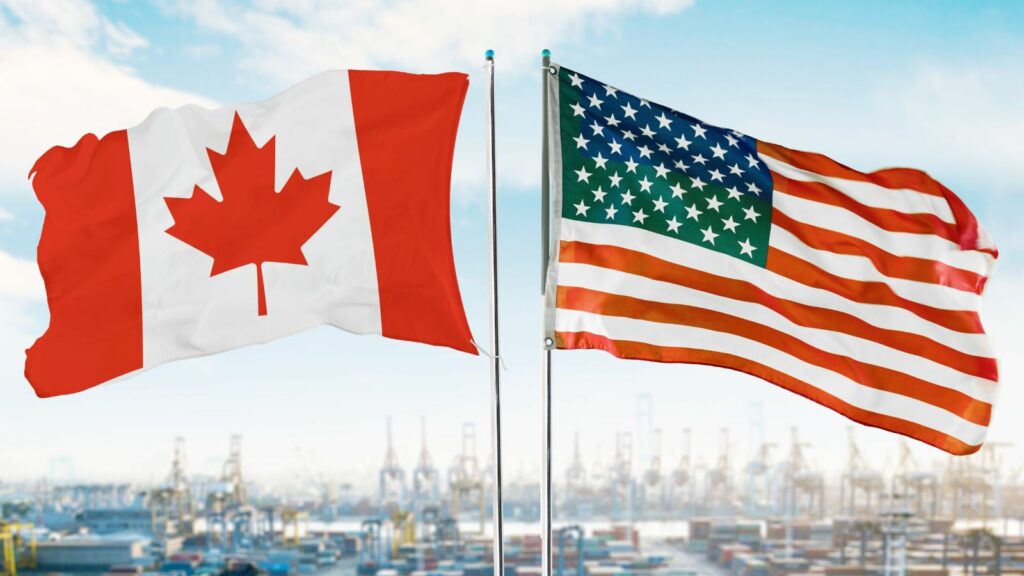
Canada has secured 34 commercial agreements worth nearly $300 million during its largest trade mission to India in three decades, marking another step in Ottawa’s push to reduce its economic dependence on the United States.
International Trade Minister Maninder Sidhu announced the results on October 16, 2026, after leading nearly 300 Canadian delegates on a business mission through Mumbai and Bengaluru. The agreements cover industries ranging from aerospace and artificial intelligence to clean energy, education and transportation.
For Prime Minister Mark Carney’s government, the announcement comes as American tariffs continue to strain cross-border trade and Canadian companies search for more reliable opportunities abroad.
The deals represent more than diplomatic discussions, although their ultimate economic value will depend on how successfully the partnerships develop into commercial activity.
Canada’s Largest India Trade Mission in 30 Years Delivers 34 Agreements
The October trade mission brought together nearly 300 Canadian delegates, making it the country’s largest commercial delegation to India in more than 30 years. According to Global Affairs Canada, the initiative generated 34 agreements and partnerships with a combined estimated value approaching $300 million. Eleven were announced in Mumbai, while another 23 were announced in Bengaluru, two major centres of Indian business and technological development. The delegation included representatives pursuing opportunities across aerospace, energy, information technology, education and other growing industries.
The agreements vary considerably in their structure and purpose. Some involve commercial partnerships and proposed manufacturing ventures, while others are memorandums of understanding, research collaborations or foreign direct investment announcements. That distinction is important because the nearly $300 million represents an estimated combined value, not money already received by Canadian exporters. Sidhu described the mission as an opportunity to strengthen Canada’s relationship with one of the world’s fastest-growing major economies. The next challenge will be converting those commitments into recurring orders, productive investments and lasting employment opportunities.
Trump’s Tariffs Are Accelerating Canada’s Search for New Customers
Canada’s dependence on American consumers has become one of the country’s biggest economic vulnerabilities. Statistics Canada reported that 71.7% of Canadian merchandise exports went to the United States in 2025, down from 75.9% in 2024. While sales to other countries increased, the American market still accounted for the overwhelming majority of Canadian goods exports. That dependence has become more concerning as trade negotiations with Washington deteriorate and businesses confront unpredictable tariffs.
In August 2026, the Trump administration imposed 50% tariffs on selected Canadian goods covering approximately $27.6 billion in trade. Ottawa responded with counter-tariffs of 15%, 25% and 50% on designated American products beginning September 8. The measures have affected industries already facing competitive pressure and complicated long-term investment decisions. For Canadian exporters, securing customers in India offers an additional source of potential revenue that is less directly exposed to American trade policy. However, diversification takes time. A business cannot replace decades of established distribution relationships simply by attending a trade mission, making these new agreements an important but early step.
Canadian Aerospace Companies Secure Partnerships With Indian Industry Leaders
Aerospace emerged as a major focus of the mission, with eight announced partnerships covering aircraft engineering, satellite communications, advanced manufacturing and space technologies. Canadian company Logic Air established separate arrangements with Genser Aerospace, GMR Aero Technic and Max Aerospace & Aviation. These collaborations involve aircraft engineering, modification and certification services, along with work supporting the modernization of military aviation platforms. Such partnerships could allow Canadian technical expertise to reach Indian customers without requiring companies to independently establish every local capability.
Other agreements target specialized areas of aerospace production. MDS Aero Support Corporation is developing a strategic partnership with Tata Projects focused on aero-engine testing infrastructure in India. Comtech Satellite Network Technologies and Rangsons Aerospace signed a memorandum of understanding concerning advanced satellite communications. Meanwhile, RSAT Space Canada announced collaborations involving Earth observation and research into advanced satellite technologies. These are not all completed sales contracts, and commercial outcomes will depend on implementation. Nevertheless, they demonstrate how Canadian manufacturers and engineering businesses are positioning themselves within India’s developing aerospace and space industries.
Electric Vehicles, Solar Power and Battery Technology Attract New Investment
Clean technology was another prominent area of cooperation. Canadian company eLeapPower and India’s Napino Auto & Electronics announced plans to establish a joint venture manufacturing integrated power electronics solutions in India. The arrangement targets India’s electric vehicle industry, where manufacturers require increasingly sophisticated electrical systems and supporting technologies. Meanwhile, ASAsoft Canada partnered with Aditya Birla Insulators to commercialize Canadian-developed composite insulator technology using Indian manufacturing capabilities. Both arrangements illustrate how Canadian intellectual property and engineering expertise can be combined with overseas manufacturing capacity
Renewable energy partnerships also featured prominently. Hygge Energy announced three separate collaborations involving Atria Renewable, Fibe and India’s Open Network for Digital Commerce. Together, the arrangements seek to support rooftop solar installations, financing and commercialization of digital energy services. Ceres BioSystems established partnerships addressing soil improvement and biogas development, while Zen Energy and Nsure Energy announced cooperation on battery-cell manufacturing technology. For Canadian companies, these arrangements offer access to new customers and potential production opportunities. Their eventual impact will depend on financing, regulatory approvals and whether the proposed technologies achieve successful commercial deployment.
Artificial Intelligence Firms Find New Partners in India’s Technology Sector
Several Canadian technology companies used the mission to establish relationships focused on artificial intelligence, cybersecurity and advanced manufacturing. Autnhive Corporation announced a strategic alliance with KPMG India to support organizations adopting AI while managing security, governance and compliance requirements. The company also established a separate partnership with Youngsoft to expand access to its AI governance platform. Deepspatial signed agreements involving geospatial artificial intelligence research and digital learning, while DynaWise AI Labs partnered with Relanto to develop enterprise AI solutions.
The opportunities extend into manufacturing. Canadian technology company ZeroKey established a commercial partnership with Microntech Group to introduce smart-factory technology to India’s automotive sector. Sidhu also met with Yotta Data Services in Mumbai to discuss potential investment in an AI innovation hub in Canada. That discussion should not be confused with a confirmed investment commitment. The broader significance is that Canadian firms are pursuing both overseas customers and access to international technology networks. For smaller software developers, a suitable distribution or implementation partner can provide access to clients that would otherwise be difficult to reach.
Canadian Universities and Healthcare Companies Join the Trade Expansion
The agreements also include educational and healthcare partnerships that could have longer-term economic benefits. Dalhousie University joined IIT Tirupati and IISER Tirupati in a doctoral research initiative associated with the Global Innovation Campus project. The University of Calgary and IIT Roorkee established a jointly supervised PhD program focused on civil engineering and water-related research. Other arrangements involve Humber Polytechnic, the Northern Alberta Institute of Technology and Niagara College, with projects addressing advanced manufacturing education, professional training and healthcare workforce development.
Healthcare technology companies are also seeking a stronger presence in India. Canadian firm THORASYS joined Yashoda Hospitals and Carna Medicare in an agreement to establish a centre focused on oscillometry, a technique used in respiratory assessment. The collaboration emphasizes clinical education and training for healthcare professionals. SinoVeda CHP separately signed a memorandum of understanding involving Canadian-developed health ingredients. These initiatives demonstrate that trade diversification involves more than physical exports. Research partnerships, professional services and specialized healthcare expertise can generate commercial opportunities while building relationships between institutions. Their economic value may emerge gradually through training, product commercialization and continued institutional cooperation.
Port of Montreal Strengthens Shipping Connections With India’s Adani Group
Physical transportation infrastructure remains essential to Canada’s diversification plans. On October 15, the Montreal Port Authority and India’s Adani Group renewed a five-year collaboration agreement aimed at strengthening the Mundra–Montreal maritime trade corridor. The relationship dates back to 2018 and focuses on improving cargo movements, exchanging operational expertise and identifying new business opportunities. The Port of Montreal also appointed Prakash Tulsiani as its representative in India to strengthen relationships with shipping companies, freight forwarders and importers.
The port’s existing trade with India demonstrates why the relationship matters. In 2025, India ranked as the Port of Montreal’s second-largest market, accounting for approximately one million tonnes of goods. Exports represented 60% of that volume, while imports accounted for the remaining 40%. Canadian forestry and metal products were among the exports moving through the port. For a manufacturer seeking Indian customers, reliable transportation can be as important as a purchase agreement. However, the renewed partnership does not establish a new direct shipping service or guarantee lower freight costs. Its immediate purpose is to improve coordination and support future trade growth.
Indian Investment in New Brunswick and Tourism Partnerships Add a Canadian Jobs Dimension
One of the mission’s 34 announcements involved money flowing into Canada rather than Canadian goods moving overseas. Indian technology company Happiest Minds formalized an investment in New Brunswick, committing millions of dollars during the first phase of its expansion. The company plans to establish its first office in the province, with the investment expected to create more than 50 information technology services jobs. The announcement offers a concrete example of how stronger international business relationships could benefit Canadian communities directly, although the anticipated employment remains a projection rather than completed hiring.
Tourism also featured among the agreements. Destination Canada, Air Canada and Lufthansa Group launched a marketing partnership intended to attract visitors from southern India. Increased international tourism can support hotels, restaurants, transportation services and local attractions without requiring those businesses to export products overseas. Together, the investment and tourism initiatives broaden the definition of trade diversification. Canada’s goal is not simply to sell more commodities to India. It is also to attract foreign capital, bring visitors into Canadian communities and develop commercial relationships capable of supporting employment in several parts of the economy.
Canada and India Are Moving Toward a Much Larger Free Trade Agreement
The commercial agreements were announced as both countries advanced negotiations on a proposed Comprehensive Economic Partnership Agreement, commonly known as CEPA. Sidhu met with Indian Commerce and Industry Minister Piyush Goyal in New Delhi and Mumbai during the mission. According to Global Affairs Canada, the ministers have met 10 times since May 2025, reflecting an unusually intensive period of bilateral engagement. Negotiators completed a fifth round of discussions in Ottawa earlier in October, with both governments working toward concluding negotiations before the end of 2026.
The proposed agreement could cover merchandise trade, services, investment, agriculture, digital commerce and other economic activities. A completed pact could reduce tariffs, improve regulatory predictability and make it easier for Canadian businesses to compete in the Indian market. However, the countries have not yet finalized CEPA, and the 34 commercial agreements announced during the mission should not be confused with a signed government-to-government free trade agreement. The distinction is important for exporters planning future investments. Until a broader agreement is completed and implemented, businesses must continue operating under existing market-access rules.
Ottawa Wants Canada–India Trade to Reach $70 Billion Annually by 2030
The federal government has established an ambitious target of increasing annual two-way trade with India to $70 billion by 2030. According to Global Affairs Canada, bilateral trade in goods and services totalled approximately $30.4 billion in 2025. Canadian merchandise exports to India were valued at $3.9 billion, with vegetables, mineral fuels and wood pulp among the leading products. Services are also an important part of the relationship, with Canadian service exports reaching approximately $15.1 billion in 2025. Education-related travel has historically been a major contributor to those services exports.
Investment provides another indication of the relationship’s scale. Canadian direct investment in India reached $11.4 billion in 2025, while Indian direct investment in Canada amounted to $9.7 billion. Canadian pension funds and asset managers also reported approximately $108 billion in total exposure to India through various investment vehicles. These figures describe existing economic relationships rather than money generated by the October mission. Reaching the $70-billion trade target would require substantial expansion across multiple industries, including services, manufacturing, agriculture and energy. The latest agreements could contribute to that objective, but their individual financial impact remains to be demonstrated.
Carney’s Reset With India Follows Years of Diplomatic Tensions
The commercial progress represents a significant change from the diplomatic confrontation that damaged Canada–India relations in 2023. Tensions escalated after the killing of Canadian Sikh activist Hardeep Singh Nijjar in British Columbia, when Canadian authorities alleged links to Indian government agents. India denied involvement, and the dispute led to a deterioration in diplomatic relations and the suspension of trade negotiations. Since becoming prime minister, Carney has made rebuilding economic and diplomatic engagement with India a priority, while the two governments have also resumed discussions on security and law enforcement.
Carney visited India in March 2026, becoming the first Canadian prime minister to make a bilateral visit since 2018. That trip produced more than $5 billion in announced commercial agreements, including a $2.6-billion uranium supply arrangement between Saskatchewan-based Cameco and India’s Department of Atomic Energy. Those earlier commitments are separate from the nearly $300 million announced in October. On October 13, Carney and Modi discussed further cooperation in trade, energy, technology and security during a telephone conversation. The leaders are also preparing for Modi to visit Canada in December, providing another opportunity to advance negotiations and strengthen their relationship.
The Real Test Will Be Whether the Agreements Deliver Sales, Investment and Canadian Jobs
The scale of India’s market presents considerable opportunities, but entering it requires preparation. Canada’s Trade Commissioner Service warns that businesses must navigate regional differences, complicated regulations and changing market conditions. A Canadian equipment manufacturer may need to secure certifications, establish local distribution arrangements and understand different purchasing requirements before receiving its first substantial order. A technology company may face similar challenges involving intellectual property, data protection and commercial contracts. Partnerships established during trade missions can help overcome these barriers, but they do not eliminate the work required.
For Ottawa, the real measure of success will emerge over the coming months and years. Policymakers will need to assess how many of the 34 agreements lead to completed transactions, how much investment actually arrives in Canada and whether the partnerships generate sustainable employment. Businesses will also need to determine whether expanding into India strengthens their profitability rather than simply increasing their costs. Canada is not about to replace its enormous American trading relationship with one market in Asia. However, the October mission provides tangible evidence that Canadian companies are seeking alternatives. If the agreements develop into lasting commercial relationships, they could help build a more diversified Canadian economy that is less vulnerable to future disruptions in U.S. trade policy.
