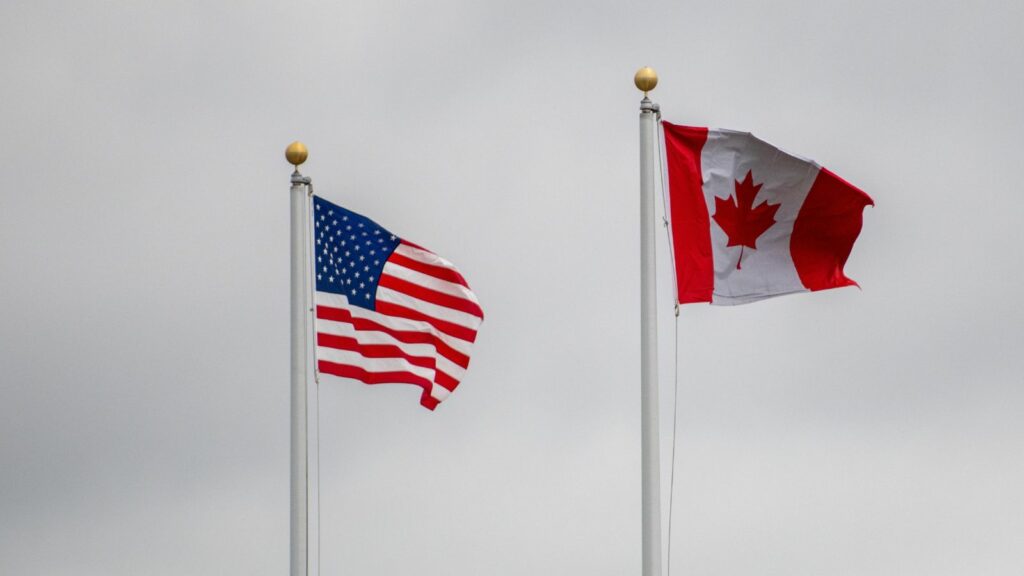
Even as trade tensions continue between Canada and the United States, California is sending an important message: business cooperation does not have to stop because governments disagree.
The California Governor’s Office of Business and Economic Development has organized a trade mission to Canada from October 18 to 23, 2026, focusing on defence, cybersecurity, emergency response and critical infrastructure. The delegation’s itinerary begins in Ottawa before continuing to Toronto and Calgary, bringing American businesses into direct contact with Canadian industry representatives and potential customers.
The visit comes as Prime Minister Mark Carney’s government increases defence investment and prioritizes Canadian suppliers, while tariffs complicate cross-border commerce.
For companies on both sides of the border, the mission offers an opportunity to strengthen commercial relationships despite uncertainty surrounding North American trade.
California Sends a Trade Delegation to Ottawa Despite Political Friction
The California Governor’s Office of Business and Economic Development, commonly known as GO-Biz, scheduled its Canada Safety and Security Trade Mission for October 18–23, with Ottawa meetings planned for Monday, October 19. The program is designed to connect California companies with Canadian government representatives, defence-sector organizations, investors and potential commercial partners. It includes market briefings, business introductions and discussions about entering or expanding within the Canadian market.
The Ottawa portion includes an Industry Day hosted at KPMG’s offices on Elgin Street, with assistance from Invest Ottawa and the American Chamber of Commerce in Canada. The program also identifies a U.S. Embassy briefing and an invitation-only diplomatic reception. Rather than organizing a large public exhibition, the mission emphasizes smaller meetings where businesses can discuss specific challenges and opportunities.
California initially sought approximately eight to ten participating companies, but an October 15 program update identified four confirmed business-meeting participants. The smaller delegation reflects a more concentrated approach, with organizers planning two or three individual meetings for each company in each city.
The initiative is supported by California trade representative Diana Dominguez, program organizer Tom Hanson of Channel Architect and Canadian coordinator Brittany Saunders of Left Field Consulting. Their involvement highlights how state governments and private organizations can maintain commercial relationships even during difficult negotiations between national governments.
Ottawa Meetings Put Defence Procurement and Cybersecurity Opportunities in Focus
Ottawa was selected as the opening destination because of its concentration of federal departments, defence organizations and businesses involved in security technology. California’s official mission announcement identified meetings with Department of National Defence decision-makers, federal procurement briefings and opportunities to engage with government representatives as major objectives.
The more detailed October 15 itinerary outlined discussions on entering the Canadian market, navigating trade regulations and understanding defence procurement. Speakers listed for the KPMG event included representatives of Invest Ottawa, the Business Development Bank of Canada, the Ontario government and KPMG Law. The schedule also included a U.S. Embassy market briefing covering Canadian defence, aerospace and bilateral trade conditions.
Cybersecurity and data protection are among the mission’s advertised priorities, alongside defence technologies, emergency communications and infrastructure protection. However, the published program does not establish that a separate cybersecurity-specific government meeting has taken place.
That distinction matters because trade missions are primarily intended to create relationships, rather than finalize government contracts. Companies may leave with new contacts, requests for demonstrations or discussions about future procurement opportunities, but attendance does not guarantee a sale.
For Canadian organizations, the meetings provide an opportunity to evaluate foreign technologies while considering how they might complement domestic capabilities and Canada’s changing national security priorities.
Four California Companies Bring Technologies Designed for Dangerous Working Conditions
The confirmed participants demonstrate that the mission extends well beyond conventional military equipment. Safety Engineering International, represented by president Susie Bozzini, specializes in rollover protection for vehicles operating in hazardous environments. Its HALO system is designed to reinforce occupant protection by distributing forces during a rollover. The technology could interest Canadian mining operators, utilities and industrial fleets whose employees regularly travel through difficult terrain. Potential Canadian partners could include vehicle distributors, equipment installers and companies responsible for occupational safety.
Another participant, MAKESafe Tools, focuses on a different workplace hazard: machinery that remains dangerous after an operator switches it off. The California company, represented by founder Scott Swaaley, manufactures braking and emergency-stop systems for equipment such as grinders, bandsaws and industrial machinery.
Its products address situations where moving equipment continues spinning or restarts unexpectedly after a power interruption. Canadian manufacturers, maintenance workshops and vocational training institutions could be potential customers.
Both companies illustrate the practical nature of the delegation. Although the mission is promoted under defence and security, many participating technologies have civilian applications. Protecting a mining employee during a vehicle rollover or preventing a workshop injury may appear unrelated to military procurement, but both fit the broader objective of making critical industrial operations safer.
Wildfire Protection and Emergency Communications Offer Another Area for Cooperation
Two other participating businesses are concentrating on emergency preparedness and infrastructure resilience. Red Line Safety, represented by founder Scott Holman and finance executive Matt Baltz, develops wearable monitoring systems and communications technology for firefighters. Its IMSAFE platform combines responder-location information, environmental monitoring, mesh networking and cloud-based analytics. The system is designed to help incident commanders track personnel and operating conditions, including situations where conventional cellular communications are unavailable.
Opal AI, represented by co-founder Alison Olmstead, is bringing geospatial intelligence technology. Its FireVision platform uses artificial intelligence, geographic information and wildfire-related data to support risk assessments and mitigation planning. Another product, Urbanomy, focuses on mapping municipal infrastructure such as roads, sidewalks and other public assets.
These technologies are relevant to Canada’s growing emergency-management challenges. According to Public Safety Canada, more than 5,400 wildfires burned approximately 4.5 million hectares across the country during the 2026 season. More than 33,750 people were forced from their homes, including thousands from First Nations communities.
For a community facing evacuation or a fire department operating beyond reliable cellphone coverage, improved situational awareness could be valuable. However, whether the California products meet specific Canadian operational requirements would need to be established through further evaluation and testing.
Cybersecurity Remains a Priority Even When Companies Focus on Physical Safety
Cybersecurity is another major reason California is interested in Canada’s security market. The Canadian Centre for Cyber Security’s National Cyber Threat Assessment for 2025–2026 identifies ransomware as the leading cybercrime threat to Canadian critical infrastructure. The assessment also warns that financially motivated criminals and state-sponsored actors are becoming increasingly capable of disrupting essential services. A separate federal ransomware outlook released in January 2026 reinforces concerns about the evolving sophistication of these attacks.
The visiting delegation is not composed entirely of specialized cybersecurity companies. Nevertheless, technologies involving emergency communications, cloud analytics and infrastructure monitoring operate within the same security environment. A system that helps emergency crews exchange information must also protect sensitive data and maintain dependable communications.
For example, an emergency-response organization considering connected wearable devices would need to evaluate not only whether the equipment performs effectively, but also how information is transmitted, stored and protected against unauthorized access.
That makes cybersecurity relevant to discussions involving several participating companies, even when their primary products address physical safety. Canadian buyers may need to examine encryption, software maintenance, interoperability and data-management arrangements before adopting new systems. These requirements could create opportunities for Canadian cybersecurity firms to work with visiting American businesses on solutions that meet domestic operational needs.
Canada’s Growing Defence Budget Creates Opportunities, but Domestic Suppliers Come First
Canada’s defence investments help explain why California selected this moment to pursue opportunities north of the border. The federal government reported achieving NATO’s target of spending 2% of gross domestic product on defence during the 2025–26 fiscal year, representing more than $63 billion in eligible expenditures. Ottawa has also committed to reaching NATO’s broader 5% defence and security investment target by 2035. These commitments signal a substantial increase in spending on military capabilities, infrastructure, research and related technologies.
However, access to that spending is not guaranteed for American companies. Canada’s Defence Industrial Strategy aims to increase the proportion of defence acquisitions awarded to Canadian firms to 70% over the next decade. The government is prioritizing domestic production and Canadian participation in major defence projects.
The strategy follows a framework described as Build–Partner–Buy. Canadian-made capabilities receive priority where practical, cooperation with trusted allies comes next, and purchasing complete systems from abroad remains an option when necessary.
For California businesses, this creates incentives to establish meaningful relationships with Canadian manufacturers, technology providers and service companies rather than simply export finished products.
A company developing security technology might improve its competitive position by arranging Canadian assembly, local technical support or joint development. Such partnerships could help meet procurement requirements while contributing to Canadian employment and industrial capacity.
Toronto Meetings Will Connect California Companies With Canada’s Security Industry
The delegation’s next destination is Toronto, where organizers have scheduled business meetings for October 20 and 21. The main company-matching session is planned at Northeastern University’s Toronto campus, with additional discussions hosted by law firm Fasken. The Toronto program focuses on commercial partnerships, technology talent, infrastructure protection and emergency preparedness. Organizers also plan discussions about lessons from major international sporting events, including Toronto’s experience hosting matches during the 2026 FIFA World Cup.
The visit overlaps with Security Canada Central, scheduled for October 21–22 at the Toronto Congress Centre. The exhibition is one of Canada’s largest security-industry gatherings, attracting more than 2,990 professionals and 186 exhibitors during its 2025 edition. The California mission was deliberately timed around this period of industry activity, although the published schedule does not confirm attendance at every exhibition event.
Updated Toronto meeting information specifically identifies Opal AI, Red Line Safety and Safety Engineering International as available for one-on-one discussions. This is narrower than the four-company delegation listed in the overall program.
The distinction illustrates how trade missions evolve as appointments and travel schedules are finalized. For Ontario businesses, the practical opportunity lies in assessing technologies, identifying suitable partners and determining whether future demonstrations or commercial arrangements are worthwhile.
Calgary Meetings Will Focus on Energy Infrastructure and Industrial Safety
The mission’s final major business destination is Calgary, with meetings scheduled for October 22 and additional activities planned for October 23. Alberta provides a different commercial environment from Ottawa and Toronto, with considerable opportunities involving energy production, utilities, industrial operations and infrastructure protection. The California delegation is expected to meet potential partners interested in improving workplace safety, emergency communications and resilience.
Calgary law firm Miller Thomson is hosting the principal industry session, with individual business meetings planned for the afternoon. The October 15 program also listed Alberta Jobs, Economy, Trade and Immigration Minister Joseph Schow as an expected participant, although his final speaking arrangements remained subject to confirmation.
For companies operating in remote oil and gas facilities, some of the delegation’s technologies could have practical applications. Vehicle rollover protection may be relevant to employees travelling between industrial sites, while emergency communications equipment could help responders operating in areas with unreliable network coverage.
Likewise, wildfire-risk analysis could assist infrastructure operators evaluating threats to equipment, roads and surrounding communities.
However, these remain potential applications rather than confirmed Canadian purchases. Alberta operators would still need to assess whether each product meets Canadian standards, performs reliably under local conditions and provides sufficient benefits to justify the investment.
California’s Outreach Comes as Trump Tariffs Disrupt North American Trade
The delegation is arriving during one of the most difficult periods in recent Canada–U.S. trade relations. Washington imposed 50% tariffs on selected Canadian goods worth approximately C$27.6 billion, effective August 22, 2026. Ottawa responded with counter-tariffs of 15%, 25% and 50% on designated American products beginning September 8. The measures have introduced additional uncertainty for manufacturers, exporters and businesses that depend on established cross-border supply chains. They do not mean every American security product entering Canada automatically faces a 50% tariff.
Trade uncertainty extends to the Canada–United States–Mexico Agreement. During the July 2026 joint review, Washington declined to extend the agreement in its existing form. However, the agreement remains in force while negotiations continue, meaning the review decision did not immediately eliminate its trade provisions.
California Governor Gavin Newsom has taken a different public position from the Trump administration on tariffs. In April 2025, Newsom directed his administration to strengthen relationships with international trading partners and urged them to exempt California-made products from retaliation. California renewed its legal challenge to federal tariff measures in March 2026.
The trade mission reflects that broader effort to preserve commercial relationships independently of federal political disagreements. California cannot unilaterally rewrite U.S. tariff policy, but it can promote business connections, encourage investment and help exporters explore opportunities in Canada.
Canada’s $17 Billion Market for California Exports Gives Both Sides a Reason to Cooperate
Canada remains an important customer for California businesses despite the political disagreements. According to the Office of the United States Trade Representative, California exported approximately US$17 billion in goods to Canada in 2025, making it the state’s second-largest international merchandise export market after Mexico. California’s total goods exports reached US$188.2 billion that year. Those figures demonstrate why maintaining access to Canadian customers matters for businesses operating across numerous industries.
The October trade mission offers participating companies a relatively focused way to explore a small but potentially valuable segment of that relationship. Organizers initially targeted between 24 and 36 short business meetings across the three Canadian cities, although updated appointment availability varies by location and the figure is not a count of completed meetings.
The immediate measure of success will not necessarily be the value of contracts announced during the visit. A meeting with a Canadian utility, emergency-management organization or manufacturing partner could lead to a technical demonstration, product evaluation or longer-term commercial relationship.
There is also a broader economic message. Canada wants to strengthen its domestic defence industry, while California businesses want access to Canadian customers. Those priorities do not have to be mutually exclusive when partnerships create opportunities for both sides.
The outcome will depend on whether the introductions develop into meaningful cooperation. Even as national trade negotiations remain strained, businesses and regional governments are demonstrating that practical cross-border relationships can continue.
