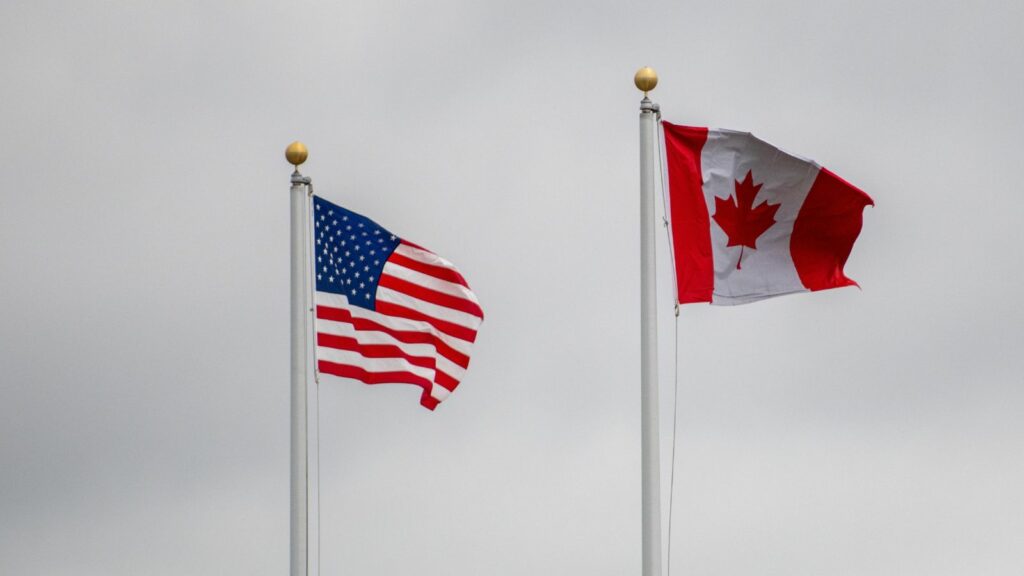
The U.S. midterm elections may reshape Capitol Hill, but Canada’s top negotiator is warning against treating November 3 as a reset button for the trade fight. Janice Charette, Canada’s Chief Trade Negotiator to the United States, said this week that Donald Trump will still be president after the vote and that his administration will continue to drive Washington’s trade policy. Her message lands at a difficult moment: the United States has declined to renew CUSMA in its current form, sectoral tariffs are pressuring Canadian manufacturers, and Ottawa is trying to defend its interests without becoming entangled in U.S. campaign politics. For Canada, the practical question is therefore not simply who controls Congress after the midterms, but how much a changed Congress could alter the political pressure surrounding a trade agenda still directed from the White House.
Charette Is Warning Canada Not to Expect a November Reset
Janice Charette’s warning is less a prediction about the election than a reminder about institutional reality. Speaking at the Toronto Global Forum on October 22, she emphasized that Donald Trump will remain president after the midterms even if control of Congress changes. Charette said Canada would stay focused on its objectives and make its case when the right negotiating moment arrives. For Canadian businesses, the message is clear: November is not necessarily a finish line for the dispute.
Charette was appointed in February 2026 after four decades in public service and diplomacy. She has twice served as Clerk of the Privy Council and was Canada’s high commissioner to the United Kingdom. Her mandate puts her alongside Ambassador Mark Wiseman and Trade Minister Dominic LeBlanc on the CUSMA review and broader bilateral relationship. Her comments therefore reflect more than political observation; they describe the operating assumption behind Canada’s negotiating strategy today.
Congress Matters, but It Does Not Automatically Control the Tariff Switch
The midterms can still matter because Congress has constitutional authority over trade. The U.S. Constitution gives Congress power to regulate foreign commerce and impose duties, while the president conducts foreign relations and negotiates with governments. Over decades, however, Congress has delegated significant tariff authority to the executive branch through statutes allowing presidents to act under specified conditions. That structure has enabled modern presidents, including Trump, to move quickly on tariffs without waiting for a new trade law.
A change in congressional control could affect hearings, committee leadership, oversight and legislation that expands or restrains presidential trade powers. Lawmakers can also create political pressure by representing exporters, farmers, manufacturers and border states hit by tariffs. But those changes do not automatically cancel a presidential proclamation or replace the U.S. Trade Representative. Congress can reshape the environment around negotiations while the White House remains the central decision-maker on tariffs already in force.
Trump’s Trade Machinery Is Already Operating Through Executive Powers
Trump’s second-term trade policy has made heavy use of executive tools, reinforcing why Ottawa is watching the White House more closely than the electoral map. In 2026, the administration strengthened Section 232 tariffs on steel, aluminum and copper, including 50% duties on many products. It also used Section 338 of the Tariff Act of 1930 to impose additional 50% tariffs on selected Canadian goods, arguing Canadian measures disadvantaged U.S. commerce. Several actions came through presidential proclamations rather than new acts of Congress.
That matters because the machinery is operating. Canadian exporters are not waiting for a future trade bill; customs classifications, exemptions, sectoral duties and countermeasures are influencing prices and investment decisions. A new Congress could debate limits on delegated tariff authority, but that would require legislation and political agreement. Until those rules change, Canada has to negotiate against the policy that exists, not the policy that might follow November.
CUSMA Has Already Entered a Longer Period of Uncertainty
The CUSMA review has made timing more important. Canada, the United States and Mexico held the agreement’s required six-year joint review on July 1, 2026. Canada and Mexico supported extending the pact, but Washington declined to renew it in its current form. That did not terminate CUSMA. The agreement remains in force until 2036, while the countries now move into annual reviews unless they later agree to a 16-year extension. For businesses, the continental framework survives, but uncertainty remains.
Ottawa says its priorities include preserving predictable North American access while resolving U.S. sectoral tariffs on Canadian steel, aluminum, automobiles and softwood lumber. Washington says it wants to address shortcomings it sees in the agreement and trade deficits with Canada and Mexico. The review therefore gives Trump’s administration opportunities to seek concessions after the midterms. A congressional shift could change pressure, but the CUSMA process is moving on a multi-year track.
Ottawa Is Trying to Keep Trade Advocacy Out of U.S. Election Politics
Canada is also trying to avoid turning trade advocacy into an American campaign issue. This week, Canadian diplomats in the United States were instructed not to meet with or attend events involving midterm candidates and to avoid photographs or material that could suggest political involvement. The directive followed accusations from U.S. officials that Canadian politicians were trying to influence American politics through comments about retaliatory tariffs and sensitive states. Canadian leaders reject the suggestion they are interfering.
The sensitivity was visible at Charette’s Toronto appearance. Former federal minister Brian Tobin, now a BMO vice-chair, joked that he wanted assurance she was not engaging in electoral activity, drawing laughter before discussion turned to trade. Beneath the humour is a serious constraint. Ottawa still needs relationships with lawmakers, governors, businesses and industry groups in the United States, but during the campaign it is reducing appearing partisan. That caution supports Charette’s wait-and-work strategy.
Canada Still Sends More Than Seven in 10 Merchandise Export Dollars to the U.S.
The scale of the Canada-U.S. relationship makes a passive strategy unrealistic. Global Affairs Canada says roughly C$3.5 billion in goods and services crossed the border every day in 2025. Statistics Canada reported that 71.7% of Canadian merchandise exports went to the United States that year, down from 75.9% in 2024. Even after that decline, the U.S. remained Canada’s dominant export destination. Changes in tariff rules can move quickly through factories, logistics networks, investment plans and provincial economies.
There is evidence companies are adapting. Canadian merchandise exports to the United States fell 5.8% in 2025, while exports to other countries rose 17.2%. That shift does not erase dependence on the American market, but it explains Ottawa’s two-track approach: stabilize access to its largest customer while building alternatives. Integration increases Canada’s exposure, yet it also strengthens Ottawa’s argument that disrupting cross-border supply chains imposes costs on firms and consumers in both countries.
Ontario’s Auto and Steel Sectors Show Why Canada Cannot Simply Wait
Ontario shows why Ottawa cannot simply wait for the midterms and hope the pressure fades. Federal economic-development officials estimated earlier this year that about 933,000 Ontario jobs depend on U.S. export demand. The province’s auto sector employs more than 95,000 workers, and autos and parts exports to the United States were worth about C$60 billion in 2025. Roughly 96% of Ontario’s auto exports went south. Steel and aluminum were concentrated, with C$6.5 billion in U.S.-bound exports representing about 94% of Ontario’s total.
On October 21, Ottawa and Queen’s Park announced C$8.7 billion in investments and measures for tariff-exposed industries, including steel, autos and critical minerals. The package includes billions for steel-sector investment and an additional C$2.5 billion over two years for large automotive capital projects. The commitments show how trade tensions are shaping industrial policy. The longer tariffs persist, the more governments must spend, redirect procurement and help companies retool.
The Midterms Could Change Canada’s Leverage Without Changing Its Counterparty
A post-midterm opening is possible, but Canadian officials have avoided treating it as guaranteed. Steve Verheul, who led Canada’s negotiations during the first Trump administration’s replacement of NAFTA, said earlier this year that Washington might seek a political win around the midterms. Even so, he judged it more likely that tariff talks would continue beyond the election into 2027. His assessment aligns with Charette’s message: November may change the atmosphere more than the person directing U.S. policy.
If control of one or both chambers changes, the administration could face oversight or pressure from lawmakers whose districts are hurt by tariffs. A different Congress might revisit proposals to reclaim delegated tariff authority. Those possibilities, not automatic outcomes. Canada’s advantage after the vote may come from a clearer political landscape rather than a new trade regime. Ottawa can test that landscape while keeping its core asks—tariff relief, CUSMA stability and predictable access—unchanged.
Canada’s Longer-Term Answer Is Diversification, Not Abandoning the U.S.
Canada’s longer-term hedge is to reduce the leverage U.S. decisions can exercise over the economy. The Carney government aims to double non-U.S. exports over the next decade, representing roughly C$300 billion in additional trade. Ottawa has paired that target with trade negotiations, investment missions and infrastructure plans to move Canadian energy, resources, goods and services to Europe, Asia and other markets. Rising 2025 non-U.S. merchandise exports show diversification is already occurring at meaningful scale.
Diversification is not a substitute for a workable U.S. relationship. Geography, integrated manufacturing, energy flows and decades of investment make the American market uniquely important. But it can change the balance of risk. Charette’s warning should not be read as resignation. It is closer to a doctrine: assume the White House remains central after the midterms, work every channel that can influence Washington, protect vulnerable sectors at home, and build alternatives to avoid negotiating from desperation.
