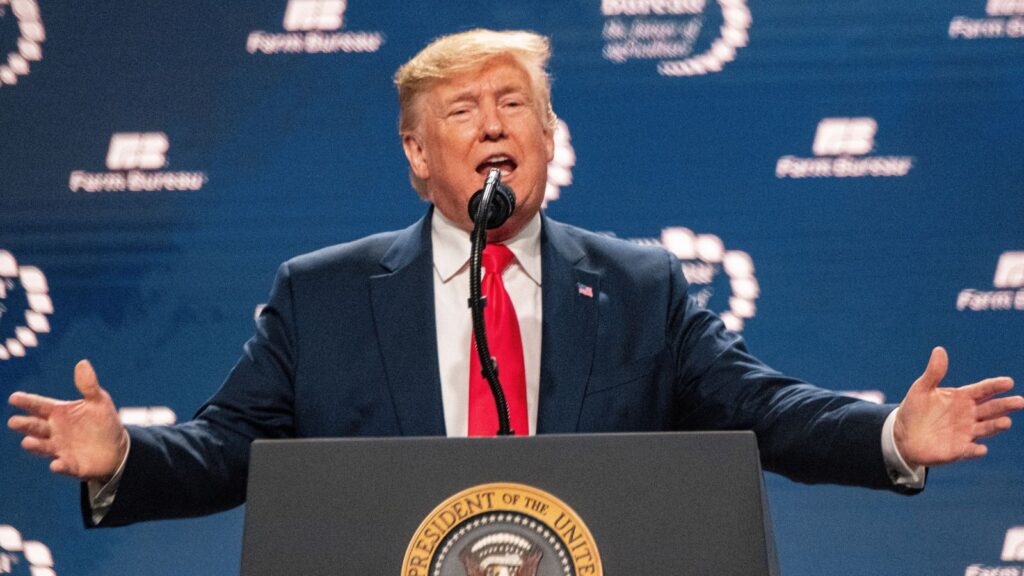
Canada and the United States are back at the negotiating table with two of the most damaging pieces of their trade fight in focus: U.S. tariffs reaching 50% on Canadian steel and a 25% levy on automobiles. The renewed talks offer Ottawa a path toward relief, but Washington is still asking Canada for further concessions before President Donald Trump signs off.
Prime Minister Mark Carney says the recent movement reflects the United States coming closer to Canada’s position, not Ottawa abandoning its red lines. That distinction matters after an August deal collapsed at the last moment. With the November 3 U.S. midterm elections approaching, factories, exporters and workers on both sides of the border are watching to see whether political pressure can produce a narrow tariff truce before the dispute escalates again.
Talks Reopen With Steel and Autos at the Center
The latest negotiating push is centered on U.S. Section 232 tariffs, which place some Canadian steel products under duties as high as 50% and apply a 25% tariff to autos and trucks. For CUSMA-compliant vehicles, U.S. content is excluded from the tariff calculation, while compliant auto parts receive different treatment. That makes the headline rate only part of the story, but it remains a major cost for manufacturers operating across the border.
Commerce Secretary Howard Lutnick is a key U.S. figure because the Section 232 measures fall under the Commerce Department. Canada’s minister responsible for U.S. trade, Dominic LeBlanc, has been in regular contact with him. The renewed engagement is significant after negotiations broke down in August, yet Canadian officials are resisting the idea that more meetings automatically mean a deal is imminent. The clearest signal is that both sides see enough room to keep negotiating.
“More Concessions” Remains the Biggest Unknown
Washington’s demand for additional Canadian concessions is the biggest unresolved part of the talks, but the newest reporting has not publicly identified exactly what the Trump administration wants Canada to give up. That gap matters. Without details, it is impossible to know whether the U.S. is seeking regulatory or market-access changes Ottawa could absorb, or whether it is again asking for changes Carney considers economically unacceptable.
Earlier negotiations show where pressure points have existed. U.S. concerns have included Canadian treatment of American alcohol, cheese and vehicles, while both governments have argued over relief for vehicles and metal derivatives. Carney said in August that Canada was willing to remove tariffs on strategic sectors if Washington substantially reduced its levies to workable levels. His government instead walked away, saying the U.S. was asking too much and offering too little. That history makes the wording of any concession package crucial.
The August Deal Shows How Close—and Fragile—a Compromise Can Be
The failed August negotiations provide the best public guide to what a new compromise might resemble. The package under discussion would have reduced the U.S. tariff on Canadian cars and light-duty trucks from 25% to 15%, while cutting steel and aluminum tariffs from 50% to 25% for much of the trade. Canada was pushing for deeper auto relief and broader coverage, including treatment of medium- and heavy-duty vehicles.
That distinction became a deal-breaker. Canadian officials argued that excluding larger trucks would leave production exposed, undercutting the agreement for plants and suppliers. U.S. officials disputed parts of Canada’s account, but both acknowledged heavier vehicles were among the issues that helped sink the package. The episode showed how a negotiation that looks close can unravel over product definitions, quotas and exemptions. A new agreement therefore has to settle not only tariff percentages, but which vehicles, metals and derivatives receive relief.
Steel Tariffs Are Already Reshaping Canadian Production
For Canada’s steel sector, the dispute is not theoretical. Canadian producers historically exported more than half of their output, with more than 90% of those exports going to the United States in 2024. Statistics Canada has also estimated that U.S. demand supported about 67% of payroll jobs at Canadian iron and steel mills and ferro-alloy manufacturers that year, showing why access to the American market remains so important.
The tariff shock has pushed producers toward other markets. On October 21, Ottawa and Ontario announced a steel fund with C$3.55 billion federal and C$1.67 billion provincial commitments, plus Buy Canadian and Ontario procurement policies. Those measures can soften the blow, but cannot replace a market as large and close as the United States. For steel communities in Ontario, a tariff cut could mean the difference between managing transition and prolonged pressure on orders, shifts and investment.
Autos Carry Even Higher Stakes for Ontario and U.S. Supply Chains
Canada’s auto industry is even more tightly tied to the United States. More than 90% of Canadian-made vehicles and roughly 60% of Canadian-made auto parts are exported south of the border. Ottawa says the sector supports more than 500,000 jobs across the economy, including about 125,000 direct jobs. Statistics Canada estimated that U.S. demand accounted for more than three-quarters of Canadian automobile and light-duty vehicle manufacturing jobs in 2024.
That dependence explains why tariffs can ricochet into the United States. Canadian and American plants use integrated supply chains in which components cross the border. A 25% tariff on non-U.S. content changes sourcing and investment decisions even when the vehicle value is not taxed. In 2025, Canada exported C$67.8 billion in autos and parts to the United States. A durable reduction would matter to Ontario assembly plants, U.S. suppliers and automakers buying Canadian production.
Midterm Politics Are Compressing the Negotiating Clock
The November 3 U.S. midterm elections have added urgency to a trade dispute that was already economically costly. Republican candidates in northern border states have faced growing pressure to explain tariffs affecting local manufacturers, farmers and consumers. In Michigan, Republican Senate candidate Mike Rogers publicly called for an end to the Canada tariff fight, while politicians in Maine have pushed the White House for exemptions on products important to their state.
Trump signaled a settlement may be possible. At an October 25 Michigan rally, he predicted the dispute would be resolved soon. The next day, Carney said talks had intensified and argued that any progress reflected Washington moving toward Canada’s position. That does not guarantee a pre-election agreement, and negotiators caution that any breakthrough could be narrow. Still, the political calendar creates a window in which lowering tariffs could let both governments claim a win without settling every dispute.
Canada Is Using Counter-Tariffs as Both Shield and Leverage
Ottawa has not relied on negotiations alone. After the United States imposed new 50% tariffs on C$27.6 billion worth of Canadian goods in August, Canada announced matching countermeasures covering C$27.6 billion of U.S. imports. The measures took effect September 8 and apply rates of 15%, 25% and 50% across targeted categories including steel, dairy, appliances, agricultural equipment, pulp and paper, plastics and electronics. Existing auto counter-tariffs also remain in place.
The strategy defends Canadian producers while raising the political cost of the dispute in the United States. It also carries a price for Canada: retaliatory tariffs can raise input costs and reduce consumer choice. Ottawa maintains remission processes for exceptional cases where businesses cannot reasonably source alternatives. Carney’s August position was straightforward: Canada would remove strategic counter-tariffs if Washington delivered substantial reciprocal relief. That makes the measures both an economic defense and powerful bargaining chip.
Carney Is Building an Exit Ramp From U.S. Dependence
Even if the current talks succeed, Carney’s government is treating diversification as a long-term economic objective rather than a temporary negotiating tactic. Canada has set a goal of doubling non-U.S. exports within a decade. Statistics Canada reported that the U.S. share of Canadian merchandise exports fell from 75.9% in 2024 to 71.7% in 2025, while exports to countries outside the United States rose 17.2% during 2025.
Europe is becoming important to that strategy. Canada will host EU leaders in Montreal on October 29 and 30 to deepen cooperation on trade, energy, technology, critical minerals and defence. Canada-EU two-way trade reached about C$178 billion in 2025, and Canadian merchandise exports to the EU rose almost 21% in the first eight months of 2026. Those markets cannot replace the United States overnight, but export options give Ottawa more resilience when Washington uses tariff access as leverage.
Any Breakthrough Would Be a Truce, Not the End of the Trade Fight
A steel-and-auto agreement would be economically meaningful, but it would not restore the old North American trade relationship. Trump has threatened to raise Canadian steel and automotive tariffs to 50% from January 1, 2027 if the dispute is not resolved, and the two governments still have broader disagreements beyond these sectors. The latest negotiations could therefore produce a targeted arrangement rather than a comprehensive reset.
There is also a larger CUSMA question over every bilateral discussion. At the July 1 joint review, the United States declined to extend the agreement for another 16-year term. CUSMA remains in force, but that decision triggered annual reviews, and U.S. officials opened consultations for 2027. For businesses, tariff relief on steel and autos would remove an immediate threat without eliminating uncertainty. The key question is whether a narrow deal rebuilds enough trust for the two countries to manage the bigger negotiations still ahead.
