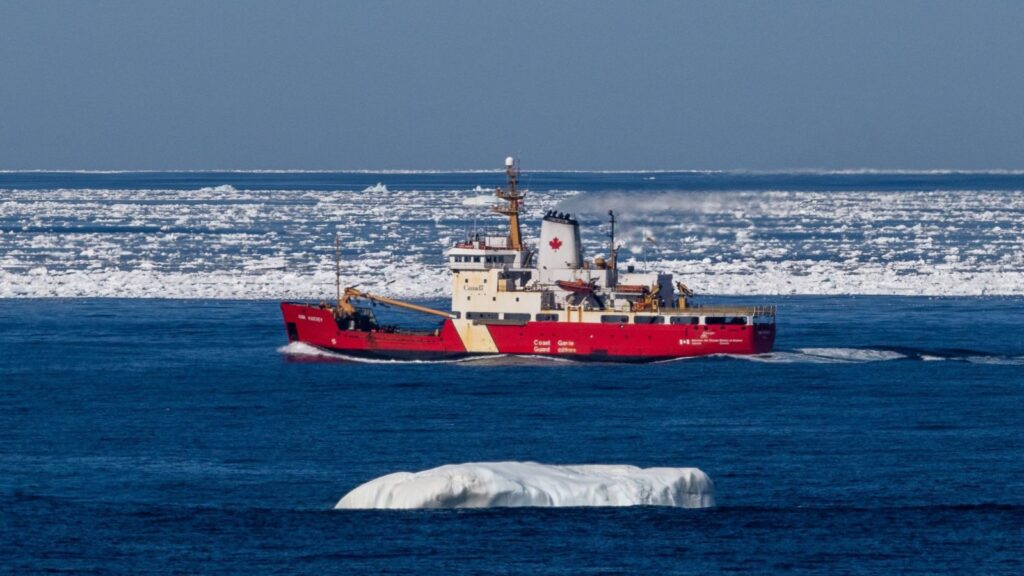
Canada’s push to reduce its dependence on U.S.-bound trade is gaining a northern route. On October 26, Arctic Gateway Group, CentrePort Canada and DP World (Canada) signed a memorandum of understanding to explore an integrated trade corridor connecting the Port of Churchill, the Hudson Bay Railway, Winnipeg’s inland logistics network and DP World’s international operations.
The agreement does not yet commit billions of dollars, guarantee new shipping services or turn Churchill into a year-round port overnight. What it does is bring together three pieces Canada has been trying to connect: Prairie production, an Arctic ocean gateway and a global logistics operator. With grain already moving through Churchill again and new European partnerships taking shape, the deal gives Western Canadian exporters another route to test as trade with markets outside the United States becomes a larger national priority.
The Agreement Links Churchill, Winnipeg and a Global Logistics Network
The October 26 memorandum is built around a relatively simple idea: make existing infrastructure work as one corridor instead of as separate assets. Arctic Gateway Group owns and operates the Port of Churchill and Hudson Bay Railway. CentrePort Canada provides the inland logistics hub near Winnipeg, where rail, trucking and air cargo networks intersect. DP World brings port operations, freight forwarding and international logistics connections that stretch well beyond Canada.
One important distinction is that the Government of Canada did not sign the MOU. The signatories are Arctic Gateway Group, CentrePort Canada Inc. and DP World (Canada) Inc. Ottawa has nevertheless backed the concept publicly, with Transport Minister Steven MacKinnon describing it as an opportunity to connect northern, inland and global transportation networks. That makes the agreement commercially led but closely aligned with federal efforts to diversify trade routes and expand Canada’s access to overseas markets.
Why Canada Wants More Trade Options Beyond the United States
The United States remains Canada’s dominant export market, so “diversification” does not mean replacing the American relationship. It means reducing the risk of having too much trade depend on one border, one set of tariffs and one political relationship. Statistics Canada reported that the U.S. share of Canadian merchandise exports fell from 75.9% in 2024 to 71.7% in 2025, while exports to countries other than the United States rose 17.2%.
That shift continued to show up in 2026 data. In August, non-U.S. destinations accounted for 30.2% of Canadian merchandise exports, even after that share declined from a record-high July. A northern route will not transform those numbers by itself, but Churchill offers exporters another way to reach Europe, the Middle East and other markets. For grain growers, mining companies and resource producers, the value is less about abandoning established U.S. customers than gaining bargaining power and additional logistics choices.
CentrePort Gives the Arctic Corridor a Prairie Logistics Hub
Churchill’s commercial potential depends on getting cargo to the coast efficiently, and that is where CentrePort Canada becomes central to the new plan. The Winnipeg-area inland port covers roughly 20,000 acres and says more than 1,000 companies are located there. It combines truck, rail and air cargo access, giving shippers a place to consolidate goods before they move north, east, west or south.
CentrePort already markets four trade directions from Manitoba: the Arctic gateway through Churchill, the Mid-Continent route toward the United States and Mexico, the Asia-Pacific gateways through British Columbia and eastern routes through ports such as Montreal and Halifax. Linking that network more deliberately to Churchill could make the Arctic route easier to use for companies that do not want to build their own northern logistics systems. In practical terms, the MOU is trying to turn Churchill from a distant port into one endpoint of a broader Prairie distribution network.
DP World Adds Something Churchill Has Never Had at This Scale
DP World changes the character of the partnership because it is not simply another Canadian infrastructure owner. The Dubai-based logistics group operates across 85 countries on six continents and connects its Canadian terminals to hundreds of logistics offices worldwide. In Canada, its marine footprint includes Vancouver, Fraser Surrey, Nanaimo, Prince Rupert and Saint John, with the Contrecoeur terminal in Quebec planned for the future.
That reach matters because developing a corridor is not only about having tracks, docks and storage. Exporters also need customers, shipping services, documentation, freight forwarding and reliable handoffs between inland and marine transportation. DP World says it has invested about $1.7 billion in Canadian port and logistics infrastructure since 2006 and handled more than 20 million loaded twenty-foot-equivalent units over that period. Still, the Churchill MOU is exploratory: no project-specific DP World investment, construction budget or guaranteed cargo volume was announced with it.
Churchill Is Starting to Prove There Is Cargo for the Route
The timing of the agreement is important because Churchill is no longer being discussed only as a future concept. At the end of August, the port loaded about 30,000 tonnes of Canadian durum wheat for Europe, its first grain export since 2020. Arctic Gateway Group said two additional grain vessels were expected during the 2026 shipping season under a new relationship with Saskatchewan-based AGT Foods.
This year has also brought zinc concentrate, Manitoba-produced potash and northern resupply traffic through the port, producing what Arctic Gateway Group has called the most diversified shipping season in Churchill’s history. The port has simultaneously been building international relationships. In March, it signed a cooperation agreement with Port of Antwerp-Bruges International, and in September it announced another agreement with the Port of Rotterdam focused on critical minerals, energy products and Western Canadian trade with Europe. Those developments give the DP World deal a base of actual cargo activity rather than pure speculation.
Indigenous and Northern Ownership Is Built Into the Corridor
Churchill’s ownership structure makes this trade project different from most major Canadian port developments. Arctic Gateway Group is owned through OneNorth by 41 Indigenous and northern communities, including 29 First Nations. The group owns the Port of Churchill, the Hudson Bay Railway and the Churchill Marine Tank Farm, putting local and Indigenous shareholders directly inside the commercial structure rather than treating them only as outside stakeholders.
That model emerged after the railway and port changed hands in 2018, following years of instability and the catastrophic 2017 flooding that severed rail service to Churchill. Federal support helped restore the line and facilitate the transition to community ownership. Today, the same infrastructure serves two purposes: it is a potential export corridor and an essential transportation link for northern residents. Ottawa says the railway remains the only year-round surface transportation option for several remote communities, meaning commercial expansion has to coexist with passenger, resupply and community needs rather than simply maximizing freight throughput.
The Biggest Obstacles Are Still Rail Capacity, Cost and Seasonality
The new agreement does not erase Churchill’s physical constraints. The Hudson Bay Railway stretches more than 1,000 kilometres from The Pas to Churchill and operates through remote terrain that is expensive to maintain. Transport Canada has acknowledged the corridor’s high infrastructure costs and limited Arctic shipping season, while Arctic Gateway Group is continuing bridge work, track rehabilitation and engineering aimed at bringing parts of the railway up to modern industrial weight standards.
Public money is already substantial. In March 2025, Ottawa announced $175 million over five years, including $125 million for Hudson Bay Railway operations and maintenance and $50 million for Port of Churchill pre-development work. Federal briefing material says Canada has invested more than $320 million in the railway and port since 2018, while Manitoba has committed more than $140 million in corridor upgrades since 2022. None of that removes the need for additional private capital if traffic grows materially. The DP World MOU itself announced no new dollar commitment.
A Longer Shipping Window Creates Opportunity, but Not Simplicity
Sea ice remains one of the defining commercial limits on Churchill. Environment and Climate Change Canada’s climate normals put the median shipping season in northwestern Hudson Bay at roughly early July to mid-November, while Hudson Strait is typically navigable from around the start of July to the end of November. Academic research has documented a longer open-water season over recent decades, a trend associated with warming and declining sea ice.
That change can improve shipping access, but it does not make Arctic logistics routine. Ice conditions remain variable, specialized vessels can be required and ecological consequences become more important as vessel traffic grows. Governments and Arctic Gateway Group said in August that recent studies found year-round operations could be technically possible with existing ice-class ship technology. Even so, the next steps include planning, Indigenous and rights-holder consultation, environmental assessment and decisions about dedicated icebreaking. A commercially reliable four-season corridor therefore remains a development objective, not a capability the port can simply assume today.
The Real Test Is Whether the MOU Turns Into Recurring Trade
Churchill is now part of a much larger national infrastructure strategy. The federal Major Projects Office lists Port of Churchill Plus as a transformative initiative built around four major elements: a modernized railway, an all-weather road, marine icebreaking capacity and a new energy corridor. Ottawa has also launched market-sounding work on expanded use of the port, while Manitoba is promoting the corridor as a platform for investment in agriculture, minerals, energy, logistics and northern resupply.
The DP World agreement can help connect those ambitions to commercial operators and customers, but an MOU is only a starting point. The strongest evidence will be recurring cargo, long-term shipping contracts, private investment and infrastructure upgrades that lower the cost and uncertainty of using Churchill. If those pieces come together, Western Canadian producers could gain a meaningful second direction for overseas trade through Hudson Bay. If they do not, Churchill may remain strategically interesting but commercially limited. The agreement matters because it creates a credible path to test which outcome is possible.
