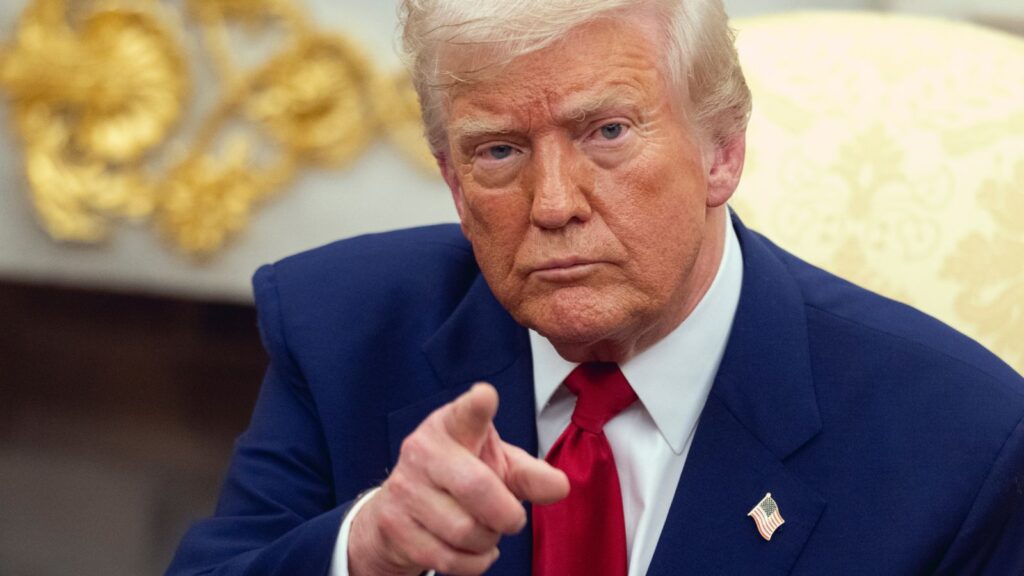
The outcome of America’s upcoming midterm elections could reshape Washington’s political landscape, but Canadian businesses hoping for relief from Donald Trump’s tariffs may be disappointed. Even if Democrats win control of Congress, experts warn that the president could retain considerable power over trade policy, leaving Canada’s exporters and manufacturers facing continued uncertainty.
With Americans heading to the polls on November 3, attention is turning toward whether a Democratic victory could soften Washington’s increasingly protectionist approach. Andreas Schotter, an international business expert at Western University’s Ivey Business School, cautions that political change in Congress should not be mistaken for an immediate improvement in Canada-U.S. trade relations. From automotive manufacturing to steel exports and the future of the Canada-United States-Mexico Agreement (CUSMA), the economic consequences could extend well beyond election night.
Democratic Control of Congress Would Not Mean an End to Trump’s Tariffs
A Democratic victory in the November midterm elections could fundamentally change how Washington responds to Trump’s trade decisions, particularly if the party gains control of both the House of Representatives and the Senate. Democratic lawmakers could launch investigations, hold congressional hearings and increase scrutiny of the administration’s tariff policies. However, those powers would not automatically eliminate existing trade restrictions or prevent the president from exercising authority already granted under federal law.
Schotter emphasizes that Canadians should distinguish between a change in congressional leadership and a change in the presidency. Trump would remain in the White House regardless of the election’s outcome, retaining significant influence over American trade negotiations. Even a Democratic majority in both chambers would face considerable obstacles in reversing his policies. For Canadian companies that have spent months navigating unpredictable trade conditions, the election could bring a more sympathetic political audience without providing the immediate financial relief they need.
Congress Has Given Presidents Considerable Authority Over Trade
Under the U.S. Constitution, Congress holds responsibility for regulating foreign commerce and imposing tariffs. However, decades of legislation have transferred significant trade-related powers to the executive branch. Section 232 of the Trade Expansion Act of 1962 allows the president to impose import restrictions on national-security grounds following a Commerce Department investigation. Section 301 of the Trade Act of 1974 provides another mechanism for addressing certain unfair foreign trade practices. These authorities allow the president to act without obtaining congressional approval for every individual tariff decision.
The limits of other institutions became particularly clear in February 2026, when the U.S. Supreme Court invalidated Trump’s use of the International Emergency Economic Powers Act to impose certain tariffs. Nevertheless, the administration continued using alternative legal authorities. An October Congressional Research Service report documented ongoing tariff actions under several statutes, while the White House announced further changes to duties covering Canadian products, effective October 30. Even successful legal challenges, therefore, do not necessarily eliminate every trade barrier facing Canadian exporters.
Trump’s Presidential Veto Could Block Efforts to Reverse Tariffs
Even if Democrats secure majorities in both congressional chambers, eliminating existing tariffs through legislation could prove extremely difficult. Any bill designed to restrict presidential tariff powers would generally need approval from both the House and Senate before reaching the president. Trump could veto legislation that undermines his trade strategy, forcing lawmakers to assemble a two-thirds majority in each chamber to override his decision. Such a threshold would almost certainly require substantial Republican cooperation.
William Alan Reinsch, a trade specialist at the Center for Strategic and International Studies, expects a Democratic-controlled chamber to produce additional trade proposals, hearings and congressional debate. However, he cautions that major legislative victories would remain difficult without enough votes to overcome a presidential veto. Democratic lawmakers could investigate how tariffs are implemented, question administration officials and highlight their economic consequences. Those activities might eventually influence negotiations, but they would not independently reduce the duties American importers pay on Canadian goods.
American Protectionism Extends Beyond the Republican Party
Canada’s trade difficulties are not simply a dispute between Ottawa and Republican politicians. Protectionist policies have gained support across the American political spectrum, particularly in industries concerned about foreign competition, manufacturing employment and national security. Former Democratic President Joe Biden maintained many tariffs introduced during Trump’s first administration and increased others. In 2024, his administration raised the Section 301 tariff on Chinese electric vehicles from 25% to 100%, demonstrating the willingness of Democratic leaders to use trade barriers to protect strategic industries.
Although tariffs targeting China differ significantly from those imposed on Canada, the broader political lesson remains important. Schotter notes that certain American industries benefit from protection against Canadian competitors, giving their political representatives little incentive to support unrestricted trade. Steel producers, for example, may favour measures designed to limit competing imports. The Council on Foreign Relations similarly warns that tariffs create groups with an economic interest in preserving them. Consequently, a Democratic majority could remain divided over which restrictions should disappear and which should continue protecting American businesses.
Canada’s Auto Industry Faces Some of the Greatest Economic Risks
Few industries demonstrate the economic stakes of the tariff dispute more clearly than automotive manufacturing. Canadian and American manufacturers operate deeply interconnected supply chains, with components sometimes crossing the border multiple times before a finished vehicle reaches a dealership. According to the U.S. Congressional Research Service, approximately 90% of Canadian automotive-goods exports went to the United States in 2025. Canada’s automotive industry also supports more than 125,000 direct jobs, making continued trade uncertainty particularly significant for manufacturing communities in Ontario.
Under current Section 232 arrangements, CUSMA-compliant vehicles generally face a 25% tariff on their non-U.S. content, while qualifying automotive parts remain exempt. Those distinctions matter enormously to manufacturers that depend on components from both countries. Schotter argues that Canada should emphasize how tariffs undermine American manufacturers’ competitiveness, rather than focusing exclusively on the damage inflicted on Canadian companies. Higher costs for Canadian components can affect American assembly plants, suppliers and vehicle buyers. That shared economic exposure could become one of Canada’s strongest arguments for tariff reductions, regardless of which party controls Congress.
Steel and Aluminum Tariffs Could Prove Particularly Difficult to Reverse
Canada’s steel and aluminum industries face another complicated challenge because the United States has justified major import restrictions under national-security legislation. Section 232 tariffs cover numerous metal products and derivatives, with rates varying by product classification and other conditions. Many Canadian steel exports have faced duties of 50%, placing substantial financial pressure on producers. Reuters reported in October that Canadian steel shipments to the United States had fallen approximately 60% after the tariff increases, prompting manufacturers to pursue additional customers within Canada.
For workers and businesses, the consequences extend beyond export statistics. Canadian steel producers must compete for domestic orders while adjusting to diminished access to their traditional American market. Meanwhile, American manufacturers that depend on imported metals may face higher production costs. Diplomatic negotiations have offered some hope, although progress remains uncertain. On October 28, Reuters reported that discussions aimed at easing steel and automotive tariffs were continuing, but a Canadian government official characterized the progress as limited. Democratic gains in Congress might increase pressure for a compromise, yet national-security arguments could continue shaping Washington’s decisions.
The Future of CUSMA May Matter More Than the Election Itself
The ongoing review of CUSMA represents one of the most consequential uncertainties facing Canada’s economy. The agreement, which replaced NAFTA in July 2020, underwent its first mandatory six-year review on July 1, 2026. During that process, the United States declined to renew the agreement in its existing form, while Canada and Mexico supported extending it. Importantly, Washington’s decision did not terminate CUSMA. The agreement remains legally in force, with annual reviews required and a scheduled expiration in 2036 unless the countries agree to extend it.
A Democratic Congress could seek greater stability and influence American negotiating priorities, particularly through committee oversight and consultation requirements established under U.S. law. However, any substantial revisions could involve difficult disagreements over labour protections, automotive manufacturing rules and access to protected industries. Schotter identifies the agreement’s future as an area where Democratic gains might produce meaningful changes over time. For Canadian manufacturers considering multimillion-dollar investments, the central concern extends beyond current tariffs. Businesses need confidence that cross-border trading rules will remain predictable long enough to justify new factories, equipment and employment.
Democrats Would Bring Their Own Demands to Trade Negotiations
Although Democrats may favour a less confrontational relationship with Canada, they have already outlined substantial demands for reforming North American trade. In May 2026, Democratic members of the House Ways and Means Committee urged the Trump administration to strengthen labour protections, environmental enforcement and economic security during the CUSMA review. They also emphasized reducing the offshoring of American jobs and ensuring that trade agreements deliver meaningful benefits to domestic workers. Democratic senators have similarly called for tighter rules addressing manufacturing and foreign investment.
These priorities could create both opportunities and challenges for Canadian negotiators. Stronger labour protections and more reliable regional supply chains may align with Canada’s economic interests. However, tougher rules governing where goods are manufactured and how they qualify for preferential treatment could also increase compliance costs. Canadian automotive suppliers, for instance, might face additional documentation or sourcing requirements if rules of origin become more restrictive. A Democratic majority could therefore shift the emphasis of trade negotiations without necessarily making them easier. Cooperation on broad principles would still leave difficult decisions about market access, investment and industrial competition.
Trade Uncertainty Is Already Changing Canadian Investment Decisions
For Canadian businesses, the damage caused by unpredictable trade policy extends far beyond individual tariff payments. Manufacturers must make decisions about factory expansions, equipment purchases and employment years before those investments generate returns. A July 2026 KPMG survey of 275 Canadian manufacturers found that 57% had paused, reduced or cancelled capital spending because of economic uncertainty and trade threats. The same survey found that 42% had either moved some production to the United States or were considering doing so.
More recent research suggests these pressures have continued. The Bank of Canada’s third-quarter Business Outlook Survey found that responses collected after Canada-U.S. trade negotiations collapsed in August showed weaker expectations for export sales and investment. Businesses reported postponing projects, adjusting supply chains and, in some cases, reducing production capacity. Some considered those responses temporary, while others were making longer-term changes. These decisions carry consequences for workers, suppliers and communities that depend on manufacturing employment. Even if a Democratic Congress eventually encourages more predictable trade relations, investments lost during prolonged uncertainty may not automatically return to Canada.
Canada Cannot Afford to Depend on American Election Results
For Ottawa, the strongest argument for tariff relief may be demonstrating how trade barriers also hurt Americans. An August Council on Foreign Relations–Morning Consult poll, published in October, found that 56% of respondents considered Canada a fair trading partner. Yet only 28% believed the next American president should eliminate all tariffs on Canadian goods. That contrast illustrates the political challenge: positive attitudes toward Canada do not necessarily translate into widespread support for unrestricted trade. Canadian negotiators must demonstrate how tariffs affect American businesses, workers and consumers, rather than relying exclusively on arguments about Canadian economic losses.
The costs of prolonged confrontation are already substantial. Canada’s Parliamentary Budget Officer estimated in October that trade measures introduced since early 2025 could leave Canada’s real GDP 1.4% lower after five years compared with a pre-tariff baseline, assuming the measures persist. Prime Minister Mark Carney has established a goal of doubling Canadian exports outside the United States this decade, although developing alternative markets cannot immediately replace deeply integrated American customers. Regardless of which party controls Congress, Canada’s prospects for lasting tariff relief will depend on economic leverage, negotiations and long-term competitiveness rather than American election results alone.
