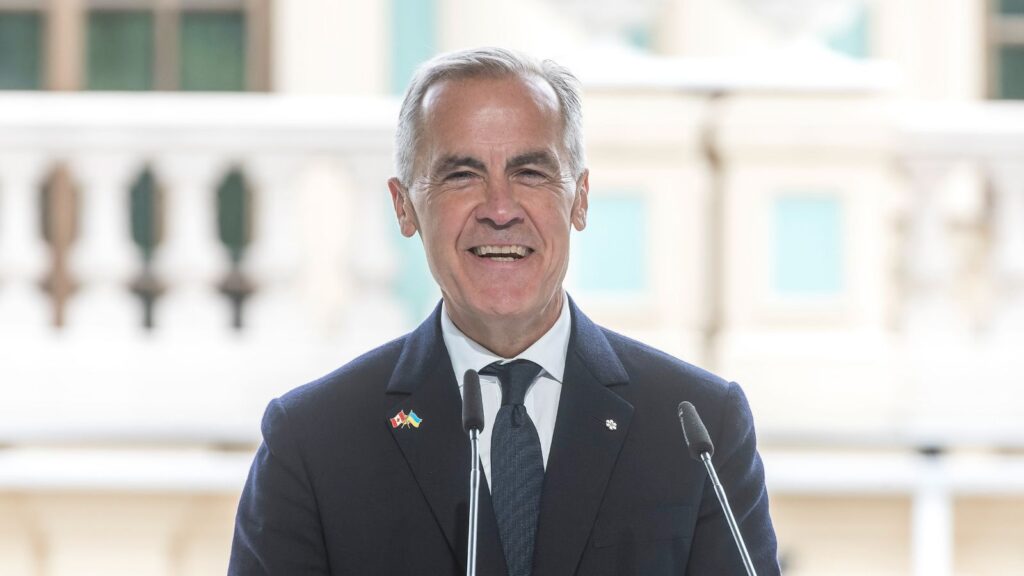
For years, Canada’s economic security rested on the assumption that the U.S. border would remain a predictable route to customers and investment. Under President Donald Trump’s renewed tariffs and trade confrontations, Ottawa is putting money behind a different proposition: strategic projects built in Canada should also create financial wealth for Canadians.
Prime Minister Mark Carney’s proposed $25-billion Canada Strong Fund would buy stakes in domestic projects and growing companies, investing alongside private partners rather than simply awarding subsidies. The initiative was first announced in April 2026, but the November 5 federal budget brought its design into sharper focus. From infrastructure and critical minerals to technology startups, the government wants public capital to help build an economy less exposed to Washington’s decisions. The promised returns, however, remain to be earned.
A $25-Billion Plan, Not a $25-Billion Cheque
The Canada Strong Fund is the centrepiece of a shift in how Ottawa wants to support large projects. Prime Minister Mark Carney first announced it on April 27, 2026, and the November 5 federal budget put more of its operating plan on paper. The government intends to contribute $25 billion over three years, beginning in the 2026-27 fiscal year. That is initial capital for investments, not a claim that $25 billion has already been handed to companies or spent in a single budget year.
Ottawa describes it as Canada’s first national sovereign wealth fund, intended to grow by reinvesting returns and potentially receiving other federal assets. Think of it less as a conventional spending program and more as a public investor seeking ownership in businesses and infrastructure. Whether that distinction proves meaningful will depend on what is bought, how much is paid, and whether the eventual returns justify the financial risks taken on behalf of Canadians.
What “Canada-Only” Actually Means
The geographical restriction is unusually clear: Budget 2026 says the fund will invest exclusively in Canada. Its capital is meant for Canadian companies and domestic nation-building projects rather than overseas stocks, foreign property or infrastructure abroad. For a government worried about economic sovereignty, keeping the investment destination at home is central to the message. The idea is that a Canadian mine, energy corridor or manufacturer should be able to attract capital without Canadians surrendering every opportunity to share in its success.
That does not mean shutting foreign investors out of the country. Ottawa explicitly expects the fund to invest alongside private partners, including international investors participating in Canadian projects. Canada’s international economic ties remain substantial: Global Affairs Canada reported $93 billion in foreign direct investment entering Canada in 2025. The policy distinguishes where the public fund invests from who may help finance a project. Economic independence, in this design, means greater Canadian participation in ownership, not an end to cross-border business.
Ottawa Wants a Stake, Not Just a Subsidy
Governments have long helped projects through loans, tax measures and direct contributions. The Canada Strong Fund is designed to add something different: an ownership position that can produce a financial return when the underlying company or project performs well. Budget documents say it will generally take minority stakes and invest on the same commercial terms as private partners. In principle, taxpayers gain exposure to potential upside rather than only providing support while someone else collects the profits.
Consider a power project requiring years of construction before it earns revenue. A public co-investor could commit capital alongside a private firm and share in future returns if the venture succeeds. But equity also involves risk: ownership can lose value, and a worthwhile public objective does not automatically make an investment profitable. Ottawa says the fund will seek market-rate returns. That standard matters because the government’s economic ambitions and its responsibility to protect public capital will not always point to the same decision.
Two Investment Routes Are Planned
Budget 2026 sets out two ways the fund could find opportunities. The first is co-investment tied to projects already receiving federal support, such as financing from the Canada Infrastructure Bank or assistance through the Strategic Response Fund. Where appropriate, the fund would assess whether to take a minority position alongside commercial partners. A separate public program might help overcome a financing barrier; the Canada Strong Fund would then decide whether an investment meets its own financial test.
The second route is direct strategic investment in promising Canadian companies or projects, without requiring the same kind of existing federal financing arrangement. The budget illustrates the approaches using hypothetical hydroelectric, mining-infrastructure and agricultural-technology transactions. Those examples explain how a deal might work, not where the $25 billion has already been allocated. That difference is important. A project appearing in a federal budget or being reviewed by the Major Projects Office is not automatically an approved investment by the new fund.
Energy, Minerals and Technology Are in Focus
Ottawa has identified clean and conventional energy, critical minerals, transportation, agriculture, infrastructure and advanced manufacturing as potential areas of investment. The economic case is easy to see at ground level. A mine may need a road or power connection before production can begin; a port expansion may need financing well before additional export revenue arrives. Such projects can affect construction crews, equipment suppliers and entire communities long before the first commercial return is recorded.
The government also wants room for high-growth businesses. Budget 2026 points to Ottawa’s separate commitment to buy equity in Canadian artificial-intelligence company Cohere as an illustration of the kind of transaction the fund could eventually pursue. It does not say Cohere has already received money from the Canada Strong Fund. The broader ambition is to help Canadian firms scale without assuming that their next major financing round must shift strategic ownership or economic activity outside Canada.
Trump’s Trade War Gives the Strategy Urgency
The economic backdrop is not theoretical. Statistics Canada reported that the United States accounted for 71.7% of Canadian merchandise exports in 2025, down from 75.9% a year earlier. Exports to the U.S. fell 5.8% that year, while shipments to other countries increased. In a country where a factory’s largest customer may be across the border, a change in tariffs or market access can quickly turn a promising investment plan into a difficult financing decision.
The November 5 budget explicitly frames greater domestic capacity and diversified trade as responses to Washington’s more protectionist approach. Statistics Canada’s October 2026 review also found continued growth in merchandise exports to non-U.S. countries during the first half of 2026. The fund cannot replace American customers or negotiate away tariffs. What it could do is help finance Canadian production, infrastructure and technology that allow exporters to reach more markets and make the economy less vulnerable to a single trading partner.
Ordinary Canadians Could Buy Canada Strong Notes
One of the most distinctive proposals is aimed beyond pension funds and wealthy investors. The government intends to introduce Canada Strong Notes in 2027, letting individuals participate in the fund’s performance through participating financial institutions. Budget 2026 says the notes are intended to protect the amount initially invested and offer a coupon payment, with additional participation in returns. That could give households a connection to large national investments that usually operate far from everyday savings accounts.
Important details still matter. Ottawa has not presented the notes as an investment product available for purchase today, and the final terms, returns and purchasing arrangements are not yet fully set out. Finance Canada’s public information includes a fraud warning about advertisements, QR codes and unsolicited approaches falsely offering access to the fund. Canadians interested in the idea should distinguish the government’s planned product from existing investment pitches using a similar name. The fund’s commercial investment risks and a noteholder’s promised principal protection are separate questions.
Investment Decisions Are Supposed to Be Independent
A fund built around national priorities faces an unavoidable governance question: who gets to decide which businesses deserve money? Budget 2026 proposes an arm’s-length, standalone Crown corporation with its own board and chief executive. Before legislation establishing that structure is brought forward, the fund is to be incorporated as a wholly owned subsidiary of the Canada Development Investment Corporation. The government says it intends to introduce the necessary legislation in the coming months.
That separation is more than an organizational detail. Major projects often attract political attention, especially when jobs, regional interests and election promises are involved. Professional investment management is meant to prevent commercial decisions from becoming a contest over which constituency has the loudest advocate. But arm’s-length status alone cannot establish accountability. Canadians will still need to know how investments are evaluated, how conflicts of interest are handled, what performance is reported and who bears responsibility when a high-profile project struggles.
The Fund Must Fit Into an Already Crowded System
Canada is not starting from a blank page. The Canada Infrastructure Bank finances infrastructure, the Business Development Bank of Canada supports businesses, and Export Development Canada helps companies compete internationally. Other federal financing and guarantee programs are involved in resources, Indigenous ownership and industrial development. The Canada Strong Fund is intended to complement those institutions rather than reproduce every loan, guarantee or grant they already provide.
The budget’s co-investment model offers one practical distinction. A federal lender might help a project get built by offering debt financing, while the new fund might take a minority equity interest beside private investors. The government has also signalled that it will review mandates across its financing institutions to reduce overlap. For a Canadian entrepreneur or project developer, clear rules will matter more than the number of federal logos attached to a proposal. Too many overlapping approvals could slow down the very investments Ottawa says it wants to accelerate.
A Big Promise Comes With Financial Risks
The fund is arriving alongside substantial fiscal pressures. Budget 2026 forecasts a federal deficit of $62.3 billion for 2026-27 and real economic growth of 1% in 2026. The $25-billion capitalization is an investment and cash-financing commitment spread across three years, not simply an extra $25-billion line of annual operating expenses. That accounting distinction does not make it free. The Parliamentary Budget Officer has noted that the fund requires additional borrowing and that associated interest charges affect the budget balance.
Success will require more than announcements and groundbreaking ceremonies. The public should eventually be able to see what the fund owns, how much additional private capital was attracted, what risks were taken and whether returns are competitive. Projects will also need the labour, approvals and customers required to operate. Carney’s proposal could give Canadians a larger financial stake in their country’s growth, but the real measure of independence will be whether those investments create durable economic capacity without leaving taxpayers with losses they were never clearly told to expect.
