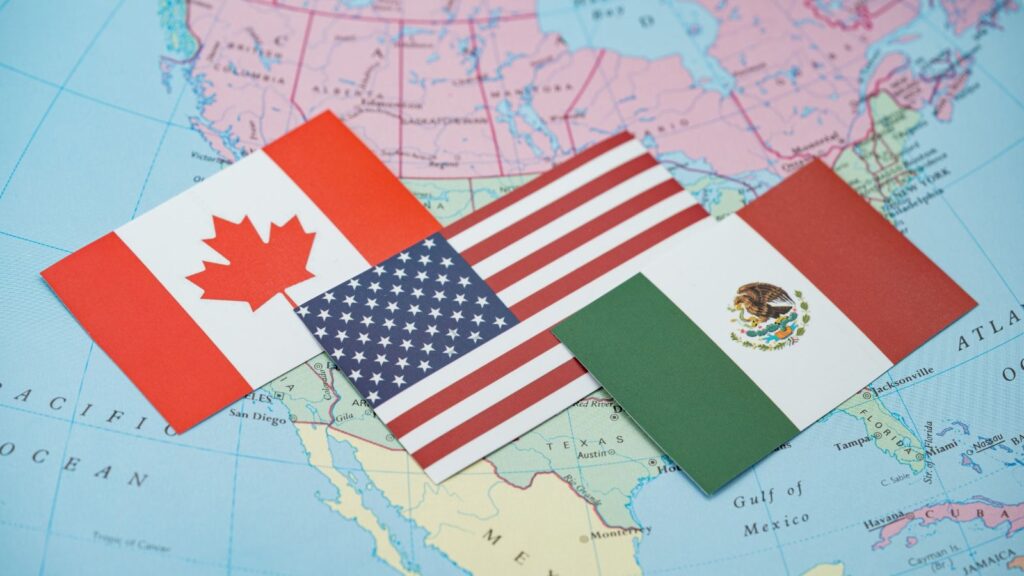
A powerful voice in Washington is preparing to challenge President Donald Trump’s trade policies, offering Canada a potential ally as uncertainty hangs over North America’s economic future. Democratic Representative Richard Neal, who is expected to reclaim leadership of the influential House Ways and Means Committee in January 2027, has pledged to fight what he describes as unjustified tariffs while keeping Canada and Mexico inside the Canada-United States-Mexico Agreement (CUSMA).
His position comes after Democrats secured control of both chambers of Congress in the November midterm elections, creating new opportunities to scrutinize Trump’s trade decisions. For Canadian manufacturers, exporters and workers, the shift could bring greater political support in Washington. However, reversing existing tariffs will require overcoming significant legal and political obstacles, including the president’s veto power.
Richard Neal Prepares to Reclaim a Powerful Position in Washington
Richard Neal, a longtime Democratic congressman from Massachusetts, is positioned to become one of the most influential figures shaping American trade policy. The House Ways and Means Committee oversees taxation, tariffs and major trade legislation, giving its chair considerable influence over the country’s economic relationship with international partners. Neal previously led the committee and is expected to regain that position when the new Congress begins its work in January 2027, although leadership appointments have not yet been finalized.
Speaking at a November 6 trade conference hosted by former U.S. Trade Representative Katherine Tai, Neal criticized the Trump administration’s approach to international commerce. He argued that unpredictable tariffs and opaque trade negotiations were contributing to higher living costs and economic inequality. Rather than treating tariffs as permanent tools of political pressure, Neal emphasized transparent decision-making and policies that benefit working families. His remarks suggest that trade oversight could become a major priority for the incoming Democratic majority, including closer examination of the economic consequences of tariffs imposed on Canada.
Keeping Canada and Mexico in CUSMA Becomes a Central Priority
One of Neal’s clearest commitments concerns the future structure of North American trade. He identified keeping Canada and Mexico inside CUSMA as a priority, rejecting the idea that improving the agreement requires dismantling the three-country trading relationship. His position offers reassurance to industries that depend on established supply chains, including automotive manufacturing, agriculture, energy and industrial machinery. For businesses making long-term investment decisions, the continued participation of all three countries is a fundamental consideration.
Neal’s position also reflects a broader Democratic argument that trade agreements should be strengthened rather than abandoned. In May 2026, House Ways and Means Democrats, including Neal, urged the administration to preserve CUSMA’s trilateral structure while improving worker protections, environmental standards and enforcement. That distinction is important because supporting CUSMA does not necessarily mean opposing every proposed change. Neal has indicated that the agreement’s review process offers opportunities for improvement, suggesting that stronger continental trade relationships and tougher enforcement provisions can coexist.
The CUSMA Review Creates Uncertainty Without Ending Free Trade
CUSMA entered into force on July 1, 2020, replacing the North American Free Trade Agreement. Its structure includes a mandatory review after six years, allowing Canada, the United States and Mexico to evaluate the agreement and consider modifications. When the three countries conducted their first joint review on July 1, 2026, U.S. Trade Representative Jamieson Greer announced that Washington would not renew the agreement in its existing form. The decision created uncertainty, particularly for companies expecting a straightforward extension.
However, declining renewal is not the same as terminating CUSMA. The agreement remains legally in force, with its existing term running until July 2036 unless the parties take separate action to withdraw or otherwise end it. Under its review provisions, the three governments must conduct annual reviews until they agree to extend the agreement or its term expires. Neal’s support therefore arrives during an ongoing negotiation process, not after Canada’s removal. His challenge will be influencing how Washington approaches those discussions and whether congressional involvement can make future trade rules more predictable.
Trump’s Tariffs Have Complicated North America’s Trade Agreement
Although CUSMA provides preferential trading arrangements for qualifying goods, Trump’s tariff measures have exposed important limits to those protections. In July 2026, the administration announced additional 50% tariffs under Section 338 of the Tariff Act of 1930, targeting categories of Canadian products over alleged discrimination against American automobiles, alcohol and dairy. Those duties subsequently affected products including furniture, industrial machinery, electronics and certain building materials. Unlike some other tariff measures, the Section 338 duties apply to covered goods even when they satisfy CUSMA origin requirements.
The administration has defended its actions as necessary to protect American workers and respond to Canadian trade practices. Ottawa disputes elements of that justification and has introduced retaliatory measures. Meanwhile, separate Section 232 tariffs continue to affect sectors such as steel, aluminum and automobiles, with different exemptions and calculation rules. The result is a complicated trading environment in which a product can qualify under CUSMA yet still face substantial duties. For Neal, challenging these measures involves confronting both presidential trade decisions and the laws that authorize them.
Ontario’s Automotive Industry Has Billions Riding on the Outcome
Few industries demonstrate the importance of North American trade integration more clearly than automotive manufacturing. Ontario’s factories depend heavily on customers and suppliers across the American border, particularly in Michigan and surrounding manufacturing states. Federal economic development figures indicate that Ontario’s automotive manufacturing sector employs more than 95,000 workers. In 2025, approximately 96% of the province’s automotive exports, worth about $60 billion, were destined for the United States. Disruptions to this relationship can therefore affect communities where manufacturing jobs support entire local economies.
Consider a Windsor-area parts supplier producing components for an American assembly plant. The business may depend on predictable delivery schedules, stable material costs and uninterrupted access to its customers. Additional tariffs can complicate those arrangements, while uncertainty makes expansion decisions harder. The automotive sector also faces separate U.S. duties on vehicles, with special treatment for qualifying American content. Neal’s commitment to maintaining a three-country agreement could help protect the broader production network, but manufacturers would still need specific tariff relief before the economic pressure disappears.
Higher Trade Costs Are Affecting Businesses and Consumers
The economic relationship between Canada and the United States extends far beyond automotive factories. According to the U.S. Trade Representative, bilateral goods and services trade reached approximately US$872.3 billion in 2025. Statistics Canada reported that 71.7% of Canadian merchandise exports went to the United States that year. These commercial connections support farmers, equipment manufacturers, logistics providers, retailers and countless smaller businesses. When additional border costs emerge, companies must decide whether to absorb them, renegotiate contracts or pass some of the expense to customers.
The Bank of Canada’s October 2026 monetary policy assumptions illustrate how dramatically the trading environment has changed. The central bank estimated that the average U.S. tariff rate on Canadian goods reached 7.5%, compared with 5.0% in July. Approximately 80% of Canadian goods exports to the United States nevertheless remained tariff-free, showing that the burden is concentrated rather than universal. For affected businesses, however, even a limited tariff can disrupt pricing and investment plans. Neal’s emphasis on reducing unnecessary trade barriers reflects concerns about these broader economic consequences.
Democrats’ Midterm Victory Changes the Balance of Power
The November 3 midterm elections transformed the political environment surrounding Trump’s trade agenda. Democrats secured control of both the House of Representatives and the Senate, positioning the party to take over important congressional committees in January 2027. Reuters reported that Democrats had won at least 250 House seats and 54 Senate seats by November 6. The results provide Democratic lawmakers with greater opportunities to introduce legislation, organize hearings and demand explanations for decisions made by the administration.
For trade policy, the significance goes beyond which party controls congressional votes. Committee leadership determines which issues receive attention, which government officials face questioning and which proposals advance through the legislative process. With Neal expected to lead Ways and Means, tariff policy could receive more sustained scrutiny. Congressional hearings may also give manufacturers, labour representatives and economists opportunities to describe how trade restrictions affect their operations. Nevertheless, Democratic control does not automatically cancel presidential tariff orders. Any lasting changes will depend on legislation, negotiations, executive decisions or successful legal challenges.
Trump’s Veto Power Remains the Biggest Obstacle to Tariff Relief
Despite their congressional victory, Democrats cannot simply eliminate Trump’s tariffs through a majority vote. Most contested legislation in the Senate requires 60 votes to overcome procedural obstacles, while overriding a presidential veto requires a two-thirds majority in both chambers. With Democrats holding at least 54 Senate seats following the midterms, substantial Republican cooperation would be necessary for legislation facing unified opposition. Trump also retains authority under existing trade statutes, meaning a change in congressional leadership does not automatically alter tariffs already in effect.
These restrictions could shape Neal’s strategy considerably. Rather than relying exclusively on sweeping legislation, Democrats may pursue narrower proposals addressing specific tariffs, demand greater transparency from trade officials or pressure the administration through congressional investigations. Such actions could influence public debate and negotiations even without immediately changing the law. However, Republicans who support tariffs as a tool for protecting American manufacturing may resist broader restrictions. The ultimate outcome will depend on whether lawmakers can distinguish between trade measures they consider economically damaging and those they believe serve legitimate industrial or national security interests.
Senate Democrats Are Building Their Own Challenge to Canada Tariffs
Neal would not be acting alone. Oregon Senator Ron Wyden, who is expected to chair the Senate Finance Committee in January, has repeatedly criticized Trump’s tariffs on Canada and called for stronger congressional oversight of trade policy. In February 2026, Wyden argued that CUSMA had delivered important benefits to North American businesses and workers while expressing concern about the administration’s approach to enforcement. His support for the agreement provides another influential Democratic voice favouring a more stable continental trading relationship.
The legislative groundwork is already visible. Senate Democratic leader Chuck Schumer introduced the End Trump’s Tariff Tax Act in September, with Wyden among its original sponsors. The proposal seeks to terminate certain presidential tariffs and provide refunds of affected duties. Other Democrats have also targeted the legal authorities behind Canada’s tariffs. Michigan Senator-elect Abdul El-Sayed has expressed willingness to work with Trump to end the trade restrictions affecting Canada. Together, these developments suggest that pressure could emerge from both congressional chambers. Whether that pressure produces actual tariff reductions will depend on Republican support and the administration’s response.
Canada Welcomes Washington’s Shift but Faces Another Difficult Negotiation
Prime Minister Mark Carney has welcomed the emerging Democratic challenge to Trump’s tariffs without suggesting that Canada’s trade difficulties are resolved. Speaking in Winnipeg on November 6, he said efforts to restore free trade would benefit American families dealing with affordability pressures and workers seeking stable employment. His comments came after months of difficult negotiations, including Canada’s decision to suspend talks in August over American demands that Ottawa considered unacceptable on sovereignty, language and cultural protections.
Canadian officials are nevertheless maintaining their negotiating approach. Trade Minister Dominic LeBlanc said on November 4 that the midterm results would not significantly change Ottawa’s priorities, while indicating plans to engage senior American officials. Meanwhile, Washington’s trade review process continues, with public comments for the next CUSMA review due January 12, 2027. Neal’s anticipated committee leadership could give Canada additional support in Congress, particularly in defending CUSMA’s three-country structure. But political support is not the same as a negotiated agreement. The central challenge remains turning congressional opposition to tariffs into meaningful changes that restore certainty for businesses, protect jobs and preserve North America’s integrated economy.
