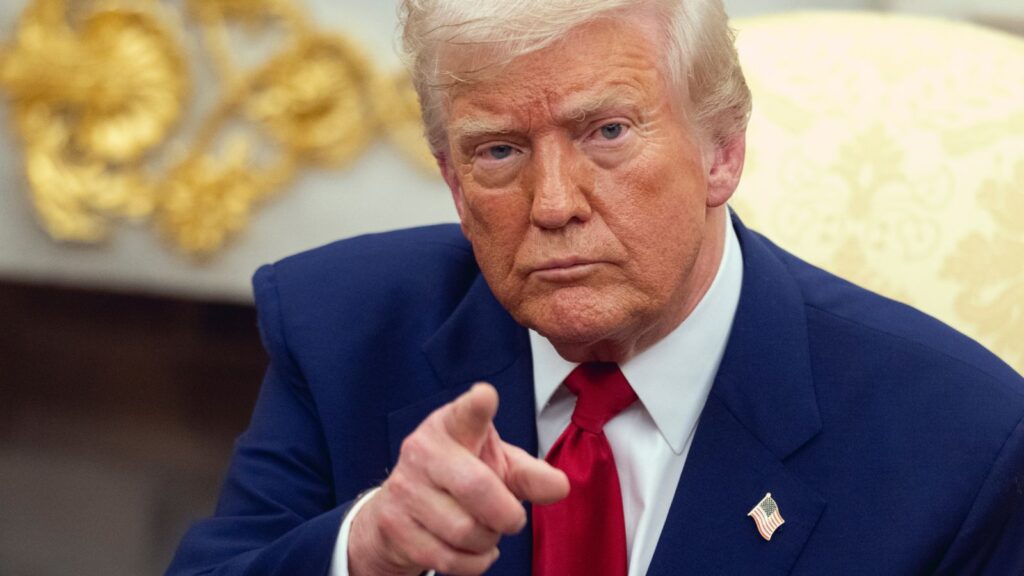
The political fallout from America’s midterm elections has reached the highest levels of the White House. On November 6, 2026, President Donald Trump announced that Stephen Miller, one of his most influential advisers and a leading architect of his immigration policies, would replace Susie Wiles as White House chief of staff, effective November 9.
The announcement came just three days after Republicans suffered sweeping electoral defeats, losing control of both chambers of Congress. Wiles, the first woman to hold the influential position, will move to Trump’s political operation. Although the president insists the decision was unrelated to the election results, Miller’s promotion suggests the administration is preparing for confrontation rather than compromise. With Democrats gaining congressional power and immigration enforcement facing growing public criticism, the leadership change could reshape the final two years of Trump’s presidency.
A Leadership Shake-Up Just Days After the Election
Trump’s announcement represented one of the most consequential personnel decisions of his second administration. In a statement published on Truth Social, the president described Miller as one of his most trusted advisers and confirmed that the transition would take effect on Monday, November 9. The White House subsequently identified Miller as its 33rd chief of staff. Wiles submitted her resignation on Thursday evening, according to reporting from the Associated Press and CBS News. Despite publicly praising her performance, Trump decided to move forward with an immediate leadership change rather than maintain the existing arrangement through the end of the year.
The circumstances surrounding the departure have attracted considerable attention. CBS News reported that Wiles had initially expected to remain through Congress’s lame-duck session, potentially departing in late 2026 or early 2027. Sources familiar with the decision connected her resignation to the Republican election defeats. Trump, however, offered a different explanation, insisting that the change was not a reaction to the midterms. He characterized it as a routine decision to change leadership. The competing accounts leave questions about what ultimately prompted the reshuffle.
Republicans’ Midterm Defeat Changes the Political Landscape
The November 3 midterm elections delivered a substantial setback for Republicans, fundamentally changing the balance of power in Washington. Democrats secured control of both the House of Representatives and the Senate, creating new obstacles for Trump’s legislative agenda. Reuters’ November 6 election tracker showed Democrats winning 250 House seats and holding 54 Senate seats, with some races still unresolved. The results represented a major reversal from the Republican-controlled Congress that supported much of Trump’s domestic agenda during the first half of his second term.
The political consequences extend beyond the number of seats lost. Republicans now face the prospect of Democratic committee leadership, investigations into executive branch activities, and tougher negotiations over spending and legislation beginning in January 2027. The results also raised difficult questions about which policies alienated voters and whether the administration needed a different political strategy. For Republican lawmakers representing competitive districts, the challenge will be particularly uncomfortable: maintaining a relationship with Trump while responding to constituents who voted for change. Miller’s appointment suggests the White House is preparing to defend its existing priorities rather than substantially revise them.
Stephen Miller’s Rise From Political Adviser to White House Power Broker
Stephen Miller’s promotion places one of Trump’s longest-serving political allies at the centre of the administration. The 41-year-old grew up in Santa Monica, California, and developed a reputation for outspoken conservative activism while attending Duke University. Before joining Trump’s political movement, he worked on Capitol Hill, including as an aide to former Republican Senator Jeff Sessions. His views on immigration restrictions were already well established before Trump’s first presidential campaign. Miller joined that campaign in January 2016, helping shape its political messaging before becoming a senior adviser and speechwriter during Trump’s first term.
Following Trump’s 2020 election defeat, Miller founded America First Legal, a conservative legal advocacy organization. When Trump returned to office in January 2025, Miller took on the roles of deputy chief of staff for policy and homeland security adviser. Those positions gave him substantial influence over immigration enforcement and domestic policy coordination. Unlike advisers whose influence depends primarily on public appearances or campaign strategy, Miller developed extensive experience navigating federal agencies and executive authority. His promotion brings that experience into the White House’s most senior staff position, strengthening the president’s reliance on an adviser whose policy priorities have remained remarkably consistent.
Immigration Enforcement Remains Miller’s Defining Political Priority
Immigration policy has shaped Miller’s reputation more than any other issue. During Trump’s first administration, he helped develop restrictions on immigration and supported the 2018 zero-tolerance border policy that contributed to widespread family separations. His influence became even more visible during Trump’s second term, when he helped coordinate an aggressive nationwide immigration enforcement campaign. Reuters reported that Miller pushed for a target of 3,000 immigration arrests per day, significantly above enforcement levels under previous administrations. The strategy encouraged federal authorities to pursue people living in the country without authorization, including individuals without criminal convictions.
The administration’s supporters argue that aggressive enforcement is necessary to restore immigration controls and fulfil Trump’s campaign promises. Critics contend that broad arrest operations have generated fear in communities and raised serious questions about civil liberties and enforcement priorities. Miller has also supported efforts to restrict birthright citizenship, a constitutional issue that has produced major legal confrontations. The Supreme Court rejected the administration’s attempt to end that protection in 2026. With Miller assuming the chief of staff position, immigration enforcement is likely to remain central to White House decision-making, even as the administration faces increased political and judicial scrutiny.
Immigration Policies Became a Political Liability in the Midterms
The election results exposed a growing divide between Trump’s immigration priorities and public opinion. According to the Associated Press Voter Poll conducted around the midterms, approximately six in ten voters believed the administration’s immigration enforcement actions had gone too far. A separate Reuters/Ipsos survey conducted from October 29 to November 2 found that just 36% of Americans approved of the immigration crackdown, while 54% disapproved. The same Ipsos survey placed Trump’s overall presidential approval rating at 32%, illustrating the broader political difficulties confronting the administration before voters headed to the polls.
Those figures help explain why Miller’s promotion has generated such intense debate. Immigration enforcement was not the only factor behind the Republican losses; rising living costs, economic uncertainty and concerns about presidential power also influenced voters. However, the administration’s approach appears to have weakened support among some groups that helped Trump return to office in 2024. Associated Press polling found that approximately one-third of Hispanic voters supported Republican House candidates in 2026, compared with roughly four in ten who supported Trump in the previous presidential election. For many households, immigration policy had become a question of community stability and personal security rather than simply border statistics.
Susie Wiles Leaves Behind a Different Style of White House Leadership
Susie Wiles entered Trump’s second administration with a reputation for political discipline and organizational skill. A veteran Republican strategist from Florida, she played an important role in his successful 2024 presidential campaign and was widely credited with helping establish a more structured operation. Her preference for avoiding public attention became particularly evident during Trump’s election-night celebration in November 2024, when she declined to speak into the microphone despite the president encouraging her to address supporters. That reserved approach distinguished her from several of Trump’s more outspoken political advisers.
Wiles subsequently became Trump’s longest-serving White House chief of staff, surpassing the tenure of the four individuals who held the position during his first administration. Her supporters credited her with maintaining order inside a political operation frequently characterized by competing personalities and shifting priorities. In announcing her departure, Wiles described serving in the White House as an extraordinary honour and expressed pride in the administration’s achievements. She also emphasized that her commitment to the president would continue despite the change in responsibilities. Her move to Trump’s political organization keeps an experienced strategist within his wider political circle, although her absence from daily White House management creates an important leadership transition.
Miller’s Influence Extends Far Beyond Immigration Policy
Although immigration enforcement has dominated Miller’s public reputation, his responsibilities have expanded across multiple areas of federal policy. Reuters reported that he was deeply involved in the administration’s efforts to reduce the federal workforce, an initiative associated with the dismissal of tens of thousands of government employees during 2025. He has also played an influential role in disputes involving universities, diversity initiatives, and federal anti-fraud programs. More recently, Miller reportedly worked alongside White House budget director Russell Vought on executive actions that could advance administration priorities without requiring new congressional legislation.
His views also extend into foreign policy and national security. Miller has publicly supported military strikes against vessels suspected of transporting illegal drugs and defended elements of Trump’s military strategy toward Iran. Those positions have attracted criticism over their legality, humanitarian implications and potential international consequences. Importantly, Miller’s influence does not give him independent authority to direct military operations or override federal law. However, his new position places him at the intersection of political strategy, domestic policymaking and national security coordination. That broad influence means the leadership change could affect considerably more than immigration enforcement, particularly as the administration considers how aggressively to pursue its remaining priorities.
Why the White House Chief of Staff Position Matters So Much
The White House chief of staff is one of the most powerful unelected positions in American government. The job typically involves coordinating senior advisers, managing presidential schedules, controlling access to the Oval Office, and helping determine which policy proposals receive the president’s attention. The White House identifies the chief of staff as the official overseeing the Executive Office of the President. Political science research published in Presidential Studies Quarterly in 2024 examined the role across nine presidencies and found that chiefs of staff play an important organizational function, even though their ability to change a president’s personal working habits may be more limited than commonly assumed.
For Miller, the promotion means moving from directing substantial portions of the domestic policy agenda to coordinating the wider White House operation. Decisions involving immigration enforcement, federal spending, congressional negotiations and executive orders may now pass through an adviser with particularly strong policy convictions. For example, disagreements between federal agencies about enforcement priorities or legal strategy could reach Miller before being presented to Trump. The president retains ultimate decision-making authority, but the chief of staff can substantially influence how competing proposals are organized, evaluated and communicated. Whether Miller uses that influence primarily to improve coordination or intensify policy confrontations will become increasingly important.
Democratic Lawmakers Prepare for a New Confrontation With the White House
Miller’s appointment has already triggered strong criticism from Democratic leaders preparing to take control of Congress. Representative Robert Garcia of California, who is expected to become chairman of the House Oversight Committee, has promised to scrutinize Miller’s role in the administration’s immigration policies. Garcia warned that the incoming chief of staff should prepare for investigations. House Democratic leader Hakeem Jeffries and Senate Democratic leader Chuck Schumer also condemned the appointment, arguing that it demonstrated Trump’s unwillingness to reconsider policies that had generated widespread public opposition. These statements represent political allegations and demands for accountability, not established findings of unlawful conduct.
Congressional oversight could become a central challenge for Miller. Democratic-controlled committees will be able to hold hearings, request government records and issue subpoenas under applicable congressional rules. However, those powers have legal limitations, including constitutional protections and potential executive privilege claims. Investigations involving presidential advisers may therefore lead to lengthy disputes over documents and testimony. Meanwhile, senior administration officials, including Vice President JD Vance and Secretary of State Marco Rubio, have publicly welcomed Miller’s appointment, emphasizing his experience and commitment to Trump’s priorities. The opposing reactions illustrate how sharply divided Washington has become, with the incoming chief of staff positioned at the centre of potentially significant institutional conflicts.
Trump’s Leadership Gamble Sets the Stage for His Final Two Years
The decision to promote Miller represents an important test of Trump’s political strategy following the midterm defeats. Rather than appointing an adviser known primarily for bipartisan negotiations, the president has selected someone whose career has been built around ideological consistency, loyalty and aggressive policy implementation. Reuters reported that some White House officials viewed the decision as evidence that Trump had no intention of fundamentally changing his governing agenda. Marc Short, who previously served as chief of staff to Vice President Mike Pence, also suggested that Miller’s appointment did not indicate strong prospects for bipartisan legislation. With Democrats taking congressional control in January, the administration may increasingly emphasize executive actions within the limits of presidential authority.
The consequences will become clearer as Miller assumes responsibility for managing competing political pressures, government agencies and White House personnel. His immediate challenges include maintaining administrative stability after Wiles’ departure, responding to congressional scrutiny and delivering policies that remain controversial with substantial portions of the electorate. For federal workers, immigrant families, businesses and communities affected by enforcement decisions, these are practical concerns rather than abstract political disputes. Ultimately, Miller’s success will depend not simply on his ability to defend Trump’s agenda, but on whether he can translate presidential priorities into effective governance while navigating a Congress increasingly determined to challenge the White House.
