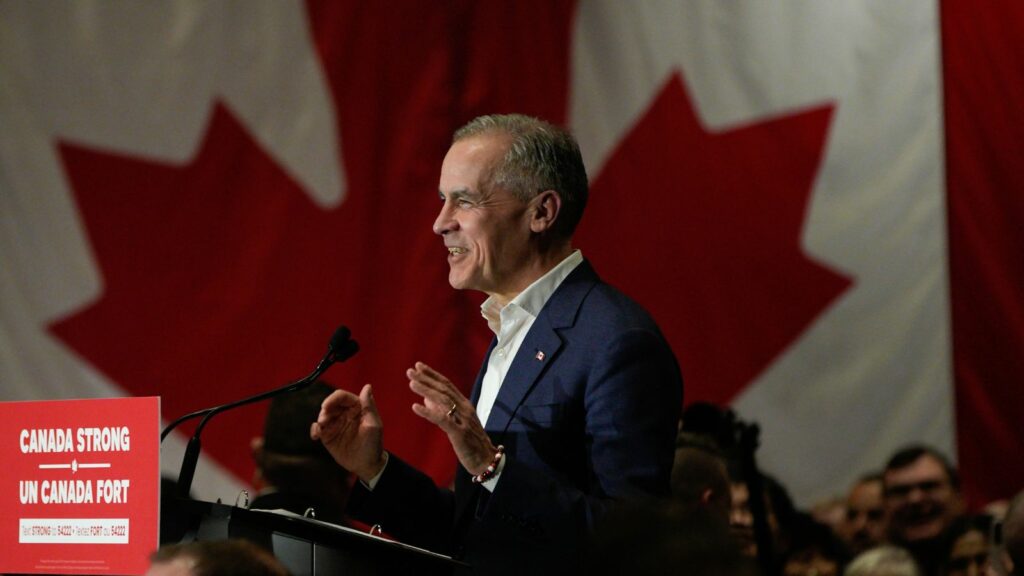
Canada’s housing market is facing another significant policy shift as Prime Minister Mark Carney’s government attempts to balance housing affordability with the need for new construction.
In its November 5, 2026 federal budget, Ottawa proposed extending restrictions on foreign purchases of existing residential properties until January 1, 2029, while introducing an exemption for newly built homes. The approach is designed to protect Canadian buyers from additional competition in the resale market while attracting international investment to help finance construction.
The proposal represents a notable change in how Canada approaches foreign participation in its housing market. However, the measures still require legislative and regulatory changes, leaving important questions about eligibility, implementation and their eventual impact on home prices.
Ottawa Wants to Extend the Ban Without Blocking New Investment
The centrepiece of the proposal is a two-year extension of the federal prohibition on foreign purchases of existing residential properties. Under the current law, the ban is scheduled to expire on January 1, 2027. Carney’s government wants to move that date to January 1, 2029, preserving restrictions on eligible resale properties while allowing foreign purchasers to invest in qualifying new homes. Ottawa argues that this distinction could protect housing affordability without discouraging investment that helps increase the country’s housing supply.
The announcement also marks a change in direction from the original policy. Canada’s foreign homebuyer ban took effect on January 1, 2023, under former prime minister Justin Trudeau’s government, initially for two years. It was extended in 2024, with Ottawa arguing that foreign investment should not make homeownership more difficult for Canadians. The latest proposal maintains that principle for existing homes but recognizes that new construction may benefit from additional buyers and financing. Importantly, the extension and exemption are not yet enacted. The government must introduce legislation and complete regulatory changes before the new approach can operate.
What the Existing Foreign Homebuyer Ban Actually Restricts
Canada’s foreign homebuyer prohibition is not a complete ban on property ownership by everyone who lacks Canadian citizenship. The legislation primarily targets purchases by non-Canadians, including certain foreign-controlled corporations and other entities. Canadian citizens, permanent residents and people registered under the Indian Act are outside the definition of non-Canadian for these purposes. Specific exceptions also exist for qualifying temporary residents, including some workers and international students, as well as certain spouses and people granted protection under Canadian law. Those exceptions matter because immigration status alone does not always determine whether someone can legally purchase a home.
The geographic and property restrictions are equally important. The federal ban generally covers residential properties in census metropolitan areas and census agglomerations, including houses with up to three dwelling units and individual condominium units. Properties outside those designated urban areas are generally excluded, as are purchases of entire buildings containing four or more residential units. Vacant land and qualifying purchases for development purposes are also exempt under existing regulations. Violations can result in fines of up to $10,000 and potential court-ordered sales. These existing distinctions help explain why the government’s proposal is more targeted than a simple choice between allowing or prohibiting all foreign property purchases.
Foreign Ownership Is a Smaller Part of the Market Than Many Assume
Foreign investment has long been a contentious issue in Canadian housing, particularly in Vancouver and Toronto, where expensive properties and international demand have attracted considerable attention. However, available ownership data suggest non-residents account for a relatively small share of Canada’s housing stock. Statistics Canada figures cited in recent reporting show that non-residents owned approximately 3.8% of residential properties in British Columbia in 2024, compared with roughly 4.5% in 2021. The figures illustrate why restricting foreign buyers alone cannot explain or solve the country’s broader affordability challenges, even if foreign purchases can affect competition in particular neighbourhoods or property types.
There are also important limitations to interpreting those numbers. Statistics Canada has cautioned that improved data linkage affects comparisons between 2023 and 2024, meaning changes in reported non-resident ownership cannot automatically be attributed to government policy. Non-resident ownership is also not identical to the category of people restricted under federal law. Meanwhile, condominium markets can have different ownership patterns from detached-home neighbourhoods. A young couple struggling to buy a starter condominium may therefore experience market pressures differently from someone purchasing a family home in a smaller community. The evidence suggests foreign investment deserves scrutiny, but the housing affordability debate cannot be reduced to foreign ownership percentages.
The New-Home Exemption Could Help Revive Struggling Condo Projects
One of the most significant potential beneficiaries of the proposed exemption is Canada’s struggling preconstruction condominium industry. Developers often need to sell a substantial portion of a project’s units before lenders will provide the financing necessary to begin construction. When buyers hesitate because of mortgage costs, economic uncertainty or falling resale prices, projects can become financially difficult to launch. Allowing foreign purchasers back into the new-home market could expand the pool of potential buyers and help developers meet financing requirements. Canada Mortgage and Housing Corporation (CMHC) has documented serious weakness in condominium construction, particularly in Toronto and Vancouver, where declining presales have contributed to delayed or cancelled developments.
The scale of the slowdown is striking. According to CMHC’s fall 2026 housing supply report, construction began on just 156 condominium units in the City of Toronto during the first half of 2026, compared with an annual average of approximately 7,000 units over the previous decade. Foreign investment could potentially help revive projects that are struggling to secure commitments from domestic buyers. However, higher presales would not automatically guarantee new construction. Developers would still need adequate financing, viable construction costs and sufficient demand. The exemption’s effectiveness would ultimately depend on whether additional investment translates into completed homes rather than simply higher prices for planned units.
Real Estate Industry Leaders See an Opportunity, but Questions Remain
The proposed policy has received a favourable response from several Canadian real estate organizations. On November 6, the Toronto Regional Real Estate Board expressed support for exempting newly constructed homes while maintaining restrictions on existing properties until 2029. The organization argued that this approach could direct investment toward condominiums and smaller multi-unit developments without exposing resale-home buyers to the same additional competition. Greater Vancouver REALTORS also welcomed the proposed adjustments. Its chief economist, Andrew Lis, suggested that allowing investment into new development could support housing construction at a time when smaller-scale projects remain undersupplied.
In British Columbia, community planner and real estate consultant Michael Geller similarly welcomed the potential changes. Speaking to Global News, he explained that foreign buyers have historically represented an important source of demand for certain developments, despite accounting for a relatively small segment of the overall market. However, support from developers and real estate professionals does not eliminate concerns about affordability. Additional international demand could help developers finance projects, but it might also increase competition for newly built units that Canadian buyers want to purchase. The difference between attracting productive investment and inflating property values will be central to evaluating the policy. For many prospective homeowners, the most meaningful outcome would be more completed homes at accessible prices, not simply increased activity in the preconstruction market.
Provincial Foreign Buyer Taxes Could Limit the Impact
Even if Ottawa exempts new residential properties from its federal ban, foreign buyers would still face additional restrictions and taxes in certain provinces. British Columbia imposes a 20% additional property transfer tax on qualifying purchases by foreign nationals, foreign corporations and taxable trustees in designated regions, including major urban housing markets. Ontario has a separate 25% Non-Resident Speculation Tax that generally applies to qualifying residential property acquisitions by foreign entities and certain trustees throughout the province. These provincial measures operate independently of the federal prohibition and would not automatically disappear because Ottawa changes its rules.
This distinction could substantially affect whether the proposed exemption attracts meaningful investment. An overseas purchaser considering a newly built condominium in Vancouver might become eligible to buy under revised federal rules but still face British Columbia’s additional transfer tax. Depending on the property’s use and location, provincial speculation and vacancy taxes may create further ongoing costs. British Columbia’s real estate association has already warned that the provincial tax could limit the practical benefits of the federal change unless provincial policy is also adjusted. The situation demonstrates how multiple layers of housing regulation can affect the same purchase. For foreign investors, developers and real estate lawyers, understanding the interaction between federal eligibility rules and provincial taxation will be essential before committing to a transaction.
Canada’s Housing Shortage Goes Far Beyond Foreign Buyers
Canada’s broader housing supply challenge remains much larger than any single foreign buyer policy can address. In its fall 2026 housing supply report, CMHC estimated that Canada would need approximately 417,000 to 469,000 new homes annually to restore pre-pandemic levels of affordability by 2036. Under its baseline projections, however, the country is expected to build approximately 231,000 homes annually, leaving a potential supply gap of 187,000 to 238,000 homes each year. Those figures highlight the scale of the construction challenge facing governments, developers and communities. Even a meaningful increase in foreign-funded development would represent only one part of the broader solution.
The challenge also varies considerably across regions. Toronto, Ottawa, Montréal and Vancouver face significant supply pressures, while construction in Edmonton has more closely matched population growth. Building the right kinds of homes is another concern. CMHC has warned that weakening condominium construction could create future shortages of ownership opportunities, even as purpose-built rental construction improves conditions for some tenants. Higher construction costs, financing constraints and lengthy development processes also complicate efforts to increase supply. Carney’s proposed exemption could help some projects move forward, but it cannot independently resolve the structural obstacles that have made housing development expensive and difficult across much of Canada.
What the Proposal Could Mean for Canadian Buyers and Renters
For Canadians hoping to purchase their first home, the proposed extension could provide some reassurance that foreign buyers will remain restricted from purchasing much of the existing residential housing stock. A family searching for an established townhouse or a first-time buyer considering a resale condominium would continue to benefit from those restrictions if the extension becomes law. However, reduced competition from foreign purchasers does not necessarily make a home affordable. Mortgage qualification requirements, household income, down payments and borrowing costs still determine what many Canadians can purchase. The Bank of Canada has also emphasized the difficult relationship between housing affordability, interest rates and construction activity, noting that changes which stimulate housing demand can push prices higher when supply remains constrained.
Renters could experience a different set of effects. A newly built condominium purchased by an investor may eventually become a rental property, contributing to the available housing supply rather than remaining owner-occupied. CMHC’s June 2026 rental market update reported that increasing competition from newly completed investor-owned condominium units was helping ease asking rents in Toronto and Vancouver. At the same time, allowing additional investors into new developments could create more competition for Canadian purchasers seeking newly constructed homes. The balance between these outcomes will matter. A policy that increases completed rental housing could benefit tenants, while one that primarily increases investment demand without delivering additional construction could have considerably less positive results.
The Foreign Buyer Changes Are Part of a Much Larger Housing Strategy
The foreign homebuyer proposal forms part of a broader housing package in the 2026 federal budget. Ottawa has proposed providing an additional $13 billion over ten years to Build Canada Homes, bringing the initiative’s total capitalization to approximately $45 billion. The government aims to support the delivery of 200,000 new homes over the next decade through the expanded initiative, with an emphasis on affordable and non-market housing. Additional funding would help prepare federal land for residential construction by supporting roads, water systems and other essential infrastructure. These commitments reflect an acknowledgment that affordability requires more than restrictions on who can purchase existing properties.
Other measures target the financial barriers confronting homebuyers and builders. Budget 2026 proposes increasing the property-price limit for optional mortgage insurance from $1 million to $1.5 million and allowing 30-year amortizations for eligible insured mortgages when at least one borrower is a first-time buyer or the home is newly built. Separate mortgage insurance changes scheduled for February 2027 would expand financing options for smaller multi-unit developments. Eligible first-time purchasers can also already access federal GST/HST rebates of up to $50,000 on qualifying newly built homes. Together, these policies attempt to make construction more financially viable while improving access to homeownership. Their effectiveness will depend on whether additional financing and purchasing power are matched by a sufficient increase in housing supply.
The Biggest Questions Still Surround Implementation and Results
Despite the attention surrounding Carney’s proposal, several important details remain unresolved. Budget 2026 commits the government to introducing legislation and beginning a regulatory process, but it does not establish a specific implementation date for the new-home exemption. It also does not clearly define which properties would qualify as newly built. That leaves questions about preconstruction condominium purchases, unsold units in recently completed buildings and transactions involving properties under development. The treatment of purchase agreements signed before the new rules take effect could also require clarification. Until the government publishes the necessary legal changes, developers and prospective purchasers cannot assume that every newly completed property will qualify for the exemption.
The policy’s ultimate success will be measured by results rather than announcements. Ottawa will need to assess whether the exemption increases actual construction starts, helps complete delayed developments and improves the availability of housing without creating excessive price pressure. Provincial governments will also play an important role because their foreign buyer taxes and other housing regulations could affect investment decisions. For Canadians struggling with housing costs, the central question remains straightforward: will the country build enough homes that ordinary households can afford? Extending the restrictions to 2029 while exempting new construction offers a different approach to foreign investment, but whether it delivers meaningful affordability improvements will become clearer only as the rules are finalized and their effects emerge.
