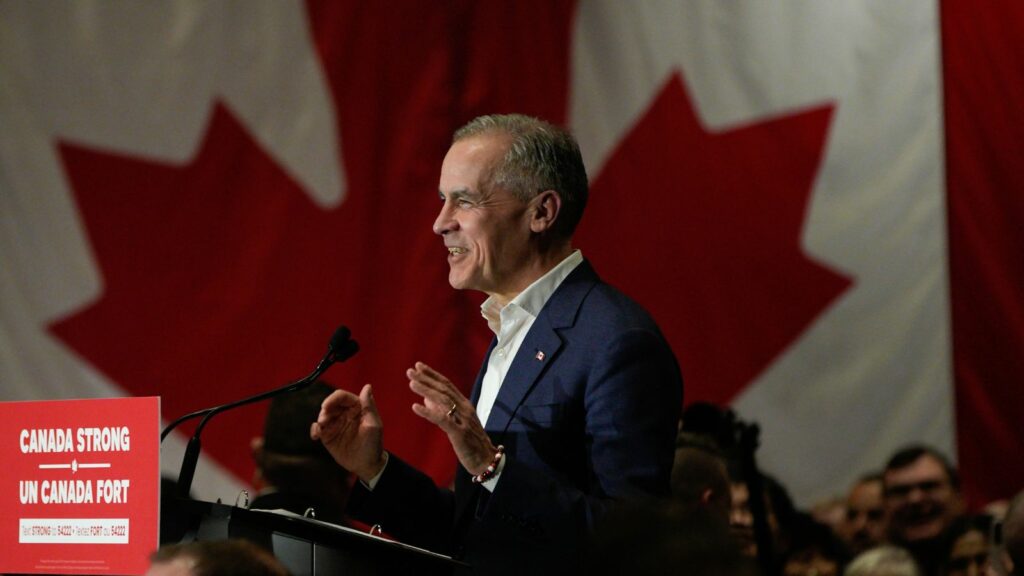
Canada is entering a new phase of economic uncertainty with a federal budget built around an uncomfortable trade-off: borrow more today in the hope of making the country stronger tomorrow. Tabled on November 5, 2026, Prime Minister Mark Carney’s plan forecasts a $62.3-billion deficit for 2026–27 while unveiling $142.1 billion in new multiyear spending and tax measures.
The package reaches well beyond traditional infrastructure, combining business incentives with energy projects, housing support, and affordability relief. Washington’s trade restrictions have sharpened Ottawa’s determination to attract investment and find customers beyond the United States. The central question is whether that ambition can generate growth quickly enough to justify the bill.
A $62.3-Billion Deficit Reveals Ottawa’s Spending Priorities
The headline deficit is large, but it tells only part of the fiscal story. Ottawa expects to collect $540.3 billion in revenue during 2026–27 while recording approximately $603 billion in total spending. That leaves a projected $62.3-billion shortfall, equivalent to 1.8% of Canada’s gross domestic product. The estimate is approximately $3 billion smaller than the government’s April projection, although it remains substantially above the $39.3-billion deficit projected for 2025–26. The figures illustrate how quickly Ottawa’s financial position can change when economic conditions, revenues, and spending priorities shift.
For Canadians watching federal finances, the distinction between borrowing for everyday operations and financing longer-term investments is especially important. A government can borrow to support economic activity during difficult periods, but that borrowing must ultimately be supported by revenues and manageable debt payments. Carney’s government argues that spending on infrastructure, productivity, and industrial capacity can strengthen future growth. Whether that approach succeeds will depend on how effectively the money is deployed and whether the economy generates enough additional activity to improve the country’s finances.
Ottawa’s $142.1-Billion Package Goes Beyond Traditional Infrastructure
The government’s $142.1-billion commitment represents a broad collection of new spending initiatives and tax measures spread over five years. According to the budget’s breakdown reported by Reuters, approximately $51.9 billion is directed toward attracting capital and encouraging innovation, while $15.1 billion supports infrastructure. Another $30.6 billion is associated with affordability measures, and $34.6 billion covers parks, natural resources, and reconciliation initiatives involving Indigenous peoples. These categories demonstrate that Ottawa’s strategy combines business competitiveness with social priorities, rather than concentrating exclusively on industrial construction or direct corporate subsidies.
The distinction matters because not every dollar represents a government cheque for a new factory or project. Some measures provide tax relief, others fund public services, and certain investments are intended to encourage private companies to contribute additional capital. The government also describes roughly $151 billion in net economic support since its spring update, using a different accounting scope. Those figures should not be treated as interchangeable or added together. The economic payoff will depend on whether incentives generate genuinely new investment, rather than simply subsidizing business activity that would have occurred anyway.
Trump’s Trade War Is Changing Canada’s Economic Calculations
Canada’s economic relationship with the United States has long supported manufacturing employment, cross-border investment, and deeply integrated supply chains. Trump’s tariffs and other trade restrictions have weakened some of the predictability behind that arrangement. In an October 2026 assessment, the Parliamentary Budget Officer estimated that recent measures raised the average effective American tariff on Canadian imports from 5.3% to 7.7%. Its modelling suggested that the combined trade measures introduced since early 2025 could leave Canada’s real GDP 1.4% below a pre-tariff baseline after five years. That represents a meaningful economic cost, even if the national economy continues growing.
For a southern Ontario auto-parts manufacturer, the consequences can involve considerably more than a customs bill. Uncertainty about future market access can influence hiring, equipment purchases, and decisions about where new production should occur. Similar concerns affect steel producers, aluminum exporters, and forestry businesses. Ottawa’s budget attempts to respond by making domestic investment more attractive while helping Canadian companies reach additional markets. However, replacing established American customers is rarely straightforward, particularly in industries where production systems have developed across the border over several decades.
A $36-Billion Tax Incentive Aims to Bring Business Investment Home
One of Ottawa’s most consequential business measures may be less visible than a new highway or factory. The Productivity Mega Deduction, announced in September and incorporated into Budget 2026, allows companies to immediately write off the full cost of a broader selection of qualifying capital assets. Government estimates indicate that the measure covers more than 65% of business investment and carries a five-year fiscal cost of approximately $36 billion. It is designed to lower Canada’s marginal effective tax rate on new business investment from 13% to 6.4%, below the comparable American rate. For companies deciding where to locate their next production line, that difference could be significant.
Consider a food processor deciding whether to replace aging equipment or a construction company considering additional machinery. Faster tax deductions can improve the financial case for upgrading those operations. However, tax advantages cannot eliminate uncertainty about tariffs, customer demand, or international competition. A company facing shrinking orders may still postpone expansion regardless of the available incentives. Ottawa is therefore betting that improved tax treatment, combined with infrastructure investment and greater economic stability, will persuade businesses to make commitments that otherwise might have gone elsewhere.
Electricity, Nuclear Energy, and Critical Minerals Become Major Priorities
Canada’s effort to attract investment increasingly depends on whether the country can supply enough reliable electricity for growing industries. Budget 2026 highlights more than $50 billion in measures supporting electricity infrastructure, clean technologies, and related investment, alongside the goal of doubling national grid capacity by 2050. The government also identifies $2.3 billion for its Critical Minerals Strategy and $518.5 million for its Nuclear Energy Strategy. These priorities reflect the growing importance of energy security, especially as manufacturers, mining operations, and technology companies require reliable power to expand. The investments are intended to make domestic resources a competitive advantage rather than simply export commodities.
For communities near proposed transmission lines, mines, and power projects, the benefits could include construction employment, supplier contracts, and new industrial opportunities. Yet these projects often require years of planning, environmental assessment, financing, and negotiations with local and Indigenous communities. A commitment made in Ottawa does not immediately produce a functioning power plant or processing facility. Successful implementation will depend on provincial cooperation, project economics, and the ability to move infrastructure through approval processes without sacrificing environmental protections or meaningful consultation.
Ottawa Wants New Export Markets Without Abandoning Canadian Manufacturing
Reducing Canada’s dependence on American customers has become a central economic objective. Carney’s government wants to double exports to markets outside the United States by 2035, supported by trade diversification and infrastructure strategies identified at approximately $6.6 billion. The budget also highlights a $6.5-billion forestry transformation strategy over six years, intended to modernize facilities, strengthen production, and encourage higher-value forest products. Ottawa’s broader automotive strategy is presented at approximately $9 billion, emphasizing investment, electric vehicles, and industry competitiveness. These figures represent different sector strategies and funding arrangements, rather than entirely separate amounts of newly announced budget spending.
The stakes are particularly high in manufacturing communities where international trade directly affects local employment. A forestry mill that can produce specialized building materials instead of relying heavily on conventional lumber exports may have more opportunities to diversify its customers. Automotive suppliers face a similar challenge, although their production systems are closely connected with American assembly plants. Expanding trade with Europe, Asia, and other markets could provide additional protection against future disruptions. However, businesses also need competitive shipping costs, reliable transportation infrastructure, and relationships with overseas customers before diversification becomes commercially viable.
Housing Spending Expands as Affordability Remains a National Challenge
Housing occupies an important place in Ottawa’s economic strategy because expensive homes and high rents affect household finances, labour mobility, and business competitiveness. Budget 2026 outlines $44.7 billion in housing-related investments over 11 years on a cash basis. The strategy aims to expand affordable and non-market housing while putting Canada on a path toward ending homelessness within a decade. The government also wants to triple annual non-market housing starts to approximately 24,000. A major component includes $10 billion through Build Canada Homes to support the delivery of roughly 25,000 supportive and transitional homes. The broader housing total covers a longer period than the budget’s five-year measures.
For renters struggling with housing costs, additional construction offers the possibility of more choices and greater stability, but the benefits will not arrive overnight. Federal funding alone cannot resolve shortages of serviced land, construction workers, or municipal approvals. Ottawa plans to provide financing and development capacity while relying on provinces and territories to support necessary services. The challenge will be converting financial commitments into completed housing at prices people can afford, rather than measuring progress primarily by how much funding governments announce.
Affordability Measures Aim to Deliver Relief Before Economic Growth Arrives
Behind the federal government’s enormous budget figures are Canadians struggling with everyday expenses. Ottawa is proposing another enhancement to the Canada Groceries and Essentials Benefit, which already supports more than 12 million individuals and families with low or modest incomes. A proposed one-time supplement, scheduled for early 2027, would provide up to $339 for a single person without children and $679 for a couple with two children. The government estimates that the supplement would deliver approximately $4.1 billion in additional assistance. While direct payments can help families manage grocery bills, they do not necessarily address the underlying reasons food prices remain elevated.
The budget also proposes a stronger Build Canada Workers Benefit, which the government estimates could help lift 240,000 people out of poverty. Meanwhile, more than $2 billion in planned heat-pump investments would support up to 820,000 households in switching to more efficient heating systems. Together, these measures represent an attempt to balance longer-term economic investment with relief that Canadians can experience more directly. Their effectiveness will depend on eligibility, participation, program delivery, and whether future cost increases erode the financial benefits households receive.
Defence Spending Becomes Part of Canada’s Economic Independence Strategy
National security is increasingly connected to Ottawa’s industrial and economic priorities. The government’s broader $7.7-billion Defence Industrial Strategy aims to strengthen Canadian suppliers and increase the share of military acquisitions awarded to domestic companies to 70%. Budget 2026 also proposes $2.3 billion over five years for defence drones and related technologies, alongside $7.6 billion to extend Canada’s Operation REASSURANCE military deployment in Europe. The latter commitment is to be financed through existing defence resources. These distinctions are important because multiyear defence announcements can include previously committed funding rather than entirely new spending.
For Canadian manufacturers, the strategy could generate opportunities beyond traditional military contractors. Precision manufacturing companies, aerospace suppliers, technology firms, and specialized engineering businesses could benefit from greater domestic procurement. A company producing sophisticated components for civilian industries might eventually find opportunities in defence-related supply chains. However, government purchasing targets do not guarantee immediate contracts, and defence procurement frequently involves demanding technical requirements and lengthy approval processes. Ottawa must balance its ambition to strengthen domestic production with the military’s need for reliable, capable equipment at competitive prices.
Rising Debt Costs Could Determine Whether Carney’s Economic Gamble Pays Off
The budget’s largest long-term challenge may be the cost of carrying federal debt. Ottawa projects public debt charges of $60.2 billion in 2026–27, increasing to $85.5 billion by 2030–31. Although the government expects its annual deficit to decline to $52.9 billion by the end of that period, the debt burden remains substantial. Federal debt is projected to represent 39.9% of GDP in 2026–27 and approximately 40.1% in 2030–31. Those figures suggest a relatively stable debt ratio, but they depend on economic assumptions that could change as trade conditions, interest rates, and commodity prices evolve.
Economists have offered differing assessments of the government’s approach. BMO Capital Markets has questioned Ottawa’s decision to use much of its improved fiscal room for additional measures rather than greater deficit reduction. Signal49 Research, meanwhile, has argued that incentives encouraging private investment address an important weakness in Canada’s economy. The government’s underlying forecast assumes real economic growth of 1% in 2026 and 1.7% in 2027. Ultimately, the budget’s success will be measured by whether new projects, stronger productivity, and more diversified exports translate into sustained prosperity. Canadians will be looking for tangible improvements in employment, affordability, and economic security—not simply larger investment announcements.
