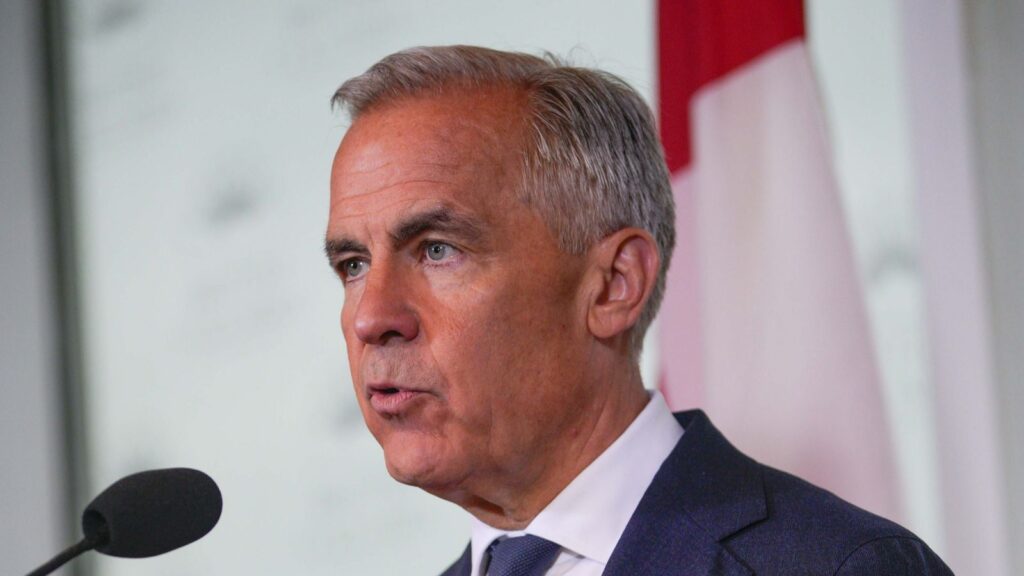
Canada’s trade negotiations with the United States have taken a significant turn, with Prime Minister Mark Carney revealing that Washington has backed away from demands that threatened Canada’s French-language protections, cultural policies, and independence in negotiating trade agreements with other countries.
Speaking on November 3, 2026, during a Commonwealth summit in Antigua and Barbuda, Carney confirmed that several contentious American proposals had been removed from the negotiating table. The development marks an important shift after trade discussions collapsed in August over disagreements involving tariffs and Canadian sovereignty.
Although Carney described the renewed negotiations as encouraging, he cautioned that significant differences remain. For Canadian businesses, workers, and provincial governments, the announcement offers renewed hope that the two countries can resolve their escalating trade dispute without forcing Canada to compromise fundamental national interests.
Washington’s Earlier Demands Brought Trade Negotiations to a Breaking Point
The latest developments follow a dramatic breakdown in Canada-U.S. trade negotiations on August 21, 2026. After weeks of discussions, Carney abruptly suspended negotiations and ordered Canadian representatives to return to Ottawa. The prime minister argued that Washington had introduced last-minute conditions that were economically unacceptable and threatened Canadian sovereignty. Those demands went beyond conventional disagreements about tariffs and market access. They involved Canada’s ability to protect its languages, support its cultural industries, and independently negotiate trade agreements with other countries.
The consequences were immediate. The United States proceeded with 50% tariffs affecting approximately $27.6 billion in Canadian goods, while Ottawa announced matching retaliatory measures. Industries producing everything from clothing to building materials faced additional uncertainty. For manufacturers already dealing with higher operating costs and unpredictable trade conditions, the collapse represented another setback. Carney maintained that accepting an agreement undermining Canadian independence would have been worse than continuing negotiations without a deal.
French-Language Protections Were Among Canada’s Firmest Red Lines
Protecting the French language has long been a fundamental part of Canada’s political and cultural identity. English and French share official-language status federally, while Quebec’s Charter of the French Language establishes French as the province’s official language. Quebec has also strengthened requirements for commercial signage, product information, and workplace communications. New business obligations took effect in June 2025, including rules concerning French descriptions associated with trademarks. These measures are particularly important in Quebec, where governments have consistently sought to preserve French in a predominantly English-speaking North American economy.
Carney’s government argued that language protections should never become concessions in trade negotiations. However, the disagreement was more complicated than whether consumer products should carry French labels. Canada-U.S. Trade Minister Dominic LeBlanc subsequently clarified that the central issue in the August negotiations concerned the visibility of Canadian and French-language programming on streaming platforms. American officials also disputed claims that they had demanded the removal of French-language protections. The disagreement revealed how differently the two governments viewed cultural regulation.
Streaming Services Became an Unexpected Battleground
One of the most significant disagreements involved the increasingly powerful role of digital entertainment platforms. Canada’s Online Streaming Act gives the Canadian Radio-television and Telecommunications Commission authority to establish requirements supporting domestic programming. In May 2026, the regulator introduced a framework intended to make Canadian, Indigenous, and French-language content more visible on broadcasting and streaming services. Quebec has pursued similar objectives through legislation adopted in December 2025, known as Bill 109, which addresses the discoverability of French-language cultural content in digital environments.
For Canadian filmmakers, musicians, and television producers, discoverability can determine whether their work reaches an audience. A French-language drama might be available on a major streaming platform but remain difficult to find among thousands of international productions. American trade officials have questioned whether Canadian digital-content regulations create unfair burdens for U.S. companies. Ottawa, however, regards its ability to promote domestic cultural expression as an essential policy responsibility. Washington’s reported retreat from these demands therefore carries significance well beyond traditional trade negotiations.
Canada Refused to Give Washington Control Over Its Future Trade Agreements
Another major obstacle involved Canada’s freedom to negotiate commercial agreements with countries beyond North America. According to Carney, American negotiators had pursued restrictions that could have given Washington the final say over certain Canadian trade arrangements with other nations. Canada already maintains extensive trade relationships through agreements such as the Comprehensive Economic and Trade Agreement with the European Union and the Comprehensive and Progressive Agreement for Trans-Pacific Partnership. Allowing another government to control future negotiations would have represented a substantial limitation on Ottawa’s economic independence.
The existing Canada-United States-Mexico Agreement already contains provisions concerning trade agreements with certain non-market economies. Article 32.10 requires advance notification and allows other members to respond by terminating the trilateral arrangement under specified conditions. However, that provision does not grant Washington a blanket right to approve Canada’s trade agreements. Carney’s announcement indicates that the United States has retreated from seeking additional restrictions. The distinction is important because Canada’s strategy increasingly depends on reducing its economic vulnerability through broader international trade relationships.
The Change in Washington’s Position Has Been Developing for Months
Although Carney’s November announcement attracted attention, the American retreat on cultural issues did not happen overnight. On August 27, Trade Minister Dominic LeBlanc had already publicly welcomed a change in Washington’s position concerning discoverability, labelling, and protections for French-language culture. The two governments nevertheless remained divided over other demands, preventing negotiations from producing a comprehensive agreement. By November 1, Carney and President Donald Trump were discussing the outlines of a potentially mutually beneficial trade arrangement, with both governments signalling an interest in renewed cooperation.
The November 3 announcement suggested that progress had extended to Canada’s freedom to negotiate trade agreements with other countries. Speaking to reporters, Carney characterized the American position as involving fewer demands and more generous offers, while making clear that negotiations were unfinished. That distinction matters. Public statements about withdrawing negotiating demands do not carry the same legal certainty as a finalized agreement. Businesses and provincial governments will ultimately need to see the actual commitments before determining how much the relationship has improved.
Tariffs Remain the Biggest Financial Obstacle to a Trade Agreement
While Washington has reportedly softened its position on Canadian sovereignty, the financial consequences of the trade dispute remain substantial. The United States has maintained tariffs affecting Canadian steel, aluminum, automobiles, and numerous manufactured products. Canada’s September countermeasures introduced rates of 15%, 25%, and 50% on targeted American imports, covering approximately $27.6 billion in goods. Ottawa also raised duties on certain American steel and aluminum products to 50%. These measures demonstrate that progress on political disagreements has not automatically translated into lower trading costs.
For businesses operating across the border, tariffs can change the economics of an otherwise profitable transaction. A Canadian manufacturer exporting specialized machinery may have to absorb additional costs, negotiate a higher selling price, or risk losing an American customer. Companies importing materials from the United States face similar pressures. The uncertainty can also affect investment decisions, hiring plans, and long-term supply contracts. Although the removal of controversial negotiating demands makes an agreement more achievable, meaningful tariff reductions remain essential to delivering practical economic relief.
Canada’s Auto Industry Still Faces a Difficult Negotiating Battle
Automotive manufacturing remains one of the most complicated areas of the Canada-U.S. trade relationship. For decades, automakers have built production networks that stretch across Ontario, Michigan, and other North American manufacturing centres. Parts and components can cross international borders several times before a finished vehicle reaches a dealership. Under the current American tariff framework, vehicles face duties of 25%, although qualifying U.S. content receives preferential treatment. Changes to these rules can significantly affect the competitiveness of Canadian-built vehicles.
The automotive dispute was also central to the failed August negotiations. Carney said Washington had been willing to reduce tariffs on certain vehicles while excluding important categories of medium- and heavy-duty trucks. He specifically identified potential consequences for Ford’s Oakville operations and General Motors’ truck production. American trade officials disputed Canada’s account of how those exclusions became contentious. Regardless of that disagreement, the stakes remain substantial for Canadian assembly plants, parts suppliers, and their employees. The removal of language-related demands does not resolve the broader conflict over where North American vehicles should be manufactured.
The U.S. Midterm Elections Have Created Another Potential Opening
The negotiations are also unfolding during a significant political transition in Washington. Following the November 3 midterm elections, Democrats secured control of both chambers of Congress, creating the possibility of stronger congressional opposition to Trump’s tariff policies. Democratic Senator Ron Wyden, who is expected to lead the Senate Finance Committee, has indicated that repealing tariffs on Canada should be a priority. Carney welcomed efforts to restore free trade, arguing that lower trade barriers would benefit workers and families on both sides of the border.
However, a change in congressional leadership does not automatically eliminate tariffs. Trump retains presidential veto authority, and reversing his policies through legislation could require substantial Republican support. Canada’s trade minister, Dominic LeBlanc, also emphasized that the election results would not fundamentally alter Ottawa’s negotiating strategy. For now, Canada must continue dealing directly with the Trump administration while recognizing that Congress could eventually provide another avenue for reducing trade tensions. The political landscape has shifted, but the economic outcome remains uncertain.
The Future of CUSMA Makes Every Concession More Important
The dispute is unfolding alongside uncertainty surrounding the Canada-United States-Mexico Agreement, which has governed North American trade since July 2020. At the agreement’s first mandatory joint review on July 1, 2026, the Trump administration declined to approve an extension in its existing form. That decision did not terminate CUSMA. The agreement remains legally in force through July 2036 unless replaced, extended, or ended under its provisions. However, the refusal triggered a process of annual reviews, keeping the future of North America’s trading framework under continued scrutiny.
For Canadian companies, the distinction between an active agreement and a permanently secured trading arrangement is important. Manufacturers considering major investments often plan production and equipment purchases years in advance. Continued uncertainty over tariff rules, regional content requirements, and future revisions can make those decisions more difficult. Carney’s reported success in protecting Canada’s independence could improve the atmosphere for further negotiations, but it does not settle CUSMA’s longer-term future. A durable agreement would need to address both immediate tariff pressures and the broader rules governing continental commerce.
The Real Test Will Be Whether Progress Delivers Economic Stability
The importance of reaching an agreement becomes clearer when examining Canada’s dependence on the American market. Statistics Canada reported that the United States accounted for 71.7% of Canadian merchandise exports in 2025, down from 75.9% in 2024. Meanwhile, the Bank of Canada’s third-quarter 2026 Business Outlook Survey found that companies surveyed after the August breakdown reported weaker business sentiment and lower export-sales expectations. These findings illustrate how diplomatic disagreements can influence economic decisions long before new trade rules are finalized.
For a factory owner in Ontario, an agricultural exporter in Saskatchewan, or a technology company seeking international customers, predictability matters almost as much as tariff rates themselves. Businesses need assurance that trade rules will remain dependable when making investments and hiring employees. Carney’s announcement represents meaningful diplomatic progress because it suggests Washington is becoming more willing to accommodate Canadian priorities. Nevertheless, the ultimate measure of success will be whether negotiators secure enforceable commitments that lower costs, protect Canadian decision-making, and restore confidence in the country’s most important trading relationship.
