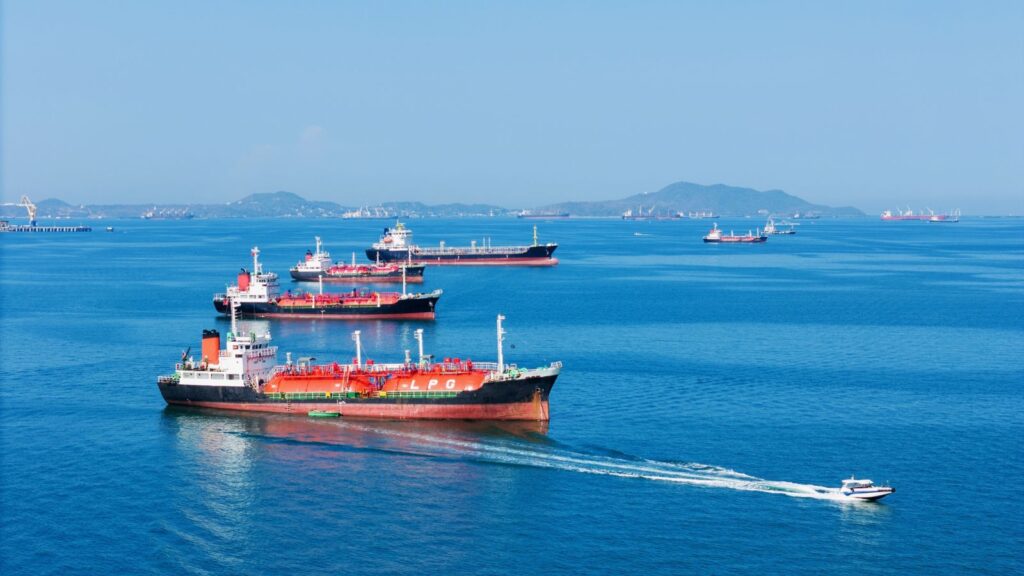
The Strait of Hormuz is narrow, but the consequences of keeping it dangerous stretch far beyond the Persian Gulf. Canada and the United States have joined other G7 countries in rejecting Iranian shipping tolls while backing American naval efforts to protect commercial vessels and clear maritime mines.
The declaration, released November 11, 2026, after foreign ministers met in Paris, also supports a separate defensive initiative led by France and Britain. However, the diplomatic agreement comes as shipping attacks continue, commercial vessels face growing uncertainty, and thousands of seafarers remain exposed to danger. For Canada, the dispute involves more than military cooperation with Washington. It raises difficult questions about international law, energy security, trade costs, and how far Ottawa is prepared to go to keep one of the world’s most important waterways open.
A G7 Declaration Draws a Firm Line on Shipping Tolls
The Paris declaration put Canada and the United States on the same side of a dispute that reaches beyond the Middle East. Foreign ministers from seven G7 countries met on November 9 and 10, with the European Union also represented. Their statement, published November 11, condemned attacks on civilian shipping and opposed tolls, fees, discriminatory conditions and other restrictions on passage through the Strait of Hormuz. It also recognized American defensive work to escort vessels and remove mines.
The language is significant because G7 governments do not have identical military commitments in the Gulf. What they share is a demand that commercial ships retain access to a route without paying for political permission. The ministers also acknowledged a maritime initiative led by France and Britain. Together, the endorsements present a coordinated front, even while questions remain about the vessels, personnel and security conditions needed to make navigation safer in practice.
Canada’s Support Does Not Automatically Mean Canadian Warships
For Ottawa, supporting an American naval mission is not the same as ordering Canadian sailors into the Strait of Hormuz. The November G7 declaration praises the work of U.S. Central Command but does not announce a Canadian combat deployment. Earlier federal briefing materials identified possible Canadian assistance in maritime logistics, mine-clearing expertise, satellite imagery and cyber support, depending on conditions and discussions with allies. Those options leave room for a contribution without promising a specific ship.
Canada does have relevant naval experience. On November 5, the Royal Canadian Navy reported that HMCS Moncton and HMCS Edmonton had returned to Halifax after conducting NATO mine-countermeasures work in European waters. Their mission was not in Hormuz, but it illustrates the specialized skills involved in detecting underwater hazards. A deployment to the Gulf would require a separate national decision, with operational risks and political consequences that a joint diplomatic statement alone cannot settle.
Washington Wants Allies to Help Protect the Sea Lane
The American escort effort has exposed a difficult division between agreeing on a problem and accepting its immediate risks. During the Paris meetings, U.S. Secretary of State Marco Rubio urged other countries to help defend commercial shipping from Iranian attacks. He told reporters that he had raised the request with fellow G7 ministers but had received no response. Washington nevertheless said it would continue protecting ships moving through the strategic waterway.
Some allies, including France, have argued that active fighting must stop before their forces can safely undertake minesweeping and related tasks. Rubio described that position as a dilemma: the danger preventing allied deployments is also the danger the escorts are meant to reduce. For shipping operators, naval protection can offer reassurance, but no convoy can guarantee a risk-free journey. The immediate question is whether governments can turn public support into practical coordination without potentially creating new confrontations at sea.
Iran’s Shipping Charges Have Become a Sanctions Flashpoint
Iran’s attempt to control passage involves far more than the price of a voyage. In May, Tehran established the Persian Gulf Strait Authority, a body that the U.S. Treasury says was designed to collect payments from vessels using the waterway. Washington sanctioned the authority on May 27, alleging that it supported the Islamic Revolutionary Guard Corps. American officials characterize the system as coercive, while Iranian representatives have described charges as payments for security or related services.
The practical consequences reach shipowners, banks and insurers. U.S. sanctions guidance says American persons and certain U.S.-controlled foreign companies generally cannot pay the Iranian government for safe passage or receive its related guarantees. It also warns that non-American businesses may face sanctions exposure when dealing with blocked parties. A vessel operator considering a payment therefore faces more than an extra cost: the transaction could trigger legal and financing problems long after the journey ends.
Why International Law Rejects a Toll Booth at Hormuz
The legal argument rests on the status of the Strait of Hormuz as a route used for international navigation. The United Nations Convention on the Law of the Sea establishes a right of transit passage through qualifying straits. Its provisions say that passage must not be impeded and that bordering states cannot suspend it. Ships, in turn, must follow safety rules and proceed without unnecessary delay, so the principle is not an exemption from navigation responsibilities.
The International Maritime Organization has been direct. In April, its secretary-general told the United Nations Security Council that governments have no legal basis to demand tolls or discriminatory payments for crossing international straits. Legitimate charges for separately provided services are a different question from charging for the right to pass. That distinction is central to the G7 objection: ships should not need to purchase permission to use a waterway protected by international navigation rights.
Attacks on Civilian Ships Show Why Escorts Matter
The danger to merchant shipping is neither theoretical nor confined to an earlier phase of the conflict. The International Maritime Organization listed 133 confirmed incidents in the Middle East as of November 10, with 25 seafarer deaths. Its recent records include the damaged tankers NAVIG8 MACALLISTER and HUDA near Oman on November 7. These are the kinds of incidents that make a commercial voyage feel like an extraordinary gamble for crews and shipping companies.
The threats also complicate military protection. U.S. maritime advisories warn of missiles, armed drones, unmanned surface vessels and other hazards in and around the Strait of Hormuz. Mine clearance is particularly demanding because locating a hazard does not immediately make a route safe. A merchant vessel needs reliable information, a workable passage plan and confidence that a threat will not reappear after an escort leaves. That is why governments are pairing naval operations with diplomatic pressure.
France and Britain Are Planning a Separate Defensive Mission
The G7 endorsement does not place every country under one naval commander. France and the United Kingdom have advanced an independent, strictly defensive multinational mission intended to reassure civilian shipping and support mine clearance. At a May 12 meeting, the two governments brought together representatives of 38 countries to build political support. Canada was among the states backing the initiative, although national contributions remained subject to each government’s decisions and procedures.
One condition has shaped the plan since May: operations are meant to start only when the environment is permissive enough for them to proceed. Britain and France have also said the mission should remain distinct from other military campaigns. In July, they announced cooperation with Oman to help safeguard navigation in Omani territorial waters. That approach seeks to separate the protection of merchant ships from offensive combat, but continuing attacks make the timing of any deployment difficult to predict.
Shipping Is Recovering, but the Numbers Remain Fragile
The economic importance of Hormuz becomes clearer when measured in cargo rather than warships. U.S. Energy Information Administration estimates show that oil flows through the strait averaged 21.6 million barrels a day in the final quarter of 2025, compared with 4.9 million barrels a day in the second quarter of 2026. Those are historical quarterly figures, not a current daily count, but they capture the scale of the disruption following the war’s outbreak.
More recent shipping data suggest a partial and uneven recovery. According to figures cited by Reuters, 31 liquefied natural gas tankers left the Gulf through Hormuz in October, up from 23 in September. Yet Qatar’s LNG traffic was still only around 30% of its prewar level. The same month saw 37 vessels hit, according to a Washington-based think tank. Increased movement, therefore, has not meant that the route has become reliably safe. For shippers, uncertainty still dominates.
Canada Has an Economic Stake Despite Its Own Oil Exports
Canada is a major crude oil exporter, but its economy is not insulated from turmoil in the Gulf. Petroleum prices respond to supply expectations, while freight disruptions can affect imported goods, agricultural inputs and industrial costs. Federal briefing materials have warned that interruptions at Hormuz threaten Canadian households, businesses and food supply chains. An oil-producing country can earn more on exports while still seeing consumers and transport companies absorb higher costs elsewhere.
The international response shows how seriously governments took the shock. In March, the International Energy Agency’s 32 member countries agreed to make 400 million barrels from emergency oil stocks available to markets, its largest coordinated release. Ottawa also discussed additional Canadian crude production as part of efforts to stabilize supplies. Such measures can provide a temporary cushion, but they cannot restore the lost certainty of a functioning sea lane. Keeping vessels moving safely remains the durable economic solution.
Seafarers and Coastal Communities Bear the Human Cost
Behind the diplomatic language are crews who cannot choose a safer route without consequences for their livelihoods. The International Maritime Organization estimated in April that roughly 20,000 seafarers aboard nearly 2,000 vessels remained trapped in the Persian Gulf. By November, its confirmed death toll had reached 25. These figures describe different points in the crisis, but together they convey why a decision made in a shipping office can become a matter of immediate personal survival at sea.
The consequences can also reach people who never board a tanker. Reuters reported in November that oil leaking from the damaged Gem No.2 had forced beach closures in the northern United Arab Emirates and threatened waters near a desalination facility. In a region that relies heavily on turning seawater into drinking water, pollution can become a public concern as well as a commercial loss. Safer passage is ultimately about people, not only cargo.
Diplomacy Will Determine Whether Safe Passage Lasts
Military escorts can help vessels navigate a dangerous passage, but they cannot by themselves resolve the dispute over who controls it. The November G7 declaration calls for a diplomatic settlement involving Iran’s nuclear program and regional security. It also urges Tehran to cooperate with the International Atomic Energy Agency and supports the enforcement of relevant sanctions. The shipping issue sits within a wider confrontation, rather than operating as a stand-alone maritime disagreement.
For Canada and the United States, success would mean more than additional tankers making it through Hormuz. It would require freedom of navigation, fewer attacks, credible mine clearance and rules that shipping companies can follow without paying contested tolls. The declaration establishes a common position, but its real test will come at sea, where captains and crews need dependable conditions rather than another reassurance on paper. Until then, the economic and human costs will remain hard to contain.
