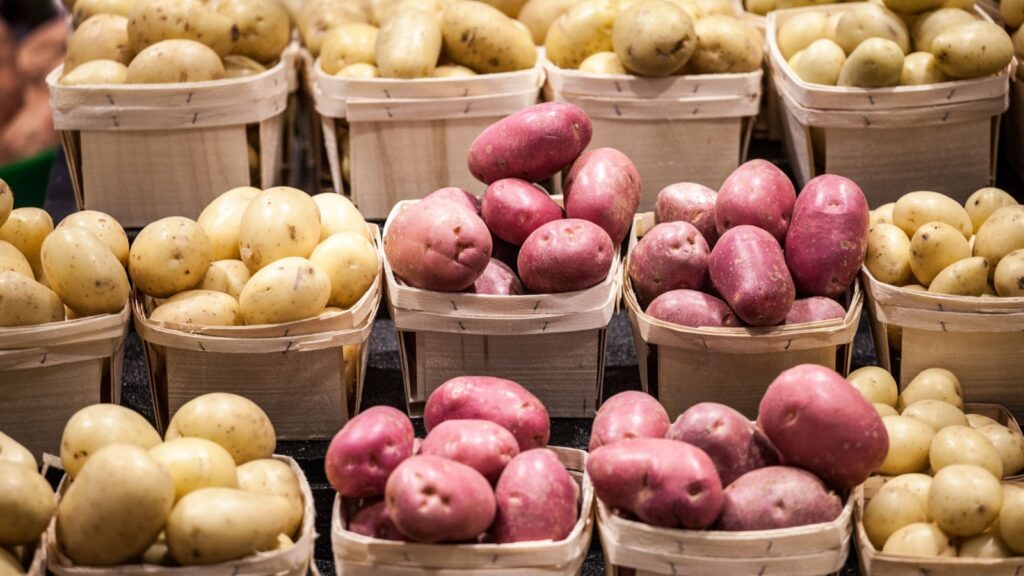
A trade dispute dating back more than four decades is creating fresh tensions between American potato growers and Canadian trade authorities. The U.S. potato industry is urging President Donald Trump’s administration to challenge longstanding Canadian antidumping duties that restrict certain American potato exports to British Columbia.
The National Potato Council argues that changes introduced in 2025 have made an already controversial trade barrier even more restrictive, costing American farmers millions in potential export opportunities. Canadian authorities, meanwhile, maintain that the measures protect domestic producers from potentially unfair competition.
With Canada reviewing the restrictions and North American trade negotiations providing another opportunity for debate, a disagreement over one of the continent’s most familiar crops has become a larger test of agricultural trade fairness.
American Potato Growers Take Their Complaints to Washington
The push came on November 23, when the National Potato Council appealed to Agriculture Secretary Brooke Rollins and U.S. Trade Representative Jamieson Greer. Its chief executive, Kam Quarles, wants to make British Columbia’s potato restrictions a negotiating priority. The council says American growers are losing millions of dollars in exports because Canadian rules keep certain potatoes from competing commercially. It is seeking removal of the measure, not simply another adjustment to its pricing formulas.
That appeal puts a local dispute on Washington’s national trade agenda. A farmer in Washington state may see British Columbia as a nearby customer, yet reaching that customer can involve a layer of duties that growers across the border do not face when selling south. The council has framed that difference as a matter of reciprocity. For now, the letter represents an industry demand, not an announced decision by President Trump to launch a formal challenge.
The Trade Dispute Began More Than Four Decades Ago
The dispute began long before today’s tariff battles. Canadian authorities opened an investigation in September 1983 after a complaint from British Columbia’s vegetable marketing organization. In 1984, investigators determined that certain russet-skinned potatoes from Washington state had been dumped into the provincial market, and an injury finding supported restrictions. Another investigation involving an expanded group of American whole potatoes followed in 1985, with a further injury determination in April 1986.
The measures did not disappear as North American trade agreements evolved. Canada’s border agency says seven expiry reviews have continued the case, sometimes with amendments, while separate, periodic administrative reviews have recalculated the values used to enforce duties. The preceding tribunal order was issued in June 2021. That history explains why U.S. growers describe the measure as a forty-year-old obstacle: successive reviews have allowed its basic protection to survive changes in governments, farming practices, farm economics and cross-border trade relationships.
The Restrictions Do Not Apply to Every American Potato
Despite the sweeping rhetoric surrounding the dispute, Canada has not prohibited all American potatoes. Its order applies to particular whole potatoes from the United States sold in British Columbia. Seed potatoes are excluded. So are red and yellow potatoes, exotic varieties, certified organic potatoes and imports arriving between May 1 and July 31 each year. Certain sizes of white and russet potatoes packed in fifty-pound cartons are also exempt.
Those distinctions matter in practice. Two shipments carrying potatoes across the same border might receive different treatment because of variety, packaging or arrival date. The trade measure is administered federally under Canada’s Special Import Measures Act rather than being an outright provincial import ban. For growers and wholesalers, the challenge is determining whether a shipment falls within the order and, if it does, what price will avoid an antidumping assessment. That complexity can influence contracts well before a truck reaches customs.
A 2025 Pricing Change Intensified the Dispute
A pricing update in July 2025 turned longstanding frustration into a confrontation. The Canada Border Services Agency revised the normal values used to assess whether covered potatoes enter British Columbia at dumped prices. Its schedule lists, for example, a normal value of C$45.12 per hundredweight for potatoes in ten five-pound packages and C$43.31 for a fifty-pound carton. The figures vary with packaging, creating different thresholds for different shipments.
The National Potato Council argues that the revised levels exceed prices American growers have actually received for comparable potatoes and effectively price them out of the market. Canadian officials interpret the update differently. The agency says earlier values dating from 2015 may no longer have represented market conditions, and it recorded substantially higher antidumping assessments after the change. The disagreement is therefore not simply about whether duties exist; it is about whether the benchmark used to calculate them reflects realistic selling prices.
British Columbia’s Potato Farmers Have Their Own Concerns
British Columbia occupies a distinct place in Canada’s antidumping framework. The case concerns a regional market rather than the entire country. Under Canadian rules, such treatment depends partly on whether local producers sell almost all their output inside the region and whether producers elsewhere in Canada supply a substantial share of its demand. Canadian authorities concluded that potatoes arriving from other provinces did not substantially meet British Columbia’s needs, allowing the provincial market to be considered separately.
Local growers are represented by the BC Vegetable Marketing Commission and marketing agencies that provide outlets for their crops. Their concern is straightforward: abundant potatoes from much larger American producing regions could arrive at prices local farms cannot sustainably match. In its current review, the commission argued that removing the order would allow dumping to resume. That is a claim about economic injury, not proof that every lower-priced imported potato represents unfair trade.
American Producers Say the Restrictions Are Costing Millions
The consequences are felt most directly in Washington state, where growing regions sit close to British Columbia’s grocery stores and wholesalers. American producers say the heightened price threshold has effectively shut them out of sales that would otherwise make commercial sense. A bipartisan group of senators raised similar concerns in March 2026, asking the U.S. International Trade Commission to examine Canadian trade practices. Their letter described millions of dollars in potentially lost exports, although it did not independently establish a precise loss figure.
Canadian records offer another way to see the dispute’s scale. For the review period from August 2022 through December 2025, the border agency reported C$752,114 in antidumping duties on affected imports. Of that amount, C$716,814 was assessed from August through December 2025, after the pricing revision. Duties collected are not the same as forgone sales, but the sharp increase helps explain why the industry renewed its campaign.
Canadian Authorities Warn That Removing Duties Could Revive Dumping
Canada’s justification rests largely on what could happen if protection ends. In August 2026, the border agency concluded that the expiry of the potato order would likely lead to continued or resumed dumping. It pointed to substantial American production, periods of oversupply, weakening demand and the ease of shipping potatoes from nearby states into British Columbia. Its finding was predictive: officials assessed the risk of future dumping rather than declaring every U.S. shipment unfairly priced.
The production gap is striking. Citing U.S. Department of Agriculture data, Canadian investigators reported that American fall potato output averaged roughly 417 million hundredweight annually between 2016 and 2025. Washington, Idaho and Oregon together accounted for more than half of that crop. From Canada’s perspective, a much larger neighbouring industry can redirect surplus into a small regional market. U.S. growers counter that competitive pricing and efficient production should not be treated as evidence of dumping.
American Growers Also Question Canada’s Review Process
The growers’ complaint also concerns the way Canada reviews the measure. In August 2026, the National Potato Council accused Canadian authorities of rejecting some detailed American submissions over technical deficiencies, effectively limiting producers’ ability to contest the restrictions. The council argued that the process can make industry participation appear weaker than it really is. These are allegations from the U.S. industry, not findings that Canadian regulators deliberately excluded valid evidence.
Official records show a more complicated proceeding. Canada’s 2026 review included submissions from the British Columbia Vegetable Marketing Commission, importers and an American exporter, Allied Potato Northwest. That exporter argued that removing the order would not lead to renewed dumping of potatoes intended for processing in British Columbia, where it said local supply is insufficient year-round. The border agency nevertheless decided that the broader risk of dumping remained. Both sides are contesting not only prices, but whose evidence deserves weight.
Canada’s Potato Exports to the United States Are Worth Billions
The wider trading relationship makes the potato quarrel unusually sensitive. Agriculture and Agri-Food Canada’s latest detailed market review shows that Canada exported approximately C$475 million in fresh table potatoes to the United States during the 2024-25 marketing year. The U.S. also bought roughly C$2.45 billion in Canadian frozen potato products. Add seed potatoes and other processed goods, and Canadian potato-related exports to its southern neighbour exceeded C$3.4 billion.
Trade also flows north. The same report valued Canada’s total imports of American potatoes and potato products at approximately C$462 million. That is why the National Potato Council emphasizes reciprocity: Canadian growers and processors depend heavily on buyers across the United States while some U.S. growers face special restrictions in British Columbia. The figures cover different potato products and the entire bilateral market, so they should not be mistaken for a precise direct measurement of the far narrower British Columbia antidumping dispute.
Canada’s Next Decision Could Determine the Future of the Trade Barrier
The industry hopes the dispute will gain leverage through wider North American trade discussions. But an important legal distinction remains: the United States-Mexico-Canada Agreement explicitly preserves each country’s right to use antidumping laws. The council argues that Canada’s order violates the spirit, and perhaps the letter, of fair trade commitments; that does not establish a treaty violation. The agreement itself remains in force despite Washington declining to extend it during the July 2026 joint review.
Canada’s next major decision is already scheduled. The Canadian International Trade Tribunal scheduled a public hearing for November 23 and expects to rule by February 4, 2027, on whether ending the order would likely injure domestic producers. A finding of likely injury would keep duties in place, potentially with changes; a contrary finding would end the order. For growers on either side, the outcome could determine whether familiar trade routes become easier or remain contested.
