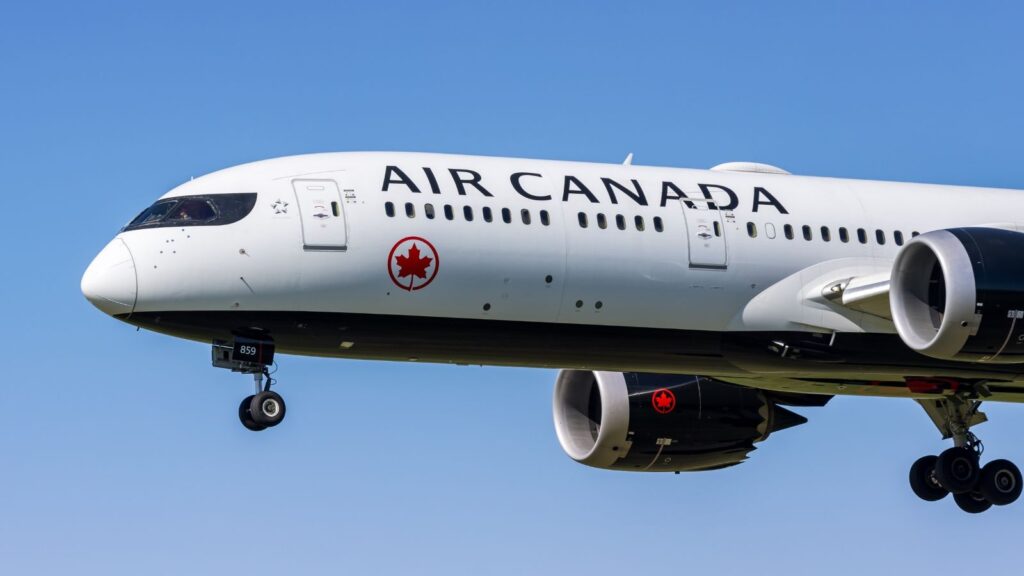
A nonstop flight can look like a choice between two airlines, yet that choice means less if both are allowed to coordinate ticket prices. Canada’s Competition Bureau says this is the risk behind Air Canada and United Airlines’ bid to deepen cooperation on ten routes linking Canada and the United States.
On October 28, 2026, the watchdog warned that the proposed arrangement could produce materially higher fares on eight routes, costing passengers millions of dollars annually. The two carriers argue that their partnership delivers more convenient schedules and stronger connections. The Bureau, however, says removing safeguards established in 2012 would erase meaningful rivalry. Ottawa now faces a familiar transportation dilemma: how to balance a more integrated airline network against the competition that helps keep travel affordable.
Ottawa–Washington: Two Airlines Control the Entire Nonstop Market
For the capital-to-capital corridor, the Bureau projects one of the sharpest fare impacts. In 2025, Air Canada carried 44% of nonstop passengers between Ottawa and Washington; United carried 56%. Together, they accounted for every nonstop traveller on the route. In the first half of 2026, United’s share climbed to 65% while Air Canada’s fell to 35%. These figures measure airlines operating flights, not brands selling tickets. For a public servant travelling to meetings or a family visiting relatives, no third nonstop operator was available.
Existing safeguards require the carriers to set prices independently. Deeper coordination would require government authorization and changes to the 2012 consent agreement. The Bureau identifies Ottawa–Washington among five routes with the largest projected fare increases. It also highlights obstacles facing potential competitors, from securing airport facilities to meeting licensing requirements and financing new service. Without another airline entering the market, customers could lose a crucial source of price competition on a route where choices are already limited.
Vancouver–San Francisco: Fewer Competitors Strengthen the Fare Warning
In Vancouver, the fare risk is more complicated than a duopoly. In 2025, United carried 41% of nonstop passengers to San Francisco and Air Canada 35%. Flair had 20%, while WestJet accounted for about 5%. By the first half of 2026, United reached 47%, Air Canada 38% and Flair 15%. WestJet no longer operated nonstop flights on the route. A third airline remained, but the two established carriers dominated.
The Bureau identifies Vancouver–San Francisco among routes facing the largest projected fare increases. The concern is not simply how many airline names appear: competitors need enough departures to influence prices. Vancouver International Airport is classified Level 3 by the International Air Transport Association, requiring coordinated arrival and departure slots. Adding flights at convenient times can therefore be difficult. For students, families and business travellers along the Pacific coast, an alternative operator offers less protection if it cannot compete effectively against a closely coordinated partnership.
Montréal–Washington: A Complete Duopoly Faces Reduced Price Competition
Montréal–Washington is another corridor where Air Canada and United accounted for the entire nonstop market in 2025. The Bureau recorded a 76% share for Air Canada and 24% for United. First-half 2026 figures remained similar, showing about 73% for Air Canada and 28% for United, with percentages rounded. For someone flying to the U.S. capital for meetings or a family visit, the distinction is between two genuinely competing nonstop options and two services that might coordinate prices.
The Bureau lists this corridor among five expected to see the largest fare increases. Its analysis found that connecting flights generally do not constrain nonstop fares, particularly where passengers value speed. The 2012 consent agreement protects independent pricing, even though the companies cooperate elsewhere in their networks. If those restrictions disappeared, a choice between Air Canada and United could become less meaningful. The concern is not that flights would vanish, but that incentives to win customers through better fares could weaken.
Toronto–Denver: A Nearly Even Split Could Become a Coordinated Market
Toronto–Denver is almost evenly divided between the two carriers seeking closer cooperation. The Bureau’s 2025 nonstop passenger data show Air Canada at 55% and United at 45%, with no third operating airline. During January–June 2026, their shares were 58% and 42%. Denver is a major United hub, while Toronto Pearson is a principal Air Canada hub. Many travellers connect onward, but competition on the nonstop leg still matters when choosing departure times and comparing fares.
The Bureau identifies Toronto–Denver among five routes with the largest projected fare increases. Its ticketing analysis found lower prices where competing departures were available within similar time windows. Independent pricing gives each carrier a reason to attract those passengers. Joint pricing and revenue management could lessen that pressure even if schedules remained convenient. For someone arranging a family visit or business trip, a higher price for the nonstop leg could change the overall travel budget. These are predicted effects, not fare increases already imposed.
Toronto–Houston: A 50–50 Market Split Raises Concerns About Joint Pricing
Toronto–Houston is an almost even split, but between only two nonstop operators. United carried 51% of passengers in 2025, while Air Canada held 49%. During the first half of 2026, the shares were exactly 50–50. Both sets of figures show a complete duopoly: nonstop passengers had no third airline operating the route. That matters because competition depends not only on airline names but on independent decisions about fares and available seats.
Houston is one of United’s major hubs, making the corridor useful for connecting journeys as well as visits to Texas. Air Canada says its wider partnership offers more than 1,200 connecting itineraries and convenient transfers. The Bureau, however, warns that closer price coordination could increase fares on this particular nonstop market. Toronto–Houston is among five routes with the largest projected increases. For a traveller building a multi-city itinerary, an easier connection is less of a bargain if the flight into the hub becomes more expensive.
Toronto–San Francisco: Porter Offers Competition, but Two Giants Still Dominate
Toronto–San Francisco shows how a route can have a third airline and still raise competition concerns. In 2025, Air Canada transported 63% of nonstop passengers, United 20%, and Porter 17%, according to the Bureau. During the first half of 2026, the shares were 60%, 21% and 19%. Porter offered an alternative, but the two larger airlines still controlled about four-fifths of the market. Multiple names on a booking screen do not necessarily mean an evenly contested route.
The Bureau’s simulation projected materially higher fares if Air Canada and United expanded joint pricing here. Unlike the five routes singled out for the biggest increases, Toronto–San Francisco was among the other three where the model still found a material effect. The watchdog also pointed to challenges new airlines face securing gates and preferred departure times. For someone travelling to a conference or visiting family, a cheaper alternative may be less useful if its schedule requires inconvenient changes. Competition depends on fares and the practicality of available flights.
Montréal–Chicago: American Airlines Remains a Rival, but Competition Could Still Weaken
Montréal–Chicago has a third competitor, yet the Bureau still sees significant risks. In 2025, Air Canada carried 47% of nonstop passengers, United 34%, and American Airlines 19%. Their shares changed modestly in the first half of 2026: Air Canada reached 50%, United 33%, and American 17%. That left the two prospective partners with roughly four in every five passengers. Travellers might find American’s schedule attractive, but most nonstop traffic remained concentrated in two airlines seeking permission to coordinate prices.
Chicago O’Hare is a major United hub, and airport access constraints can make adding flights difficult. The Bureau says obtaining preferred slots and gates at some major U.S. airports can take years. Its modelling still predicts a material fare increase on Montréal–Chicago despite American’s presence. This illustrates a distinction easy to miss in flight searches: three carriers do not automatically create strong competition if two cooperate closely and control most of the market. A useful alternative needs sufficient capacity and convenient departures to influence what passengers pay.
Toronto–Washington: Four Airlines Compete, but the Deal Could Still Raise Fares
Toronto–Washington is one of the more contested markets, making its inclusion revealing. In 2025, Air Canada carried 47% of nonstop passengers, United 18%, Porter 18% and American Airlines 17%. Together, the two prospective partners held 65%, despite two independent operators. First-half 2026 figures were similar: 47% for Air Canada, 19% for United, 16% for Porter and 18% for American. The Bureau’s model still projected materially higher fares if Air Canada and United coordinated more closely.
The contrast explains why Ottawa–New York and Toronto–Cleveland were excluded from the Bureau’s eight predicted fare increases. Only one partner operates nonstop on each route, despite both selling tickets; Toronto–Washington has both. Transport Minister Steven MacKinnon will weigh competition concerns against the partnership’s claimed benefits. Canadians can submit feedback through November 15, 2026. The minister could approve, impose conditions or refuse the proposal. Even approval would not automatically remove the 2012 restrictions: the airlines would still seek their rescission from the Competition Tribunal.
