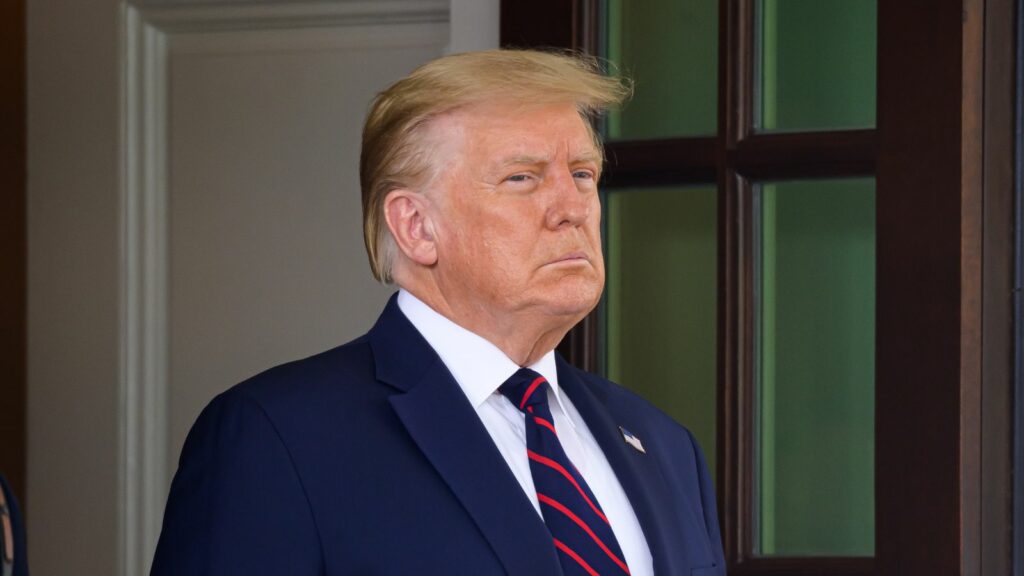
U.S. President Donald Trump has delivered a new warning to American technology companies expanding overseas, threatening substantial taxes on businesses that build artificial intelligence data centres outside the United States.
Speaking at the White House on November 20, 2026, Trump said his administration wants American companies to keep their AI infrastructure investments at home rather than directing billions of dollars toward foreign markets.
The announcement has immediate implications for Canada, where major technology companies are developing large-scale AI facilities in Alberta and Nova Scotia.
Although Trump has not announced a specific tax rate or implementation timeline, the threat introduces uncertainty for projects promising thousands of construction jobs, major energy investments and long-term economic benefits to Canadian communities.
Trump Threatens a “Tremendous Tax” on Overseas Data Centres
Trump made the announcement during a White House news conference on Friday, November 20, following a diplomatic trip to Asia. The president declared that American companies building data centres abroad could face significant financial penalties, arguing that the United States must retain its leadership in artificial intelligence. He warned that allowing critical computing infrastructure to move overseas could repeat what he considers past mistakes involving semiconductor manufacturing and other advanced technologies. His comments suggested that AI infrastructure is becoming another priority in his administration’s broader efforts to encourage domestic industrial investment.
The president’s warning was particularly notable because he acknowledged that the proposal had not yet been discussed with members of his administration. He provided no specific tax rate, implementation date or explanation of how penalties would be calculated. It also remains unclear whether existing overseas facilities, projects already under construction or future developments would be affected. For technology companies making multibillion-dollar commitments years in advance, that uncertainty creates a difficult planning environment. A potential tax could alter investment calculations even before any formal legislation or administrative rules are introduced.
Canada’s Multibillion-Dollar AI Projects Are Suddenly in the Spotlight
Canada has become an important destination for American technology companies seeking additional computing capacity. In July 2026, Meta announced construction of its first Canadian data centre in Sturgeon County, Alberta. The planned one-gigawatt facility represents an investment exceeding C$13 billion and is expected to support approximately 3,000 construction workers at peak activity, along with more than 300 operational jobs. Meta also committed approximately C$60 million toward improvements to local roads, water infrastructure and community facilities. Construction is already underway, making the project a particularly significant example of the uncertainty surrounding Trump’s remarks.
Nova Scotia has another major development in progress. In October, American AI company Anthropic confirmed a long-term lease for computing capacity at EverWind’s proposed data centre campus in Point Tupper. EverWind’s broader investment plans exceed C$10 billion, including approximately C$8 billion for data centre development and C$2 billion for renewable energy projects. The development is expected to support roughly 2,000 construction positions and 215 permanent operational jobs. Neither project has been specifically identified by Trump for penalties, but both illustrate how broadly his proposed policy could affect Canadian investment if implemented.
Why American Technology Companies Build Data Centres Outside the United States
International expansion is not simply about finding cheaper land or electricity. Major cloud computing companies position data centres near their customers to improve performance, maintain reliability and meet local data-handling requirements. Microsoft, for example, operates Canadian cloud regions in Toronto and Quebec City, while Amazon Web Services has established regions in Montreal and Calgary. These facilities allow Canadian businesses and public institutions to access computing services closer to home. They also provide options for keeping certain information within Canadian borders, something particularly important for organizations managing sensitive financial, health or government data.
Geographic proximity also affects how quickly digital services operate. Financial transactions, business applications and real-time AI systems can become less efficient when large amounts of information must travel considerable distances. Microsoft specifically identifies latency, availability and data residency as important considerations when selecting cloud infrastructure locations. Trump’s proposal therefore raises a practical question: Could American companies continue serving international customers effectively while concentrating future infrastructure investment exclusively in the United States? The answer depends heavily on how broadly any restrictions are written and whether exceptions are created for legitimate overseas computing requirements.
Competition With China Is Driving Washington’s Latest Warning
Trump has connected his position on overseas data centres to America’s technological rivalry with China. During Friday’s news conference, he argued that allowing American companies to establish advanced computing infrastructure abroad could undermine the United States’ competitive advantage. His concern reflects a broader national security debate over who controls the powerful computer chips, servers and computing capacity needed to develop increasingly sophisticated AI systems. Washington has already restricted China’s direct access to some advanced American semiconductor technologies, but controlling access to computing power located in other countries presents additional challenges.
The administration introduced a separate regulatory measure earlier in the same week. On November 16, the U.S. Commerce Department announced new restrictions addressing remote access to advanced American computing technology. The rule, which took effect on November 19, targets certain overseas data centres that provide substantial computing capacity to companies associated with restricted jurisdictions, including China. It also establishes additional chip-export licensing requirements involving Malaysia, Singapore, Thailand, Indonesia and Brazil, with specified exemptions. Unlike Trump’s proposed overseas construction tax, these measures have already been formally issued. The distinction matters because the new export controls address particular national security risks rather than imposing a universal penalty on American companies investing abroad.
The Proposed Tax Faces Major Legal and Practical Questions
Despite the president’s forceful language, there is currently no publicly specified tax rate, legislative proposal or detailed enforcement mechanism accompanying his announcement. Under Article I of the U.S. Constitution, Congress possesses the authority to establish federal taxes. A September 2026 Congressional Research Service report also outlined how lawmakers could use taxation to influence the development and operation of data centres. However, Trump’s comments did not explain whether his administration would seek new legislation, rely on existing executive authority or pursue some other mechanism. Until those questions are answered, the proposal remains a policy threat rather than an established tax obligation.
Another unresolved issue concerns exactly which business activities would trigger penalties. American technology companies sometimes own overseas facilities directly, while others rent computing capacity from independent operators or participate through subsidiaries and joint ventures. Anthropic’s lease arrangement in Nova Scotia illustrates why those distinctions matter. Would leasing servers from a Canadian developer count as building a data centre abroad? Would an American company’s investment in additional equipment at an existing foreign facility qualify? Companies also need to know whether previously approved investments would receive exemptions. These are more than technical details: they could determine whether billions of dollars in planned infrastructure development remain commercially viable.
Trump Wants More AI Infrastructure Investment to Stay in America
The proposed overseas tax fits into a broader administration strategy aimed at expanding domestic AI infrastructure. In July 2025, Trump signed Executive Order 14318, directing federal agencies to accelerate permitting and support qualifying data centre developments, including large facilities requiring more than 100 megawatts of electricity. The order also addressed related infrastructure such as power generation, transmission equipment and semiconductor manufacturing. By reducing regulatory delays and encouraging investment within American borders, the administration hopes to strengthen domestic computing capacity and retain economic benefits that might otherwise flow to international projects.
During his November 20 remarks, Trump encouraged American communities to negotiate financial benefits from technology developers rather than reject proposed data centres outright. He argued that communities should secure payments and other concessions in exchange for hosting facilities. The administration had previously introduced a Ratepayer Protection Pledge in March 2026, calling on major technology companies to cover the electricity and infrastructure costs associated with their operations. Together, these policies show that Washington wants to accommodate rapid AI expansion while addressing concerns about its local impact. The challenge is that economic incentives alone may not overcome residents’ worries about electricity prices, water consumption and the physical scale of new developments.
Growing American Opposition Creates a Complication for Trump’s Strategy
Trump’s determination to keep data centres in the United States comes at a time when many American communities are questioning whether they want these facilities nearby. During the November 2026 midterm elections, opposition to large AI developments became a significant local political issue. According to an Associated Press examination of election results, restrictions on data centre construction were approved in 44 of 45 completed local referendum counts tracked by researchers. An AP voter survey also found that approximately three-quarters of American voters opposed building a new data centre in their own communities. Electricity costs, water consumption, environmental concerns and limited public consultation have contributed to the resistance.
The scale of the industry’s energy requirements helps explain those concerns. Updated International Energy Agency projections indicate that worldwide data centre electricity consumption could reach approximately 950 terawatt-hours annually by 2030, nearly twice its estimated 2025 level. Although that would represent only about 3% of global electricity consumption, the demand can be heavily concentrated in individual communities. New facilities may require expensive grid upgrades, additional generation capacity and extensive cooling systems. Trump’s overseas tax proposal could therefore intensify an existing contradiction: Washington wants more domestic AI investment, but many American communities are demanding stronger restrictions on precisely the developments the administration hopes to attract.
Canada Is Positioning Itself as a Major AI Infrastructure Destination
Canada has several advantages that appeal to international data centre developers, including its extensive energy resources, skilled workforce, available industrial land and relatively cool climate. Electricity generation is another important factor. Statistics Canada’s preliminary figures show that renewable energy sources accounted for approximately 64.1% of Canadian electricity production in 2025, with hydroelectricity alone supplying 54.5%. However, the national figures conceal substantial regional differences. Alberta’s expanding AI infrastructure sector, for example, relies heavily on natural gas development, while provinces such as Quebec benefit from established hydroelectric systems. Electricity availability and costs therefore vary considerably depending on where a project is proposed.
Ottawa has also been developing policies intended to expand Canada’s domestic computing capacity. In September 2026, the federal government introduced Responsible Data Centre Development Principles, establishing expectations for protecting electricity customers, reducing water consumption, providing community benefits and strengthening Canadian technological capabilities. Meta, Anthropic, Microsoft, Amazon Web Services and numerous other technology companies were among the initial signatories. The framework reflects Canada’s interest in attracting investment without transferring infrastructure costs to households. Trump’s proposed tax adds an external challenge to those ambitions, potentially making American companies reconsider international projects even when Canadian regulatory requirements and financing arrangements are otherwise favourable.
The Financial Consequences Could Extend Beyond Major Technology Companies
American technology companies have already established extensive international data centre networks. Equinix, a major U.S.-based infrastructure provider, reported operating 282 data centres across 36 countries in its third-quarter 2026 investor information. Digital Realty, another American company, reported a consolidated portfolio of 311 data centres as of September 30, 2026, including facilities in Europe, Asia and other international markets. Microsoft, Google and Amazon have similarly developed geographically distributed computing networks. A broad restriction on overseas expansion could therefore affect businesses whose international operations are deeply integrated into their commercial strategies, rather than only companies proposing new AI megaprojects.
The potential consequences would also extend to Canadian businesses involved in construction, electricity generation, equipment supply and infrastructure services. Major data centre developments create commercial opportunities for engineering firms, contractors, utilities and local suppliers, often years before a facility begins operating. Delays or reductions in investment could affect those businesses even if they are not directly subject to American taxation. However, the risk should not be confused with an announced cancellation. Neither Meta’s Alberta investment nor Anthropic’s Nova Scotia lease has been shown to be canceled because of Trump’s November 20 remarks. For now, the financial consequences remain hypothetical, dependent on the final scope of any policy and how affected companies respond.
What Happens Next for Canada’s Data Centre Investments?
The next major development will be whether the White House produces a formal policy proposal explaining which overseas investments could be taxed and how the penalties would work. Until then, Canadian governments and technology developers face an uncertain situation rather than an immediate financial obligation. Meta’s Alberta project is already under construction, while the Anthropic-backed development in Nova Scotia involves a long-term commitment to future computing capacity. Decisions about equipment purchases, electricity connections and construction schedules depend on financial forecasts that extend years into the future. Even the possibility of additional taxation could influence those forecasts, particularly if a proposed policy offered no exemptions for previously announced commitments.
Canada is meanwhile pursuing its own goal of building a stronger domestic AI computing sector. The 2026 federal budget proposed financial tools intended to help Canadian AI companies access 500 megawatts of sovereign computing capacity, while Ottawa’s data centre principles emphasize responsible electricity use and benefits for local communities. For construction workers, energy suppliers and businesses near proposed developments, the key question is whether promised investments will translate into completed facilities and lasting employment. That will depend less on the force of Trump’s warning than on whether it becomes enforceable policy—and how American technology companies respond.
