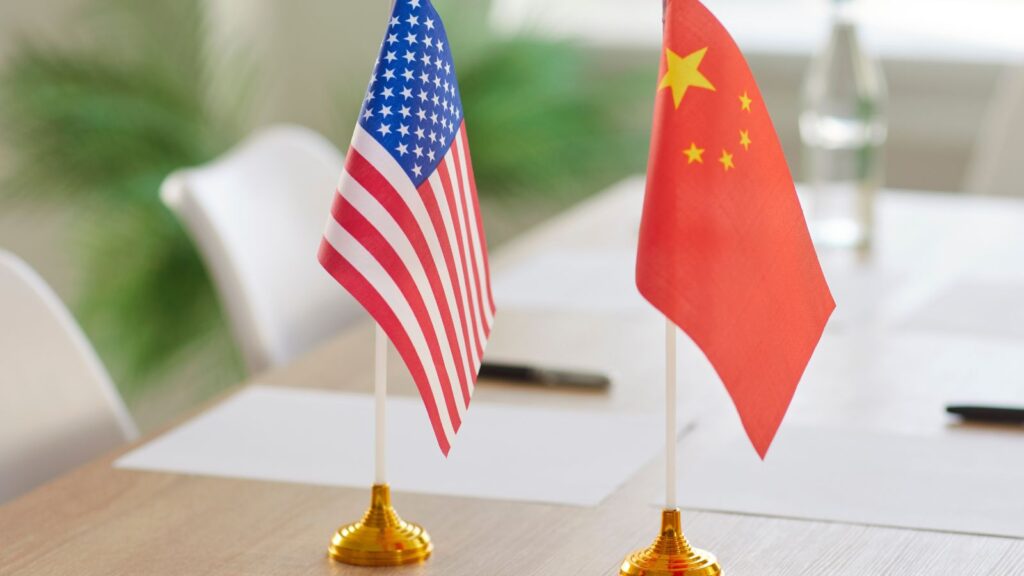
A striking split has opened in Washington’s trade policy. President Donald Trump’s administration has agreed to give China another two months under its existing trade truce, pushing a key deadline from November 10, 2026, to January 10, 2027. At almost the same moment, Canada is heading toward another escalation in its own dispute with the United States.
Beginning September 29, certain Canadian products are scheduled to be excluded from the U.S. market under proclamations targeting disputes involving alcohol, dairy and motor vehicles. The contrast is significant, although the two relationships involve different negotiations and grievances. China is receiving additional time to work through unresolved issues, while Canada faces tighter restrictions after bilateral talks broke down and both countries imposed retaliatory tariffs.
China’s Trade Truce Now Runs Until January
The immediate result of the latest U.S.-China negotiations is relatively simple: a trade truce scheduled to expire November 10 will instead continue until January 10, 2027. U.S. Treasury Secretary Scott Bessent said negotiators agreed to the two-month extension while exploring whether a broader economic agreement could be reached. Trump and Chinese President Xi Jinping then met at the White House on September 24, their second summit of 2026.
That matters because the alternative is not a return to ordinary trading conditions. U.S.-China tariffs climbed above 100% during the most intense period of the 2025 trade confrontation before negotiations reduced some of those barriers. The current arrangement therefore functions partly as a guardrail against another sudden escalation. It gives manufacturers, retailers, farmers and financial markets two additional months in which the basic tariff framework is unlikely to change dramatically, even though many existing tariffs and trade restrictions remain in place.
The Extension Buys Time Rather Than Settling the Fight
The extra two months should not be confused with a comprehensive U.S.-China trade settlement. U.S. Trade Representative Jamieson Greer said Washington expects to release additional details on September 28 about agreements reached during the latest negotiations. He has described progress toward shielding some categories of relatively non-sensitive trade from future disputes, including American agricultural products and medical devices and Chinese consumer goods.
Major disagreements remain outside that limited framework. Technology controls, access to advanced American semiconductors, Chinese rare-earth supplies, agricultural purchases and broader industrial policy remain sensitive. High-end U.S. chips were not part of the latest trade discussions, according to Greer. Earlier agreements have also taken time to implement: Chinese commitments involving American farm purchases and aircraft have progressed unevenly. The January deadline therefore represents another checkpoint rather than a finish line. Washington and Beijing have reduced the immediate risk of a tariff shock while leaving much of their strategic competition intact.
Canada Is Moving Toward a Very Different September 29 Deadline
Canada faces a more immediate change. U.S. presidential proclamations issued September 8 state that certain Canadian products will be excluded from importation beginning at 12:01 a.m. Eastern time on September 29. Separate measures cover goods connected to Washington’s disputes with Canada over alcoholic beverages, dairy and motor vehicles. The restrictions replace the 50% tariff treatment already applying to specified products covered by those proclamations.
The measures are targeted rather than a prohibition on all Canadian exports to the United States. That distinction matters for businesses trying to understand the practical effect. Products covered by the new bans that were imported before September 29 but had not yet formally entered U.S. commerce can remain subject to the earlier 50% duty instead. Other Canadian goods continue operating under separate tariff or trade rules. Even so, moving selected products from a steep tariff to outright exclusion represents a further escalation beyond simply making those imports more expensive.
Washington Is Using a Nearly Century-Old Trade Power Against Canada
The Canada measures are unusual because they rely on Section 338 of the Tariff Act of 1930. The provision allows a U.S. president to impose additional duties of as much as 50% when another country is determined to discriminate against American commerce. If that discrimination continues, the statute also provides authority to exclude affected goods from the United States. Trump became the first president to expressly invoke Section 338 to impose tariffs when he targeted Canada in July 2026.
Washington says its complaints involve Canadian policies affecting American alcohol, dairy products and vehicles. Canada disputes the U.S. characterization of its trade practices and has called the tariffs unjustified. The unusual legal mechanism is important because the Section 338 duties apply to covered goods even when they would otherwise qualify for preferential treatment under the Canada-U.S.-Mexico Agreement. That has weakened one of the protections Canadian exporters had relied on during earlier rounds of American tariffs.
Ottawa Has Already Answered With C$27.6 Billion in Counter-Tariffs
Canada has not responded by simply absorbing the new American duties. After the United States imposed 50% tariffs on C$27.6 billion worth of Canadian goods beginning August 22, Ottawa announced an equivalent C$27.6 billion package of countermeasures. Those Canadian tariffs took effect September 8 and include rates of 15%, 25% and 50%, depending on the product.
The affected American goods span several sectors, including steel and aluminum, dairy, appliances, agricultural equipment, pulp and paper, plastics and electronics. Existing Canadian counter-tariffs on American automobiles also remain in place. Ottawa paired the trade response with C$7.5 billion in new and expanded assistance for businesses and workers affected by the dispute, on top of previously announced support programs. For companies on either side of the border, the result is increasingly complicated: the question is no longer merely whether a product crosses the border, but which tariff authority applies, where it originated and whether it appears on a changing list of targeted goods.
Canada’s Dependence on the U.S. Makes Every Escalation Economically Important
The scale of Canada-U.S. economic integration helps explain why these measures command so much attention in Ottawa. Statistics Canada reported that 71.7% of Canadian merchandise exports went to the United States in 2025. That was already down substantially from 75.9% in 2024, but it still means roughly seven out of every ten dollars of Canadian goods exports depended on the American market. U.S. government figures put total two-way goods and services trade with Canada at approximately US$872.3 billion in 2025.
Recent figures show how quickly the monthly picture can move. Canadian merchandise exports to the U.S. dropped 6.6% in July 2026, the sharpest percentage decrease since April 2025, while imports from the United States increased 1.8%. Canada’s merchandise surplus with the U.S. consequently fell from C$10.3 billion in June to C$5.9 billion. Statistics Canada attributed much of July’s export decline to crude oil and gold, meaning the movement cannot be blamed solely on tariffs.
Canada Is Trying to Build More Trade Outside the United States
The trade dispute is also accelerating attention on markets beyond the United States. In July, Canadian merchandise exports to non-U.S. destinations reached a record C$25.6 billion, rising 7.4% from the previous month. Countries outside the United States accounted for 33.7% of Canadian exports that month. That is a notable shift for an economy whose export geography has historically been dominated by its southern neighbour.
Ottawa is pursuing that strategy through trade negotiations as well. Canada and India have set an objective of completing a comprehensive economic partnership agreement by the end of 2026. Canadian officials have also said negotiations with the Philippines and the Association of Southeast Asian Nations are more than 90% complete, with agreements potentially moving toward completion in November. Those efforts cannot quickly replace a market as large, geographically close and deeply integrated as the United States, but they can gradually reduce the economic consequences when access to the American market becomes less predictable.
The Next Few Days Will Show How Different the Two Trade Tracks Have Become
The calendar now captures the contrast. Washington is expected to disclose more information about its China negotiations on September 28. One day later, the scheduled import bans on specified Canadian goods take effect. China therefore enters the autumn with its major tariff deadline pushed into January, while Canadian exporters covered by the U.S. proclamations face an immediate new restriction.
There is also little indication that Washington feels pressured to resolve the Canada dispute quickly. On September 25, Greer said the Trump administration was comfortable with the current state of the relationship and saw no urgent need to reach an agreement, even though communication between officials continues. Canada-U.S. negotiations had already been suspended after the August breakdown. The contrasting treatment does not necessarily indicate a single broader strategy toward allies versus rivals; the China and Canada disputes involve different complaints, legal authorities and negotiations. But for Canadian businesses, the practical reality is straightforward: Beijing has gained more negotiating time while another U.S. trade deadline for Canada is only days away.
