A $13-billion technology investment would normally give a provincial government an easy economic victory lap. In Alberta, Meta’s enormous planned data centre has instead opened a much broader argument about electricity, water, rural development and who ultimately carries the risks of the artificial-intelligence infrastructure boom.
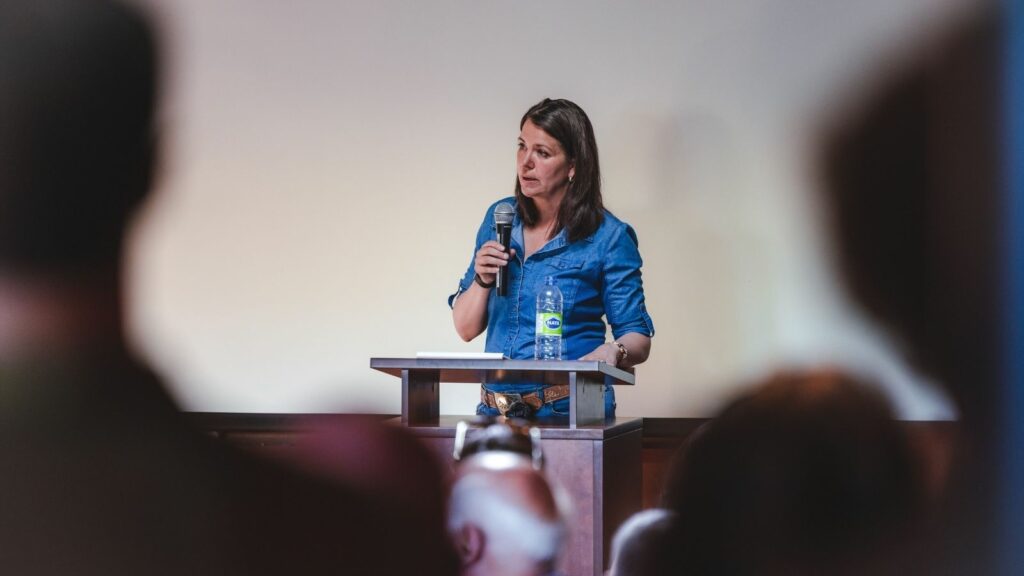
More than 12,500 people tuned in to a provincial virtual town hall as Premier Danielle Smith and cabinet ministers fielded questions about Alberta’s expanding data-centre ambitions. The size of the audience underscored how quickly an industrial-development issue has become a kitchen-table debate. Meta’s planned Sturgeon County campus promises billions in private investment and thousands of construction jobs, but residents are increasingly asking what happens outside the server halls — particularly to power bills, water supplies and neighbouring communities.
A 12,500-Person Audience Shows How Quickly the Issue Has Grown
The virtual meeting lasted about an hour, with Albertans able to submit questions online or participate by telephone after registering. Primary Care Minister Justin Wright, who moderated the event, said more than 12,500 people had tuned in. Smith was joined by three ministers as residents raised concerns about electricity costs, water consumption, jobs, setbacks from homes and what would happen to enormous facilities if their owners eventually walked away. The session was noticeably calmer than two earlier in-person meetings where Technology Minister Nate Glubish faced sharp criticism from residents.
Yet the absence of shouting did not mean the concerns had disappeared. According to the Canadian Press account of the meeting, callers largely focused on risks rather than celebrating Alberta’s success in attracting technology companies. That distinction matters. Provincial officials have spent years positioning Alberta’s abundant energy, industrial expertise and relatively low taxes as competitive advantages for data centres. The town halls show that communities are now asking for an equally detailed explanation of the costs that accompany those advantages.
Meta Is Bringing a Project on an Industrial, Not Office-Park, Scale
Meta says the Sturgeon Data Centre will represent more than $13 billion in investment and initially operate at roughly one gigawatt of capacity. The company describes it as its first Canadian data-centre campus. At the peak of construction, approximately 3,000 workers are expected on site, while more than 300 jobs are expected once operations are established. Meta has also committed roughly $60 million to local infrastructure improvements involving roads and water systems.
Those figures explain why Alberta has promoted the project so heavily. A hyperscale computing campus is closer in economic character to a major industrial development than a conventional technology office. The province’s major-projects database says construction is expected to take about three years and that the facility is intended to have its own natural-gas-powered electricity supply. Provincial officials have separately said the development could generate roughly $250 million annually through a combination of royalties, taxes, levies and other government revenues. That projected return, however, has not ended arguments over costs elsewhere in the system.
Water Became One of Smith’s Most Difficult Questions
Meta plans to use closed-loop liquid cooling, an important detail because cooling is one of the biggest operational challenges for large computing facilities. During the town hall, Smith and her ministers repeated that the Meta campus itself is expected to use comparatively little ongoing water. Government and company representatives have compared the facility’s annual consumption with that of a golf course. Alberta’s major-projects information similarly describes a closed-loop system designed to avoid continuously drawing cooling water from surrounding supplies.
Residents pointed out that the computing buildings are only one part of the development. A Calgary caller asked about water required by the separate natural-gas generating project intended to supply Meta with electricity, arguing that the power plant’s needs also belong in the discussion. Smith acknowledged the point and responded that Alberta already accommodates major industrial water users. Another caller questioned whether adding large industrial developments made sense after periods of water restrictions in parts of Alberta. The exchange exposed a recurring problem: assessing the entire industrial ecosystem can produce a different picture from assessing only the data centre.
Electricity Costs Have Become the Most Contested Number
Days before the town hall, the Pembina Institute released modelling estimating that the Meta development could add roughly $267 to $462 a year to the electricity costs of an average Alberta household between 2027 and 2031. Its argument is not that residents would directly pay Meta’s connection costs. Instead, Pembina contends that allowing enormous new loads to connect before dedicated generating capacity is fully available could tighten Alberta’s wholesale electricity market and push energy prices upward.
Both Meta and Alberta’s government disputed that conclusion. The province said the analysis did not properly reflect how consumer electricity rates work and noted that many households have fixed-rate contracts. Officials also argued that Alberta’s competitive market should respond to greater demand by attracting additional generation. Meta called the modelling speculative and emphasized that it is paying its own grid-connection costs. That leaves Albertans with competing projections rather than a settled answer. The disagreement is significant precisely because a one-gigawatt customer is large enough to alter assumptions about supply, investment timing and wholesale-market conditions.
Residents Want More Distance Between Data Centres and Homes
Physical proximity emerged as another concrete concern. During the virtual meeting, participants were asked whether they supported setback requirements designed to keep large data centres farther from residential communities. Wright reported that 57 per cent of respondents strongly supported the idea. Smith had already said her government was examining whether additional guidance on setbacks was needed after criticism at the earlier community meetings.
The debate gained urgency when the Alberta Utilities Commission rejected a separate proposal by Synapse Real Estate Corp. near Olds. Synapse had sought approval for an approximately 1,400-megawatt combined-cycle natural-gas plant, accompanied by substantial emergency and backup diesel generation, to serve an on-site data-centre load. The AUC concluded that the proposed plant was too close to the surrounding community and that the developer had not demonstrated a compelling justification for the location. The decision showed that provincial regulators can reject projects even as the government aggressively promotes the industry.
Thousands of Construction Jobs Lead to a Harder Question About Permanent Employment
Employment is among the strongest arguments for attracting Meta. More than 3,000 construction workers could be on the Sturgeon County site at its peak, providing years of work for tradespeople, contractors and suppliers. Large industrial construction also creates activity beyond the fence line, from equipment rentals and transportation to accommodation, engineering and food services. For a province accustomed to building oil, gas and petrochemical megaprojects, that portion of the economic proposition is familiar.
Operations tell a different story. Meta expects the completed campus to support more than 300 permanent positions — meaningful employment, but far fewer jobs than the construction phase. A caller at the town hall asked whether those positions would go to Albertans. Smith said local employment was the goal and connected the issue to her government’s broader immigration and temporary-worker policies. The contrast between a $13-billion capital investment and several hundred lasting jobs explains why residents are increasingly interested in taxes, infrastructure contributions and community benefits rather than judging these projects by employment numbers alone.
Alberta Has Rules, but the Political Argument Is Over Whether They Are Strong Enough
The provincial government maintains that data centres face established municipal, environmental, electricity and safety approvals. Alberta also introduced a dedicated data-centre levy in January 2026. The levy can reach 2 per cent of the value of computing equipment at large facilities, with lower rates available for projects that reduce their impact on the public electricity system by supplying their own generation. Levy payments are deductible against Alberta corporate income taxes.
Alberta’s broader policy encourages what is commonly described as a “bring your own power” model. Developers are expected to pay for land, generation, connections and required infrastructure rather than shifting direct project costs to ordinary ratepayers. The province says the approach is intended to protect affordability and reliability while encouraging investment. Critics counter that indirect effects — such as wholesale-market pressures, water allocation or local land-use conflicts — still require stronger safeguards. The dispute therefore is not simply whether regulations exist. It is whether rules designed during a rapidly developing industry are comprehensive enough for projects operating on gigawatt scale.
The Meta Fight Is Turning Into a Test of Public Confidence
Alberta’s Opposition NDP is calling for a moratorium on new AI data-centre approvals until tougher rules are established. Leader Naheed Nenshi has called for clearer setback and water requirements, community-benefit expectations and plans dealing with facilities at the end of their useful lives. During Smith’s town hall, reclamation became an issue as well. Glubish argued that abandoned data-centre buildings would retain value and could likely be repurposed by another operator, while Smith said the government had confidence the structures could find other uses.
Smith’s government is taking the opposite approach: continue welcoming investment while using public consultations to identify gaps and adjust regulations. A final scheduled provincial data-centre town hall is set for Sept. 11 in Grande Prairie. That means the $13-billion Meta development has become more than a single investment announcement. It is an early test of whether Alberta can build a new resource-intensive industry quickly enough to capture the AI boom while convincing communities that growth will not come at their expense.
