
Canada’s housing crisis is no longer simply a story about prices, interest rates or construction targets. It is changing who shares a home, when young adults leave their parents, where couples raise children and how much time families have left after paying for shelter. Homes are increasingly becoming workplaces, caregiving centres, income sources and multigenerational safety nets—often all at once.
These 17 changes reveal how housing pressure reaches far beyond real estate. Some arrangements provide companionship, shared child care and financial resilience. Others bring crowding, delayed milestones, exhausting commutes and persistent uncertainty. Together, they show that the shortage of affordable, suitable homes is quietly rewriting the routines and expectations of Canadian family life.
Adult Children Are Staying Home Longer

For many young adults, moving out is no longer treated as an automatic step after school or the first full-time job. Statistics Canada found that 57% of 20- to 24-year-olds lived with their parents in 2021, while 35.1% of adults aged 20 to 34 lived with at least one parent. High rents, large down payments and uncertain early-career income can make a separate household feel financially reckless rather than liberating.
That changes the rhythm of family life. Parents may keep bedrooms available longer, cover more groceries and utilities, or renegotiate privacy with adult children who are working, dating and saving under the same roof. A 27-year-old returning home after a lease increase may contribute rent and help with younger siblings, but the arrangement can still postpone independence. Co-residence is not always a crisis response; cultural preferences and caregiving also matter. Yet affordability has made the arrangement more common, longer-lasting and harder to describe as merely temporary.
Multigenerational Homes Are Becoming More Common

Three generations under one roof are becoming a more visible part of Canadian family life. In 2021, about 2.4 million people—6.5% of everyone living in private households—lived in a multigenerational household. Nearly one in 10 children lived in this kind of family arrangement, and one-parent families were especially likely to share a home with grandparents or other relatives.
The practical advantages can be substantial. Grandparents may provide child care, adult children can help with transportation and appointments, and several earners can divide mortgage, rent and utility costs. A household that once might have occupied two or three addresses may now organize meals, caregiving and finances around one kitchen. The trade-offs are equally real: noise, limited privacy, conflicting routines and unclear responsibilities can produce tension. Multigenerational living has deep cultural roots in many communities, so it should not be reduced to a symptom of unaffordability. The housing crisis, however, is making this choice financially necessary for families that might otherwise have preferred separate homes nearby.
More Families Are Sharing With Roommates or Relatives

Sharing housing with roommates or extended relatives is no longer confined to students and people in their early twenties. Statistics Canada identified 1.65 million households with roommates or extended family members in 2021, split almost evenly between relatives-only households and homes that included non-relatives. These arrangements allow rent, internet, utilities and even child-care duties to be spread across more adults.
Family life in a shared home often becomes highly scheduled. Kitchen time may be divided, storage labelled and quiet hours negotiated around shift work, school and sleep. A separated parent might rent a room in a larger house to keep access to a child’s neighbourhood, while cousins may combine incomes to secure a three-bedroom unit neither household could afford alone. Sharing can provide companionship and resilience, but it can also leave residents with weak tenure, little privacy or no realistic alternative if relationships deteriorate. The result is a growing grey zone between a conventional family household and a temporary housing arrangement, with emotional bonds and financial survival increasingly intertwined.
Bedrooms Are Being Shared in New Ways

When families cannot afford enough bedrooms, the definition of “home” becomes more flexible. In the 2018 Canadian Housing Survey, about 747,100 households—5% of the total—lived in unsuitable housing, meaning the dwelling did not have enough bedrooms for its size and composition. The rate was higher among renters, and crowding has been particularly severe for some recent immigrants, Indigenous and northern households.
The statistic translates into ordinary compromises: siblings sharing beyond the age a family expected, a dining area becoming a sleeping space, or grandparents occupying a room originally intended for children. Crowding can make homework, sleep and conflict resolution more difficult because there is nowhere to withdraw. It can also intensify illness transmission and strain bathrooms, kitchens and storage. Families frequently adapt with bunk beds, curtains, staggered routines and strict rules about noise. Those solutions show creativity, but they do not create more space. As larger rental homes remain scarce and expensive, the number of bedrooms increasingly shapes family relationships, not just housing comfort.
Renting Is Becoming a Longer Stage of Family Life

Homeownership is still a major goal for many Canadian families, but it is arriving later—or not at all. The national homeownership rate fell from a peak of 69.0% in 2011 to 66.5% in 2021, even though the absolute number of owner households grew. Statistics Canada’s recent work on millennials also links affordability pressures with delayed departures from the parental home and deferred entry into ownership.
Longer periods of renting affect decisions that once followed a familiar sequence: move out, buy a starter home, have children and trade up. A couple may remain in a one-bedroom apartment while saving, then discover that prices and borrowing costs rose faster than the down payment. Others decide that stable renting is preferable to taking on a mortgage that would consume most of their income. This does not make renters less committed to family life, but it changes what stability looks like. Instead of building routines around a property they expect to keep, families may plan around lease renewals, landlord decisions and the possibility that their next move will cost much more.
Family Wealth Is Determining Who Can Buy

The housing crisis is increasing the importance of family wealth in determining who can buy. Statistics Canada reported that in 2021, about 17.3% of residential properties owned by people born in the 1990s were co-owned with their parents. Bank of Canada research has also documented growing reliance on parental mortgage co-signing among first-time buyers as affordability constraints tightened.
That support can turn an impossible purchase into an achievable one, but it also redraws family boundaries. Parents may delay retirement, use a home-equity line of credit or accept legal responsibility for a mortgage on a property where they do not live. Adult children may feel gratitude alongside pressure to choose a home their parents approve of or to remain in a city close to family. Meanwhile, households without property-owning relatives face a structurally different path, even at similar incomes. Housing assistance has always existed within families, but today it can involve six-figure transfers, shared title and long-term financial exposure. The “family home” is increasingly becoming a multigenerational balance-sheet project.
Family Milestones Are Being Reconsidered

Housing uncertainty is also entering decisions about partnership and parenthood. Canadian demographic experts consulted by Statistics Canada have identified housing affordability, rising living costs and reduced confidence in the future among factors that could suppress fertility. International research likewise finds that high housing costs can influence when people form households and have children, although the effect differs between owners and renters and cannot explain every change in birth rates.
For couples, the issue is often less about wanting a detached house than about securing a stable, suitably sized home. A pair in a small rental may postpone a second child because a two- or three-bedroom unit would add hundreds of dollars to monthly costs. Others delay marriage or continue living separately because combining households near both jobs is unaffordable. These choices are deeply personal and shaped by careers, health, child care and culture as well as housing. Still, when shelter feels temporary or consumes an outsized share of income, family milestones can begin to look like financial risks rather than natural next steps.
Families Are Postponing Necessary Moves

Rising prices are preventing families from making moves they believe would improve their lives. Statistics Canada found that 26.1% of Canadians reported that higher prices had affected plans to buy a home or move to another rental. The effect was much stronger among tenants: 40% said their plans were affected. Among younger people experiencing financial difficulty, roughly 45% reported that rising prices had interfered with moving decisions.
A family may need another bedroom, a shorter commute or a home closer to grandparents, yet remain in place because every available alternative costs more. That can mean keeping a toddler in the parents’ room, declining a job in another city or staying in a neighbourhood after support networks have moved away. The financial penalty for moving creates a form of residential gridlock: the current home is unsuitable, but the next one is unaffordable. Over time, postponed moves can affect work, child care, relationships and life satisfaction. Housing scarcity changes mobility from a practical decision into a high-stakes calculation involving the entire household.
Affordable Leases Are Becoming Too Valuable to Surrender

For many renters, an affordable lease has become an asset that cannot easily be replaced. In the 2021 Census, 43.2% of recent renter households were in unaffordable housing, compared with 30.5% of longer-standing renters. Median monthly shelter costs were about $1,320 for recent renters and $1,020 for existing renters, illustrating the financial jump that can follow a move.
This gap encourages families to tolerate conditions they would once have left. A tenant may stay with poor insulation, limited accessibility, a difficult landlord or too few bedrooms because the market price of a comparable unit is hundreds of dollars higher. Separating couples may remain under one roof longer, and parents may turn down work that requires relocation. Children can also remain in the same school, which provides continuity, but the stability is partly enforced by fear of losing the lease. Rent regulation, vacancy rules and local market conditions differ across Canada, yet the broader pattern is clear: staying put can be cheaper than choosing a home that better fits the family.
Work, School and Family Life Compete for Space

The home now carries more functions than many dwellings were designed to handle. At the time of the 2021 Census, 24.3% of Canadian workers worked from home, up from 7.4% in 2016. At the same time, Statistics Canada found that one in five households with roommates or extended family members lived in crowded dwellings. For families in compact or shared housing, paid work, schoolwork, caregiving and rest may compete for the same rooms.
A kitchen table can serve as an office at 9 a.m., a homework station at 4 p.m. and the only dining surface at night. Shift workers may sleep while children attend online tutoring or relatives take calls nearby. Even after pandemic restrictions ended, hybrid work left many households needing quiet, private space that their housing budgets could not buy. Families respond with folding desks, headphones, room dividers and carefully timed routines. These adaptations can work, but they also make domestic life more managerial. Square footage increasingly determines who gets silence, privacy and uninterrupted time.
Families Are Moving to Less Expensive Provinces

Some families are responding to unaffordable markets by leaving their province or metropolitan area. In 2023, Alberta recorded a net interprovincial gain of 55,107 people, the largest for any province since comparable records began in 1972. Ontario lost a net 36,197 people to other provinces, while British Columbia posted its first annual net interprovincial loss since 2012. Housing is not the only reason people move, but affordability is an important part of the calculation.
A household selling a small home in the Greater Toronto Area may be able to purchase a larger property in Edmonton or a smaller Alberta city. Renters may make the same move to secure an extra bedroom and lower monthly costs. The gain in space can come with losses: grandparents become a flight away, shared child care disappears and professional networks must be rebuilt. Receiving communities also face new pressure on schools, health services and local rents. The housing crisis is therefore rearranging family geography, trading proximity to established support systems for a more manageable balance sheet.
Affordable Housing Often Comes With a Longer Commute
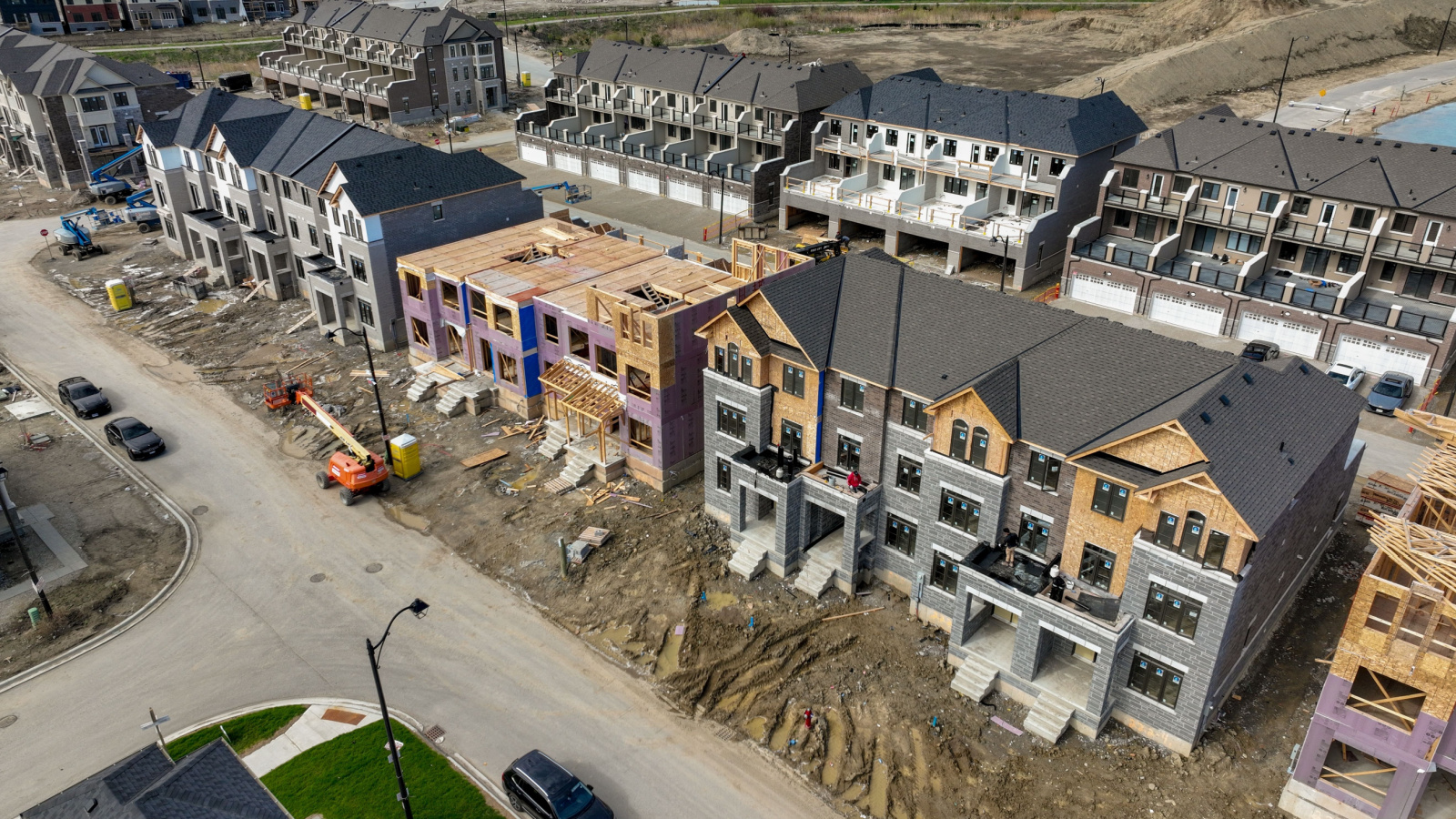
Families priced out of central neighbourhoods often pay for affordability with time and transportation. Statistics Canada’s research on metropolitan commuting found growth in traditional suburb-to-core commuting and in travel between suburbs. Earlier work on the Greater Toronto region also noted that many residents preferred walkable, transit-friendly neighbourhoods with shorter commutes but were constrained by housing prices.
The daily cost is not limited to fuel or transit fares. A longer commute can reduce the time available for school pickups, meal preparation, homework and caregiving. It may require a second vehicle or force one parent into more flexible, lower-paid work. A family that gains a backyard by moving farther from the city can lose two hours together each weekday. Remote and hybrid work have softened this trade-off for some occupations, but many health-care, retail, construction and service workers cannot work from home. Housing and transportation are therefore becoming a single household decision: cheaper shelter at the edge of a region may carry a substantial cost in time, vehicles and family coordination.
Housing Costs Are Crowding Out Other Essentials

As shelter consumes more income, other parts of family life are being cut back. In 2022, 33.0% of renter households spent at least 30% of income on shelter, more than twice the rate for owners. By spring 2024, 55% of households with children said rising prices were greatly affecting their ability to meet day-to-day expenses. Statistics Canada has also found that renters and one-parent families are among the groups most exposed to food insecurity.
The adjustments are often quiet: fewer extracurricular activities, delayed dental care, smaller grocery shops, cancelled trips and little left for emergency savings. A rent increase can be absorbed by removing several modest pleasures rather than one dramatic expense. Parents may shield children from the numbers while skipping meals themselves or relying on credit for utilities. Middle-income households are not immune; Statistics Canada has reported that shelter and utility spending continued to outpace income growth for some families. The housing crisis changes not only where families live, but what remains possible after the housing payment clears.
Mortgage Renewals Are Rewriting Household Budgets

Higher mortgage payments are reshaping life for owners who once considered their housing costs predictable. Bank of Canada analysis estimated that about 60% of mortgage holders renewing in 2025 and 2026 would face payment increases. Compared with December 2024 payments, the average increase was projected at roughly 10% for 2025 renewals and 6% for 2026 renewals, with five-year fixed-rate borrowers forming much of the affected group.
For a family, even a moderate percentage increase can equal the cost of groceries, child care days or a vehicle payment. Some owners extend amortizations, reduce retirement contributions or postpone renovations and parental leave. Others add a tenant, take on extra shifts or ask adult children to contribute more. The pressure is different from that faced by renters, but it can produce the same result: less flexibility and more anxiety around the next housing bill. Ownership still provides an asset and greater tenure security, yet a renewal can expose how closely the household’s lifestyle was built around an older interest rate.
Aging Parents Are Relying More on Family Care

Canada’s aging population is making housing a caregiving issue as well as an affordability issue. Statistics Canada found that home adaptations were the most common support used by older Canadians, reported by 25.0% of people aged 65 to 79 and 51.9% of those aged 80 or older. Informal care from family and friends also becomes more common with age, particularly when formal home care is limited or unavailable.
Many families are choosing to keep an older parent in a familiar home rather than pursue costly retirement housing or long-term care. Adult children may handle snow removal, groceries, medication, repairs and appointments, sometimes travelling across a city several times a week. Others move a parent into their own home, converting a bedroom or basement and reorganizing work schedules. Aging in place can preserve independence and community ties, but it can shift substantial labour onto relatives. When accessible, affordable senior housing is scarce, the family becomes the housing system’s backup provider—offering space, transportation and care that would otherwise need to be purchased.
Secondary Suites Are Becoming Family Infrastructure

Secondary suites, basement apartments and backyard units are increasingly being treated as family infrastructure. CMHC describes accessory dwelling units as useful for accommodating aging relatives, while newer insured-refinancing options are designed to help homeowners create self-contained secondary suites. The same space can house a parent, an adult child or a tenant whose rent helps cover the mortgage.
These arrangements blur the line between investment, caregiving and family support. A couple may build a garden suite for grandparents who can then assist with child care. Another household may legalize a basement apartment so an adult child can live independently without leaving the property. For cash-strapped owners, rental income can make renewal payments manageable, though construction costs, permits and landlord responsibilities remain significant. Municipal rules vary, and not every lot or home can accommodate another unit. Still, the idea of one detached house serving one nuclear family is weakening. Families are increasingly redesigning existing property to create the housing supply the wider market has failed to provide.
More Families Are Experiencing Hidden Homelessness

At the most severe end of the crisis, family housing becomes temporary, hidden or lost altogether. The 2022 Canadian Housing Survey found that 12.1% of households had experienced some form of homelessness in their lifetime. Hidden homelessness—staying provisionally with friends or relatives without a guaranteed place to remain—was reported by 11.2% of households, far more than had experienced sheltered or unsheltered homelessness.
For families, this can look like weeks on a sibling’s sofa, children rotating between relatives, or a motel paid from dwindling savings. Because there may be a roof each night, the instability is easy to miss. Yet repeated moves can disrupt school attendance, health care, sleep and a child’s sense of safety. Canadian housing research links instability and overcrowding with poorer health, well-being and educational outcomes. Parents often work hard to preserve routines while concealing the crisis from employers, schools and friends. The housing shortage is therefore changing family life not only through smaller homes and higher bills, but through the loss of a secure address itself.
