
Artificial intelligence is rapidly transforming the Canadian job market. Roles once considered secure, such as data entry, customer service, and retail positions, are now increasingly automated. AI can handle repetitive tasks, analyze data, and even communicate with customers efficiently. Workers in fields like banking, legal support, and transportation face new challenges as machines and algorithms take on routine responsibilities. Here are 19 Canadian jobs AI is coming for sooner than you think.
Data Entry Clerks

Data entry clerks are among the first roles being affected by AI in Canada. Tasks like inputting information into databases, updating records, and managing spreadsheets are increasingly automated. AI software can process large volumes of data faster and with fewer errors than humans. Many companies are investing in digital solutions to reduce labor costs and improve efficiency. Clerks now focus on oversight, exception handling, and verifying AI outputs rather than manual entry. This shift affects positions across sectors, including finance, healthcare, and government, highlighting the growing impact of automation on routine office jobs.
Telemarketers

Telemarketing is facing disruption from AI-powered systems that can handle calls and messaging at scale. Automated voice and chatbot systems can engage potential customers, provide information, and even facilitate sales transactions without human intervention. AI tools analyze customer data to personalize interactions and improve conversion rates. As a result, fewer live telemarketers are needed for repetitive outreach tasks. Many businesses are transitioning to AI-driven lead generation and customer engagement, reducing labor costs. Telemarketers who remain often handle complex customer inquiries or supervise AI systems, showing the shift from human-driven calls to machine-assisted communication.
Customer Service Representatives

Customer service roles in Canada are being transformed by AI chatbots and virtual assistants. Routine questions, account management, and troubleshooting can now be handled without human agents. AI systems respond quickly, operate 24/7, and track customer interactions for efficiency. Representatives are increasingly needed for complex cases, escalation handling, or emotional support that machines cannot replicate. Companies use AI to reduce wait times and operational costs. Workers must adapt by developing skills in problem-solving, customer empathy, and AI system management. This change is common across banking, telecommunications, retail, and government services.
Retail Cashiers
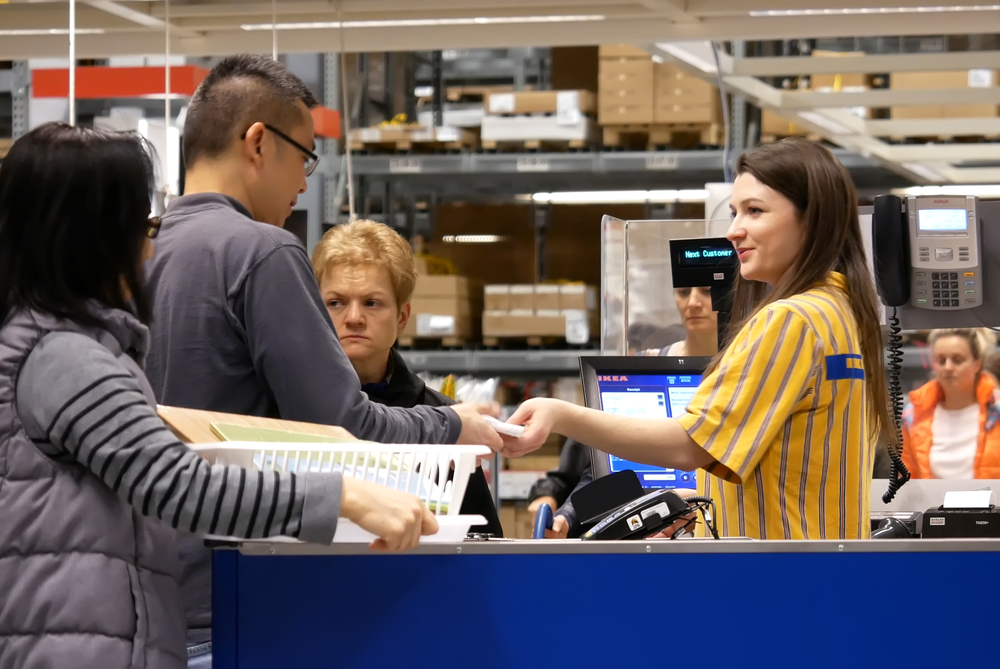
Retail cashiers face AI and automation in the form of self-checkout machines, automated payment systems, and cashierless stores. These systems allow customers to scan and pay for items without staff assistance. Large Canadian retailers have begun implementing self-checkouts and mobile payment technologies in many stores. Cashiers now focus on customer support, technical issues, and maintaining smooth operations rather than processing every transaction. The shift reduces labor costs while improving efficiency. While some positions remain, the traditional role of a cashier is gradually being replaced or redefined by AI and automation technology.
Bookkeeping and Accounting Clerks

Bookkeeping and accounting clerks are at risk as AI software automates tasks like invoice processing, payroll, and reconciliation. Machine learning tools can categorize transactions, detect errors, and generate reports faster than humans. Clerks now oversee AI outputs, focus on complex analysis, and handle exceptions. Many small and medium businesses adopt automated accounting platforms, reducing the need for routine clerical work. Professionals who adapt by learning AI tools and analytics remain valuable. This trend is transforming accounting departments, allowing staff to spend less time on manual entry and more on strategic financial decision-making.
Bank Tellers

Bank tellers in Canada face increasing automation through online banking, ATMs, and AI-driven kiosks. Routine transactions like deposits, withdrawals, and account inquiries can be completed digitally without teller involvement. AI chatbots also handle basic banking questions and account management. Tellers now perform specialized services such as loan assistance, complex transactions, and customer relationship management. Banks reduce staffing costs by automating repetitive tasks, while employees focus on advisory roles. The shift illustrates how traditional financial services positions are evolving as AI becomes capable of performing many standardized banking operations efficiently.
Travel Agents

Travel agents in Canada are increasingly affected by AI-powered booking platforms. Online tools and apps can search flights, hotels, and vacation packages instantly. AI can suggest itineraries, compare prices, and handle cancellations or changes. This reduces the need for traditional travel agents. Agents who remain focused on complex planning, corporate travel, and personalized experiences. Luxury trips, group travel, and unique itineraries still require human expertise. However, routine bookings are often automated, lowering demand for standard travel agent roles. AI has made self-service planning convenient for consumers, transforming the way Canadians arrange travel.
Insurance Underwriters

Insurance underwriters are facing automation through AI systems that assess risk and calculate premiums. Machine learning models analyze applicant data, claims history, and statistical trends to make faster, more accurate decisions. AI can also flag high-risk profiles and detect potential fraud. Human underwriters now focus on exceptions, complex policies, and regulatory compliance. Insurance companies in Canada increasingly rely on AI to reduce processing time and operational costs. While underwriters remain essential for judgment-based tasks, routine approvals and standard risk assessments are increasingly handled by intelligent software.
Paralegals and Legal Assistants

Paralegals and legal assistants are seeing automation in document review, research, and contract analysis. AI tools can scan large volumes of legal documents, identify key information, and flag inconsistencies. Case preparation and legal research are accelerated using AI databases. Clerical tasks like formatting, filing, and client intake are also streamlined. Human legal staff focus on complex reasoning, client communication, and court preparation. Automation reduces repetitive workloads and speeds up case management. AI adoption is changing the legal support landscape in Canada, creating a need for staff skilled in technology and legal strategy.
Proofreaders and Copy Editors

Proofreaders and copy editors face AI-driven writing and editing tools that check grammar, spelling, and style. Software can automatically correct errors, suggest improvements, and maintain consistent formatting across documents. Publishers, businesses, and marketing agencies in Canada increasingly use these tools to streamline content production. Editors now focus on creative input, tone, context, and high-level quality control. While AI handles routine corrections, human oversight remains essential for nuance, legal compliance, and brand voice. The role of proofreaders and editors is evolving, requiring skills beyond basic error detection.
Fast Food Workers
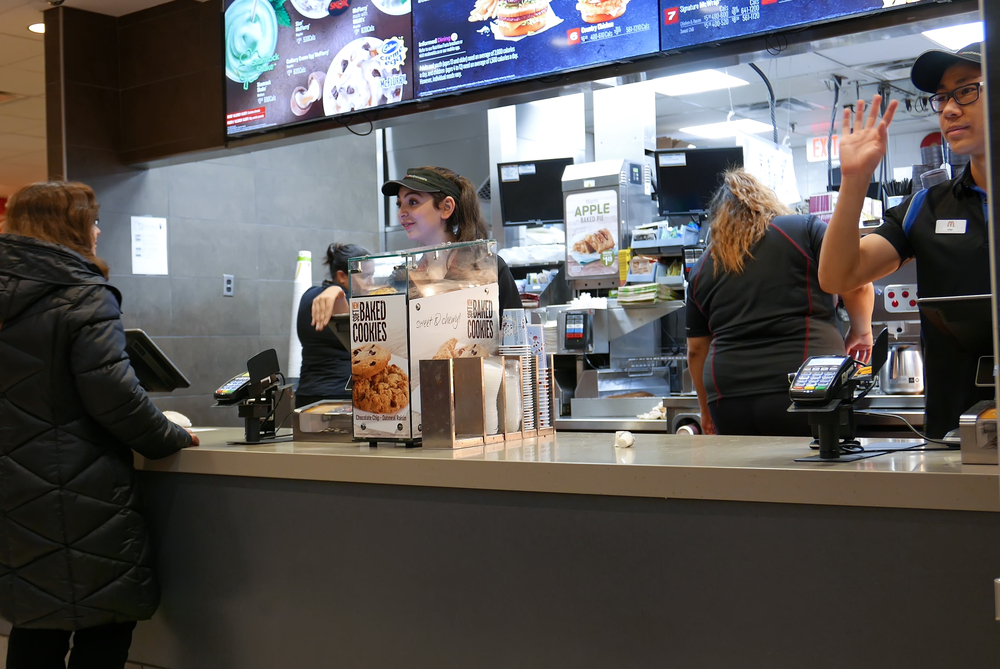
Fast food workers in Canada are affected by AI in the form of automated cooking stations, ordering kiosks, and robotic food preparation. Machines can prepare standard menu items, take orders, and handle payments efficiently. Staff now focus on customer support, quality control, and managing kitchen operations. Some fast food chains reduce staff hours due to automation. AI also helps with inventory management and predicting peak times. While entry-level opportunities remain, the traditional role of assembling and serving food is increasingly supplemented or replaced by technology, changing the landscape of Canadian fast food employment.
Warehouse Workers

Warehouse roles in Canada are being transformed by AI and robotics. Automated sorting, picking, and packaging systems increase efficiency and reduce the need for manual labor. AI can track inventory, optimize routes, and predict supply chain needs. Workers now supervise machinery, manage exceptions, and handle complex logistics tasks. E-commerce growth accelerates automation adoption, especially in large distribution centers. While physical labor is reduced, tech-savvy employees who can operate, maintain, and troubleshoot AI systems are in demand. Warehouse jobs are shifting from manual tasks to technology-driven roles.
Taxi and Ride-Share Drivers

Taxi and ride-share drivers face emerging AI technologies, including autonomous vehicles and advanced route optimization software. Companies test self-driving vehicles to reduce labor costs and improve efficiency. Even without full automation, AI-assisted dispatch and navigation systems affect demand. Drivers may see reduced fares and fewer job opportunities. Human drivers still handle complex urban scenarios, passenger interactions, and areas not accessible to autonomous vehicles. The industry is gradually changing, pushing drivers to adapt to technology while preparing for potential disruption in Canada’s urban transportation networks.
Receptionists and Front Desk Clerks

Receptionists and front desk clerks in Canada face automation through AI-powered scheduling, check-in kiosks, and virtual assistants. Hotels, medical offices, and corporate buildings increasingly rely on digital systems for guest registration and appointment management. AI can answer routine inquiries, handle bookings, and direct visitors efficiently. Human staff now focus on complex customer needs, troubleshooting, and personalized service. Automation reduces repetitive tasks and operational costs. While reception roles are not disappearing entirely, the job is evolving to require tech literacy, multitasking, and problem-solving alongside traditional customer service skills.
Market Research Analysts

Market research analysts are impacted by AI tools that can analyze consumer data, track trends, and generate insights automatically. Predictive analytics, sentiment analysis, and automated reporting allow faster decision-making. Analysts now interpret AI outputs, provide strategic recommendations, and focus on qualitative research that machines cannot replicate. Canadian companies adopt AI to reduce costs and improve accuracy in market forecasting. Routine data collection and basic analysis are increasingly handled by software, changing the nature of market research roles. Analysts need skills in AI oversight, data interpretation, and strategic thinking.
Manufacturing Assembly Line Workers

Manufacturing assembly line workers in Canada are increasingly replaced or assisted by AI and robotics. Machines can assemble, sort, and inspect products faster than humans while reducing errors. Automated production lines operate 24/7, increasing efficiency and cutting labor costs. Workers now oversee machinery, handle exceptions, and maintain equipment. Entry-level manual positions are decreasing, while demand grows for technically skilled staff who can manage automation systems. AI in manufacturing transforms the sector, shifting labor from repetitive tasks to monitoring, troubleshooting, and process optimization roles.
Medical Transcriptionists

Medical transcriptionists face disruption from AI-powered speech recognition and natural language processing systems. These technologies convert doctor dictations into written records automatically, with high accuracy. Human transcriptionists now focus on editing, verifying, and ensuring compliance with healthcare regulations. AI reduces turnaround time for medical documentation and lowers administrative costs. Canadian hospitals and clinics are increasingly adopting these tools to improve efficiency. While some positions remain for complex cases, routine transcription work is declining. The role is evolving to emphasize quality control, clinical understanding, and technology management alongside traditional transcription skills.
Real Estate Agents

Real estate agents in Canada face AI tools that assist in property matching, pricing analysis, and client communication. Platforms use algorithms to suggest homes, schedule viewings, and provide market insights. Agents who rely on routine listings and standard guidance may see reduced demand. Human agents remain essential for negotiation, local knowledge, and personal relationships with clients. AI supports efficiency and data-driven decision-making but does not replace expertise in legal, financial, or emotional aspects of buying and selling. The role is shifting toward advisory and strategic services rather than purely transactional tasks.
Library Technicians

Library technicians are being affected by AI tools that automate cataloging, indexing, and book retrieval. Digital databases and AI-driven search systems allow patrons to locate and access materials without human assistance. Technicians now focus on managing complex research requests, digital resources, and educational support. AI assists with administrative tasks, reducing routine workload. Canadian libraries increasingly integrate AI for efficiency, while human staff handle guidance, literacy programs, and specialized reference services. The role shifts from routine management to technology-enabled support, requiring staff to adapt to digital systems and oversee automated operations.
22 Groceries to Grab Now—Before another Price Shock Hits Canada

Food prices in Canada have been steadily climbing, and another spike could make your grocery bill feel like a mortgage payment. According to Statistics Canada, food inflation remains about 3.7% higher than last year, with essentials like bread, dairy, and fresh produce leading the surge. Some items are expected to rise even further due to transportation costs, droughts, and import tariffs. Here are 22 groceries to grab now before another price shock hits Canada.
22 Groceries to Grab Now—Before another Price Shock Hits Canada
