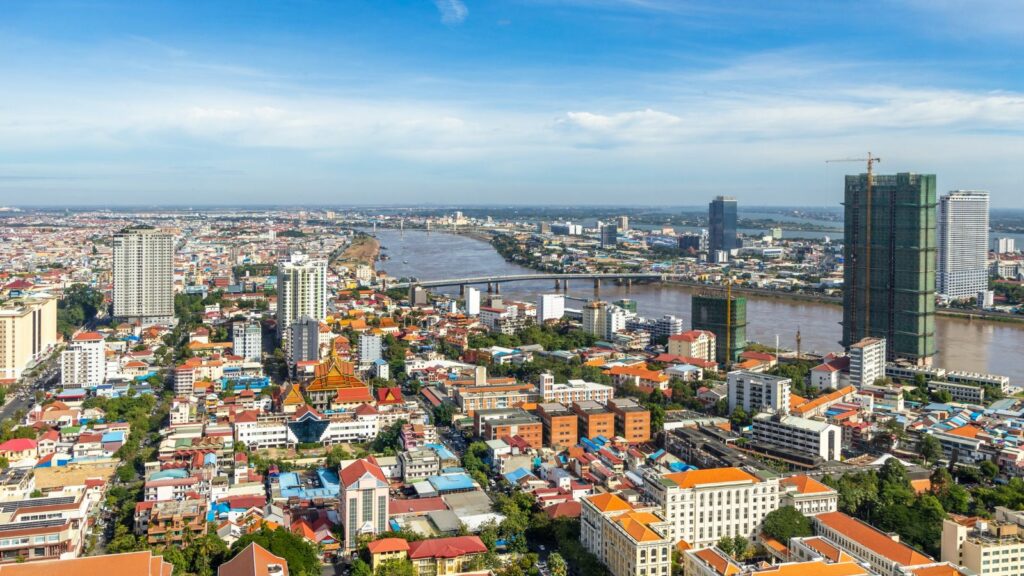
For decades, Canada’s bedroom communities were easy to recognize: subdivisions, commuter traffic, shopping plazas and a daily flow of workers toward a larger downtown. That model is becoming harder to recognize. Population growth, housing pressure, immigration, hybrid work, new transit, apartment construction and infrastructure demands are pushing many once-quiet commuter municipalities into a much more urban phase.
The transformation is uneven, and not every suburb is changing in the same way. Still, national data and local planning decisions point in a common direction. These 19 changes show how communities once defined mainly by where residents travelled for work are increasingly becoming places where people also rent, work, study, age, shop and build denser lives closer to home.
The Fastest Growth Is Often Happening Farther Out
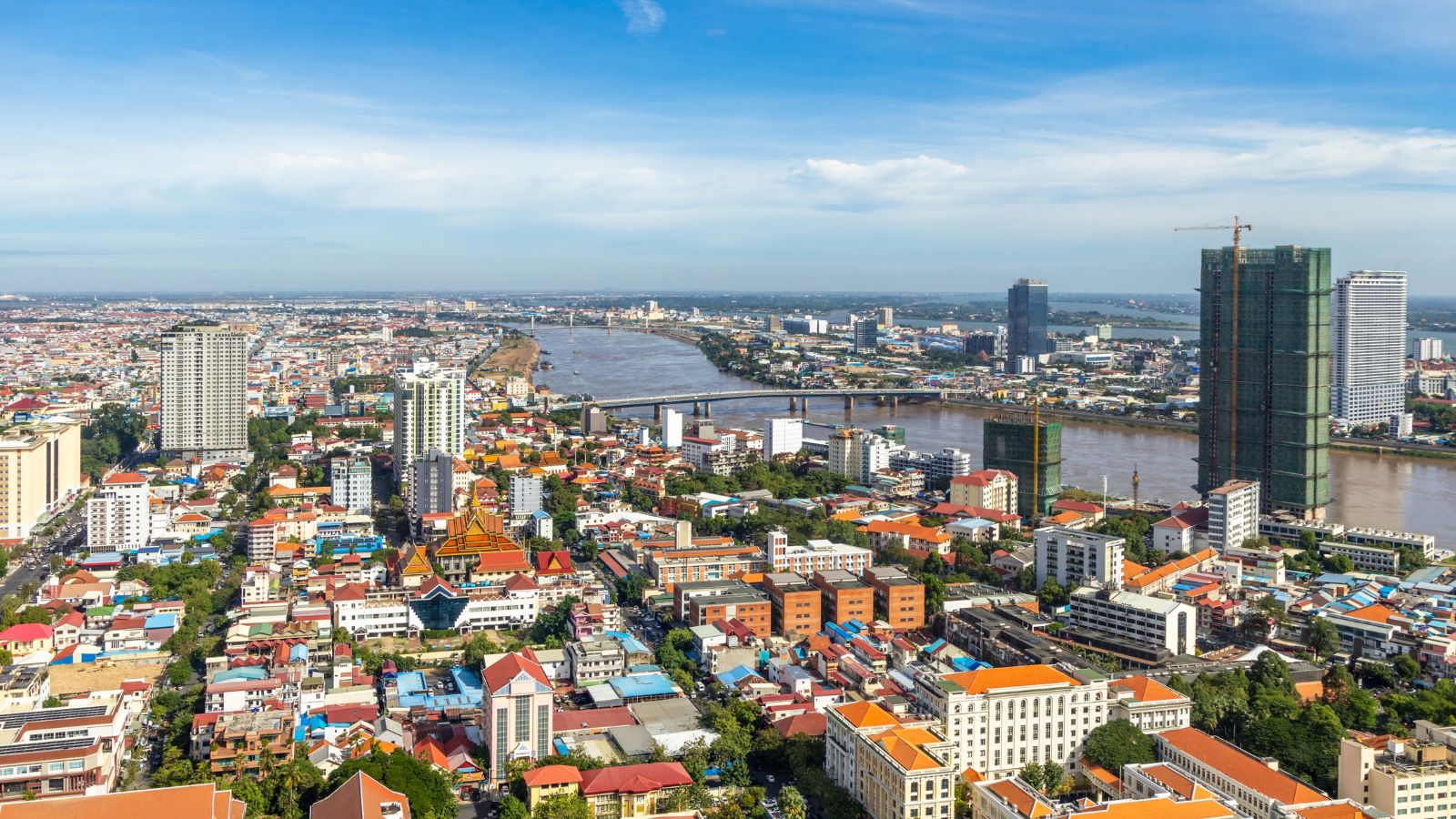
The old assumption that metropolitan growth naturally concentrates near the centre no longer fits much of Canada. Statistics Canada found that between 2016 and 2021, distant suburbs—areas at least a 30-minute drive from downtown—grew 8.8%, compared with 5.8% in near suburbs and 3.7% in the urban fringe. Brampton, for example, grew 10.6% over that census period, faster than Toronto itself.
More recent estimates show the pressure extending well beyond the traditional big three metropolitan areas. In 2024, Calgary grew 5.8%, Moncton 5.1%, Kitchener–Cambridge–Waterloo 4.9% and Oshawa 3.9%. Those rates are dramatically higher than many of the same regions recorded a decade earlier. For local governments, this is not abstract demography. A subdivision that once seemed like the edge of town can quickly become surrounded by new schools, traffic lights, apartment sites and construction equipment as the urban boundary pushes outward. The pace can alter local politics and capital plans quickly.
Hybrid Work Rewrote the Commuter Bargain

Bedroom communities were built around a simple bargain: accept a longer trip to work in exchange for more space at home. Hybrid work weakened that trade-off. Statistics Canada reported that 18.7% of employed Canadians worked mostly from home in May 2024. That was below the pandemic peak, but still well above the 7.1% recorded in 2016 for many workers.
The result is a different daily rhythm in many commuter municipalities. A resident who once left at 7 a.m. five days a week may now make the downtown trip only two or three times, spending more weekdays near local grocery stores, gyms, cafés and services. Statistics Canada has even changed the 2026 Census commuting questions to better capture hybrid workers. That seemingly technical adjustment reflects a larger reality: suburban homes are increasingly workplaces too, and municipal economies that once emptied during office hours now have more residents present throughout the day.
The “Cheaper House” Advantage Is Shrinking
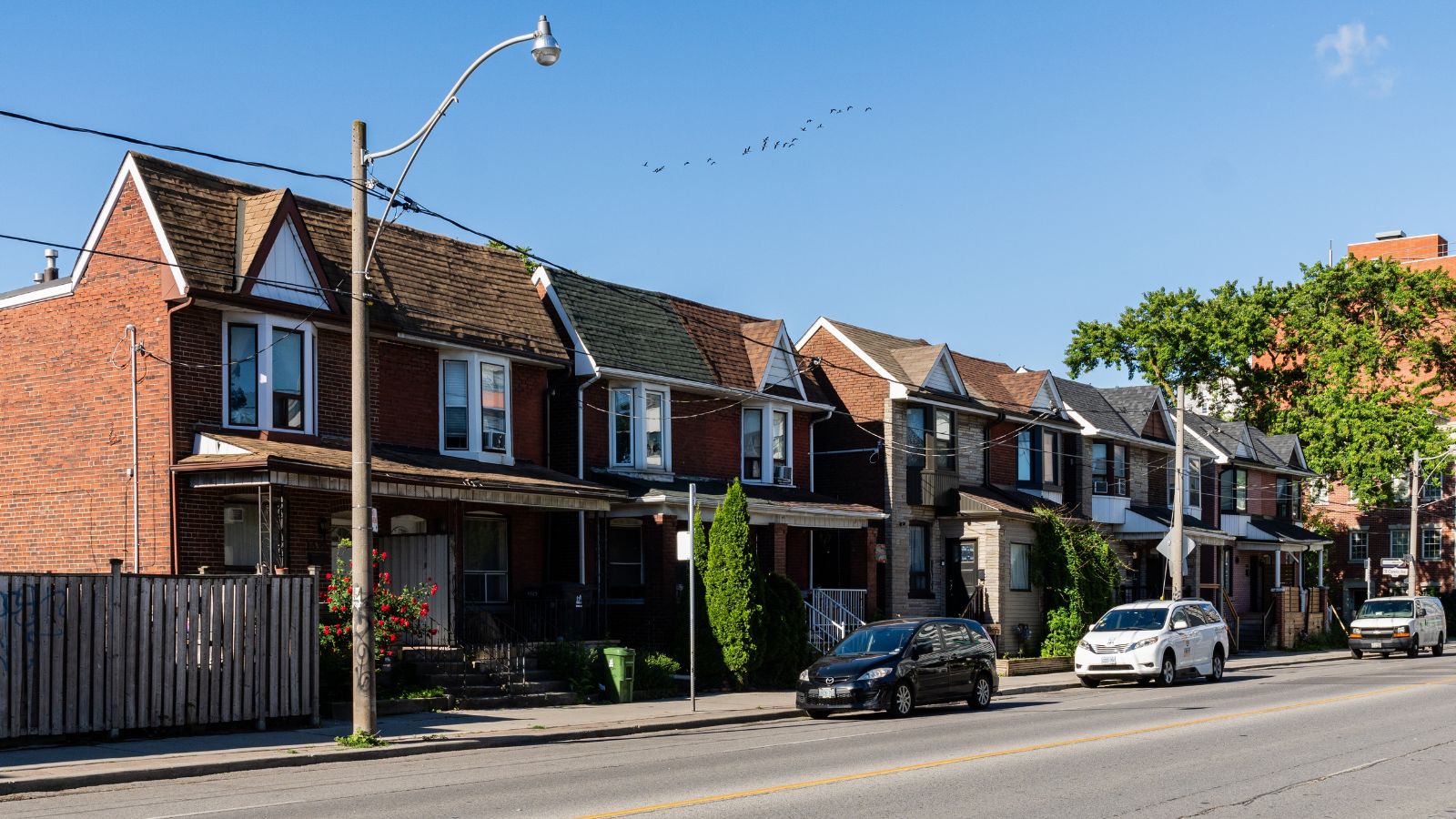
Moving farther from a major downtown has long been one of Canada’s most familiar affordability strategies. Statistics Canada noted that during the pandemic, higher housing prices may have encouraged some households to move toward distant suburbs where larger homes could be available for less. That helps explain strong outer-area growth around Toronto and Vancouver during the pandemic.
But the affordability advantage is less dependable than it once was. In a 2024 Statistics Canada social survey, 45% of Canadians said they were concerned about their ability to afford housing or rent, with housing challenges particularly prevalent in Ontario and British Columbia. As demand spreads outward, buyers can find themselves competing in places that were once treated as budget alternatives. The practical effect is visible in communities where a modest detached house, once marketed mainly to first-time buyers, now carries a price and mortgage burden associated with far more established urban markets.
Single-Detached Zoning Is Losing Its Monopoly

One of the biggest physical changes in bedroom communities is happening lot by lot. Federal housing programs have pushed municipalities to permit more homes on land historically reserved for one detached house. CMHC’s Housing Accelerator Fund best practices call for four units per residential lot as of right in large urban communities, plus greater density near transit and major corridors.
Municipal rulebooks are already changing nationwide. Ottawa’s Housing Accelerator Fund agreement, for example, included a move toward allowing up to four units as of right, while Regina committed to four units per residential lot and more medium-density housing. The effect will take years to fully appear, but the visual language of suburbia is already broadening. A street once dominated by detached homes can gradually gain duplexes, triplexes, garden suites and small apartment buildings. For residents, “growth” increasingly means redevelopment inside existing neighbourhoods rather than only new subdivisions at the edge.
Rapid Transit Is Reaching Deeper Into Commuter Territory
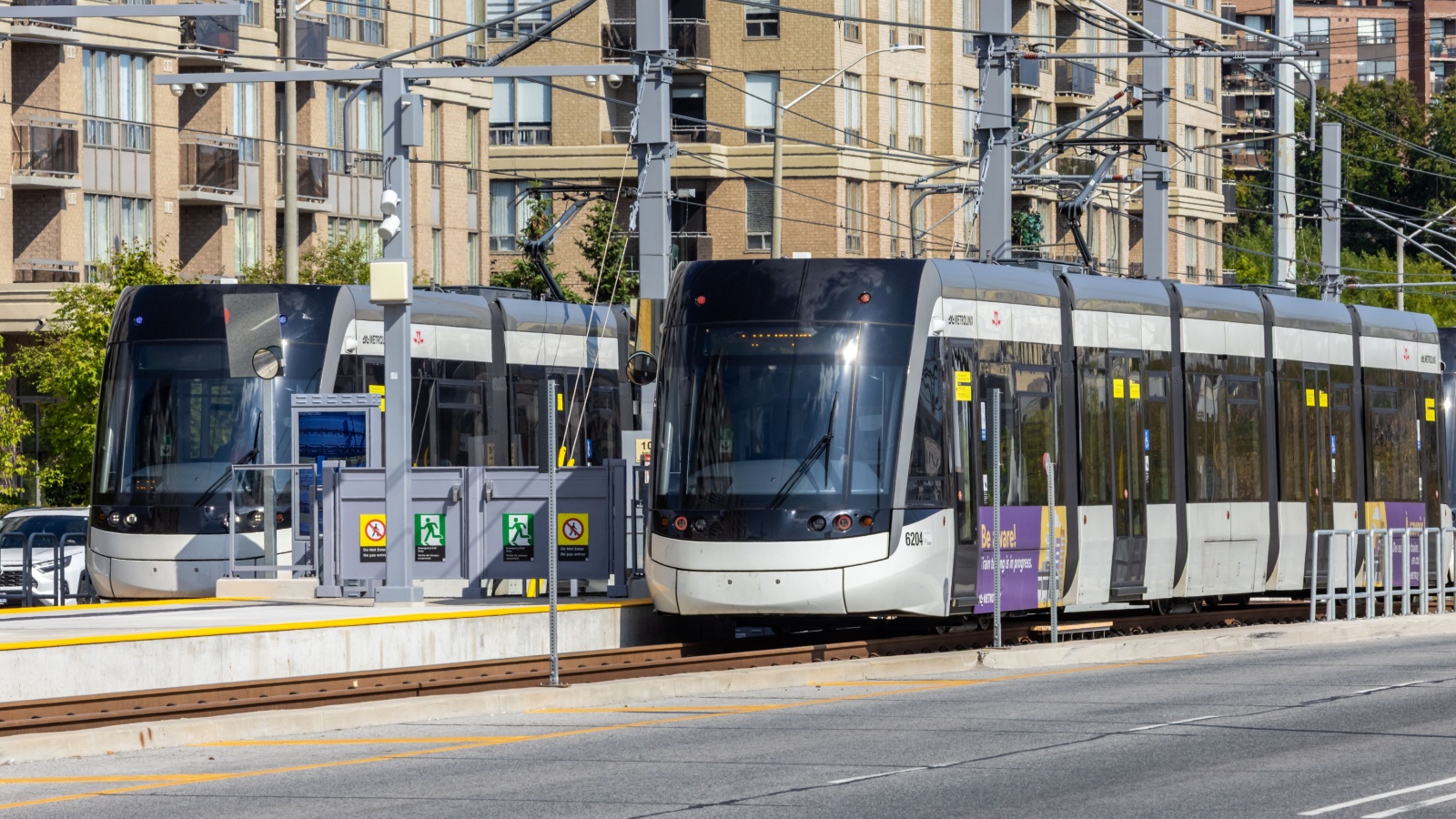
Rail lines that once stopped well short of outer suburbs are increasingly being designed to connect them directly. Greater Montréal’s Réseau express métropolitain is one of the clearest examples. The automated network is planned at 67 kilometres with 26 stations, linking downtown Montréal with Brossard, Deux-Montagnes and the West Island. By 2026, 23 stations were already in service.
That kind of infrastructure changes more than commuting time. A station can alter where apartments are approved, where retailers open and how much land municipalities devote to parking. It also gives some households a realistic alternative to owning multiple cars, especially when new housing is built close to frequent service. The classic bedroom-community landscape—detached houses feeding into arterial roads and highway ramps—does not disappear overnight. But once high-capacity transit arrives, the area around a station can begin functioning more like an urban node, with residents, jobs and services concentrated within walking distance.
Newcomer Settlement Is Becoming More Dispersed

Immigration remains central to Canadian population growth, but the geography of settlement is changing. Statistics Canada estimated that 464,265 immigrants were added to the population between July 2023 and July 2024, and only 46.7% settled in Toronto, Montréal or Vancouver. The agency has also reported that newcomers are increasingly settling outside the country’s three largest metropolitan areas, especially in parts of Ontario and Quebec.
For bedroom communities and smaller metros, demographic change can arrive faster than older planning assumptions anticipated. New residents create demand for housing, schools, transit, language services, religious spaces, groceries and small businesses. They reshape identity in daily life. A suburb once thought of mainly as a destination for households leaving a nearby city can become an international arrival point in its own right. The change is visible in commercial plazas and school enrolment—signs that a commuter municipality is becoming a more self-contained and globally connected place.
More Jobs Are Appearing Outside Traditional Downtowns

Bedroom communities are becoming less dependent on a single downtown because employment itself has spread. Industrial and logistics development drives part of that shift. CBRE reported that Canadian industrial construction starts reached 8.0 million square feet in the second quarter of 2025, with an Amazon distribution centre in Ottawa accounting for 3.1 million square feet. Toronto and Montréal also recorded significant industrial construction starts.
Warehouses, distribution centres, advanced manufacturing sites and service businesses tend to favour highway access, available land and proximity to growing populations. Those characteristics are common in suburban and exurban municipalities. The result is a more complicated commuting map: some residents still travel downtown, while others drive across the region to jobs in business parks, logistics corridors or neighbouring suburbs. That shift can strengthen tax bases and shorten some commutes, but it also creates truck traffic and infrastructure demands older residential communities were not designed to absorb.
Rental Housing Is Finally Becoming a Suburban Growth Story

Many Canadian bedroom communities were built around ownership, especially detached homes and townhouses. That housing mix is changing quickly. CMHC’s 2025 Rental Market Report found strong rental-stock growth outside major cores. In Metro Vancouver, Coquitlam recorded its largest increase in rental units in 20 years, rental stock grew significantly in Surrey, and Burnaby reversed a five-year decline as major projects neared completion.
CMHC said Calgary’s purpose-built rental supply grew 11% in 2025, the fastest pace in decades, with much of the new supply concentrated in the southwest, southeast and northwest. In the Greater Toronto Area, York Region was expected to record the fastest rental-supply growth. Renters use a community differently from traditional move-up homeowners. They increase demand for smaller units, transit access and walkable services, while creating a housing market with more turnover. A suburb full of rental towers and mid-rises behaves differently from one dominated by long-held detached houses.
Schools Are Playing Catch-Up With Population Growth

Fast-growing communities can add residents faster than they can add classrooms. Alberta has made that mismatch unusually visible. In 2025–26, the province invested $100 million to purchase 115 new modular classrooms, creating 2,825 new student spaces and supporting another 275 relocated spaces in some of its fastest-growing communities. For 2026–27, funding for 189 new modular classrooms is expected to deliver about 5,450 student spaces.
Ontario has faced similar pressure. For the 2024–25 school year, 37 new schools and additions opened across the province, creating more than 18,000 student spaces. In rapidly developing suburbs, the gap between moving into a new house and seeing permanent community facilities arrive can be years long. Families may encounter portables, boundary changes or long school-bus routes while construction catches up. Those are not temporary quirks of new subdivisions; they are signs that population growth is occurring quickly enough to reshape public-service planning in real time.
Health-Care Infrastructure Is Following the People

A commuter town can grow into a city long before its health-care network catches up. Vaughan offers a striking example. Cortellucci Vaughan Hospital opened in 2021 as Ontario’s first net-new hospital in three decades. During its initial pandemic role, it added 35 intensive-care beds and 150 general internal-medicine beds to provincial capacity while serving rapidly growing western York Region.
Similar planning is underway in Alberta’s metropolitan fringe. The province’s 2025 capital plan included funding for the planning and design of an Airdrie Regional Health Centre, reflecting the scale of growth north of Calgary. These projects make the bedroom-community label increasingly misleading. Once populations grow large, residents expect more than roads back to the core; they need emergency care, diagnostics, specialists, long-term care and services closer to home. Health infrastructure is slow to deliver, so rapid suburban growth can expose the gap between a community’s population size and its institutional maturity.
Traffic Is Getting Harder to Dismiss

Hybrid work did not eliminate commuting. By May 2025, Statistics Canada reported that Canadian commuter numbers had increased for a fourth consecutive year as more workers returned to workplaces. Toronto still had the country’s longest average commute among major metropolitan areas at 34.9 minutes, up 1.6 minutes from a year earlier. Long trips matter where housing growth outpaces transit.
Suburb-to-suburb commuting complicates the problem. Statistics Canada has found that workers travelling between suburban locations are much more likely to drive than use public transit, because many regional transit systems are still designed around trips to a central downtown. A business-park job may be nearby but awkward to reach easily without a car. That creates congestion on ring roads and arterial streets that were never intended to serve as all-day regional corridors. In fast-growing bedroom communities, rush hour increasingly feels less like a morning-and-evening event and more like a persistent condition.
Pipes, Sewers and Stormwater Are Becoming Housing Issues

Housing growth is impossible without less-visible infrastructure underground. The federal Canada Housing Infrastructure Fund was created to accelerate drinking-water, wastewater, stormwater and solid-waste projects that enable new housing and higher density. The policy reflects a constraint facing fast-growing municipalities: zoning land for thousands of homes does little if treatment plants, water mains and sewers lack capacity.
The Federation of Canadian Municipalities says municipalities maintain about 60% of Canada’s essential public infrastructure. Its research has estimated that the municipal infrastructure needed to support a new home can average roughly $107,000. That helps explain why some projects stall even when housing demand is obvious. For residents, the issue may surface through construction detours, utility upgrades or debates over development charges. For municipalities, it is a reminder that rapid growth has a physical bill. Every new block of housing requires systems that may have been sized decades earlier for a much smaller population.
Urban Expansion Is Consuming More Edge Land
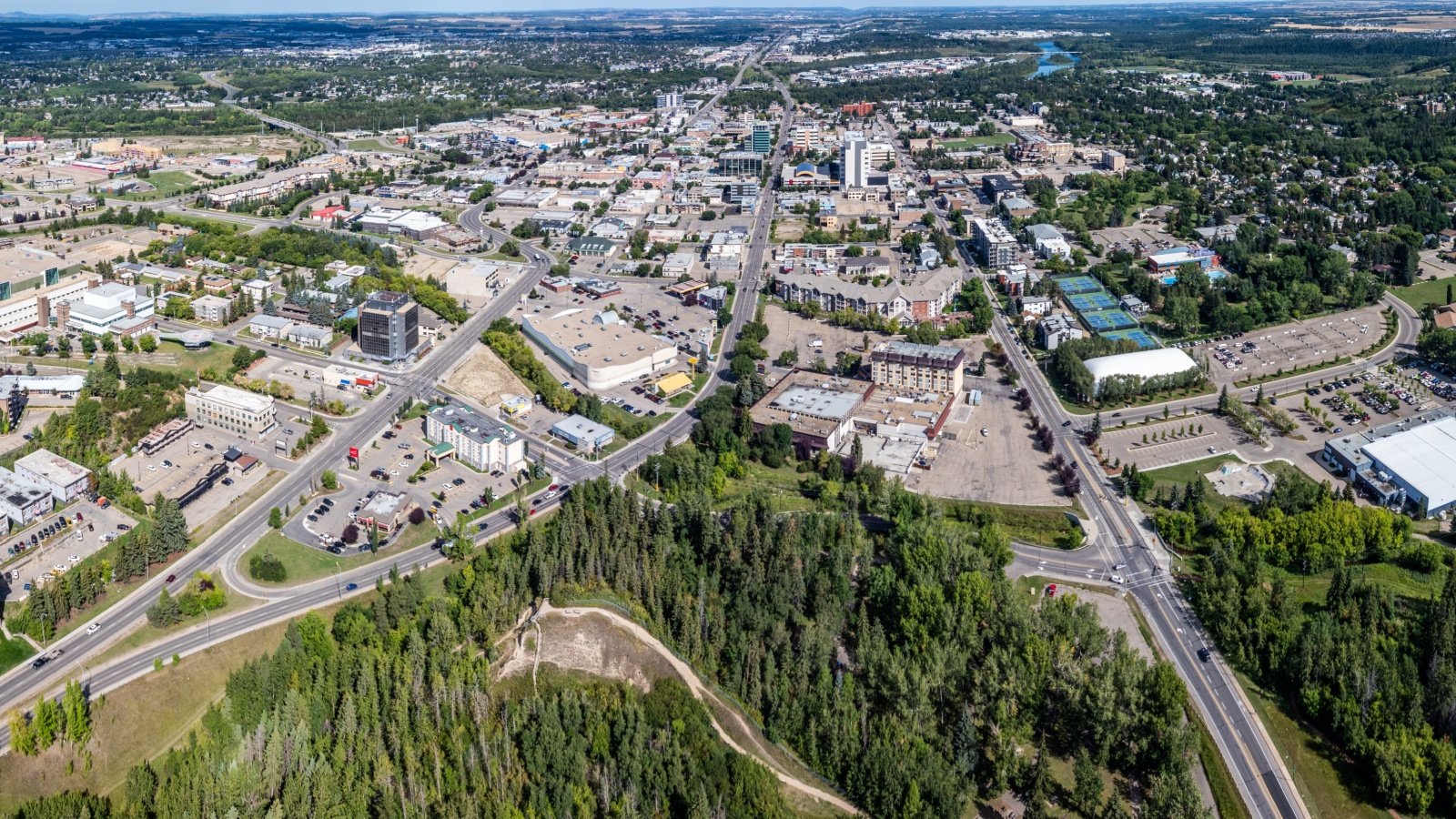
Canada is densifying, but still spreading outward. Statistics Canada measured more than 370 square kilometres of additional built-up area between 2010 and 2020 within two kilometres outside the boundaries of the country’s contiguously settled areas. Its 2024 housing research also linked new low-density housing with suburban expansion.
That growth changes the landscape at the metropolitan edge. Farm fields, woodlots and open land can become subdivisions, warehouses and arterial roads in a relatively short period. Statistics Canada has specifically warned that continued urban spread raises concerns about encroachment on farmland, wetlands and wildlife habitat, along with greater car dependence. The tension is unavoidable: families want housing, municipalities want a stronger tax base and builders need developable land. Every outward expansion lengthens future transit, utility and road networks. Bedroom communities are now becoming central battlegrounds in Canada’s broader debate over how much growth should go outward and how much should go up.
Climate Risk Is Changing the Development Conversation

The metropolitan fringe often contains land where climate risk becomes a planning issue: floodplains, wetlands, ravines, forests and areas exposed to wildfire or extreme heat. Natural Resources Canada’s Flood Hazard Identification and Mapping Program is receiving $164.2 million from 2024 to 2028 to improve flood-hazard information. Federal guidance also notes that municipal bylaws can regulate development and construction on land subject to flooding.
That matters as bedroom communities expand into previously undeveloped areas. A subdivision approved today may stand for generations, so drainage, stormwater capacity, emergency access and future climate conditions are part of land-use decisions. Statistics Canada has identified floods, water contamination and extreme urban heat among the risks affecting urban ecosystems and public safety. For homeowners, issues can surface as insurance costs, basement flooding or smoke-filled summers. For municipalities, resilience is becoming a growth requirement rather than an optional environmental feature added after roads and houses are planned.
Multigenerational Living Is Reshaping the Suburban House

The suburban detached house increasingly serves more people and generations than its original design assumed. Statistics Canada reported that 14.3% of Brampton households were multigenerational in 2021, the highest share among Canadian cities. Surrey followed at 9.6% and Markham at 9.5%. Nationally, 7.1 million people were living in intergenerational households that included parents and their adult children.
Housing costs, immigration and family preferences contribute to the trend. In practical terms, it can mean basement suites, extra kitchens, converted garages, larger vehicles in driveways and pressure for homes that can accommodate aging parents and adult children simultaneously. It can strengthen demand for zoning that permits secondary suites or additional units on a property. The image of the bedroom community as a place dominated by a nuclear family in a three-bedroom house is becoming less complete. Household structure is changing from within, even on streets where the exterior architecture looks almost unchanged.
Suburban Downtowns Are Becoming Real Downtowns

Some bedroom communities are no longer just subdivisions around highway interchanges. Vaughan Metropolitan Centre shows how quickly a planned suburban core can outgrow expectations. The original secondary plan targeted 25,000 residents and 11,500 jobs by 2031. By early 2024, the city said occupied, under-construction and approved development represented more than 69,000 residents in over 35,000 housing units.
Density creates demand for a different kind of city. Towers need parks, schools, sidewalks, public spaces, restaurants and frequent transit. They also bring residents who may live without the detached house and two-car household historically associated with Vaughan. Statistics Canada formally recognizes that metropolitan regions can contain secondary downtowns, such as Mississauga within the Toronto region. That concept is increasingly useful today. Instead of functioning only as satellites of a central city, some former bedroom communities are building recognizable skylines and urban cores—complete with the opportunities and growing pains that come with them.
The Cost of Living Farther Out Is Being Recalculated

A lower home price does not automatically mean a lower-cost lifestyle. Statistics Canada developed a Housing and Transportation Cost Index to examine those expenses together, recognizing that cheaper housing can come with costlier travel. That matters in commuter communities where households may need two vehicles and spend more on fuel, maintenance, insurance and parking.
The calculation matters more as housing pushes people farther from major job centres. A family may save on the purchase price of a home but give back part of that advantage through transportation costs and hours spent travelling. Hybrid work can soften the trade-off, but the return of commuting means it has not disappeared. This broader way of measuring affordability changes how bedroom communities are judged. The desirable question is no longer simply, “How much does the house cost?” It is increasingly, “What does it cost to live there and still reach work, school and services?”
Entertainment and Office Districts Are Following Residents

As suburban populations grow, residents expect major amenities closer to home. Surrey is planning its City Centre around that idea. In 2025, the city confirmed a Central Business District where new buildings must include office space, preserving employment room as residential towers multiply. Surrey is also planning an Entertainment District anchored by a new arena and events facility. That shift changes daily life.
This departs from the bedroom-community formula of subdivisions plus shopping centres. A true metropolitan centre needs workplaces, nightlife, cultural venues and public gathering spaces as well as homes. The goal is not merely convenience. Local offices can reduce some long-distance commuting, while entertainment venues keep spending and activity in the community after work hours. As more municipalities pursue this model, the line between “suburb” and “city” becomes increasingly blurred. Residents may still commute elsewhere, but they no longer need to leave home for every major urban experience.
Growth Is Forcing a New Municipal Financial Model

Rapid growth brings revenue but also major upfront costs. Development charges help municipalities pay for roads, sewers, parks and services required by new construction. CMHC data show how large those charges can become: in 2026, it reported that charges could add roughly $40,000 to more than $100,000 to a new home in some municipalities, with high amounts in parts of the Greater Toronto Area.
The debate exposes a problem for fast-growing bedroom communities. FCM argues that municipalities rely heavily on property taxes and lack revenue sources that automatically grow with the economy and population. Its proposed Municipal Growth Framework would link more federal transfers to economic and population growth. For residents, this argument can feel remote until it affects property-tax bills, housing prices, transit service or the timing of a new recreation centre. As commuter municipalities become full-scale cities, financing growth becomes one of the hardest parts of the transformation.
19 Things Canadians Don’t Realize the CRA Can See About Their Online Income

Earning money online feels simple and informal for many Canadians. Freelancing, selling products, and digital services often start as side projects. The problem appears at tax time. Many people underestimate how much information the CRA can access. Online platforms, banks, and payment processors create detailed records automatically. These records do not disappear once money hits an account. Small gaps in reporting add up quickly.
Here are 19 things Canadians don’t realize the CRA can see about their online income.
