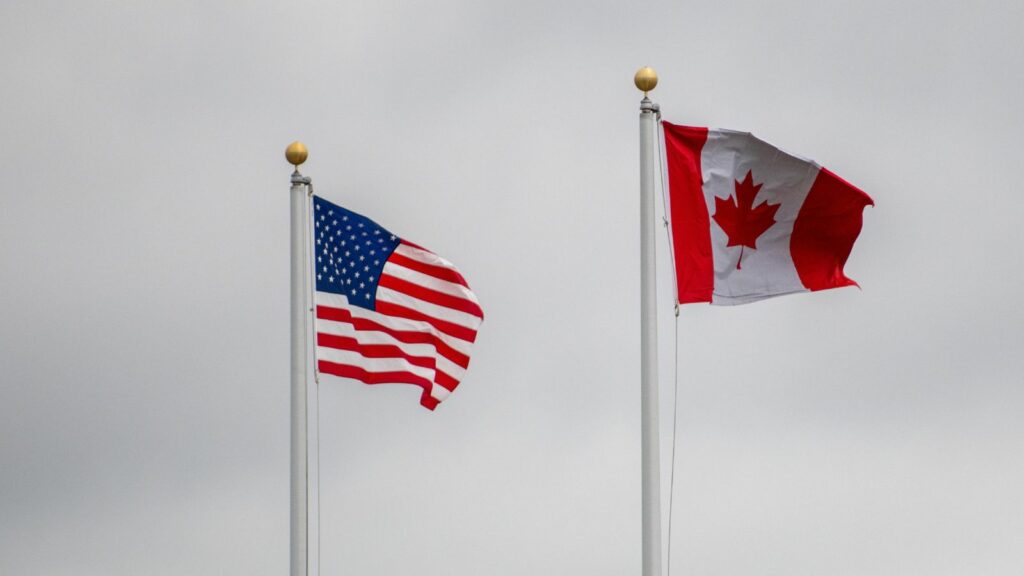
Twenty-five years ago, one of the darkest days in American history produced an extraordinary display of neighbourly compassion on the Canadian side of the border. When U.S. airspace closed on September 11, 2001, dozens of aircraft were sent to Gander, Newfoundland and Labrador, where thousands of frightened travellers suddenly needed food, beds, information and reassurance.
On September 11, 2026, that story carries a sharper meaning. Former passengers are returning to Gander, dignitaries are gathering for a solemn commemoration and the town’s hospitality remains one of the most enduring symbols of Canada-U.S. friendship. Yet the anniversary arrives during a bitter trade conflict involving tariffs, import restrictions and openly strained political relations. The contrast makes Gander’s legacy less sentimental and more relevant: governments may clash, but the connections formed between people can be far harder to undo.
When Gander Suddenly Became a Refuge
Gander’s transformation on September 11, 2001 was extraordinary even by the standards of an aviation emergency. Thirty-eight diverted aircraft arrived at Gander International Airport after American airspace closed. Government and historical sources generally describe more than 6,500 passengers and crew being taken in, while Transport Canada and Historica Canada give the more precise figure of 6,656. At the time, Gander itself had roughly 10,000 residents, making the influx enormous for a community of its size.
The numbers only hint at the logistical problem. Thousands of people who had expected to land in New York, Washington and other destinations instead found themselves on an island in the North Atlantic with little information about when they would leave. Local residents suddenly had to think about mattresses, meals, medication, telephones, clothing and transportation. It was not an organized tourism welcome. It was an improvised humanitarian response created while the scale of the terrorist attacks was still becoming clear.
Operation Yellow Ribbon Was National in Scale
Gander became the best-known Canadian destination for diverted passengers, but it was one piece of a much larger emergency operation. Transport Canada called the response Operation Yellow Ribbon. Its historical account says NAV CANADA directed 224 aircraft carrying more than 33,000 passengers to Canadian airports, while hundreds of other transatlantic aircraft were ordered to turn back toward Europe. Airports from Atlantic Canada to Vancouver suddenly became part of the response to the closure of U.S. airspace.
That wider context matters because the familiar Gander story can sometimes make the operation appear purely local. It was actually a combination of federal decision-making, air-traffic management, airport operations, customs and immigration work, policing, military support and thousands of acts of community assistance. Halifax alone processed thousands of unexpected passengers, while Vancouver used unconventional accommodation including cruise ships. Gander became the emotional symbol of the response because of its size and hospitality, but Canadians across the country were involved in getting people safely out of the sky.
Thirty-Eight Aircraft Changed a Town’s Rhythm
Gander was well suited to receive transatlantic aircraft because aviation had shaped the community for generations. Its airport began operations before the Second World War and became a major refuelling and staging point on the Great Circle Route between North America and Europe. During the war, more than 20,000 North American-built fighters and heavy bombers passed through as aircraft were moved toward Europe. By the 1950s, Gander had become one of the world’s busiest international airports.
That history did not mean the town was prepared to house thousands of people without warning. Aircraft could land there, but the people inside those aircraft still needed somewhere to go. The result was an unusual collision between Gander’s global aviation role and its small-community character. A place accustomed to watching international aircraft pass through suddenly had to care for the travellers themselves. The same airport that had long connected continents became, for several days, the place where thousands of journeys stopped completely.
The Waiting Began Before the Welcome
For many diverted passengers, the experience did not begin with warm meals or beds. It began with hours of uncertainty inside parked aircraft. Security authorities had to determine who was aboard the diverted planes, process travellers and respond to fears that the terrorist attacks might not yet be over. Transport Canada’s retrospective account describes the enormous security challenge of handling tens of thousands of passengers while officials were still trying to determine whether additional aircraft could pose threats.
That meant some travellers remained aboard their planes for many hours before they were allowed to enter Canadian communities. The delay was frustrating, but the circumstances were unprecedented. Officials were simultaneously trying to land aircraft safely, control Canadian airspace, coordinate with American agencies and decide how to screen people and baggage. Only after those procedures could the community response fully begin. The now-famous scenes of hospitality therefore followed a tense period in which passengers and officials alike were operating with incomplete information and no reliable timetable.
Schools, Churches and Colleges Became Shelters
Once passengers began leaving the airport, Gander and neighbouring communities needed sleeping space almost immediately. Schools, churches, community buildings and educational institutions were converted into temporary accommodations. Gyms filled with makeshift beds and sleeping bags. The College of the North Atlantic in Gander housed hundreds of passengers, while other travellers were spread through facilities across central Newfoundland. Televisions were set up so people could finally understand the scale of what had happened in the United States.
These arrangements were basic, but they provided something more important than comfort: stability. Many passengers had family members trying to locate them, while others had personal connections to New York or Washington and feared the worst. Residents helped travellers use telephones and computers, find showers, obtain clothing and deal with practical needs that had never been anticipated. Buildings designed for classrooms, worship and recreation became part of an emergency accommodation network almost overnight, illustrating how existing community infrastructure can become invaluable when a crisis arrives without warning.
Nearby Communities Shared the Load
The story is often shortened to “Gander,” but central Newfoundland’s response reached beyond the town limits. Communities including Appleton and others in the surrounding region helped accommodate and feed the unexpected visitors. Former Appleton mayor Derm Flynn has recalled how municipal buildings, schools, churches and private homes were used as residents scrambled to find space. Flynn and his wife, Dianne, famously ended up welcoming six people into their own home after each separately invited three guests.
That anecdote captures the improvisational nature of the response. There was no centralized booking system matching passengers to spare bedrooms. People saw a need and acted. Smaller communities absorbed groups of strangers despite having limited resources of their own. The regional character of the response also helps explain why former passengers frequently describe their memories in terms broader than Gander alone. The hospitality they encountered came from a network of Newfoundland communities whose residents treated an international emergency as a local responsibility.
Ordinary Households Became Emergency Infrastructure
Emergency planning normally revolves around institutions: airports, hospitals, government agencies and police services. In central Newfoundland after 9/11, private households became part of that infrastructure. Residents offered guest rooms, showers, meals, transportation and access to telephones. Some passengers remained in schools or public buildings but were invited into homes during the day. Others developed friendships with residents who had initially been complete strangers.
The practical value of those gestures should not be underestimated. A shower, clean clothing or a chance to call home can feel minor during normal life. For a stranded traveller who has spent hours on an aircraft while watching a catastrophe unfold on television, those things can restore a sense of normality. The residents were not trained disaster counsellors, yet many effectively provided emotional support by sitting with frightened passengers, sharing meals and helping them contact loved ones. Gander’s reputation emerged not from one spectacular act, but from thousands of ordinary decisions made repeatedly over several days.
Military and Civilian Systems Worked Side by Side
The response also depended on military support. Canada’s 9 Wing Gander says its personnel provided logistical and humanitarian assistance during Operation Yellow Ribbon, including equipment, accommodation and transportation. Military personnel worked alongside local authorities and the Gander International Airport Authority as the community dealt with the extraordinary arrival of 38 transatlantic flights. The episode demonstrated how civilian and defence infrastructure can overlap during an emergency even when the crisis itself is not occurring on Canadian soil.
That connection remains visible during the 25th anniversary. Governor General Louise Arbour’s September 11, 2026 itinerary includes a visit to 9 Wing Gander before the main commemorative service. The base still plays an important role in search and rescue and in North American defence operations. The visit links two eras: the emergency response of 2001 and the continuing security relationship connecting Canada and the United States. Political rhetoric may change quickly, but institutions built around shared continental security operate on much longer timelines.
Human Connections Outlasted the Crisis
The most durable part of the Gander story may be what happened after the aircraft finally departed. Former passengers returned to Newfoundland, maintained friendships with host families and supported community projects. Historica Canada notes that the aftermath included scholarships, funding for school equipment and other contributions from people who wanted to repay the generosity they had received. What began as emergency hospitality became a network of relationships that continued for decades.
That durability explains why so many former passengers are back in Gander for the 25th anniversary. They are not visiting a historical site with which they have no personal connection. Many are returning to see friends. Some have made repeated trips over the years. In an era when international relationships are usually discussed in terms of tariffs, military commitments and diplomatic statements, these friendships offer a different measure of bilateral ties. They were created without treaties or negotiations and therefore cannot easily be cancelled by a change in government.
Returning to Gander Became Part of the Story
Sue Riccardelli and Maureen Murray are among the former passengers whose relationship with Newfoundland continued long after 2001. The New Jersey couple were returning from France when their aircraft was diverted to Gander. They stayed at the College of the North Atlantic campus with more than 230 other people from their flight and developed friendships that repeatedly brought them back to Newfoundland. By 2026, they had returned at least 10 times.
Their experience illustrates how the anniversary has become more than a historical commemoration. Returning passengers often arrive with memories of specific people, classrooms, meals and conversations rather than only memories of aircraft on a runway. Riccardelli and Murray also began displaying a flag combining Canada’s Maple Leaf and the American Stars and Stripes as political tensions grew. For them, the symbol represents a relationship experienced personally. Twenty-five years later, the physical journey back to Gander has become part of the legacy itself.
Gander’s 2026 Ceremony Carries National Weight
The central commemorative service on September 11, 2026 is scheduled for 2 p.m. Newfoundland Daylight Time at Gander’s Steele Community Centre. Governor General Louise Arbour is scheduled to deliver remarks, giving the ceremony the weight of a national observance. Reporting ahead of the service also identified U.S. Ambassador Pete Hoekstra among those expected to attend, alongside former passengers, crew members, first responders and residents from Gander and surrounding communities.
Thousands were expected in Gander for the anniversary period. That scale reflects how a local response became part of national memory on both sides of the border. The ceremony comes as larger observances take place in New York, at the Pentagon and in Pennsylvania, but Gander occupies a different place in the history. It was not an attack site. Its significance comes from what people did in response to the attacks. That gives the Newfoundland ceremony a distinctive emphasis on service, compassion and cross-border connection.
The Town Insists This Is Remembrance, Not Celebration
Gander Mayor Percy Farwell made an important distinction when anniversary plans were announced: the occasion is not a celebration. The town’s official approach focuses first on remembering those who were killed, recognizing those who helped and reflecting on the connections that emerged afterward. That framing prevents the extraordinary hospitality story from overwhelming the tragedy that created the circumstances in which it occurred.
It is an important balance. Gander’s experience has become uplifting partly because it shows generosity under pressure, but the passengers arrived because 19 al-Qaeda terrorists hijacked four commercial aircraft and murdered 2,977 people in the United States. Twenty-four Canadians were among the dead. A responsible commemoration therefore has to hold two truths at once: the attacks caused immense loss, and the response revealed remarkable courage and compassion. Gander’s anniversary events have been organized around that tension rather than treating the town’s global fame as something detached from the grief of September 11.
American Guests Are Returning Amid Political Strain
Some Americans returning to Gander this year have openly acknowledged how uncomfortable the current Canada-U.S. political climate feels. At an anniversary-related event on September 10, former passengers spoke about their affection for Canada while distancing themselves from the rhetoric and policies coming from Washington. The trade confrontation and repeated political tensions have therefore become an unavoidable background to gatherings built around friendship and gratitude.
That produces a striking image: Americans who once needed help from Canadians returning 25 years later at a moment when the two governments are imposing economic penalties on one another. The visitors are not diplomats, but their presence makes a diplomatic point nonetheless. They remember being welcomed when their country was under attack. For many, those memories are more enduring than whichever government happens to be in office. The anniversary therefore separates relations between citizens from relations between administrations in a way few official events could accomplish.
A Combined Canada-U.S. Flag Says More Than Diplomacy Can
Riccardelli and Murray’s Canada-U.S. flag has become a particularly vivid symbol of that distinction. The couple began taking the combined flag to performances of Come From Away in New Jersey as political relations deteriorated. They planned to bring it back to Gander for the anniversary as a public statement that their feelings toward Canadians had not followed the direction of the political relationship.
A flag made from two national symbols could easily appear sentimental. In this context, however, it represents lived experience. The couple remembers relying on people in Newfoundland for shelter and comfort during a national emergency. Their response to the current dispute is therefore rooted in personal history rather than abstract foreign-policy preferences. Such gestures cannot settle tariffs or rewrite trade agreements. They can, however, remind both countries that bilateral relationships operate on several levels simultaneously. Political hostility at one level does not automatically erase decades of family ties, tourism, business relationships and personal friendships underneath it.
Come From Away Turned Local Memory Into Global Memory
The Gander story reached an audience far larger than the town itself through Come From Away, the musical by Irene Sankoff and David Hein. The production dramatizes the experiences of stranded travellers and the Newfoundland communities that received them. Rather than centring the terrorist attacks themselves, it focuses largely on the human relationships that formed after thousands of passengers unexpectedly arrived in central Newfoundland.
That creative decision helped transform a complicated emergency-response story into something audiences around the world could understand emotionally. The musical became closely associated with Gander and introduced millions of theatre-goers to an episode many had previously known little about. It also created a difficult responsibility: presenting warmth and humour without diminishing the tragedy surrounding 9/11. The continued popularity of the production suggests that audiences have connected with its focus on generosity. Twenty-five years later, Come From Away has become one of the principal ways the Gander story is passed from people who remember 2001 to those who do not.
The Musical Has Also Brought the Story Back Home
For the 25th commemoration, the Newfoundland and Labrador production of Come From Away returned to Gander for a fourth season, running from late June through September 13, 2026. The production takes place at the Joseph R. Smallwood Arts and Culture Centre on Airport Boulevard, only a short distance from the places where the real events occurred. Provincial tourism officials say the Gander production attracted more than 50,000 theatregoers during its first three seasons.
That creates an unusual relationship between theatre and place. Visitors can watch a dramatization of events and then encounter the airport, roads and community that inspired it. Some audience members include people who participated in the original story. Governor General Arbour’s anniversary itinerary even includes meeting members of the cast and people who inspired characters after a performance. The musical is therefore no longer simply representing Gander abroad; it is helping draw the world back to Gander.
A Heritage Minute Gives the Story to a New Generation
Historica Canada added another layer of remembrance in September 2026 with a new Heritage Minute devoted to Gander and 9/11. The short production recounts the arrival of 38 aircraft carrying 6,656 people and the rapid community response involving food, clothing, shelter and other supplies. Canadian performer Rick Mercer portrays longtime Gander mayor Claude Elliott, while the production uses the familiar Heritage Minute format to introduce the story to younger audiences.
Its timing reflects a growing challenge facing 9/11 commemorations. A quarter-century has passed, meaning millions of Canadians and Americans have no personal memory of the attacks. Stories that once required little explanation increasingly need historical context. The Gander Minute serves that educational purpose while emphasizing service rather than only terror. By placing the response inside a widely recognized Canadian historical series, it also signals that Operation Yellow Ribbon has moved from recent memory into the country’s documented national story.
Gander’s Airport Was Built for Crossroads Moments
Long before 9/11, Gander International Airport had been a meeting point between continents. Construction began in the 1930s, and the first aircraft landed there in 1938. Its position on the Great Circle Route made it strategically valuable during the Second World War and later during the early era of transatlantic passenger aviation. The airport handled thousands of aircraft annually when long-range jets still needed frequent fuel stops.
By 2001, advances in aircraft range had greatly reduced Gander’s role as an international refuelling stop. Yet the enormous runways and aviation infrastructure remained. History therefore created the conditions for an unexpected second act. An airport built for an earlier age of transatlantic flight once again became essential when American airspace abruptly closed. That helps explain why Gander’s story feels almost cinematic: a facility whose international importance had faded was suddenly called upon to perform precisely the kind of role for which geography had originally made it valuable.
Twenty-Four Canadians Were Among the Dead
Canada’s connection to September 11 extends beyond the diverted aircraft. Twenty-four Canadians were among the 2,977 people killed in the attacks. The victims in the United States came from roughly 90 countries, underscoring that the events were an international tragedy even though their principal targets were American. Canadian commemorations therefore remember citizens who died as well as Canadians who participated in the response.
This matters when Gander’s hospitality becomes the dominant Canadian memory of the day. The story offers hope, but it should not obscure the families who lost relatives in New York, at the Pentagon and in the broader disaster. Canada’s National Day of Service, established on the anniversary, is intended to connect remembrance with acts of community service. That approach reflects the same principle embodied in Gander: honouring people who were lost not only through ceremony, but by encouraging others to help their communities when help is needed.
The U.S. Is Marking the Same Anniversary on a Vast Scale
Across the United States, the 25th anniversary is being marked at the three principal attack sites. Families gathered at the National September 11 Memorial in lower Manhattan for the reading of victims’ names and moments of silence. President Donald Trump attended the Pentagon commemoration, where the names of the 184 people killed there were read. Events also took place at the Flight 93 site in Pennsylvania, where 40 passengers and crew died.
This year’s New York ceremony added another moment of silence to honour people who later died from illnesses associated with exposure to toxic material from the World Trade Center collapse. The addition reflects how the consequences of 9/11 have continued far beyond the day itself. Gander’s commemoration belongs to that larger landscape of remembrance. Its focus is different, but the date binds the ceremonies together: one country remembering the places where people were killed and another remembering communities that suddenly became sanctuaries.
A Generation Now Knows 9/11 Only as History
The National September 11 Memorial & Museum estimates that about 100 million Americans are now too young to remember the attacks. That figure changes the purpose of a 25th anniversary. For people who watched events unfold in 2001, the images and fear require little explanation. For younger adults and children, September 11 belongs to a historical period they know through photographs, videos, classrooms, museums and family stories.
Gander faces the same transition. Many younger residents were not alive when their community became internationally famous. The people who coordinated shelters, drove buses, prepared meals and welcomed passengers are getting older. Projects such as the Heritage Minute, Come From Away and anniversary storytelling events therefore serve as forms of preservation. They turn individual memories into a record that can survive the generation that experienced them. At 25 years, remembrance increasingly depends on deliberate storytelling rather than shared firsthand memory.
The Trade War Makes the Anniversary Harder to Ignore
The timing of the anniversary creates an unavoidable political contrast. On August 21, Prime Minister Mark Carney said Canada had to recognize that “America has changed” and that the two countries would not simply return to their old relationship. The statement followed failed trade negotiations and growing Canadian efforts to reduce economic dependence on the United States. By September, retaliatory measures had intensified further.
That language would have sounded extraordinary in the atmosphere surrounding Gander in 2001. Then, Canadians were helping stranded American and international passengers while government agencies on both sides coordinated an emergency response. In 2026, officials are instead debating market access, tariffs and economic sovereignty. The anniversary therefore raises a difficult question about what friendship between countries actually means. Gander suggests that neighbourliness can survive political disputes, but the trade war demonstrates that historical goodwill does not eliminate serious conflicts of national interest.
Tariffs and Import Restrictions Show How Far Relations Have Shifted
The current dispute is not symbolic. After the United States imposed a 50 per cent tariff covering $27.6 billion in Canadian goods effective August 22, Ottawa announced matching countermeasures. Canadian tariffs at rates of 15, 25 and 50 per cent on $27.6 billion of U.S. products took effect September 8, targeting sectors including steel, aluminum, dairy products, appliances, agricultural equipment, pulp and paper, plastics and electronics.
Washington then widened its response. U.S. measures announced in early September included restrictions on certain Canadian dairy products, motorcycles and most alcoholic beverages, with import bans scheduled to take effect September 29, along with moves affecting Canadian participation in major U.S. government procurement. Carney described the latest measures on September 10 as relatively modest compared with earlier actions, while signalling that Ottawa was studying its response. Against that backdrop, the language of cross-border friendship in Gander carries unusual economic and political weight.
Economic Dependence Still Runs Deep
Political tensions have encouraged Canada to diversify its trade, but the United States remains by far its most important merchandise market. Statistics Canada reported that 71.7 per cent of Canadian merchandise exports went to the United States in 2025, down from 75.9 per cent in 2024. The decline was significant, yet it still meant that more than seven of every 10 export dollars in goods depended on the American market.
U.S. data reveal the enormous scale from the other side of the border. The Office of the U.S. Trade Representative estimates that goods and services trade between the countries totalled roughly US$872 billion in 2025. Such figures explain why a trade dispute between Canada and the United States quickly spreads into manufacturing, agriculture, transportation and consumer prices. The countries can pursue greater economic independence, but decades of integration cannot be reversed overnight. The same border that divides two political systems also connects an extraordinary volume of everyday commerce.
Cross-Border Travel Shows the Relationship Has Changed Too
The strain has extended beyond factories and tariffs into travel decisions. Statistics Canada found that Canadian travel to the United States fell sharply after the political shift of 2025. In the first quarter of 2026, Canadian residents made 5.5 million trips involving a U.S. visit, down 10.6 per cent from the same period a year earlier. Spending on those visits fell 13.6 per cent.
There have been signs of recovery, but the comparison with pre-dispute travel remains striking. Preliminary July 2026 data showed Canadian return trips from the United States rising from the unusually weak levels of July 2025. Even so, automobile trips remained 28.9 per cent below July 2024 levels, while air trips remained 26.8 per cent lower. The figures provide a measurable indication that political sentiment can influence everyday cross-border behaviour. Against that backdrop, Americans deliberately travelling back to Gander for the anniversary carry added symbolic significance.
Security Cooperation Has Not Disappeared
Trade relations may be deeply strained, but Canada and the United States continue to share continental defence responsibilities. NORAD remains a binational command responsible for aerospace warning, aerospace control and maritime warning. Its Canadian region monitors and protects Canadian airspace while operating within a structure that connects Canadian and American military personnel. The partnership dates to 1958 and was renewed indefinitely in 2006.
That continuing cooperation complicates any simple claim that the Canada-U.S. relationship has collapsed. The two countries can simultaneously impose tariffs on one another and operate a joint defence command. Governor General Arbour’s anniversary visit to 9 Wing Gander underscores that continuity, as the base remains connected to NORAD operations. Carney has also continued speaking directly with Trump about international security issues despite the trade dispute. Governments may argue sharply over commerce while still needing each other on defence, intelligence and continental security.
What Gander Means in 2026
Gander’s legacy is powerful precisely because it does not require pretending that Canada and the United States always agree. In 2001, residents did not ask stranded passengers about tariffs, party affiliation or diplomatic disputes before deciding whether they needed food or somewhere to sleep. They responded to an immediate human need. That simplicity is what has allowed the story to survive for 25 years.
The 2026 anniversary arrives at a moment when the official relationship is unusually tense, which makes the old story more useful rather than less. It demonstrates that relations between neighbouring countries are built from governments, businesses, defence institutions, families, travellers and friendships at the same time. Trade wars can change prices and political attitudes. Elections can alter policy within months. The relationships formed in Gander have lasted a quarter-century. As former passengers return to Newfoundland amid another period of uncertainty, that durability may be the most important part of the commemoration.
