
The shift no longer looks theoretical. What once sounded like a distant workplace experiment is now moving through ordinary digital work at startling speed, especially the repetitive, text-heavy, screen-based tasks that keep online businesses running. AI is not replacing every job outright, but it is rapidly taking over the first pass, the routine version, or the high-volume portion of work that used to require a person at every step.
That is why the change feels faster than expected. The biggest disruption is not always dramatic; it often arrives as a chatbot that handles the easy cases, a writing assistant that drafts the first version, or a tool that digests a pile of documents in seconds. These 16 tasks show where that quiet replacement is already well underway.
Customer Support Chats

Customer support was supposed to be one of those areas where human nuance would slow automation. Instead, it has become one of the clearest examples of AI taking over routine online work. Password resets, shipping questions, return windows, billing clarifications, and account-access issues all follow recognizable patterns, which makes them highly suitable for automated responses. When companies connect chatbots to order histories, refund systems, and help-center articles, the machine can often solve a basic issue before a person ever sees the ticket.
That does not mean the human side disappears. Difficult complaints, emotionally charged cases, and unusual edge cases still tend to move uphill to live agents. But the volume has shifted. The agent who once answered every question now increasingly handles only the messy ones. In practice, that means AI is not simply “assisting” support teams anymore. It is swallowing the repetitive middle of the job, and doing it fast enough that many customers barely notice the handoff.
Routine Email Replies

Email remains one of the most repetitive forms of digital work, which is precisely why AI is moving in so quickly. A large share of daily messages do not require deep thought; they require speed, clarity, and a familiar format. Follow-ups, scheduling confirmations, polite declines, recap notes, and status updates can all be predicted from context. Once AI tools started reading threads, identifying intent, and proposing full replies instead of short autocomplete snippets, a major slice of email labor became much easier to automate.
The real surprise is how invisible this replacement has become. Nobody announces that a small but meaningful percentage of office writing is now machine-generated. It simply happens in the background while people approve, tweak, and send. That matters because email used to be a daily measure of someone’s responsiveness and written professionalism. Increasingly, the hard part is no longer drafting the message. The hard part is deciding whether the AI’s tone, assumptions, and implied promises are actually safe to send.
Meeting Notes and Transcripts

Taking notes during online meetings used to be one of the most common low-grade office burdens: necessary, distracting, and easy to do badly. AI has moved into that space with unusual force. Modern tools can transcribe a call, pull out action items, identify decisions, and generate a summary before people have even closed the meeting window. That means one of the classic support tasks of digital work has been turned into an automated layer that runs alongside the conversation.
The speed matters because note-taking used to depend on whoever volunteered, paid attention, or typed fastest. Now the default expectation is shifting. In many organizations, the transcript is automatic, the recap is automatic, and the searchable record is automatic. Human judgment still matters when a summary misses tone or misreads a decision, but the task itself has been redefined. Instead of creating notes from scratch, people are increasingly reviewing machine-made notes and correcting them only when something looks off.
Translation and Localization First Drafts
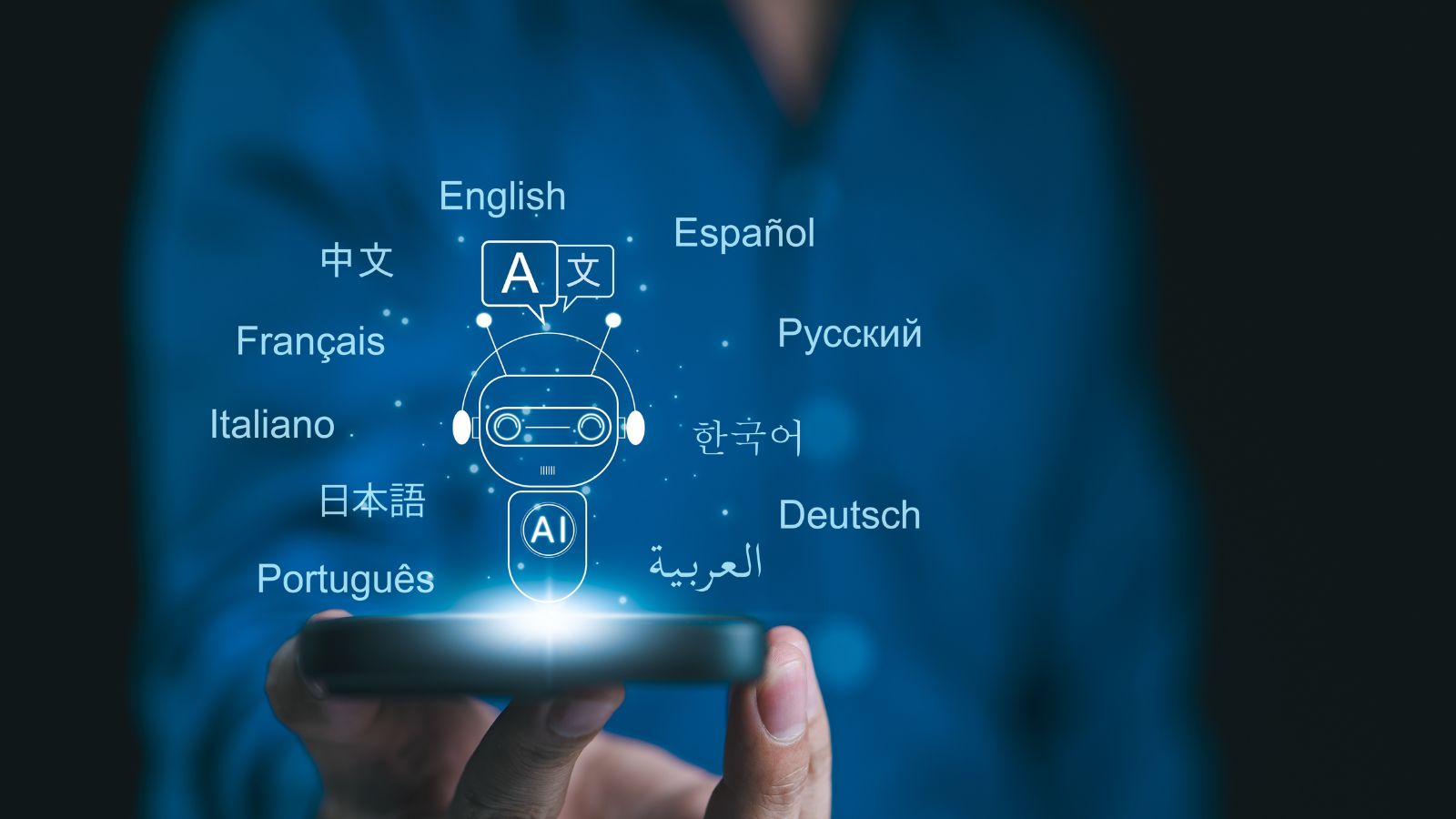
Translation was once seen as safe from rapid automation because language is filled with cultural nuance, ambiguity, idiom, and tone. That is still true at the highest level. But the first draft of translation, especially for product pages, help articles, internal documents, and routine business copy, is moving quickly toward AI. For companies handling huge amounts of multilingual content, the difference between hand-translating everything and machine-generating a draft is too large to ignore.
What disappears first is not the expert translator on a delicate literary or legal assignment. It is the routine commercial pass: the standard FAQ, the customer email, the app notification, the promotional banner, the product description. Human specialists are still needed for review, terminology control, brand voice, and error correction. Yet that changes the nature of the work. Many language professionals now spend less time translating from zero and more time post-editing, validating, and cleaning up what a system already produced in seconds.
Marketing Copy Variations

Marketing used to rely heavily on teams generating endless versions of nearly the same message. One headline for paid search becomes five. One product angle becomes ten social hooks. One launch email becomes a family of subject lines, previews, landing-page intros, and retargeting messages. AI is especially good at this kind of variation work because it thrives on patterns, prompt constraints, and rapid iteration. That makes it ideal for the production side of online marketing, where volume often matters as much as originality.
The most noticeable change is not that AI writes every campaign brilliantly. It is that it writes enough usable options, fast enough, to reduce the human workload dramatically. Marketers still shape positioning, approve claims, and decide which version fits the audience. But much of the drafting labor has shifted. What once required hours of copy development can now begin with a prompt and a review pass. In many teams, humans are increasingly curators and editors of machine-made options rather than the first writers in the chain.
Product Listings and Descriptions

Few tasks are more repetitive than writing product listings at scale. Size, color, materials, features, compatibility, care instructions, and SEO-friendly phrasing all need to be turned into clean copy, often across hundreds or thousands of items. AI is well suited to this because the structure repeats even when the products change. Feed it a product image, a supplier sheet, or a short spec list, and it can generate titles, bullet points, and descriptions in seconds.
This has immediate consequences for marketplaces and merchants. The tedious catalog work that once consumed interns, freelancers, or ecommerce coordinators is increasingly handled by software. Humans still need to catch hallucinated features, wrong dimensions, and bad brand language, especially when the product is technical or regulated. But the baseline task has already changed. Instead of staring at a blank field and writing item 427 by hand, teams now spend more time approving, correcting, and bulk-publishing AI-generated listing content.
Online Storefront Setup

Building a simple online storefront used to involve a patchwork of micro-decisions: template choice, home-page copy, product grouping, image placement, navigation labels, and basic promotional framing. None of those tasks is individually glamorous, but together they once required time, confidence, and often a designer or agency. AI has started compressing that process. When a merchant can describe a brand in a sentence and receive a usable store draft, the setup phase becomes much less human-intensive.
That matters because many small businesses never needed a fully custom site; they needed a decent one quickly. AI tools are increasingly optimized for that exact use case. They can propose layouts, write placeholder copy, generate imagery, and suggest merchandising structure from a few prompts. The result is not always polished enough for a major brand relaunch, but it is often good enough to replace the early production work that used to eat days or weeks. The online store no longer begins with manual assembly. It often begins with machine generation.
Basic Design Assets

Not every design task is deeply conceptual. A surprising amount of visual work online is repetitive production: resizing banners, generating background variations, adapting a seasonal promotion, creating simple ad concepts, mocking up alternate hero images, or extending a campaign into multiple formats. That is exactly the territory where AI image systems have advanced quickly. They are not replacing top-tier art direction in full, but they are taking over much of the fast, iterative asset work that once filled design queues.
This changes both timelines and expectations. Teams that used to wait for a creative slot can now generate several versions before a designer even opens the brief. That makes human designers more valuable on strategy, brand consistency, and final polish, but it also reduces the number of hours spent on routine production. The replacement is especially visible in performance marketing, where speed matters and assets are constantly tested. The designer becomes a reviewer, refiner, or exception handler rather than the sole maker of every visual element.
Boilerplate Coding

Software engineering is not disappearing, but a meaningful slice of coding work has already been reorganized by AI. Boilerplate functions, scaffolding, test cases, regex patterns, SQL queries, simple scripts, and code explanations are now among the most obvious examples of digital tasks being absorbed. Developers no longer need to compose every block from memory. Increasingly, they describe what they want, inspect the output, and modify it. The first draft of code, once a core human step, is often generated almost instantly.
That does not make the work easy. In some ways it makes judgment more important, because bad code written quickly can still create expensive problems. Architecture, security, debugging under production pressure, and system-level reasoning remain deeply human. Yet the routine act of producing standard code is undeniably shifting. This is why AI feels so disruptive in software: it does not need to replace engineers entirely to change the labor equation. Replacing even the repetitive half of coding changes hiring, training, and the shape of entry-level work.
Research Summaries and Competitor Scans

A great deal of online research work is not discovery but condensation. Someone gathers reports, notes, transcripts, reviews, or articles, and then another person turns the pile into a digest. AI excels at that transformation. It can summarize long documents, compare sources, identify recurring themes, and produce a first-pass brief in minutes. For teams that constantly scan competitors, products, customer complaints, or industry developments, that capability cuts directly into a task that once absorbed large amounts of analyst time.
The speedup is especially valuable in environments where nobody wants a perfect memo; they want a decent one quickly. That is why AI now shows up in everything from earnings-call summaries to internal competitive intelligence. Human researchers still matter because source quality, missing context, and false confidence remain real risks. But the burden of first synthesis is moving away from people. The job increasingly starts after the summary exists, not before. That is a major change for one of the most common forms of online knowledge work.
Data Entry and Document Extraction

Photo Credit: Shutterstock
Data entry has long been a symbol of routine office work, and AI is accelerating its decline. Invoices, receipts, application forms, insurance paperwork, onboarding documents, and medical records all contain structured information that used to require tedious human extraction. Once AI systems became good enough at reading messy documents, classifying fields, and routing information into workflows, a large amount of keyboard-level labor became vulnerable all at once.
The effect is bigger than it first appears because data entry jobs often sit inside broader administrative roles. Remove the form-filling, copy-pasting, and field verification, and the human role changes shape. That does not eliminate every need for oversight. Documents can still be incomplete, ambiguous, or inconsistent, and regulated sectors still need accountability. But the routine mechanical act of lifting information from one place and dropping it into another is exactly the kind of digital work AI handles well. It is one of the clearest cases where replacement is not hypothetical but already operational.
Candidate Sourcing and Resume Screening

Recruiting has always involved a great deal of invisible online labor before any interview happens. Someone searches profiles, screens resumes, compares keywords to job requirements, flags potential matches, and narrows a huge pool into a manageable shortlist. AI is increasingly taking over that early funnel. It can scan qualifications, rank applicants, search large talent databases, and even generate recruiter notes, all before a human recruiter makes direct contact.
That shift is important because early-stage recruiting used to reward sheer manual effort. The recruiter who spent the most time searching often found the most people. Now the task itself is being automated, which means the human value moves toward persuasion, judgment, and relationship-building later in the process. In some hiring pipelines, the first meaningful human attention now arrives after AI has already filtered the field. That does not make the system inherently fairer or better, but it does show how quickly a once-human online task is being absorbed by software.
Homework Help and Tutoring

Online tutoring once depended on a person being available at the right time, with the patience to explain the same concept again in a slightly different way. AI has changed that by offering instant, always-on academic help. Students now turn to chatbots to summarize readings, explain concepts, brainstorm ideas, solve practice problems, and walk through homework steps. In effect, one of the internet’s most common learning tasks has gained a machine version that is faster, cheaper, and always awake.
That does not mean AI is a perfect tutor. It can be confidently wrong, too quick to provide answers, or weak at spotting when a student is lost for a more human reason such as frustration or embarrassment. Still, for routine educational help, the convenience is difficult to beat. The traditional online tutor is not vanishing, but the floor of tutoring has changed. Many students no longer begin by asking a person. They begin by asking a model, and only escalate when the explanation feels incomplete or suspicious.
Contract Review and Legal First Drafts

Legal work has a reputation for complexity, and much of it deserves that reputation. But not every task in a legal workflow is bespoke brilliance. A large amount of online legal labor involves first-pass review: checking clauses, spotting deviations from templates, summarizing documents, comparing agreements, or drafting standard responses. AI is moving quickly into that layer because the work is text-heavy, rule-sensitive, and often repetitive across large document sets.
The interesting shift is that replacement arrives through triage, not total autonomy. A machine can review the ordinary NDA, summarize the standard contract, or flag missing language before a lawyer touches the file. That does not remove the need for expertise; in fact, it may raise the cost of mistakes when a reviewer becomes overconfident. But the routine portion of legal drafting and review is clearly being compressed. Lawyers are increasingly asked to supervise, verify, and refine rather than produce every first version themselves from scratch.
Market Briefs and Financial Summaries

A large share of business analysis involves turning too much information into a usable brief. Analysts review earnings calls, company filings, macro updates, competitor moves, and internal data, then compress that material into something a manager can read quickly. AI is exceptionally good at this kind of summarization task, which is why financial and market-analysis workflows are adopting it so aggressively. It saves time precisely where information overload used to create bottlenecks.
What disappears first is not expert judgment but the slow manual sweep through documents. AI can surface the themes, highlight the changes, and draft the summary before a human analyst adds interpretation. That is a meaningful transfer of labor. In finance and strategy teams, the first read is increasingly machine-assisted, sometimes machine-written. Humans still decide what matters, what is misleading, and what deserves escalation. But the baseline task of producing a concise market or earnings brief is being automated faster than many white-collar workers expected.
Content Moderation and Spam Filtering

Content moderation has become one of the clearest examples of scale forcing automation. No major platform can manually review every comment, upload, review, or image before it appears. As a result, AI systems now handle enormous amounts of first-line moderation by detecting spam, nudity, hate signals, policy violations, and suspicious behavior before human reviewers step in. The task that used to imply a room full of moderators increasingly begins with models sorting the easy cases at industrial speed.
That speed comes with trade-offs. Automated systems can miss context, misread satire, or remove legitimate content while letting harmful material slip through. But the online task itself has already changed. Human moderators are now more likely to handle appeals, edge cases, and escalations instead of scanning every piece of content from the ground up. In other words, AI has not solved moderation, but it has replaced a huge share of the repetitive screening work. For the internet’s endless stream of uploads and posts, that replacement was probably inevitable.
19 Things Canadians Don’t Realize the CRA Can See About Their Online Income

Earning money online feels simple and informal for many Canadians. Freelancing, selling products, and digital services often start as side projects. The problem appears at tax time. Many people underestimate how much information the CRA can access. Online platforms, banks, and payment processors create detailed records automatically. These records do not disappear once money hits an account. Small gaps in reporting add up quickly.
Here are 19 things Canadians don’t realize the CRA can see about their online income.
