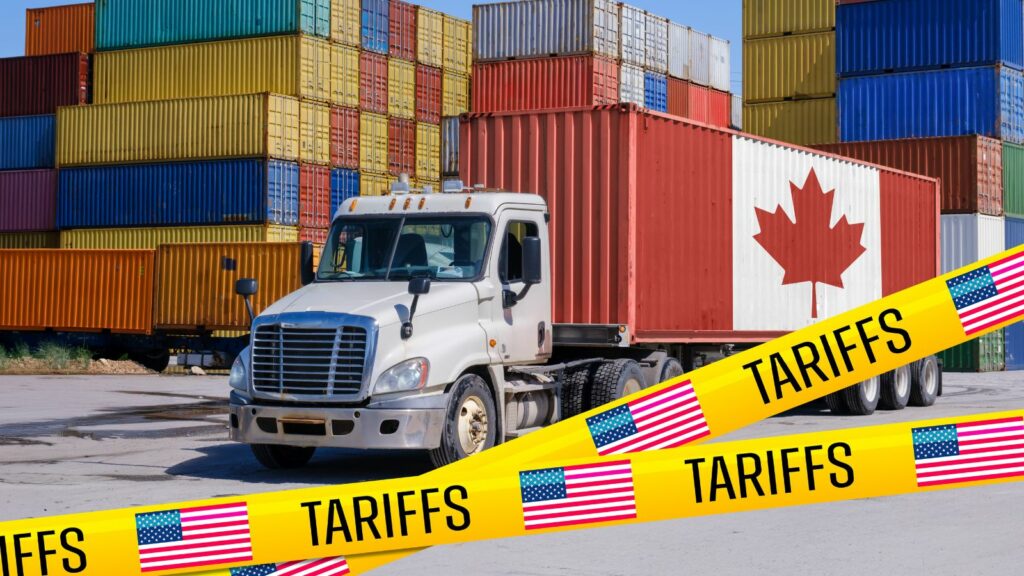
Tariff battles can sound distant until they reach a checkout counter. In Newfoundland and Labrador, that link is becoming harder to ignore as Canada prepares to impose another round of retaliatory tariffs on U.S. goods beginning September 8. The St. John’s Board of Trade is warning that businesses, particularly smaller firms already coping with repeated cost increases and uncertainty, cannot absorb every new expense indefinitely.
Ottawa says its response is designed to match Washington’s latest tariffs dollar for dollar and protect Canadian industries. Yet retaliation also creates costs at home. For Newfoundland and Labrador, where overall U.S. trade exposure is lower than in some provinces but industries such as seafood and manufacturing remain closely connected to American markets, the next phase could test both business margins and household budgets.
Newfoundland Businesses Say the Cost Cushion Is Nearly Gone
The warning from the St. John’s Board of Trade is straightforward: many businesses no longer have much room to absorb another round of higher costs. CEO AnnMarie Boudreau told VOCM that small and medium-sized firms have been operating in a volatile, unpredictable environment and have already faced repeated increases in expenses. Businesses may prefer to shield customers from those pressures, but when margins are thin, absorbing tariffs indefinitely is rarely realistic. At some point, companies must raise prices, reduce product selection, find new suppliers, delay investment or accept lower profitability.
That matters because the tariff fight arrives after businesses have already spent years managing changes in transportation, financing, labour and input expenses. The Board of Trade has supported Canada’s response to the United States while urging Ottawa to ensure assistance is timely, accessible and sufficient, particularly for small companies. That creates an uncomfortable tension: retaliatory tariffs may serve a broader national strategy while still causing immediate financial pain for a retailer, contractor, restaurant or manufacturer trying to keep prices stable.
Canada’s September 8 Retaliation Is Large and Highly Targeted
Canada’s latest countermeasures are scheduled to take effect at 12:01 a.m. on September 8. Ottawa says they will cover $27.6 billion worth of U.S. imports and match the newest American tariffs dollar for dollar and rate for rate. Depending on the product, Canadian surtaxes will be 15%, 25% or 50%. Targeted sectors include steel and aluminum, dairy, appliances, agricultural equipment, pulp and paper, plastics and electronics. Furniture and clothing are among the products facing some of the highest rates, while existing Canadian counter-tariffs on U.S. autos will remain.
The immediate trigger was Washington’s latest tariff action against Canadian products, which took effect August 22 after bilateral negotiations failed to produce an agreement. The American measures include 50% duties on selected Canadian products under Section 338 of the Tariff Act of 1930, alongside existing sectoral measures. Ottawa describes its retaliation as proportional. Even so, hundreds of tariff lines are involved, meaning the consequences extend well beyond a few major industries and into routine purchasing decisions made by Canadian companies.
A Tariff Is Collected at the Border, but the Cost Rarely Stays There
The mechanics of tariffs help explain why the Newfoundland business community is focused on consumers. When a Canadian company imports a tariffed U.S. product, the additional duty is collected on the Canadian side. The importer can absorb the expense, persuade the American supplier to lower its price, switch suppliers, accept a smaller margin or charge customers more. In practice, businesses often use a combination of those approaches rather than relying on a single solution.
Canadian evidence from the previous trade dispute shows how the process can reach shoppers. Bank of Canada researchers examined daily prices for more than 110,000 products from seven major retailers during Canada’s 2025 counter-tariff period. Prices of tariffed products eventually stood about 6% above comparable untariffed goods, suggesting roughly one-quarter of the 25% tariff reached retail prices. Researchers estimated the measures added approximately 0.3 percentage points to consumer price inflation. That episode does not predict the precise effect of the September tariffs, but it demonstrates how a border tax can eventually become a household expense.
Price Increases May Arrive Gradually Rather Than Overnight
Consumers should not expect every affected product to become 25% or 50% more expensive the morning new tariffs begin. Businesses may still hold inventory purchased before the duties took effect, operate under existing supplier contracts or have enough margin to absorb part of the increase temporarily. Others can substitute Canadian or non-U.S. goods. Those buffers mean the initial effect at the checkout can appear relatively modest even when underlying business costs have risen sharply.
Duration also matters. Bank of Canada researchers found that retailers passed through more of Canada’s 2025 counter-tariff costs after developments suggested the trade conflict might continue longer than initially expected. Separate research released by the National Bureau of Economic Research in July 2026 found that tariff effects can also spread indirectly as imported inputs become more expensive and competitive conditions change. The result can resemble a slow pressure wave rather than a one-day price shock, with changes emerging at different speeds across appliances, clothing, food, industrial supplies, construction materials and other goods.
Small Exporters Are Being Squeezed From Both Directions
For many small Canadian businesses, the dispute creates pressure on sales and costs simultaneously. Companies exporting into the United States risk losing orders because tariffs make their products more expensive for American customers. Canadian counter-tariffs can then raise the cost of U.S. machinery, components or merchandise that those same companies purchase at home. Large corporations may have international sourcing teams, greater bargaining power and bigger financial cushions. Smaller companies frequently have far fewer alternatives.
The Canadian Federation of Independent Business says 40% of small Canadian exporters to the United States are directly affected by the latest 50% U.S. tariffs. Among affected businesses surveyed before implementation, 77% expected their revenue to decline, while 35% expected a reduction of at least 50%. Those figures explain why warnings about passing costs to consumers carry weight. A company facing weaker export sales is also less capable of absorbing higher domestic input expenses. Raising prices, delaying hiring or investment, reducing inventory or abandoning lower-margin products can quickly shift from optional business decisions to measures aimed at staying viable.
Newfoundland and Labrador Is Less Exposed Overall — but Some Sectors Are Not
Newfoundland and Labrador has one important buffer: its export economy is more geographically diversified than Canada’s overall. The Bank of Canada noted in 2025 that roughly one-third of Newfoundland and Labrador’s goods exports were destined for the United States, compared with about three-quarters nationally at the time. Statistics Canada has separately estimated that 18.4% of the province’s economic value added was connected directly or indirectly to U.S. exports in 2021. Those figures show that the province is not uniformly dependent on one foreign market.
The averages, however, conceal industries with much heavier exposure. Newfoundland and Labrador’s 2026 economic outlook reported that the United States represented 57.1% of the province’s international manufacturing exports in 2025. Seafood is particularly important. Provincial figures show approximately 65% of Newfoundland and Labrador seafood exports went to the United States in 2024, valued at about $890 million. In coastal communities, the impact can therefore be concentrated: one processor, buyer or fishing season can matter enormously even when province-wide statistics suggest relatively diversified trade.
The Consumer Impact Will Depend Heavily on Available Substitutes
The Canadian tariff list reaches product categories that appear routinely in homes and businesses. Appliances, dairy products such as cheese, electronics, furniture, clothing and numerous industrial materials are among the affected goods. But a tariff does not translate mechanically into an identical retail price increase. When a store can substitute a U.S.-made product with a comparable Canadian, European or Asian item without substantially increasing costs, the biggest change may occur in sourcing rather than at the cash register.
The problem becomes more difficult when alternatives are scarce. That consideration can be particularly important in Newfoundland and Labrador, where geographic distance and a smaller consumer market can complicate procurement. A contractor needing a specific component, a restaurant using a particular ingredient or a retailer selling a specialized American appliance may not be able to replace its supplier quickly. Tariffs can also affect components used to make Canadian products, spreading higher costs beyond items carrying a “Made in USA” label. Consumers are therefore likely to encounter a patchwork of effects shaped by inventories, supply contracts, competition and businesses’ ability to find substitutes.
Ottawa Is Pairing Retaliation With a $7.5-Billion Support Package
The federal government is attempting to contain some of the economic damage while maintaining its retaliatory position. Ottawa has announced $7.5 billion in new and expanded measures for workers and companies, building on nearly $25 billion it says had already been provided since U.S. tariff measures began. The latest package includes another $1.5 billion through the Regional Tariff Response Initiative, a $500-million Business Development Bank of Canada liquidity stream, $2 billion for the Canada Strong Diversification Fund and $3.5 billion in rapid-response assistance for workers and employers.
Access could ultimately matter as much as the headline dollar figure. Ottawa lowered the minimum revenue requirement for certain BDC tariff programs to $1 million and says regional development agencies will provide liquidity support to small and medium-sized companies. Business organizations remain concerned, however, about programs becoming too complicated for smaller firms to navigate. The St. John’s Board of Trade has explicitly asked for timely and accessible assistance. For an owner facing payroll, rent and supplier invoices every month, support that takes too long to reach the business may offer little protection against immediate cash-flow pressure.
Buying Local and Trading More Within Canada Are Becoming Economic Strategy
One consequence of the dispute has been a stronger effort to redirect spending toward Canadian companies. Newfoundland and Labrador already operates a Buy NL initiative designed to make provincial and Canadian products easier to recognize. Some businesses say changing consumer attitudes have benefited them. Karen Thorpe, owner of Karen’s Woodworking, told CBC that her business improved as more Canadians chose domestic products, adding that she no longer sells her woodworking products into the United States. Her experience cannot represent every company, but it shows that trade disruption can redirect demand as well as destroy it.
Governments are also attempting to remove obstacles between Canadian provinces. At an August meeting in Iqaluit, federal, provincial and territorial ministers agreed to accelerate efforts toward model mutual-recognition legislation aimed at making goods, services and labour mobility easier across Canada. Newfoundland and Labrador participated in the discussions and has separately joined a direct-to-consumer alcohol framework involving other provinces. Domestic trade cannot replace American demand for industries built around U.S. customers, but a larger and easier-to-access Canadian market could provide businesses with another way to reduce exposure.
September 8 Is the Next Test — Not the End of the Trade Fight
For Canadian businesses, September 8 is now the key date. The new counter-tariffs are scheduled to take effect just after midnight, although U.S. goods already in transit to Canada on that date will not be covered by the new measures. Future shipments of listed U.S.-origin products will face the additional duties. Ottawa has also maintained a tariff-remission system that businesses can use in certain circumstances, including when necessary inputs cannot be obtained domestically or reasonably sourced from countries other than the United States.
That flexibility may become increasingly important if the dispute persists. Canada-U.S. trade negotiations remain suspended, while federal and provincial governments continue discussing support programs, domestic trade and diversification. The greatest economic unknown may therefore be duration rather than the tariff rate alone. Previous Canadian evidence suggests companies become more willing to pass tariff expenses forward when they believe those costs will persist. For Newfoundland and Labrador households, the crucial question is not whether every price will rise immediately. It is how long businesses can continue absorbing additional expenses before more of the burden reaches store shelves, service bills, employment decisions and investment plans.
