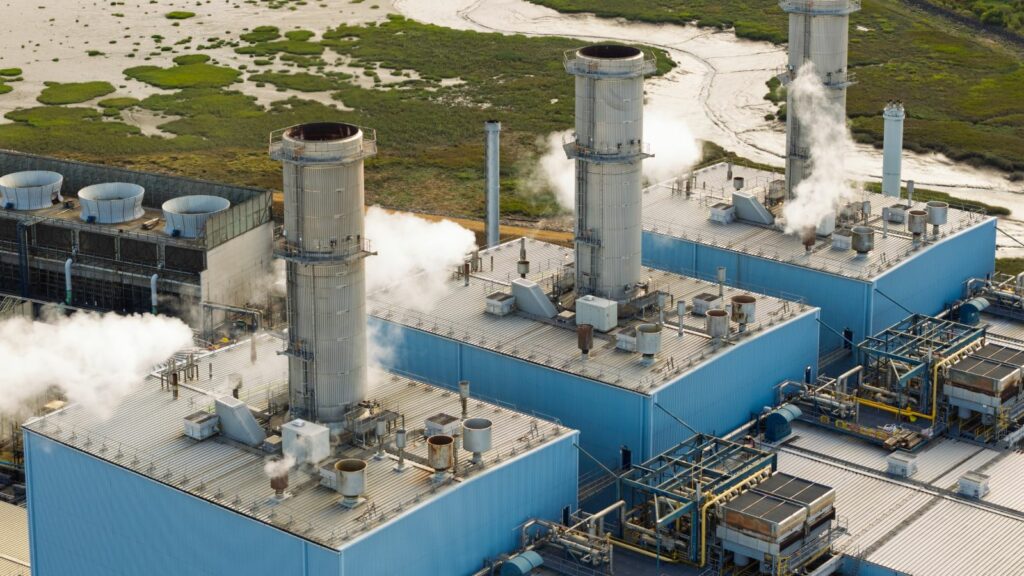
A U.S. rare-earth supply chain does not become more secure simply because a new mine is announced. The harder bottleneck is often what comes next: separating mixed rare-earth material into the high-purity oxides needed for powerful magnets. That is why Aclara Resources’ latest Louisiana milestone matters. The TSX-listed company says the Louisiana Department of Environmental Quality has approved the state air permit for Project Dynamo, its planned separation facility at the Port of Vinton. The approval moves the project closer to construction as Washington pushes to reduce dependence on concentrated foreign processing capacity. But the permit is only one piece of a much larger strategy linking South American ionic-clay deposits, U.S. processing technology, federal financing tools and a Louisiana industrial site designed to turn difficult-to-source heavy rare earths into commercial products.
The Air Permit Moves Dynamo Closer to Construction
Louisiana regulators issued State Permit No. 0520-00550-00 to Aclara Technologies, the company’s U.S. subsidiary, authorizing construction and operation of Project Dynamo under specified emissions limits, controls and operating requirements. Aclara called the approval its main permitting milestone for the separation plant. That distinction matters: an air permit is not the same as saying every development risk has disappeared, but it allows the project to move from planning toward physical execution under a defined environmental framework. For a specialty chemical operation built around rare-earth solvent extraction, getting those operating conditions settled is a meaningful step before major equipment and construction commitments are made.
Aclara says Hatch is completing the final stages of basic engineering and now targets major construction activity beginning in the first quarter of 2027. Earlier development schedules also contemplated long-lead equipment orders, site work and foundations around late 2026, so the transition into construction is expected to occur in stages rather than with a single ceremonial start date. The company’s current development pathway points toward construction running into early 2028, followed by commissioning and ramp-up. In practical terms, the new permit does not produce a kilogram of dysprosium or terbium by itself. It does, however, remove a major regulatory gate between a proposed flowsheet and an operating industrial plant.
Louisiana Was Chosen for Industrial Infrastructure, Not Just Incentives
Project Dynamo is planned for an approximately 82-acre Louisiana Economic Development certified site at the Port of Vinton in Calcasieu Parish. Louisiana Economic Development says Aclara evaluated more than 100 potential U.S. locations before choosing Vinton. The location offers access to the Gulf Intracoastal Waterway, Interstate 10, chemical suppliers and an established industrial workforce. Those details are unusually important for rare-earth separation, which depends not only on ore or concentrate but also on reagents, utilities, logistics and experienced operators. A facility can be strategically valuable on paper and still struggle if the industrial ecosystem around it is weak.
The state has attached a substantial economic-development package to the project. Aclara has outlined approximately US$277 million of construction capital for the separation facility, while Louisiana officials expect 140 direct jobs and estimate another 456 indirect positions. The state also approved an Industrial Tax Exemption Program contract providing an 80% property-tax exemption for an initial five-year term. Aclara estimates that benefit at about US$4.2 million annually, or roughly US$20.8 million over the first five years, with a possible renewal. For Vinton, the significance is therefore twofold: the project is part of a national security supply-chain push, but it is also a conventional local industrial-development bet involving payrolls, infrastructure and long-term tax considerations.
The Plant Targets the Rare Earths That Matter Most for High-Performance Magnets
Aclara’s planned output is concentrated on magnet materials rather than the full rare-earth spectrum. At full capacity, the company’s current design calls for average annual production of about 1,131 tonnes of neodymium-praseodymium oxide, 148 tonnes of dysprosium oxide and 25 tonnes of terbium oxide, with product purities above 99.5%. Those are relatively small tonnages beside bulk commodities such as copper or iron ore, yet their economic importance is much larger than their physical volume suggests. Neodymium and praseodymium form the core of high-strength NdFeB magnets, while dysprosium and terbium can improve performance and temperature resistance in demanding applications.
That chemistry connects Project Dynamo directly to electric-vehicle motors, wind turbines, robotics, industrial equipment and defense systems. Aclara has said that, if the facility reaches full production, its dysprosium and terbium output could supply more than 75% of U.S. Dy-Tb requirements for electric vehicles by 2028. That is a company projection, not a guarantee and not a claim that Dynamo would meet three-quarters of all U.S. rare-earth demand. The narrower point is still striking: because heavy rare-earth markets are small and concentrated, one successful commercial plant can materially change supply availability. In this sector, a few dozen or hundred tonnes can carry strategic weight far beyond what the tonnage alone suggests.
Washington Is Treating Rare-Earth Processing as Industrial Policy
Project Dynamo is advancing at a time when U.S. industrial policy is increasingly designed to finance the missing middle of critical-mineral supply chains. On September 4, Aclara disclosed a non-binding Letter of Interest from the Export-Import Bank of the United States indicating that EXIM would consider up to US$750 million in financing for the broader separation, metals and alloys platform in Louisiana. The potential debt could carry a repayment tenor of as long as 15 years under EXIM’s Make More in America initiative. The headline number is large, but the company explicitly states that the letter is not a final financing commitment and remains subject to due diligence, underwriting and authorization.
Federal support is also reaching the technology side. In July, Aclara’s U.S. subsidiary was selected for Department of Energy funding negotiations under the Genesis Mission for an AI-enabled project focused on multi-feed rare-earth separation. At the state level, Louisiana has combined tax relief, workforce support and infrastructure assistance around the Vinton development. The pattern is broader than Aclara. EXIM has been expanding critical-mineral and domestic-manufacturing financing, while the Defense Department has spent years backing mine-to-magnet capacity. Washington’s message is increasingly clear: mining alone is not enough if the separation, metal-making and magnet stages remain vulnerable to foreign chokepoints.
The Virginia Pilot Is the Bridge Between Lab Chemistry and Louisiana Scale
Before Project Dynamo processes commercial volumes, Aclara is using a pilot separation plant at the Virginia Tech Corporate Research Center in Blacksburg to validate the chemistry and generate operating data. The facility began operating in March 2026 and uses solvent-extraction circuits designed around high-purity mixed rare-earth carbonate from Aclara’s ionic-clay feed. The goal is to demonstrate the separation of NdPr, dysprosium and terbium before the same basic process is scaled up in Louisiana. That is a crucial distinction in a sector where producing a mixed concentrate is easier than repeatedly separating individual rare earths to tight purity specifications at industrial scale.
Aclara is also collaborating with Argonne National Laboratory on an AI-enabled digital twin intended to simulate and optimize the separation process. The company says the model is meant to improve recovery, product quality, process stability and adaptation to different feed compositions. The DOE-selected project extends that idea toward multi-feed processing, which could make Dynamo more flexible if the plant eventually handles material beyond its initial source. For operators, the value is less futuristic than the phrase “AI digital twin” can sound. A useful model could help teams anticipate how a complex solvent-extraction circuit responds before changing conditions in the real plant, potentially reducing commissioning problems and shortening the learning curve during ramp-up.
China’s Dominance Explains the Urgency
The strategic case for facilities such as Dynamo begins with concentration. The International Energy Agency estimates that China accounted for about 60% of global mined production of magnet rare earths in 2024, roughly 91% of refined output and about 94% of permanent-magnet production. That concentration is especially important because mining is only the first step. A country can possess rare-earth deposits and still remain dependent if it lacks the ability to separate individual oxides, refine metals, make alloys and manufacture magnets at scale. The processing stages are where China’s position becomes most pronounced.
Recent trade disruptions turned that structural concern into an operational one. The IEA says Chinese export controls introduced in 2025 caused sharp declines in shipments of controlled heavy rare earths and magnets, with some automakers outside China reducing utilization or temporarily stopping production while licenses were sorted out. The U.S. Geological Survey’s 2025 critical-minerals assessment also placed several heavy rare earths—including terbium, dysprosium, gadolinium and yttrium—among the commodities facing the highest supply risk. That combination of market concentration and geopolitical exposure explains why a Louisiana separation plant can attract attention far beyond the mining sector. It is not simply another processing site; it is part of an attempt to create redundancy in a chain where relatively small disruptions can reach high-value manufacturing quickly.
Dynamo Depends on a Cross-Border Feedstock Chain
Although Project Dynamo would place separation capacity inside the United States, its planned feedstock illustrates the international nature of the strategy. Aclara is developing ionic-clay rare-earth resources in Brazil and Chile, with the Carina Project in Goiás currently positioned as the primary feed source in the Louisiana scoping study. The company’s integrated plan is to produce a high-purity mixed rare-earth carbonate in South America and ship that intermediate material to Louisiana for separation into individual oxides. This is therefore a U.S.-based processing chain built around Western Hemisphere supply rather than a wholly domestic U.S. mine-to-magnet system.
The upstream projects have been moving through their own milestones. Aclara completed a feasibility study for Carina in 2026, while Chile’s regional environmental authorities approved the Penco Module’s environmental assessment in June after a multi-year review. Penco provides potential additional feedstock and diversification beyond Brazil, although the current Dynamo economics are primarily modeled around Carina material. That creates both an advantage and a dependency. Aclara can design the Louisiana plant around feed it knows well, but the schedule must ultimately line up across mining, shipping and separation. A world-class separator without reliable feed is underused equipment; a producing mine without a qualified downstream outlet leaves value stranded upstream.
The Permit Removes One Risk, Not the Project’s Remaining Risks
Aclara’s April scoping study gave Project Dynamo attractive headline economics: an estimated after-tax net present value of about US$470 million at an 8% discount rate, a 25.2% after-tax internal rate of return and a 3.3-year payback period. Construction capital was estimated at US$277 million, plus approximately US$52 million of working capital. Those figures help explain the interest from governments and investors, but they remain study-level estimates. Actual returns will depend on construction costs, commissioning performance, feed availability, processing recoveries, financing terms and the rare-earth pricing environment when the plant is operating.
The same caution applies to federal financing. EXIM’s indication of up to US$750 million is potentially transformative because it covers a broader Louisiana platform that includes separation, metals and alloys, but the letter is explicitly non-binding. DOE support is also subject to award terms, and engineering must still translate pilot results into reliable commercial production. The September air permit therefore should be viewed as an important de-risking event rather than the finish line. If Aclara can coordinate South American feedstock, Louisiana construction and downstream magnet-material production on schedule, Project Dynamo could become one of the more consequential new pieces of the Western rare-earth supply chain. The next test is execution.
