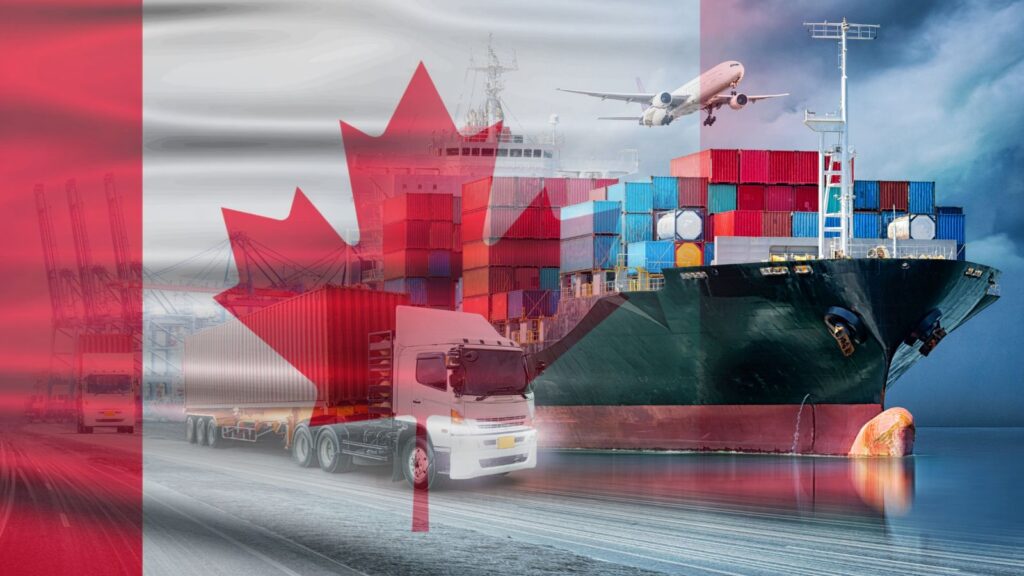
Canada’s effort to find more customers beyond the United States is starting to look less like a temporary response to tariffs and more like a potentially lasting shift in how the country trades. That possibility is raising concern just across the border in Buffalo, where Mayor Sean Ryan warned that new commercial relationships with Europe, Asia and South America could become difficult for American businesses to win back once they are established.
His warning comes during another period of intense Canada-U.S. trade friction. Canadian exporters are still deeply dependent on the American market, but recent trade figures show unusually strong growth elsewhere. For border regions such as Western New York, the question is no longer simply how much current tariffs cost. It is whether years of tightly integrated cross-border business could gradually be replaced by new customers, suppliers, contracts and shipping patterns abroad.
Ryan’s Warning Is About What Happens After the Tariffs
Buffalo Mayor Sean Ryan delivered his warning during a September 22 event focused on the impact of the escalating Canada-U.S. trade dispute on Western New York manufacturers. Ryan argued that the current disruption remained reversible, but cautioned against allowing it to continue long enough for Canadian companies to establish stronger trading relationships in the European Union, Asia and South America. His concern was straightforward: once companies find dependable alternative buyers and suppliers, restoring the old relationships may become considerably harder.
That distinction matters. Ryan was not saying that Canada had abandoned the American market or that every new overseas transaction would permanently replace U.S. trade. He was describing the risk of commercial relationships becoming entrenched. Companies invest time and money qualifying suppliers, negotiating contracts, arranging transportation and meeting regulatory requirements. If Canadian firms make those investments elsewhere because access to the American market has become more costly or uncertain, the economic calculation can remain different even after the original tariff dispute ends.
Western New York Has More at Stake Than Most U.S. Regions
Buffalo’s concern is partly geographic. Southern Ontario and Western New York function as neighbouring pieces of a highly integrated manufacturing economy, with components, metals, machinery and finished products regularly moving across the international border. Federal labour figures show that the Buffalo-Cheektowaga metropolitan area had about 50,700 manufacturing jobs in August 2026, making industrial activity an important part of the regional employment base.
The consequences are already visible at individual businesses. At the September 22 Buffalo event, Welded Tube USA plant manager Steve Vanasky said his company historically sourced steel for its Lackawanna operation from nearby Canadian mills. According to Vanasky, tariff conditions pushed some production north of the border and resulted in the loss of roughly 25 local jobs. Congressman Tim Kennedy’s office separately highlighted New York’s two-way trade in aluminum, steel and copper with Canada, illustrating why border manufacturers can be exposed on both the purchasing and selling sides of their businesses.
The U.S. Market Is Still Enormous for Canada
Any suggestion that Canada can quickly replace the United States would overlook the extraordinary scale of the relationship. U.S. Census Bureau figures show that American goods exports to Canada totalled about US$333.6 billion in 2025, while imports from Canada reached approximately US$381.9 billion. That represents more than US$715 billion in two-way goods trade in a single year, before services are even included.
Canada’s own monthly statistics show similar dependence. In July 2026, Canadian merchandise exports to the United States were C$50.5 billion out of C$76.1 billion in total merchandise exports. In other words, roughly two-thirds of Canadian goods exports that month still went south of the border. Geographic proximity, extensive road and rail networks, common business practices and decades of continental supply-chain integration remain significant advantages. Ryan’s warning therefore concerns erosion at the margins rather than an overnight replacement of the U.S. market. Even modest shifts, however, can represent billions of dollars when the underlying trade relationship is this large.
Canada’s Non-U.S. Export Numbers Are Becoming Harder to Ignore
The strongest evidence behind concerns about diversification came from Statistics Canada’s July 2026 merchandise-trade report. Exports to countries other than the United States climbed 7.4% from June and reached a record C$25.6 billion. Non-U.S. destinations accounted for 33.7% of Canadian merchandise exports that month, with the Netherlands, China and Germany among the markets contributing most to the increase.
One month does not establish a permanent structural change, particularly because commodity prices and large individual shipments can cause substantial swings in Canadian trade statistics. Still, the direction fits a broader strategy that Canadian governments and businesses have pursued as U.S. trade conditions became less predictable. The significance is that diversification no longer exists only in policy documents. Goods are moving. Customers are buying. Exporters are learning how to operate in those markets. Every successful transaction gives a Canadian company more information about alternative logistics, regulations, prices and buyers, potentially reducing the perceived risk of relying less heavily on the United States.
Europe Is Already a Large and Established Alternative
Europe is particularly important because Canada does not have to build that trading relationship from scratch. The Comprehensive Economic and Trade Agreement between Canada and the European Union has been provisionally applied since 2017, removing or reducing numerous barriers and giving Canadian firms preferential access to one of the world’s largest markets. Global Affairs Canada reports that combined Canada-EU trade in goods and services reached C$178.6 billion in 2025.
Merchandise trade between Canada and the EU increased by more than 77% between 2016 and 2025. The European Commission reports a similarly strong long-term pattern, with EU-Canada trade in goods and services up roughly 80% over the period. Canada and the EU have also been working on deeper digital-trade cooperation. This matters for Ryan’s warning because diversification toward Europe is not simply an emergency workaround created by the latest dispute with Washington. The institutional framework, business relationships and tariff preferences were already being built for years. Current U.S. tensions may accelerate a trend that already had substantial momentum.
Asia Offers Scale That Canadian Exporters Cannot Easily Dismiss
Canada has been building similar commercial infrastructure across the Indo-Pacific. The country is part of the Comprehensive and Progressive Agreement for Trans-Pacific Partnership, connecting it with economies including Japan, Vietnam, Malaysia, Australia and Singapore. Canada has also expanded trade missions and commercial representation throughout Southeast Asia, including new Export Development Canada offices in Jakarta, Ho Chi Minh City, Manila and Bangkok.
The numbers are becoming substantial. Global Affairs Canada says merchandise trade between Canada and the Association of Southeast Asian Nations reached C$52.4 billion in 2025, an increase of 23.6% from C$42.4 billion in 2024. ASEAN collectively ranked as Canada’s fifth-largest merchandise trading partner that year. Asia cannot duplicate the convenience of shipping components from Ontario to nearby New York, and greater distances introduce transportation costs and logistical complexity. But its enormous consumer base, expanding middle class and existing Canadian trade agreements mean it offers something different: enough scale to give exporters credible alternatives when North American conditions become less predictable.
The “New Trade Routes” Are Becoming Physical Infrastructure
The phrase “trade routes” can sound abstract, but Canada is also investing in the infrastructure required to move more goods overseas. The Port of Montreal provides a revealing example. Its 2025 cargo statistics show Northern Europe accounting for more than 20% of waterborne cargo handled by trading partner, while Asia accounted for roughly 8.5%. The United States represented about 15.2% under the same measure. These are already functioning international logistics networks rather than theoretical future connections.
Montreal is also developing its Contrecœur container terminal, which is expected to add annual capacity of as much as 1.15 million twenty-foot-equivalent units when commercial operations begin in 2030. The port describes the project as supporting trade diversification and economic resilience. In March 2026, Montreal was also added to CMA CGM’s CAGEMA service, giving it a direct weekly connection with Latin America. The port said the service could reduce reliance on U.S. East Coast ports for some cargo. Infrastructure investments of this size can make diversification progressively easier once they are operating.
Tariffs Give Companies a Reason to Reconsider Old Habits
The immediate pressure behind the latest diversification debate is unusually high. Canada imposed new counter-tariffs of 15%, 25% and 50% on C$27.6 billion worth of selected U.S. imports beginning September 8, responding to new American measures affecting Canadian products. The targeted Canadian list includes goods in areas such as steel, aluminum, dairy, appliances, agricultural equipment, pulp and paper, and electronics.
The Trump administration has defended its Section 338 measures as responses to what it describes as discriminatory Canadian policies in sectors including automobiles, dairy and alcoholic beverages, and has argued that tariffs can create more opportunities for American producers. Canada disputes the U.S. approach and has responded with its own measures. Whatever the policy arguments on either side, businesses have to operate under the resulting prices and rules. In Buffalo, GTI Fabrication engineering manager Dan Yousett said rapidly changing tariff conditions make it difficult to know what costs to use when quoting future jobs—an example of how uncertainty itself can influence sourcing decisions.
Supply Chains Can Become Sticky Once Companies Move
Economic research helps explain why Ryan focused on what happens after alternative trading arrangements are established. Research on earlier U.S. tariff episodes found that supply-chain adjustments frequently occur gradually rather than immediately. A National Bureau of Economic Research study of the 2018-era tariffs found that the response of import values became larger over time, consistent with companies needing time to reorganize sourcing arrangements.
More recent research examining the reallocation of U.S. supply chains away from China found a similar pattern. Early adjustments were concentrated in products for which alternative production could be found relatively easily. Later, as companies became convinced the policy changes would persist, reallocation spread into contract-intensive products and goods characterized by stickier buyer-supplier relationships. IMF research likewise emphasizes that supply chains contain significant rigidities: businesses cannot instantly switch suppliers, but diversification can improve resilience once alternative networks are created. These studies do not prove Canadian trade will permanently move away from the U.S., but they explain the economic mechanism behind Ryan’s warning.
The Shift Is Not Necessarily Permanent
There are also strong reasons to avoid treating the mayor’s warning as a prediction that Canadian trade will simply disappear from the United States. Geography remains powerful. Factories in Ontario can reach customers in New York, Michigan and Ohio far faster than equivalent customers across an ocean. Canadian and American production systems have developed around that advantage for decades, particularly in automobiles, metals, energy and advanced manufacturing.
The continental trade framework has also not vanished. The United States declined on July 1, 2026, to renew the USMCA/CUSMA for another 16-year period in its current form, but the U.S. Trade Representative explicitly said the agreement remains in force while the parties continue dealing with disputed issues. That creates uncertainty, but not an immediate end to preferential North American trade. The central question is therefore one of degree. Canada may continue selling enormous quantities to the United States while simultaneously building a much larger portfolio of European and Asian customers than it had before.
Buffalo’s Concern Is Really About the Next Business Decision
For Western New York, the most important part of the dispute may not be today’s tariff bill. It may be the next contract a Canadian company signs. A manufacturer that has always purchased a particular component in Buffalo may investigate a European supplier. A Canadian resource producer may develop a new buyer in Germany or China. An importer that traditionally routed cargo through an American port may find a Canadian alternative. Any one decision looks small beside hundreds of billions of dollars in annual Canada-U.S. commerce.
Repeated thousands of times, however, those choices can gradually alter trade patterns. That is the risk Sean Ryan was describing. Current statistics support the idea that Canada is diversifying, while the continuing scale of U.S.-Canada commerce shows that the American market remains exceptionally difficult to replace. Whether the new connections become permanent will depend on relative costs, tariff policy, reliability, infrastructure and the value businesses place on having multiple markets. For Buffalo, waiting to find out carries its own economic stakes.
