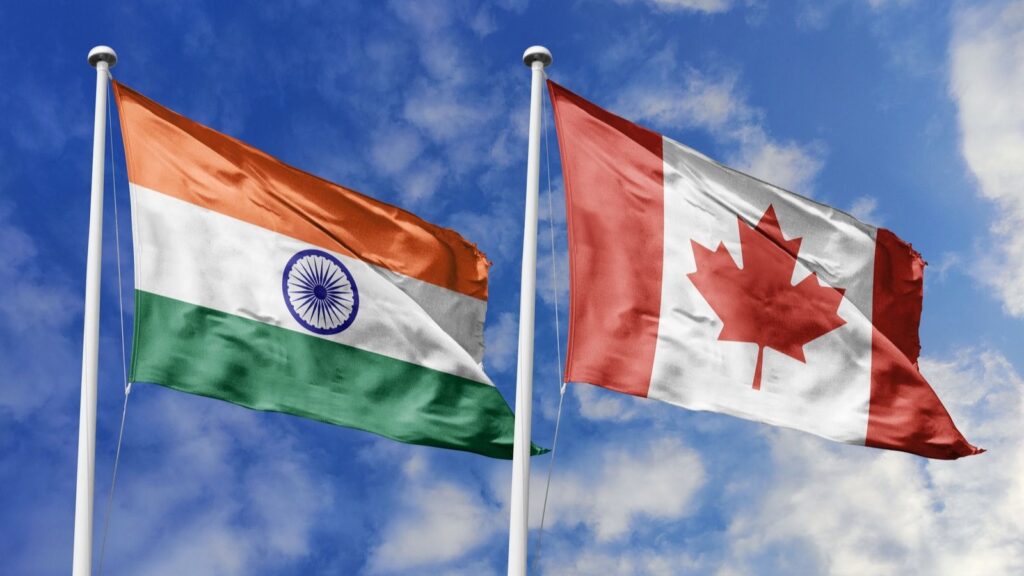
Canada and India are moving their trade negotiations onto a notably faster track, with a fifth round of Comprehensive Economic Partnership Agreement talks scheduled to begin October 5. The new round comes only weeks after negotiators completed their fourth round and reflects a shared goal of finishing the negotiations before the end of 2026.
For Ottawa, the talks are about considerably more than opening another export market. Canada is trying to reduce its longstanding dependence on the United States by expanding commercial relationships across Asia and other fast-growing regions. India, with its enormous consumer market, rising energy needs and demand for food, minerals and technology, has become an increasingly important part of that strategy. The challenge now is turning political momentum into a detailed agreement capable of working for businesses on both sides.
Fifth Round Puts the Negotiations on a Compressed Calendar
The fifth round is scheduled to begin October 5, according to Indian Commerce and Industry Minister Piyush Goyal, after the fourth round concluded on September 18. That timetable illustrates just how quickly the renewed negotiations are moving. Canada and India formally launched the current CEPA process in March 2026, and both governments have repeatedly stated that they want negotiations completed before the end of the year. Canadian officials said after the fourth round that negotiators would continue working to narrow remaining gaps rather than waiting for lengthy pauses between formal sessions.
That pace matters because comprehensive trade agreements normally involve far more than negotiating tariff cuts. Teams must address services, rules of origin, product standards, agriculture, intellectual property and numerous technical issues affecting how companies actually conduct business. India and Canada have already discussed many of those chapters. Goyal described the coming months as an important period for bilateral ties, while Canadian Trade Minister Maninder Sidhu has similarly emphasized the goal of reaching a mutually beneficial agreement in 2026. The fifth round therefore represents another test of whether political urgency can translate into technical compromises.
India Fits Ottawa’s Broader Diversification Strategy
Canada’s interest in India is part of a much wider effort to make its economy less vulnerable to disruptions involving any single trading partner. Ottawa’s current trade diversification strategy calls for Canadian exports to markets outside the United States to double over the next decade. The government has simultaneously accelerated commercial negotiations with India, ASEAN and the Philippines while pursuing new investment and energy relationships across Europe and the Indo-Pacific.
The numbers help explain the urgency. Statistics Canada reported that the U.S. share of Canada’s merchandise exports fell from 75.9% in 2024 to 71.7% in 2025. Canadian merchandise exports to non-U.S. destinations, meanwhile, increased 17.2% during 2025. The United States remains by far Canada’s largest commercial partner, meaning diversification does not amount to replacing the American market. Instead, Ottawa is attempting to build additional outlets for Canadian companies when conditions south of the border become difficult. India matters in that calculation because its population, industrial expansion and growing demand for resources create commercial opportunities that differ significantly from Canada’s traditional North American trade patterns.
The Current Trade Relationship Is Bigger Than the Goods Numbers Suggest
Canada and India already have a substantial economic relationship, although merchandise statistics alone can make it look relatively modest. Global Affairs Canada reported that two-way trade in goods and services reached approximately $30.4 billion in 2025. Merchandise trade accounted for $13.6 billion of that amount. Canadian goods exports to India were valued at about $3.9 billion, while merchandise imports from India totalled approximately $9.7 billion.
The composition of that trade shows why both governments believe there is room for expansion. Canadian exports were led by products such as vegetables, mineral fuels and oils, and wood pulp. Imports from India included precious stones and metals, machinery and pharmaceutical products. Services add another important dimension. Canadian service exports to India were valued at roughly $15.2 billion in 2025, while services imported from India reached about $4.5 billion. Ottawa and New Delhi have set a shared objective of taking total bilateral trade to roughly $70 billion annually by 2030. Reaching that target would require growth not just in traditional goods but also in investment, education, technology, energy and professional services.
Agriculture Gives Canada a Clear but Politically Sensitive Opportunity
For farmers on the Canadian Prairies, India is already a market that can materially affect prices and export volumes. India is the world’s largest producer and consumer of pulses, yet domestic demand can still exceed production, creating opportunities for international suppliers. Agriculture and Agri-Food Canada reported that Canadian agri-food and seafood exports to India reached about $1.4 billion in 2024, with dried peas and lentils accounting for the overwhelming majority of that value. Saskatchewan and Alberta supplied most of those shipments.
That relationship also demonstrates why predictable trade rules matter. India’s import policies can change as New Delhi tries to balance consumer prices, domestic farm production and food security. Canada has previously monitored Indian duties on products such as yellow peas, and Canadian producers have repeatedly sought greater certainty around tariffs, sanitary measures and other import requirements. During Canada’s CEPA consultations, agricultural organizations called for stronger market access and more predictable sanitary and phytosanitary rules. A successful agreement could therefore provide value even beyond tariff reductions if it creates clearer procedures for exporters trying to plan crops, contracts and shipments months in advance.
Energy Could Become One of the Deal’s Biggest Commercial Pillars
Energy has emerged as one of the most strategically significant areas of the renewed Canada-India relationship. India is a major global energy consumer whose demand is expected to keep expanding as manufacturing, transportation and electricity consumption grow. Canada, meanwhile, has been building more export infrastructure aimed at Asian markets. The renewed Canada-India Ministerial Energy Dialogue has identified liquefied natural gas, liquefied petroleum gas and crude oil as areas where bilateral trade could grow.
The potential relationship goes beyond simply loading Canadian energy onto ships. Canadian officials have been encouraging investment partnerships that could give Indian companies longer-term participation in energy projects and supply chains. Reuters reported in September that Indian companies were exploring opportunities associated with Canada’s LNG sector. Canada has also increased LNG shipments to Asian markets after the opening of Pacific Coast export capacity. Geography makes that significant: western Canadian facilities provide a more direct route to Asia than terminals on the Atlantic coast. If commercial contracts follow the political discussions, energy could become one of the largest new components of Canada-India trade over the coming decade.
Critical Minerals and Nuclear Trade Add Strategic Weight
Critical minerals provide another area where the two economies have increasingly complementary interests. India needs materials such as lithium, graphite and other minerals as it expands electric vehicles, renewable energy and advanced manufacturing. Canada is seeking investment to develop its own mining and processing industries while building supply relationships beyond the United States. Canadian and Indian officials have consequently discussed critical-mineral investment, mining technology and the development of more resilient supply chains.
Nuclear cooperation adds another layer. Canada has major uranium reserves and an established nuclear industry, while India is expanding its electricity system and nuclear capacity. In March 2026, the Canadian government pointed to a roughly $2.6-billion arrangement involving Cameco and India for the purchase of 22 million pounds of uranium. Canadian and Indian officials have also welcomed discussions between India’s Department of Atomic Energy and Canadian uranium suppliers. Potash creates a similar strategic connection in agriculture: India’s government has said roughly one-quarter of its potash requirement is sourced from Canadian producers. These relationships make the trade negotiations important not only for consumer goods but also for resources tied directly to energy and food security.
Services, Education and Technology Make This More Than a Tariff Deal
One of the most unusual features of Canada-India trade is the importance of services. Global Affairs Canada’s 2026 State of Trade report found that India became Canada’s second-largest services export market in 2025, behind only the United States, accounting for roughly 6% of Canadian services exports. Education-related travel has historically represented a large part of that business, alongside tourism, professional services and commercial activity.
The relationship is also evolving beyond the traditional model of Indian students travelling to Canadian campuses. In February 2026, Canada announced a Canada-India Talent and Innovation Strategy involving more than 20 Canadian institutions and 13 new partnerships. The initiative includes research exchanges, hybrid campuses, skills programs and artificial-intelligence centres of excellence. Technology companies are also part of the broader commercial push. This matters because modern trade agreements increasingly cover digital services, intellectual property, data movement and temporary entry for business professionals. For Canadian universities, engineering firms, technology companies and professional-service providers, those rules can sometimes matter just as much as customs duties on physical products crossing a port.
The Hard Part Is Rules, Standards and Market Access
The toughest negotiations are unlikely to revolve around headline trade targets. They will involve the less visible rules determining whether companies can actually take advantage of a deal. During the second CEPA round, negotiators discussed trade in goods and services, intellectual property, rules of origin, sanitary and phytosanitary measures and technical barriers to trade. Each of those areas contains potentially difficult compromises.
Canada’s public consultation offers a useful look at the issues businesses are watching. Global Affairs Canada received 624 submissions, including responses from industry groups, businesses, provinces, labour organizations and individuals. Agricultural exporters emphasized unpredictable tariffs and food-safety requirements. Automotive companies raised rules of origin and regulatory recognition. Technology and service-sector participants highlighted digital trade, data governance and intellectual-property protections. At the same time, some Canadian industries sought continued protection for sensitive sectors, including supply-managed agriculture. Negotiators therefore face a familiar trade-policy challenge: creating enough new market access to make the agreement commercially meaningful without ignoring domestic sectors that could face stronger competition.
Trade Talks Are Riding a Broader Diplomatic Reset
The speed of the negotiations is especially notable given how strained Canada-India relations became earlier in the decade. The relationship began moving toward renewed engagement after Prime Minister Mark Carney and Prime Minister Narendra Modi met during the G7 summit in Kananaskis in June 2025. They agreed to appoint new high commissioners, helping restore normal diplomatic representation. By November 2025, the two leaders had agreed to formally launch negotiations toward a comprehensive economic partnership.
That rebuilding continued through 2026. Carney travelled to India in March, where the two governments signed the terms of reference for CEPA negotiations. The two leaders met again during the G7 summit in France in June and welcomed progress on trade, LNG, LPG and metallurgical coal discussions. Foreign-office consultations in September covered energy, critical minerals, science, education, security and consular matters alongside trade. Economic relations have therefore become part of a broader effort to create more regular institutional contact. That does not eliminate areas of disagreement, but it gives officials more channels through which problems can be addressed without freezing the entire commercial relationship.
An End-of-Year Deal Is the Goal, Not Yet a Guarantee
Ottawa and New Delhi continue to publicly target the end of 2026 for completing CEPA negotiations, and both sides have demonstrated unusual willingness to maintain a rapid negotiating schedule. Four rounds have already been completed, the fifth begins October 5, and Sidhu has announced plans to lead a Team Canada Trade Mission to India in October. The governments are also working toward a much larger long-term objective: approximately $70 billion in annual two-way trade by 2030.
Still, a deadline is different from a finished agreement. Trade officials must resolve outstanding differences, settle legal language and ensure that commitments work across sectors ranging from agriculture to digital services. Canada’s own public consultations show that exporters want stronger access to India while domestic industries also expect safeguards and predictable rules. The fifth round will therefore be important not because it guarantees a deal, but because it should reveal whether negotiators are moving from broad political agreement toward the compromises required for an enforceable pact. For Canada, success would add a major Asian market to a diversification strategy increasingly central to its economic policy.
