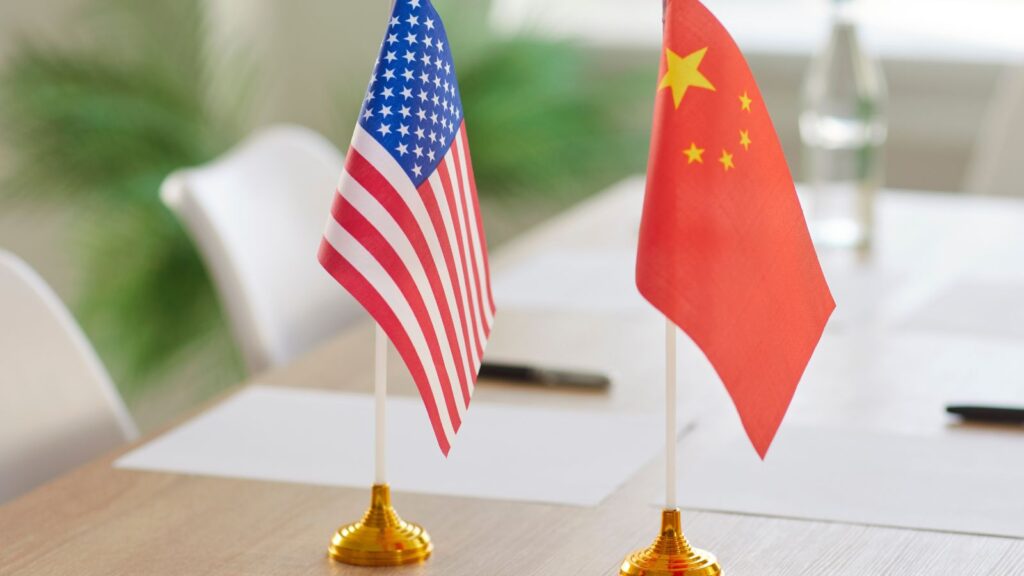
A striking split is emerging in Washington’s trade relationships. The United States and China have now identified roughly US$30 billion in goods on each side that could receive more favourable tariff treatment, potentially easing barriers on about US$60 billion in two-way trade. At almost the same moment, a much harder measure is about to hit Canada: U.S. import bans targeting specified Canadian alcohol, dairy and motor-vehicle-related products are scheduled to take effect Tuesday, September 29.
The two developments are not directly comparable deals, but their timing is difficult to ignore. Washington and Beijing are building a mechanism for selective tariff relief while the United States and its largest neighbouring trading partner remain locked in escalating countermeasures. For Canadian businesses, Tuesday marks another significant change at a border that handles hundreds of billions of dollars in trade every year.
The $30 Billion Figure Actually Applies in Both Directions
The U.S.-China framework is larger than the headline number can initially suggest. Washington and Beijing have each recommended approximately US$30 billion in non-sensitive imports for preferential tariff treatment. That means the framework potentially covers roughly US$60 billion in two-way trade. China’s Ministry of Commerce says the values are based on 2024 trade and that tariff reductions will be implemented reciprocally, subject to each country’s domestic laws and procedures.
The arrangement grew out of the U.S.-China Board of Trade created after Trump and Xi Jinping met in Beijing earlier in 2026. U.S. Trade Representative Jamieson Greer said the selected American exports represent roughly 30% of current U.S. exports to China. That makes the package commercially meaningful without amounting to a wholesale dismantling of U.S.-China tariffs. Both governments continue to treat strategically sensitive sectors differently, while the current initiative concentrates on products they consider less politically or national-security sensitive.
American Farmers and Food Producers Are Prominent on China’s List
Agriculture occupies a major place in the goods China is considering for tariff relief. The published categories include grains such as corn, wheat and sorghum, alongside meat, dairy products, vegetable oils and meals. Fish and seafood, logs and other wood products, cosmetics and medical devices are also among the U.S. exports identified for improved treatment. The breadth of the agricultural coverage reflects a sector that has repeatedly been at the centre of U.S.-China trade negotiations.
Soybeans are notable because they are not the main story in this particular list. The two governments already have separate commitments involving Chinese purchases of U.S. soybeans and other agricultural products. The new framework therefore adds another channel through which farm exports could receive improved access. For producers, however, inclusion on a list does not automatically mean a shipment becomes cheaper immediately. Actual commercial benefits depend on final tariff rates, implementation dates, customs procedures and whether Chinese buyers increase orders once the changes become operational.
The U.S. List Focuses Heavily on Everyday Chinese Consumer Goods
The American side of the arrangement looks considerably more familiar to shoppers. Goods identified for potentially more favourable U.S. tariff treatment include small household appliances, toys, holiday decorations and children’s car seats. Reporting on the newly released lists also identifies products such as tableware, bed and table linens, microwave ovens, artificial flowers, weighing equipment and other household products. These are very different categories from semiconductors, electric vehicles or other strategically sensitive imports that remain central to broader U.S.-China tensions.
That distinction is deliberate. Greer has described the framework as covering non-sensitive trade, allowing tariff relief in areas where Washington sees less strategic risk. Lower duties could eventually reduce import costs for retailers and distributors, although that does not guarantee equivalent reductions at the checkout counter. Exchange rates, shipping costs, inventories, supplier contracts and retailer pricing decisions all affect what consumers ultimately pay. The key point is that the new lists create a route toward tariff reductions; they do not instantly eliminate every existing levy on the products named.
The China Breakthrough Comes With a Longer Trade Truce
The tariff lists are part of a broader effort to keep the U.S.-China trade relationship from sliding back into the extreme tariff escalation seen earlier in the dispute. China confirmed Monday that the two countries have extended their existing trade truce for two months, through January 10, 2027. Beijing said the extension gives both sides time to review how earlier agreements have been implemented and creates a more predictable environment for companies while negotiations continue.
Other commercial commitments remain in the picture. The White House says China has agreed to import at least 10 million metric tonnes of U.S. coal in both 2027 and 2028. At the same time, important disputes are unresolved. The countries are still discussing U.S. concerns about rare-earth and critical-mineral supplies, and earlier U.S. officials had said China was lagging in some agricultural and mineral commitments. The result is better described as selective stabilization than the end of the trade conflict: several areas are easing even while strategic restrictions remain.
Canada Faces a Very Different Change at 12:01 A.M. Tuesday
Canada’s immediate timetable is considerably tougher. U.S. presidential proclamations issued September 8 state that specified Canadian products will be excluded from importation beginning at 12:01 a.m. Eastern time on September 29. Separate actions cover certain Canadian alcoholic beverages, dairy products and products linked to the motor-vehicle dispute. Reuters and AP have described the affected categories as including most targeted Canadian alcoholic beverages, some dairy products and motorcycles.
The administration is using Section 338 of the Tariff Act of 1930. A Congressional Research Service analysis published this month says the 2026 Canada measures mark the first time a president has expressly cited Section 338 to impose tariffs. The administration argues that Canadian policies affecting alcohol, dairy and motor vehicles discriminate against U.S. commerce. Those are the administration’s legal and policy findings; Canada has disputed the U.S. characterization and responded with its own trade measures. The September 29 restrictions therefore represent the next stage of an already active bilateral dispute rather than an isolated tariff announcement.
Some Canadian Goods Are Moving From a 50% Tariff to an Outright Ban
The practical difference between the existing Canadian measures and Tuesday’s change is significant. Products covered by the new exclusions have generally already been facing additional U.S. duties of 50% under the Section 338 actions. Starting September 29, specified products move from being expensive to import to being barred from importation altogether. That distinction matters for distributors with regular cross-border supply arrangements: an importer cannot simply absorb a higher duty on a shipment that is no longer eligible to enter.
There is also a transition rule. The White House proclamations say affected goods imported before September 29 but not yet entered for consumption or withdrawn from a bonded warehouse will remain subject to the earlier 50% duty rather than the ban. Other Canadian products still covered by the Section 338 tariff regime remain subject to those duties unless separately modified. For companies managing inventory around the effective date, those customs distinctions can determine whether merchandise faces a steep charge or is excluded entirely.
Ottawa Has Already Put Its Own Counter-Tariffs Into Effect
Canada did not wait until the September 29 import bans to respond. Ottawa imposed new counter-tariffs on September 8 covering C$27.6 billion of U.S. imports. Depending on the product, the Canadian rates are 15%, 25% or 50%, with Ottawa saying the measures were designed to match U.S. Section 338 and Section 232 tariffs. Targeted sectors include steel, dairy, appliances, agricultural equipment, pulp and paper, plastics and electronics.
The Canadian government simultaneously announced C$7.5 billion in new and enhanced support for workers and businesses affected by U.S. tariffs, on top of nearly C$25 billion in assistance it said had already been made available. The combination illustrates how quickly a tariff dispute can spread beyond customs schedules. Manufacturers may face altered sourcing costs, exporters can lose market access and governments can end up financing support programs for affected industries. The measures also mean companies operating on both sides of the border are dealing with restrictions flowing in both directions rather than a single U.S. tariff shock.
The Scale of Canada-U.S. Trade Makes Even Narrow Restrictions Important
Canada remains one of the United States’ largest economic partners. U.S. Trade Representative data put total U.S.-Canada goods and services trade at about US$872.3 billion in 2025. Goods alone accounted for roughly US$715.5 billion, including US$381.9 billion of U.S. imports from Canada and US$333.6 billion of U.S. exports to Canada. Those numbers make the relationship many times larger than the new US$60 billion U.S.-China tariff-relief framework when measured simply by the value of trade involved.
Canada is also still heavily dependent on the American market, even after recent diversification. Statistics Canada reported that 71.7% of Canadian merchandise exports went to the United States in 2025, down from 75.9% a year earlier. Canadian goods exports to non-U.S. destinations rose 17.2% during the same year. That shift offers some evidence of diversification, but it also shows why sudden restrictions at the American border can remain consequential. Replacing nearby U.S. customers with overseas buyers often requires different shipping routes, contracts, standards and distribution networks.
The Two Trade Stories Are Moving on Very Different Timelines
The most important distinction heading into Tuesday is that the China tariff framework and the Canada import bans are at different stages of implementation. Washington and Beijing have identified products for preferential treatment and agreed on a mechanism for reciprocal reductions, but officials still describe the lists as recommendations that must proceed through domestic legal and administrative procedures. The countries now have until January 10 under their extended truce to keep negotiating broader economic issues.
The Canadian restrictions, by contrast, already have a fixed legal start time: 12:01 a.m. Eastern on September 29. Unless the proclamations are changed, affected importers must operate under the new exclusions immediately. That creates an unusual picture in U.S. trade policy: negotiations with China are currently producing targeted openings in selected non-sensitive sectors, while the dispute with Canada is moving from high tariffs to bans on specified goods. Whether those paths eventually converge will depend on separate negotiations, enforcement decisions and government actions that remain unsettled.
