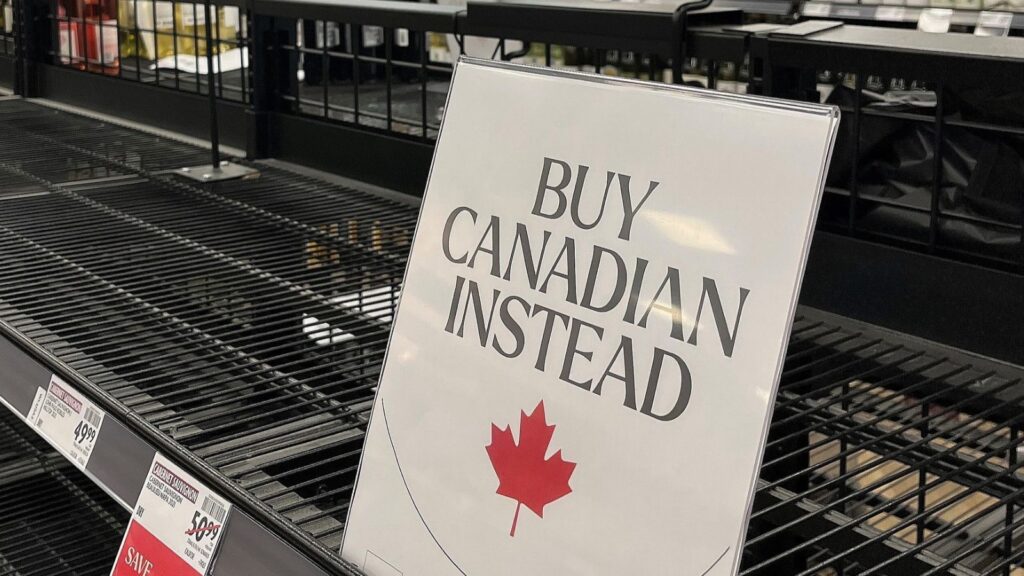
A trade measure aimed at Canada is beginning to produce warnings on the American side of the border. The Trump administration’s restrictions on certain Canadian alcoholic beverages took effect on September 29, blocking a wide range of packaged beer, wine and spirits from entering the United States after months of escalating trade measures between the two countries. Now, a coalition representing U.S. restaurants, bars, retailers, distillers and other businesses says the restrictions could create new problems for America’s hospitality sector just as companies prepare for the holiday season. The immediate economic shock may be concentrated rather than nationwide, but the dispute shows how quickly a border measure aimed at foreign producers can work its way into American menus, inventories and supply chains.
The Ban Is Real, but More Technical Than the Headline Suggests
The new U.S. restriction is not literally a prohibition on every drop of alcohol produced in Canada. President Donald Trump’s September 8 proclamation excludes specified Canadian alcoholic beverages from importation beginning at 12:01 a.m. Eastern time on September 29. The accompanying tariff schedule covers numerous classifications of beer, wine, cider, whisky, rum, gin, vodka, brandy, liqueurs and other beverages. In many categories, however, the restriction specifically applies to products packaged for direct consumption in bottles, cans, boxes, kegs or similar containers. Goods that had already been imported before the deadline but had not yet entered for consumption remain subject to the earlier 50% additional duty rather than the outright exclusion.
That distinction matters because the border measure is broader than a conventional tariff but narrower than a universal blockade on Canadian alcohol. The annex contains numerous container-size and packaging qualifications, and reporting from Reuters found that many bulk, unbottled shipments can continue to cross the border. That leaves potential workarounds for companies capable of moving bottling or packaging to the United States. Smaller producers that make, bottle and package everything at their Canadian facilities have much less flexibility. In other words, two Canadian whiskies sitting beside one another on a U.S. bar shelf could face very different outcomes depending on how their supply chains are structured.
U.S. Restaurant Groups Are Warning About Collateral Damage
The strongest warning so far has come from the Toasts Not Tariffs Coalition, which represents 59 national and state organizations across the U.S. beverage-alcohol supply chain. Its members and represented businesses include distillers, vintners, importers, distributors, retailers, restaurants, bars and hospitality workers. On the morning the Canadian restrictions took effect, the coalition said American restaurants and bars were being pulled deeper into a dispute that had already harmed U.S. wine and spirits producers. It warned specifically that the Canadian ban would “ripple throughout” the hospitality sector as businesses enter their holiday-planning period.
That statement should be understood for what it is: an industry warning rather than an independent forecast that restaurants nationwide are about to face shortages. Still, the restaurant connection is substantial. Coalition materials have included the National Restaurant Association among participating organizations, and its earlier filings argued that policies affecting wine and spirits can reach well beyond producers because restaurants, wholesalers, retailers and importers all depend on the same supply chain. The concern is less that every American restaurant needs Canadian whisky and more that sudden restrictions can force some operators to replace products, renegotiate orders and change beverage menus with little lead time.
Alcohol Sales Matter More to Restaurants Than They May Appear
For a full-service restaurant, the bar is often more than an optional side business. In an April submission to the U.S. Trade Representative, the Toasts Not Tariffs Coalition said alcohol sales account for roughly 21% of revenue at full-service restaurants. That means a disruption involving imported wine or spirits does not have to affect the entire menu to matter financially. Beverage programs can support everything from a neighbourhood steakhouse’s whisky list to cocktails built around particular brands, while higher-margin drinks can help absorb expenses elsewhere in an operation. The same coalition said the broader U.S. wine and spirits ecosystem supports millions of jobs spanning production, logistics, retail and hospitality.
The industry is also enormous in employment terms. Bureau of Labor Statistics data show roughly five million jobs at full-service restaurants alone, while restaurants and other eating places collectively account for far more. That does not mean the Canadian ban threatens millions of jobs; there is no evidence supporting such a conclusion. It illustrates why trade groups are paying attention to a relatively narrow product restriction. Even a small sourcing disruption can spread through importers, distributors and individual establishments when tens of thousands of businesses are constantly ordering inventory. For many operators, the most likely immediate response will be substitution rather than an empty bar—but substitutions still require time, revised purchasing and sometimes changes to menu pricing.
Canada’s Earlier Shelf Removals Have Already Hurt American Producers
The latest American measure did not emerge in isolation. Canadian provinces began removing U.S. wines and spirits from liquor-store shelves in March 2025 as part of their response to U.S. trade measures. Because provincial governments and liquor authorities control a significant portion of alcohol distribution in Canada, those decisions sharply reduced access to what had been an important market for American producers. The Trump administration has cited those restrictions as discriminatory treatment and as a central justification for its subsequent tariffs and import exclusions targeting Canadian alcohol. Canada has characterized its own measures as responses to U.S. trade actions.
The damage reported by American alcohol groups has been striking. According to the Toasts Not Tariffs Coalition, U.S. spirits exports to Canada fell 70%, from $232 million to $72 million, after the provincial removals, while U.S. wine exports dropped 87%, from $456 million to $60 million. The coalition says Alberta and Saskatchewan are the two provinces that ended their outright shelf bans, although Saskatchewan subsequently imposed an additional 50% levy on U.S. alcohol. Those figures help explain why American producers support efforts to regain access to Canada even while opposing measures they believe will create additional problems for their own distributors, customers and hospitality businesses.
Not Every Canadian Brand Will Be Hit the Same Way
One of the most important details buried in the new rules is the treatment of packaging. The White House annex repeatedly limits restrictions to products described as “packaged,” meaning direct-to-consumption containers. Reuters reported that many bulk, unbottled alcoholic beverages remain eligible to enter the United States. Large companies with sophisticated North American operations may therefore have more options than the wording “alcohol ban” initially suggests. Some Canadian whisky can potentially cross the border in bulk and be bottled on the American side, depending on the precise classification and supply arrangement involved.
Industry reporting has pointed to brands such as Crown Royal as examples of why the impact may differ dramatically from one producer to another. Large multinational owners already have American bottling or distribution capacity and can reorganize logistics more readily. A family distillery producing a few thousand cases in Saskatchewan or Nova Scotia cannot simply reproduce that infrastructure overnight. There is another important distinction: Canadian whisky itself must still be produced in Canada under rules recognizing it as a distinctive Canadian product. Bottling elsewhere is not the same as relocating whisky production. The result is an unusually uneven restriction—one that may inconvenience global brands but effectively shut some smaller bottled products out of the American market.
Smaller Canadian Distillers Have Much More Exposure
Canada’s spirits industry is particularly dependent on American customers. Spirits Canada reported that the country exported approximately $948.6 million worth of spirits to the United States in 2025, representing about 93% of the value of all Canadian spirits exports. The association also estimates that roughly 48% of Canadian spirits production is tied to U.S. demand. Those numbers are considerably more concentrated than the exposure of many other Canadian industries, meaning a producer can be small nationally but still have a major portion of its business dependent on American distributors and drinkers.
Individual businesses make that vulnerability easier to see. Reuters reported that Lauchie MacLean’s Glenora whisky distillery in Nova Scotia normally gets roughly one-third of its sales from U.S. markets including New York, California and Illinois. One planned shipment was already left sitting at the distillery after an American buyer backed away amid the preceding 50% tariff. Other craft producers told Reuters they bottle locally and therefore cannot take advantage of the bulk-shipping options available to larger companies. For businesses like these, the transition from a large tariff to an import ban is not a technical trade-policy change. It can mean losing a customer base that took years to build.
Selling More at Home Is Not as Simple as “Buy Canadian”
A natural response for Canadian producers would be to replace lost American sales with more business at home. The obstacle is that Canada still does not operate as a completely seamless national alcohol market. Reuters found that distillers, brewers and winemakers continue to face differing provincial regulations and liquor-distribution systems. Provincial retailers may prioritize local products, while gaining shelf space in another province can involve a completely different process from selling within a producer’s home market. For a company that loses a U.S. distributor overnight, those barriers make domestic diversification much slower than simply redirecting a truck to another Canadian city.
There has been progress. Nine provinces signed an agreement in July designed to make direct-to-consumer alcohol sales across provincial boundaries easier. The framework could eventually allow consumers to order products directly from licensed producers elsewhere in the country. Yet Spirits Canada itself noted that the agreement does not instantly create a single national marketplace. Provinces continue to set their own rules on licensing, taxes, age verification, delivery and compliance. Direct shipping also does not automatically give a distillery space on a major provincial retailer’s shelves. That helps explain why producers facing an immediate U.S. shutdown say replacing American demand domestically could take considerable time.
The Economy-Wide Hit Is Small, but the Sector Exposure Is Concentrated
Measured against the enormous Canada–U.S. trading relationship, the latest bans are relatively limited. The American Action Forum estimates that the September 8 import exclusions cover about US$967 million of Canadian goods based on 2025 trade data, with alcoholic beverages representing approximately 87% of that amount. U.S. Census Bureau figures show that total merchandise trade between Canada and the United States exceeded US$700 billion in 2025. By that measure, the new exclusions affect only a small fraction of overall cross-border commerce.
That economy-wide comparison can obscure what happens to an individual producer or buyer. A billion-dollar restriction can be modest at the national level while being extremely disruptive to companies concentrated in the affected categories. There is also evidence that some of the trade had already been suppressed before the formal ban. Analysts cited by the Associated Press noted that the preceding 50% tariff had already made importing some Canadian products commercially unattractive, effectively reducing shipments before September 29. The restaurant industry’s concern is therefore not that this single measure will transform the U.S. economy, but that another layer of disruption has been added to supply chains already adjusting to tariffs and retaliatory measures.
The Alcohol Fight Has Become a Negotiating Tool in a Much Bigger Dispute
The White House describes the alcohol restrictions as a direct response to what it considers discriminatory Canadian treatment of American commerce. Its September proclamation says Canada maintained or increased restrictions affecting U.S. alcoholic beverages after earlier negotiations and tariff measures. Ottawa disputes Washington’s characterization of the broader conflict and says its actions have been intended to defend Canadian workers and businesses following U.S. tariffs. That disagreement now sits inside a much wider bilateral dispute involving steel, autos, dairy products, government procurement and other sectors.
There is no clear timetable for resolving it. U.S. Trade Representative Jamieson Greer said in late September that Trump was comfortable with the current situation and saw no urgency to conclude a Canadian trade deal. Canadian officials, meanwhile, say communication with Washington continues even though detailed formal negotiations have not resumed. Prime Minister Mark Carney said September 29 that Canada did not currently intend to increase trade pressure, while Trade Minister Dominic LeBlanc rejected Trump’s suggestion that Canada would eventually return with an apology. Those positions leave businesses on both sides facing an unusual problem: planning inventories without knowing whether the restrictions will last weeks, months or longer.
Restaurants Want a Resolution Before Holiday Plans Become Harder to Change
Timing is one reason the restaurant warning is receiving attention. September and October are important planning months for businesses preparing holiday menus, private events, year-end promotions and seasonal purchasing. Toasts Not Tariffs warned about that issue before the ban started and repeated it once the restrictions took effect. Importers and distributors generally make purchasing decisions before bottles reach a restaurant storeroom, meaning uncertainty at the border can begin influencing hospitality businesses even while existing Canadian inventory remains available.
The available evidence does not show that American restaurants are facing a broad alcohol shortage or an industry-wide crisis because of the Canadian ban. The more immediate risks are narrower: fewer choices in certain Canadian categories, disrupted orders, additional logistics work and potential pressure on businesses that built menus around specific products. The Toasts Not Tariffs Coalition is calling for a negotiated outcome that restores U.S. wine and spirits access in Canada while removing barriers against Canadian products in the United States. How significant the restaurant impact ultimately becomes will depend largely on duration. A short dispute may be absorbed through inventories and substitutions. A prolonged ban would give supply chains—and customer expectations—more time to change.
