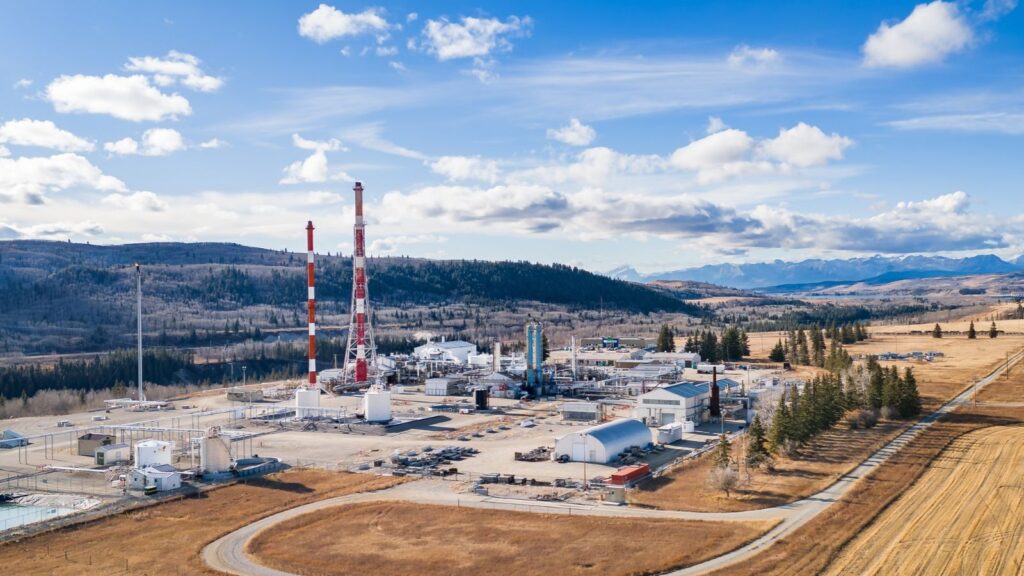
Canada’s push to become a bigger global energy supplier has entered a much more expensive phase. LNG Canada and its five owners have approved a C$33-billion expansion of the Kitimat, British Columbia, export terminal, doubling its planned production capacity and giving Western Canadian natural gas a significantly larger outlet to overseas markets.
The timing matters. Asian countries are reassessing where their energy comes from after another turbulent year for global LNG flows, while the United States is rapidly expanding its own export industry and trying to deepen energy ties with Japan, South Korea and other major buyers. For Canada, the opportunity is no longer simply about exporting LNG. It is about securing customers before an enormous wave of competing supply reaches the market.
A C$33-Billion Bet on Doubling Kitimat
LNG Canada’s Phase 2 final investment decision transforms the Kitimat terminal from a 14-million-tonne-a-year facility into one capable of producing 28 million tonnes annually. Two additional liquefaction trains will be constructed alongside the first two, while the site will gain another LNG storage tank, a condensate tank, an additional loading berth and expanded utility and processing systems. Commercial operations from the new capacity are expected in the early 2030s. The expansion builds on infrastructure deliberately designed from the beginning to accommodate four trains, rather than requiring an entirely separate export terminal.
The decision is especially significant because Canada only became a large-scale LNG exporter in June 2025, when LNG Canada loaded its first cargo at Kitimat. Just over a year later, the owners are committing another C$33 billion. Shell holds the largest interest at 40%, followed by PETRONAS at 25%, PetroChina and Mitsubishi Corporation at 15% each, and Korea Gas Corporation at 5%. That ownership structure also gives the project direct connections to several of the Asian markets Canada hopes to serve.
Asia Is the Commercial Prize—but Demand Is Complicated
Kitimat’s geography gives Canadian LNG one of its clearest competitive advantages. Cargoes leaving northern British Columbia can reach major Asian markets in roughly eight to 10 days, considerably faster than LNG shipped from terminals on the U.S. Gulf Coast. That shorter Pacific route can reduce voyage time, shipping costs and exposure to bottlenecks such as the Panama Canal. For utilities and trading companies buying millions of tonnes over decades, transportation economics can have a meaningful influence on where supply contracts are signed.
Asian demand, however, is not rising in a straight line. The International Energy Agency said high prices and disruptions to Middle Eastern LNG flows contributed to weaker Asian natural-gas consumption in 2026, with regional demand forecast to decline about 0.5% for the year. The longer-term picture remains more supportive: the IEA has projected Asia-Pacific markets to account for roughly half of worldwide gas-demand growth through 2030 in its base case. Canada is therefore building for the market of the 2030s rather than relying on one unusually volatile year.
The United States Is Scaling Up Even Faster
Canada may have geography on its side in the Pacific, but the United States has scale. The IEA estimates that the U.S. accounted for roughly one-quarter of global LNG supply in 2025 and could approach one-third by the end of the decade. More than 80 billion cubic metres per year of new U.S. liquefaction capacity reached final investment decisions during 2025 alone. Projects including CP2, Louisiana LNG, Port Arthur Phase 2 and additional Corpus Christi and Rio Grande trains are building an enormous pipeline of future supply.
Washington is also looking north to Alaska. The proposed Alaska LNG development is designed around a roughly 800-mile pipeline connecting North Slope gas with a southern export terminal and targets approximately 20 million tonnes of LNG annually. Reuters reported estimated project costs ranging from US$44.5 billion to US$54.5 billion, with preliminary purchase arrangements covering about 13 million tonnes annually. Japan, South Korea and other Asian buyers are central to that strategy. If Alaska LNG advances toward its targeted 2031 startup, it could compete for customers during almost exactly the same period as LNG Canada Phase 2.
Canada’s Natural-Gas Export Map Is Starting to Change
For decades, Canadian natural gas had an unusually simple destination: the United States. Pipelines connected Western Canadian production with American consumers so effectively that Canada had little direct access to global gas prices or overseas customers. Ottawa says less than 0.01% of Canadian natural-gas exports went to non-U.S. markets in 2024. LNG Canada’s first exports in 2025 finally opened a direct large-scale maritime route from Western Canada to international buyers.
Federal officials now estimate the non-U.S. share could climb to about 55% by the early-to-mid-2030s if currently planned LNG developments proceed. That figure remains a projection rather than a guaranteed outcome, but the commercial groundwork is becoming visible. The proposed Ksi Lisims LNG project has announced long-term agreements involving Germany’s Uniper and SEFE as well as Australia-based Santos, whose LNG business is heavily oriented toward the Asia-Pacific region. Canada’s strategy is therefore broader than simply replacing the American market with Asia; it is attempting to develop several major customer bases simultaneously.
British Columbia Is Becoming an LNG Export Cluster
LNG Canada is the largest piece of the West Coast buildout, but it is no longer the only one. Woodfibre LNG near Squamish is designed to produce 2.1 million tonnes annually and is targeting construction completion in 2027. Cedar LNG, being developed by the Haisla Nation and Pembina Pipeline Corporation, has already reached a positive investment decision and is targeting operations in 2028 with roughly three million tonnes of annual capacity.
Farther north, Ksi Lisims LNG is being developed around a proposed 12-million-tonne annual export facility involving the Nisga’a Nation and private-sector partners. Its commercial campaign has accelerated during 2026, including a September agreement under which Santos could purchase one million tonnes annually for 20 years. Ottawa has also been working with British Columbia to accelerate LNG Canada Phase 2, Ksi Lisims, Cedar and Woodfibre through its broader major-project strategy. If these developments reach their planned operating stages, buyers will increasingly see British Columbia as an LNG-producing region rather than a market represented by one terminal.
Coastal GasLink Is the Other Half of the Expansion
Doubling liquefaction capacity at Kitimat only works if considerably more natural gas can reach the terminal. That makes Coastal GasLink Phase 2 nearly as important operationally as the new LNG trains themselves. The existing 670-kilometre pipeline transports about 2.1 billion cubic feet of natural gas per day from northeastern British Columbia to Kitimat. TC Energy says Phase 2 will nearly double that capacity using additional compression instead of constructing another full-length pipeline.
Five compressor stations and associated facility upgrades will be added along the existing route. TC Energy expects construction to start in early 2027, with the expanded system entering service in the early 2030s alongside LNG Canada’s new capacity. Up to 2,100 people are expected to work on Coastal GasLink Phase 2 during peak construction. The configuration also illustrates why LNG Canada’s second phase can move differently from the first: much of the expensive foundation already exists. The pipeline corridor, terminal site, marine infrastructure and supply basin are established, allowing the next investment cycle to concentrate on expanding throughput.
Indigenous Ownership Is Moving Beyond Contracting
One of the more consequential elements of Phase 2 sits away from the liquefaction trains themselves. Five First Nations—the Gitga’at, Gitxaała, Haisla, Kitselas and Kitsumkalum—have an option through MNT Investments LP to invest as much as C$1 billion in the expansion’s LNG storage infrastructure. The partnership could acquire a majority interest in a special-purpose entity that would own the new storage tank and lease the asset back to LNG Canada over the project’s operating life.
That arrangement is designed to create something different from temporary construction employment: long-term infrastructure ownership and revenue participation. LNG Canada and Ottawa also point to nearly C$5 billion in contracts and procurement awarded to Indigenous-owned and local-area businesses during the project’s development. The federal government expects Phase 2 itself to create more than 4,000 direct construction jobs, before accounting for the separate Coastal GasLink workforce. The numbers will ultimately depend on construction schedules and contracting, but the project demonstrates how Indigenous participation in major Canadian energy infrastructure is increasingly being structured around equity ownership as well as employment and procurement.
Lower-Emission Claims Face a Real-World Test
The environmental argument around the expansion is more complicated than whether natural gas is simply “clean” or “dirty.” Ottawa projects that LNG Canada Phase 2 will have an operating emissions intensity about 35% below what it describes as the world’s best-performing comparable LNG facilities and roughly 60% below the global average, aided partly by British Columbia’s relatively clean electricity system and modern equipment. Other proposed B.C. projects, including Woodfibre and Ksi Lisims, are also being designed around extensive use of hydroelectric power.
Lower emissions intensity does not mean zero emissions, and LNG carries greenhouse-gas impacts from gas production, processing, liquefaction, shipping and eventual combustion. The IEA estimates the global average emissions intensity of the LNG supply chain through regasification at 18.6 grams of CO2-equivalent per megajoule of LNG delivered, underscoring the importance of methane leakage and operational performance. LNG Canada has also faced scrutiny over flaring and black-smoke incidents during Phase 1’s startup, with the B.C. Energy Regulator requiring investigation and corrective measures. With Phase 2 not expected to operate until the early 2030s, its commercial success will ultimately depend on controlling construction costs, meeting environmental requirements and winning long-term customers in a market where U.S., Qatari and other LNG supply is also expanding aggressively.
