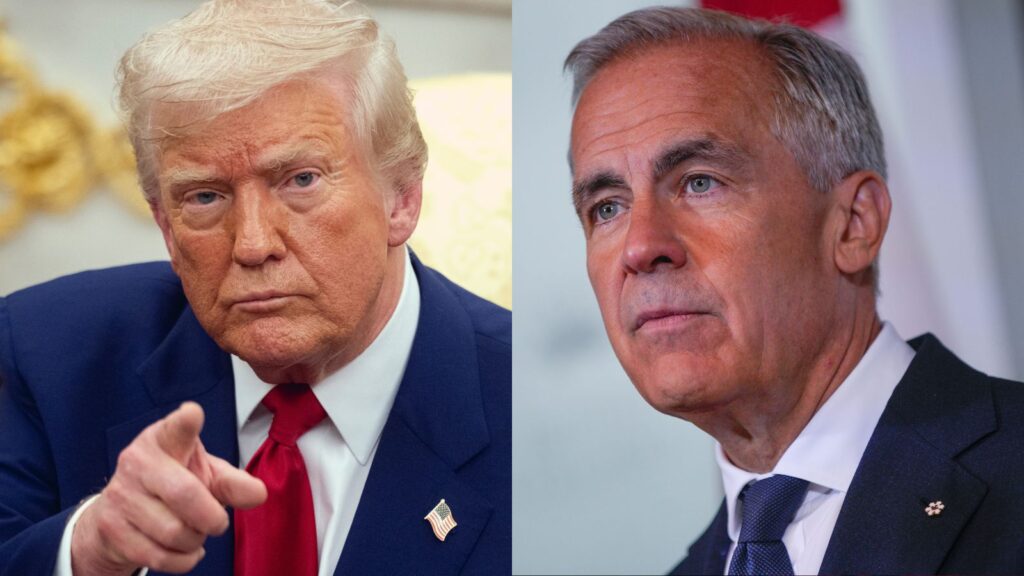
Canada has signed onto a U.S.-led push to confront industrial overproduction at the same time Ottawa and Washington remain locked in a bruising tariff dispute. The October 7 declaration brings Canada together with the United States, European Union, Japan, India, Mexico and other market-oriented economies around a shared concern: government-backed production that persistently exceeds demand can distort prices, discourage investment and leave trading partners dangerously dependent on a small number of suppliers. The alignment is striking because it does not amount to a Canada-U.S. trade truce. Washington imposed a new round of 50% tariffs on billions of dollars of Canadian goods in August, and Ottawa responded with counter-tariffs in September. Canada is therefore cooperating with the Trump administration on one of its biggest global trade priorities while still contesting the way that same administration is treating Canadian exports.
Canada Backs a Smaller Coalition After G20 Consensus Fails
Canada’s decision places it inside a 15-member coalition that includes Argentina, Australia, the European Union, France, Germany, India, Italy, Japan, South Korea, Mexico, Poland, Türkiye, the United Kingdom and the United States. The statement emerged after G20 trade ministers met in Milwaukee on September 30 and October 1 but failed to reach a broader consensus on industrial overcapacity. Senior officials then advanced the narrower agreement on the sidelines of an OECD Trade Committee meeting, giving Washington a group of willing partners even without full G20 backing.
That distinction matters. China, Brazil, Indonesia, Russia, Saudi Arabia and South Africa were among the G20 members absent from the declaration, so the document is not a global settlement on how excess capacity should be defined or disciplined. Instead, it is a plurilateral effort by governments that say the problem has become too costly to leave unresolved. For Canada, joining keeps Ottawa at the table where definitions, data standards and possible future responses may be shaped, rather than leaving those decisions entirely to Washington, Brussels or Tokyo.
The Target Is Broader Than Steel—and the First Five Sectors Are Strategic
The declaration is broader than the steel disputes that have dominated trade policy for years. Its first five areas of work are autos and electric vehicles, batteries, chemicals, foundational semiconductors and solar panels. Those sectors sit at the centre of manufacturing, electrification and digital supply chains, which means the debate is not simply about factories producing too much of one commodity. It is about whether state-supported capacity can become so large that private investment elsewhere no longer looks commercially viable.
The signatories describe structural excess capacity as production that persistently exceeds global demand, would not exist under normal market conditions and is sustained or encouraged by government intervention. They argue that the result can be weaker competition and investment over time, along with greater dependence on concentrated foreign suppliers. The statement also links that dependence to vulnerability to economic coercion, including arbitrary export restrictions. That language helps explain why Canada signed: the issue is being framed not only as a trade problem, but also as a question of industrial resilience and supply-chain security.
Canada Is Cooperating With Washington While Fighting Washington’s Tariffs
The cooperation lands in the middle of an unusually direct Canada-U.S. tariff confrontation. On August 22, the United States implemented 50% tariffs on $27.6 billion worth of Canadian goods under Section 338 of the U.S. Tariff Act of 1930. Washington said the action responded to Canadian practices in the automotive, alcoholic beverage and dairy sectors. Ottawa rejected the U.S. allegations and said its dairy administration complied with CUSMA while other Canadian measures cited by Washington had been adopted in response to earlier American tariffs.
Canada answered on September 8 with counter-tariffs covering $27.6 billion in U.S. imports. The Canadian surtaxes were set at 15%, 25% or 50% depending on the product, preserving the government’s planned dollar-for-dollar response in value terms. That makes the new joint statement easy to misread. It does not signal that the bilateral fight has ended. Instead, Canada is separating two files: it is challenging American tariffs directed at Canadian goods while agreeing with Washington that persistent, government-supported overproduction can damage market-based industries.
Ottawa’s Overcapacity Concerns Predate the New Statement
Ottawa’s concern about excess capacity did not begin with the October declaration. In June 2025, the federal government introduced tariff-rate quotas on steel mill products from non-free-trade partners, explicitly citing the risk that U.S. steel tariffs and global overcapacity would redirect metal originally destined for the American market into Canada. The measure applied a 50% surtax above quota levels, and officials described it as a way to stabilize the domestic steel market without shutting off imports altogether.
By March 2026, Canada’s steel defences had expanded. Federal briefing material showed tariff-rate quotas limiting imports from certain non-CUSMA partners relative to 2024 levels, with a 50% surtax above those thresholds. Canada had also imposed a 25% surtax on steel containing material melted and poured in China and aluminum containing material smelted and cast in China, followed by a 25% surtax on steel derivative imports from all countries. The pattern shows that Canada was already using targeted trade barriers to manage diversion and non-market production before joining the U.S.-led coalition.
China Is Central to the Debate, but the Coalition Is Not Simply Anti-China
China is plainly central to Washington’s case, but the coalition cannot be reduced to a simple anti-China bloc. U.S. Trade Representative Jamieson Greer has long argued that Chinese state support has encouraged production that spills into export markets and pressures manufacturers elsewhere. Beijing rejects the overcapacity accusation and says Western governments are using it to justify protectionism. The October statement itself avoids naming China and instead calls on “all countries” to end non-market policies that contribute to structural excess capacity.
Washington’s own enforcement strategy makes the picture even more complicated. In March, USTR opened Section 301 investigations into excess-capacity practices in 16 economies. The list included China, but it also included the European Union, South Korea, Mexico, Japan and India—all participants in the October declaration. That overlap shows how expansive the Trump administration’s industrial-policy scrutiny has become: countries can cooperate with the United States on the diagnosis of global overproduction while simultaneously facing U.S. scrutiny over their own policies. Canada’s participation therefore aligns it with a principle, not necessarily every American target or remedy.
Steel Shows Why Governments Think the Problem Is Getting Harder
Steel provides the clearest warning of what governments fear could happen in newer sectors. At a September 30 ministerial meeting in Milwaukee, the OECD-linked Global Forum on Steel Excess Capacity said global steel excess capacity was expected to rise from 601 million tonnes in 2024 to 745 million tonnes by 2028. The forum said that would be the highest level in a decade and 319 million tonnes more than the current combined production of its members. Participants adopted a new “Milwaukee Framework” aimed at the causes and effects of the imbalance.
The history is important because the current debate is not starting from zero. G20 ministers raised similar concerns in 2016, and that process helped create the steel forum as a cooperative mechanism. The new joint statement says structural excess capacity has worsened since those earlier commitments. That experience is now being used as a model for autos, batteries, chemicals, chips and solar equipment: gather comparable data, identify the policies driving capacity, and see whether countries can coordinate before defensive tariffs and subsidies increasingly become the default response.
Canada’s U.S. Dependence Makes the Balancing Act Economically Serious
Canada has more reason than most signatories to worry about how trade remedies interact with an integrated North American economy. Statistics Canada reported that Canadian domestic exports totalled $721.1 billion in 2024, with 75.9% going to the United States. The exposure was even higher in major strategic sectors: 88% of energy exports went south, while 94.1% of motor vehicle and parts exports were destined for the U.S. market. Nearly half of Canadian imports also originated in the United States on a country-of-origin basis.
Those numbers help explain why Ottawa can support a coordinated response to global overproduction while resisting unilateral U.S. measures against Canada. A tariff imposed in Washington can rapidly change the economics facing Canadian factories and exporters, particularly in autos and metals. At the same time, Ottawa has an interest in preventing excess output from other markets from being redirected north when U.S. barriers rise—a diversion risk the federal government has explicitly cited in its steel policy. The challenge is defending Canadian industry without deepening the fragmentation that makes a highly trade-dependent economy more vulnerable.
What the Statement Changes—and What It Does Not
The immediate impact of the October statement is institutional rather than punitive. The signatories agreed to create dedicated sectoral platforms for autos and EVs, batteries, chemicals, foundational semiconductors and solar panels. Technical officials are supposed to meet before December 2026 to develop terms of reference, share non-confidential information, assess the effects of excess capacity, review mitigation efforts and identify gaps in available data. The document also says governments will explore effective and, where possible, complementary action.
What it does not do is set a common tariff rate, quota or sanctions schedule. That leaves the hardest questions for later: how overcapacity will be measured, which subsidies or policies will count as distortive, and whether countries can coordinate without turning industrial resilience into a race of competing trade barriers. For Canada, the test will be especially delicate. Ottawa has now joined Washington’s effort to reshape the international response to industrial overproduction even as it continues to fight U.S. tariffs at home. The partnership is real, but so is the conflict—and both are now shaping Canadian trade policy at the same time.
