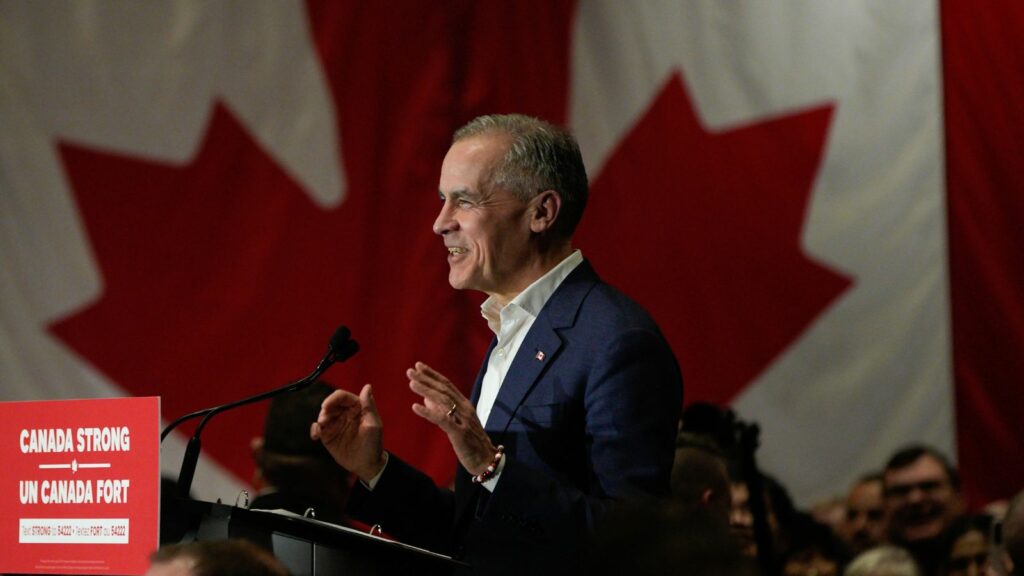
Canada’s long-running debate over energy independence is landing squarely in Sarnia. Mayor Mike Bradley is urging Prime Minister Mark Carney to place the proposed Northern Shield Energy Corridor on Ottawa’s list of projects of national interest, potentially giving the 3,300-kilometre pipeline a faster federal approval path.
The request comes as Canada is trying to reduce strategic dependence on the United States amid tariffs, stalled trade negotiations and renewed uncertainty surrounding cross-border energy infrastructure. Northern Shield would carry western Canadian crude from Hardisty, Alberta, to Sarnia’s refining and petrochemical hub without entering U.S. territory. For Bradley and other supporters, that makes the proposal about more than another pipeline. They see it as a test of whether Canada can build a domestic energy system with fewer critical links exposed to decisions made south of the border.
Sarnia Makes Its Case Directly to Ottawa
Bradley’s October 7 appeal asks Carney to designate Northern Shield as a “project of national interest” under the federal Building Canada Act. Such a designation would not mean construction could begin immediately, but it could substantially change how Ottawa handles federal approvals. Bradley argues the existing system can allow major projects to spend years navigating regulatory stages and believes Northern Shield could move much faster while still undergoing environmental review and Indigenous consultation.
His push also reflects growing local political support. Sarnia city council previously endorsed continued review of the corridor, and Lambton County politicians have backed the concept as well. Bradley has publicly suggested that a streamlined process could make a three-to-five-year development timeline possible, although that is his estimate rather than an established project schedule. The proposal’s official timetable remains far less certain: the feasibility study is still underway, and no construction date has been set.
Northern Shield Would Create a 3,300-Kilometre Canadian Route
The concept unveiled by Ontario and Alberta would connect Hardisty, one of western Canada’s major crude-oil hubs, with Sarnia entirely through Canadian territory. The proposed line would initially be engineered to move roughly 500,000 barrels of crude per day, with infrastructure designed to potentially expand capacity to as much as 800,000 barrels daily.
Ontario describes the corridor as more than a single pipe. Officials are examining connections with existing refining and transportation infrastructure, potential grid upgrades, a possible strategic petroleum reserve and future extensions capable of giving Canadian crude greater access to export markets. Manitoba and the Manitoba-Crown Indigenous Corporation have also been offered an opportunity to study an extension toward the Port of Churchill. Those ambitions remain preliminary. There is currently no final surveyed route, construction budget or identified pipeline developer. Alberta’s own major-project database describes Northern Shield as being in its infancy and lists both its estimated cost and developer as unavailable.
Sarnia Already Has the Industrial Base the Pipeline Would Need
Sarnia was not chosen simply because it is an eastern point on a map. The surrounding Sarnia-Lambton region has spent generations developing an interconnected network of refineries, chemical plants, storage facilities, pipelines, rail infrastructure and marine transportation. The local economic development agency counts three refineries and more than 35 interconnected chemical facilities within the region’s broader industrial cluster.
Major facilities illustrate the scale already operating there. Imperial says its Sarnia refinery processed about 113,000 barrels of crude per day in 2025 and supports a workforce of roughly 700 people. Suncor lists its local refinery’s capacity at 92,000 barrels per day, while Shell’s Sarnia Manufacturing Centre can process as much as 85,000 barrels daily. Those operations turn crude into gasoline, diesel, aviation fuel, petrochemical feedstocks and other products. Northern Shield supporters therefore argue that landing additional western Canadian crude in Sarnia could reinforce an industrial ecosystem that already has workers, customers and distribution systems in place.
Line 5 Shows Why Cross-Border Dependence Worries Sarnia
The strongest argument for an entirely Canadian route comes from the experience of Enbridge’s Line 5. The existing pipeline carries up to roughly 540,000 barrels per day of crude oil and natural gas liquids from Superior, Wisconsin, through Michigan and eventually to Sarnia. It is an important link between western Canadian production and refineries in Ontario, Quebec and the U.S. Midwest, but part of that Canadian energy supply depends on infrastructure physically located in the United States.
That dependence has become politically uncomfortable. Michigan has spent years challenging Line 5, and in July 2026 the Michigan Supreme Court vacated a state regulator’s approval for Enbridge’s proposed Great Lakes tunnel project and ordered further environmental review. The ruling did not shut Line 5 down, but it added another layer of uncertainty. Meanwhile, broader Canada-U.S. relations have deteriorated following new U.S. tariffs and Canada’s retaliatory measures. For Sarnia, those disputes make domestic pipeline redundancy a strategic issue rather than an abstract one.
Carney Now Has a Powerful Fast-Track Mechanism
Bradley’s request matters because the federal approval system has changed. The Building Canada Act allows Ottawa to identify major infrastructure as being in the national interest based on factors including economic benefits, national autonomy and security, likelihood of successful completion, Indigenous interests and compatibility with Canada’s clean-growth and climate objectives.
Once a project is listed, the federal process shifts from debating simply whether it should proceed toward establishing how it can proceed and under what conditions. Federal permits covered by the legislation can be consolidated through a streamlined regulatory process coordinated by the Major Projects Office. That does not eliminate environmental obligations or Indigenous rights. Ottawa must consult potentially affected Indigenous rights holders before national-interest listing, and further consultation is required when project conditions are developed. Provincial approvals also remain necessary. What the framework offers proponents is earlier federal certainty, reducing the risk of spending years and large sums before learning whether Ottawa fundamentally supports the project.
Provincial Support Is Growing, but the Business Model Is Still Missing
Ontario Premier Doug Ford and Alberta Premier Danielle Smith have become the proposal’s most prominent political backers, while Saskatchewan Premier Scott Moe has also endorsed the corridor. The concept grew from interprovincial cooperation on energy and trade infrastructure, and Ontario has committed public money to the feasibility process. Provincial financial documents included an additional $14 million for the Northern Shield study in 2026-27.
Ford has gone further by signalling that Ontario could provide capital if the project moves toward construction, potentially as a minority public investor. Yet Northern Shield still lacks several ingredients normally expected before a multibillion-dollar pipeline reaches an investment decision. No private-sector developer has been publicly selected, no final ownership structure has been announced, and no construction cost has been established. The feasibility team, overseen by Infrastructure Ontario and involving engineering, financial and Indigenous-advisory expertise, is expected to complete its work by the end of 2026. Until those findings arrive, political enthusiasm remains ahead of the commercial details.
Canada’s Oil Trade Explains the Push for More Domestic Options
Northern Shield is being proposed in an energy system still deeply integrated with the United States. Canada exported about 4.3 million barrels of crude oil per day in 2025, according to the Canada Energy Regulator. Roughly 90.1% went to the United States. At the same time, Canada imported about 506,000 barrels per day of crude, with roughly three-quarters of those volumes coming from the U.S.
The relationship is economically valuable in both directions, and Northern Shield would not realistically replace it. The United States remains Canada’s largest energy customer and depends heavily on Canadian crude itself. The strategic argument is instead about adding alternatives. Ottawa and provincial governments increasingly want more routes that allow Canadian resources to reach Canadian customers or overseas buyers without relying so heavily on a single foreign market. That concern has become more pronounced after Canada-U.S. trade negotiations broke down in August and both governments imposed new tariffs on billions of dollars worth of each other’s goods.
Indigenous Consultation and Environmental Review Could Shape the Final Project
Fast-tracking should not be confused with bypassing consultation. A pipeline stretching thousands of kilometres across several provinces would potentially affect numerous Indigenous communities, treaty rights, waterways and ecosystems. Ontario says it has already initiated its duty to consult Indigenous partners as part of the feasibility work, while federal law requires consultation with potentially affected rights holders before a project can receive national-interest status.
Those requirements may ultimately influence route selection, ownership and project economics. Ottawa’s current major-project model increasingly promotes Indigenous equity participation rather than treating communities solely as stakeholders consulted near the end of development. Northern Shield would also have to address the Building Canada Act’s clean-growth and climate criteria, alongside provincial and federal environmental requirements. That makes the eventual feasibility report especially important. The political argument for energy sovereignty may be straightforward, but designing a commercially viable route that meets environmental standards and earns durable partnerships along 3,300 kilometres will be considerably more complicated.
Pacific Link Gives Sarnia a Road Map for What Could Happen Next
Bradley is making his appeal only days after Carney demonstrated how aggressively Ottawa can use its new infrastructure powers. On October 1, the federal government formally listed Pacific Link, the proposed Alberta-to-British Columbia oil pipeline, as a project of national interest. Ottawa says the line would eventually add one million barrels per day of capacity to Asian markets and has placed the Major Projects Office in charge of a federal review designed to establish project conditions by September 2027.
Northern Shield is not yet at that stage. Its immediate milestone is completion of the feasibility study, including cost estimates, commercial models and further analysis of its route and related infrastructure. Ottawa would then have to determine whether the project meets the national-interest test and undertake the required consultations before listing it. Sarnia’s campaign is essentially asking Carney to put that process into motion. With Canada reassessing its economic dependence on the United States, the argument that once sounded primarily regional is increasingly being framed as a national question: how much of Canada’s essential energy network should remain beyond Canada’s borders?
