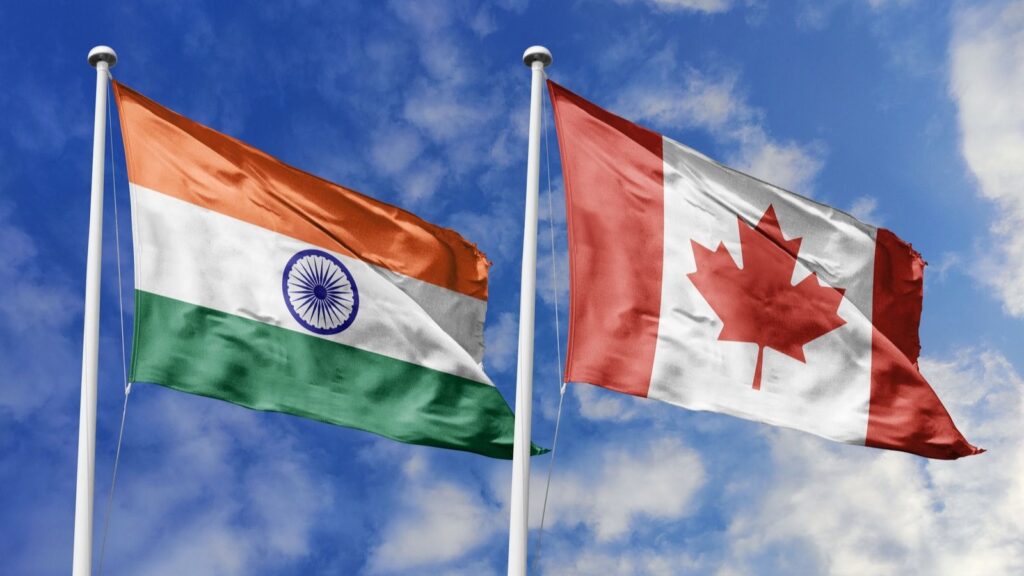
Canada is accelerating efforts to secure a major trade agreement with India before the end of 2026, as Prime Minister Mark Carney’s government looks for new economic opportunities beyond the United States.
Foreign Affairs Minister Anita Anand confirmed the ambitious timeline on October 14, saying Ottawa wants to conclude negotiations on a Comprehensive Economic Partnership Agreement with India by December. The renewed push comes amid President Donald Trump’s tariffs and growing uncertainty over the future of North American trade.
With bilateral trade already worth C$30.4 billion annually, both governments hope to expand that relationship to C$70 billion by 2030. Canadian businesses are exploring opportunities in energy, agriculture, aerospace and technology, while diplomatic relations between Ottawa and New Delhi continue to recover from years of tension.
The challenge is turning political promises into an agreement that delivers measurable benefits for Canadian exporters, workers and investors.
Ottawa Sets a December Deadline for Its Ambitious India Trade Agreement
Canada’s push for a trade agreement with India gained fresh momentum on October 14 when Foreign Affairs Minister Anita Anand confirmed that Ottawa wants to complete negotiations before the end of 2026. Speaking with Reuters at the Canadian High Commission in New Delhi, Anand described the proposed Comprehensive Economic Partnership Agreement, or CEPA, as a central part of Canada’s trade diversification strategy. She emphasized that reducing dependence on any single country is becoming increasingly important for Canada’s economic resilience and sovereignty.
The timeline follows months of discussions between Canadian and Indian officials. International Trade Minister Maninder Sidhu has repeatedly emphasized the goal of concluding a mutually beneficial agreement this year, while Prime Ministers Mark Carney and Narendra Modi reaffirmed their commitment during an October 13 telephone conversation. However, the distinction between completing negotiations and putting an agreement into effect remains important. Even if officials settle the terms by December, formal signing, domestic approval procedures and implementation may take additional time. No completed, operational Canada–India CEPA had been announced as of October 15.
Nearly 300 Canadian Delegates Arrive in India as Trade Negotiations Intensify
The diplomatic effort is being accompanied by one of Canada’s largest recent business missions to India. From October 12 to 17, International Trade Minister Maninder Sidhu is leading nearly 300 delegates to Mumbai and Bengaluru, making it the largest Canadian trade delegation to India in more than 30 years. Participants represent industries including aerospace, space technology, clean energy, information and communications technology, life sciences and agri-food. The mission is designed to introduce Canadian businesses to Indian buyers, investors and potential commercial partners.
For a Canadian manufacturer interested in selling specialized equipment abroad, identifying a serious customer can be as challenging as producing the equipment itself. The trade mission offers opportunities for arranged business meetings, discussions with industry representatives and direct exposure to India’s commercial environment. Meanwhile, government negotiators have been working through the agreement’s details. The fifth round of CEPA negotiations took place in Ottawa from October 5 to 9. Sidhu and Indian Commerce Minister Piyush Goyal subsequently met in New Delhi to discuss the results and accelerate their work. Their October meeting was the ninth between the two ministers since May 2025, demonstrating the intensity of the renewed engagement.
Trump’s Tariffs Have Made Trade Diversification an Economic Priority
The urgency behind Canada’s India strategy is closely connected to the deterioration of its trading relationship with Washington. The Trump administration imposed 50% tariffs on approximately C$27.6 billion worth of selected Canadian products beginning August 22, 2026. Ottawa responded with counter-tariffs of 15%, 25% and 50% on designated American imports starting September 8. The measures affected industries ranging from steel and aluminum to machinery, agricultural equipment and consumer products. They did not impose a universal 50% tariff on all goods moving across the border.
The dispute has exposed Canada’s dependence on American customers. Statistics Canada reported that 71.7% of Canadian merchandise exports went to the United States in 2025, down from 75.9% in 2024. Despite that decline, the American market remains overwhelmingly important. Washington’s decision in July not to renew the Canada–United States–Mexico Agreement in its existing form added uncertainty, although the agreement remains in force. For Canadian businesses, expanding sales in India could provide additional customers and reduce exposure to American policy changes. It cannot, however, immediately replace the scale or convenience of Canada’s established U.S. trade relationships.
Canada and India Want to More Than Double Bilateral Trade to $70 Billion
The proposed agreement has an ambitious economic target. Canada and India want to increase annual two-way trade in goods and services from C$30.4 billion in 2025 to C$70 billion by 2030. That would require an increase of roughly C$39.6 billion within five years, more than doubling the existing relationship. It would represent an important expansion for Canadian exporters, although the target includes imports and services as well as Canadian merchandise exports.
The existing trade figures illustrate where the relationship stands. Canadian merchandise exports to India were valued at approximately C$3.9 billion in 2025, with major categories including vegetables, mineral fuels, oils and wood pulp. Canadian imports from India reached approximately C$9.7 billion, including precious stones and metals, machinery and pharmaceuticals. Services are another significant part of the relationship, with Canadian services exports to India reported at approximately C$15.1 billion in 2025. Education-related travel is an important component of those exports. These figures show that the relationship is already substantial, but achieving the 2030 target will require sustained growth rather than simply signing an agreement. Businesses must establish customers, secure financing and overcome regulatory barriers before the potential translates into new revenue.
Canadian Farmers Could Benefit From Better Access to India’s Huge Food Market
Agriculture is expected to be one of the most important sectors in the negotiations. India has a large food market, while Canadian producers are established suppliers of agricultural commodities, including pulses such as lentils and peas. For farmers in Saskatchewan and other Prairie provinces, improved access could create additional demand and reduce dependence on existing markets. Yet Indian tariffs, changing import requirements and food-safety rules have historically made agricultural trade difficult to predict.
Those challenges were prominent in the Canadian government’s consultations on the proposed agreement. Agriculture and agri-food organizations accounted for 24 of the 53 industry-association submissions received. Exporters urged Ottawa to pursue meaningful reductions in tariffs and other barriers, while seeking greater predictability in matters such as plant-health requirements, residue limits, labelling and certification. Canadian provinces also identified pulse fumigation requirements and biotechnology approvals as important concerns.
Not all agricultural groups favour unrestricted trade. Representatives of Canada’s supply-managed industries and other import-sensitive producers warned against concessions that could undermine domestic production. Any final agreement will therefore require compromises between expanding export opportunities and protecting politically and economically sensitive Canadian industries.
A $2.6 Billion Uranium Agreement Shows the Potential for Energy Exports
Energy cooperation has already produced one of the clearest commercial results of Canada’s renewed relationship with India. On March 2, Saskatoon-based Cameco announced a long-term agreement to supply nearly 22 million pounds of uranium concentrate to India’s Department of Atomic Energy. The contract is valued at approximately C$2.6 billion, with deliveries expected between 2027 and 2035. It will support India’s nuclear electricity sector, which currently operates 24 reactors and has ambitions to significantly expand nuclear generation capacity.
The agreement illustrates why India’s growing energy requirements are attractive to Canadian resource companies. Canada has substantial reserves of uranium, oil, natural gas and critical minerals, while India is seeking dependable supplies to support industrial expansion and electricity demand. During Carney’s March visit, the countries announced a strategic energy partnership covering liquefied natural gas, liquefied petroleum gas, uranium and clean energy technologies. They also signed a memorandum of understanding on critical minerals cooperation. However, potential LNG and LPG arrangements should not be confused with completed sales contracts. Expanding energy trade will depend on production capacity, shipping infrastructure, financing and long-term commercial commitments. The Cameco agreement demonstrates what is possible when diplomatic cooperation leads to a signed business contract.
A Major Canadian Banking Investment Highlights India’s Growing Financial Appeal
The strengthening relationship is also visible in the financial sector. On October 14, Reuters reported that Toronto-based Fairfax Financial Holdings had agreed to acquire a controlling stake of approximately 60.7% in India’s IDBI Bank. The transaction is valued at 528.78 billion Indian rupees, or roughly US$5.56 billion. Indian authorities described it as the country’s largest cross-border banking transaction. The acquisition would give Fairfax control of a financial institution with more than 2,000 branches and assets valued at approximately 4.44 trillion rupees as of June 2026.
The transaction still requires approval from the Reserve Bank of India and other applicable regulatory processes, so it should not be treated as a completed acquisition. Nevertheless, the announcement demonstrates the scale of Canadian investment interest. Government figures indicate that Canadian pension funds and asset managers reported approximately C$108 billion in total exposure to India in 2025, including direct investments, portfolio holdings and other investment vehicles. Canadian direct investment in India stood at C$11.4 billion that year. These figures are distinct measures and should not be added together. For Canadian financial institutions, infrastructure investors and pension funds, India’s expanding economy offers opportunities that extend well beyond the traditional exchange of manufactured products.
Technology, Education and Services Could Become Major Parts of the Agreement
Although attention often focuses on agricultural and energy exports, services could play an equally important role in the proposed trade agreement. Canada’s relationship with India includes education, professional services, financial activities and technological collaboration. During Carney’s March 2026 visit, the governments launched a Talent and Innovation Strategy and announced initiatives linking universities, researchers and businesses. Carney subsequently highlighted 13 educational partnerships established during the visit. Cooperation in artificial intelligence, digital infrastructure and advanced manufacturing was also emphasized.
The commercial connections already support significant employment. Canadian government figures show that Indian multinational enterprises employed 37,902 people through their Canadian affiliates in 2024. Canadian multinational enterprises employed 68,941 people through affiliates in India during the same year. These jobs illustrate that the relationship is not confined to goods crossing international borders.
However, a comprehensive agreement involving services can raise complicated questions about professional qualifications, temporary business travel, data protection and intellectual property. Canadian consultation participants urged negotiators to establish clear protections for personal information and ensure that professional standards remain enforceable. A successful agreement could make cross-border business easier without removing legitimate domestic regulatory safeguards.
Diplomatic Relations Are Improving, but Security Concerns Have Not Disappeared
Canada’s return to serious trade negotiations with India represents a substantial diplomatic reversal. Relations deteriorated after the 2023 killing of Canadian Sikh activist Hardeep Singh Nijjar in Surrey, British Columbia. The government of former prime minister Justin Trudeau alleged links between Indian government agents and the killing, allegations New Delhi strongly denied. The dispute escalated in October 2024 when both governments expelled diplomats. Trade negotiations were disrupted, and questions involving foreign interference, transnational repression and public safety became central to the relationship.
Carney and Modi have since pursued a gradual restoration of diplomatic engagement. On October 7, Canadian senior diplomatic adviser David Morrison concluded meetings in India with National Security Adviser Ajit Doval, focusing on law enforcement cooperation and issues including organized crime, terrorism, cybercrime and extortion. Foreign ministers Anita Anand and Subrahmanyam Jaishankar discussed the renewed partnership on October 14.
Yet the controversy remains significant domestically. Canada’s CEPA consultations received 624 submissions, including 398 individual submissions associated with a campaign organized by the World Sikh Organisation of Canada opposing engagement without stronger security and accountability commitments. The renewed economic partnership therefore carries a difficult balancing act: rebuilding commercial ties while addressing unresolved concerns about sovereignty, public safety and the rule of law.
India’s Trade Deal Is Part of a Wider Strategy Stretching Across Europe and Asia
India is only one component of Ottawa’s broader effort to reduce economic dependence on Washington. Carney’s government wants to double Canadian exports to markets outside the United States over the next decade, an ambition it estimates could generate approximately C$300 billion in additional trade. Foreign Affairs Minister Anand said the government is also strengthening ties with the European Union, China and Southeast Asian countries. Canada already benefits from the Comprehensive Economic and Trade Agreement with Europe, while negotiations continue toward new agreements with ASEAN and the Philippines.
The strategy reflects a changing international trading environment in which governments increasingly prioritize economic security, supply-chain resilience and access to dependable partners. Canada is working toward an ASEAN trade agreement in 2026, while European discussions later in October are expected to address critical minerals, energy and artificial intelligence. These initiatives offer Canadian exporters opportunities to build relationships across several regions instead of concentrating their risk in a single market.
However, diversification requires more than diplomatic agreements. Canadian businesses must overcome transportation costs, different regulations and intense competition from established suppliers. Expanding access does not automatically create demand. Ottawa’s challenge is to translate political relationships into commercial opportunities that deliver lasting gains.
Modi’s Expected December Visit Could Become a Defining Moment for the Agreement
The next major political milestone is expected in December, when Indian Prime Minister Narendra Modi is scheduled to visit Canada. Carney and Modi confirmed preparations for the visit during their October 13 conversation, while reaffirming their commitment to completing CEPA negotiations as soon as possible. A successful visit could provide an opportunity for both leaders to announce progress or, if negotiators reach agreement, formally present a negotiated outcome. However, neither government has confirmed that a final agreement will necessarily be signed during the visit.
For Canadian businesses, the most important question is what the eventual deal would actually change. Lower tariffs on agricultural goods, better access for service providers, clearer investment rules and more predictable customs procedures could create meaningful opportunities. Yet the benefits would depend on the final terms and how effectively companies use them.
Carney’s government faces pressure to demonstrate that expanding trade with India can help offset the uncertainty created by Trump’s tariff policies. The United States will remain a central economic partner, but stronger relationships with India and other markets could give Canadian exporters additional choices. Whether the ambitious C$70-billion target becomes reality will depend on sustained investment, competitive products and the ability of both governments to turn renewed diplomatic trust into long-term commercial success.
