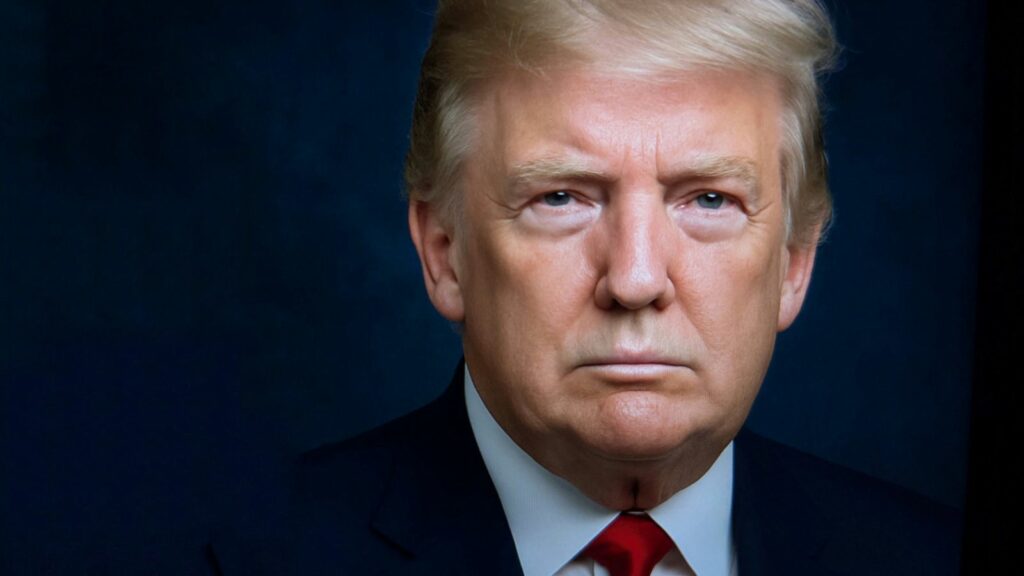
Donald Trump has revived one of his most controversial claims about Canada, telling supporters at an Arizona rally that the country will eventually become America’s 51st state because the United States no longer needs its northern neighbour.
Speaking in Bullhead City on October 14, 2026, the U.S. president linked his prediction to tariffs, automotive manufacturing and what he described as an unfair economic relationship. He also claimed Washington loses as much as US$100 billion annually supporting Canada, a figure that does not align with official U.S. trade statistics.
The remarks arrive amid a damaging trade dispute, stalled formal negotiations and renewed debates about Canadian sovereignty. Yet Trump’s prediction is not a legal process or an announced annexation plan. The distinction matters as Canadians confront the economic consequences of Washington’s policies.
Trump Revives His 51st-State Claim at an Arizona Rally
President Donald Trump returned to his familiar criticism of Canada during a campaign rally at Laughlin/Bullhead International Airport in Bullhead City, Arizona, on Wednesday, October 14. While discussing tariffs and North American automotive manufacturing, he said Canada would eventually join the United States. Trump told supporters that Canadian carmakers were shifting operations south to avoid American tariffs and suggested that economic pressure would ultimately make integration unavoidable.
His remarks were explicit: “They’ll end up being the 51st state because it’s the only way it works.” He added, “We don’t need them, but they need us.” Trump then questioned why the United States should lose between US$80 billion and US$100 billion annually supporting another country. He quickly moved on to discussing Greenland, another territory he has repeatedly expressed interest in bringing under American control. The speech offered no legislative proposal, bilateral agreement or timetable for Canada to become a U.S. state.
The Arizona Comments Continue a Dispute Dating Back to 2024
Trump’s latest remarks did not emerge from nowhere. He began publicly floating the idea of Canada becoming the 51st state after meeting then-prime minister Justin Trudeau in late 2024. What initially appeared to some observers as political provocation became a recurring theme during his return to the White House. Trump repeatedly suggested that Canada would be economically better off inside the United States, linking the idea to tariffs, defence spending and access to American markets.
The disagreement became especially visible during Prime Minister Mark Carney’s first White House meeting with Trump on May 6, 2025. Carney firmly rejected the suggestion, telling the president that Canada was not for sale and never would be. Trump responded that the future could not be ruled out. Although Carney later suggested the American president had moved on from the issue, the Arizona speech demonstrates that Trump has not abandoned the rhetoric. Still, repeating a territorial claim is fundamentally different from initiating a formal annexation process.
Trump’s US$100-Billion Claim Does Not Match Official Trade Figures
One of Trump’s most consequential assertions concerned the amount of money he believes America loses through its relationship with Canada. At the rally, he referred to annual losses of US$80 billion, US$90 billion and US$100 billion, presenting those amounts as a cost of supporting its northern neighbour. However, the Office of the United States Trade Representative provides a substantially different picture of the bilateral economic relationship.
According to USTR’s current 2025 trade summary, the United States recorded a US$48.3-billion goods trade deficit with Canada, meaning it imported more physical merchandise than it exported. However, America also maintained a US$27.7-billion surplus in services, including business, financial and other commercial activities. Combining those figures produces a net trade deficit of approximately US$20.6 billion. More importantly, a trade deficit is not a government subsidy or an annual payment to another country. It reflects the difference between purchases and sales. Trump’s much larger assertion therefore conflates commercial trade balances with financial support.
His Dairy Tariff Example Leaves Out Important Details
Trump also accused Canada of charging extraordinarily high tariffs on American dairy products. During his Arizona remarks, he suggested that imports could initially enter without duties before facing a tariff of 409% after a tiny quantity had been purchased. The example fits his broader argument that Canada unfairly restricts access to its agricultural market. However, Canada’s dairy import system operates through negotiated annual tariff-rate quotas, not a simple allowance measured in a couple of bottles.
Under the arrangement, qualifying American dairy products can enter Canada at low or zero preferential tariff rates up to specified limits. Higher duties apply when shipments exceed those quotas. Published Canadian tariff schedules have included over-quota rates of approximately 241% for liquid milk, 245.5% for cheese and 298.5% for butter, rather than a general 409% dairy tariff. American dairy organizations have nevertheless criticized how Canada administers its quotas, arguing that market-access restrictions disadvantage U.S. exporters. The underlying dispute is genuine, but Trump’s description omitted how the system actually operates.
America’s Economic Relationship With Canada Is Far From One-Sided
The suggestion that America has little economic need for Canada overlooks the extraordinary scale of their commercial relationship. USTR estimates that bilateral trade in goods and services totalled US$872.3 billion in 2025. American companies exported approximately US$333.6 billion in merchandise to Canada, alongside another US$92.3 billion in services. Those sales represent revenue for manufacturers, farmers, technology firms and other businesses operating throughout the United States.
Canada is also more exposed to the American market than the reverse. Statistics Canada reported that 71.7% of Canadian merchandise exports went to the United States in 2025, down from 75.9% the previous year. That dependence gives Washington substantial leverage in negotiations, particularly when tariffs threaten industries built around cross-border demand. Yet economic leverage should not be confused with independence from a trading partner. A supplier in Ohio selling machinery to Ontario factories, for example, can lose business when Canadian customers delay investment. Both countries have commercial interests at stake, even if their relative bargaining power differs.
Automotive Manufacturing Is Central to Trump’s Argument
Trump specifically claimed that Canadian automotive companies were moving into the United States because they otherwise faced massive tariffs. His comments reflect an important priority of his administration: increasing the share of vehicles and components manufactured on American soil. However, North America’s automotive industry has spent decades developing production networks that operate across national borders. Automakers routinely source engines, transmissions, electronics and other components from facilities located in Canada, Mexico and the United States.
CUSMA’s automotive rules generally require 75% North American regional content for qualifying passenger vehicles and light trucks, demonstrating how extensively production has been integrated. Changing those rules or imposing additional tariffs can influence future manufacturing decisions, but factories cannot simply relocate overnight. New facilities involve years of planning, investment and supplier arrangements. An October Associated Press fact-check also challenged Trump’s broader claims about unprecedented U.S. automobile factory construction. For Canadian workers, the immediate danger lies less in wholesale relocation than in production cuts, delayed investments and future vehicle programs being awarded elsewhere.
Canadian Energy Supplies Complicate the Claim That America Needs Nothing
Energy provides another powerful comparison with Trump’s rhetoric. According to the Canada Energy Regulator, Canada supplied 63.4% of all crude oil imported by the United States in 2025. It also accounted for almost all American natural gas imports and 81.3% of electricity imports. These figures do not mean the United States is incapable of producing energy independently, but they demonstrate the substantial role Canadian resources play in its existing supply system.
The relationship works in both directions. In 2025, Canada exported 32.7 terawatt-hours of electricity to the United States while importing 22.1 terawatt-hours from American suppliers. Canadian refineries and consumers also purchase U.S. petroleum products and natural gas. This interconnected infrastructure has developed over decades because it serves economic and geographic needs on both sides of the border. Removing Canadian supplies abruptly would require adjustments involving pipelines, refineries and electricity networks. Trump’s assertion may be politically effective, but the physical energy system tells a more complicated story.
Canadian Public Opinion Offers Little Support for Statehood
Trump’s proposed future for Canada faces an obstacle: Canadians have overwhelmingly rejected the idea. An Angus Reid Institute survey published in January 2025 found that 90% of Canadian respondents would vote against joining the United States in a hypothetical referendum. The same research found that American opposition to a merger exceeded support, with approximately 49% opposed and 25% supportive. Subsequent polling reinforced the strength of Canadian resistance rather than revealing a broad movement toward American statehood.
By the summer of 2026, Canadian attitudes toward the Trump administration had deteriorated further. Angus Reid polling found that 79% of Canadians held an unfavourable opinion of Trump, while 79% of Americans surveyed still expressed favourable views of Canadians. That contrast suggests the political dispute has affected perceptions of Washington more strongly than Americans’ feelings toward their northern neighbours. Carney has repeatedly maintained that Canada will determine its own future. Although Canadians disagree over trade policies, federal leadership and economic priorities, available polling offers no basis for describing American annexation as a widely supported national objective.
The Remarks Come Days Before Alberta’s Referendum
The timing carries significance because Alberta is scheduled to hold a provincial referendum on October 19, just five days after Trump’s Arizona appearance. The referendum contains ten questions covering immigration, provincial powers and Alberta’s constitutional future. One asks whether Alberta should remain in Canada or whether the provincial government should begin the legal process required to hold a future binding referendum on separation. Advance voting began October 13, adding immediacy to the national unity debate.
Crucially, the October 19 ballot is non-binding, and it does not ask whether Alberta should become part of the United States. A vote favouring the commencement of a legal process would not automatically separate the province from Canada. Alberta Premier Danielle Smith has publicly maintained her support for remaining within the federation, despite acknowledging separatist concerns. Carney has also urged Albertans to preserve national unity. Trump’s renewed statehood rhetoric therefore arrives during a sensitive political moment, but it should not be confused with the specific constitutional question Albertans are being asked to consider.
Turning Canada Into a U.S. State Would Face Enormous Legal Obstacles
Even if political support existed, Canada could not become an American state simply because a U.S. president declared it inevitable. Article IV, Section 3 of the United States Constitution gives Congress authority to admit new states. A presidential statement alone cannot exercise that power. Canada is also an independent sovereign country with its own Parliament, provincial governments, constitutional arrangements and democratic institutions. Any proposed transfer of sovereignty would raise profound legal questions on both sides of the border.
Canada’s Constitution Act, 1982 establishes several amendment procedures. Its general formula requires approval by Parliament and at least seven provinces representing half the provincial population, while certain fundamental constitutional changes require unanimous provincial approval. Determining the precise legal steps for an unprecedented dissolution or merger would involve issues extending beyond any ordinary amendment. There is no current agreement between the two governments to pursue such an arrangement. The practical conclusion is straightforward: Trump’s prediction does not change Canada’s constitutional status, regardless of how frequently he repeats it.
Trade Negotiations Remain the More Immediate Threat to Ottawa
For Prime Minister Carney, the practical challenge is securing a workable economic relationship while protecting Canada’s independence. Ottawa suspended formal bilateral negotiations in August 2026 after rejecting last-minute American demands that Carney characterized as unfair and economically damaging. Canada subsequently imposed retaliatory measures against selected U.S. products. The confrontation has affected sectors including steel, aluminum, automobiles and agricultural goods, creating uncertainty for businesses accustomed to relatively predictable cross-border trade.
The three-country trade agreement remains another source of pressure. During the first mandatory CUSMA review on July 1, 2026, Washington declined to extend the pact in its existing form. That did not terminate it: CUSMA remains in force under its current terms, with further reviews required. U.S. Trade Representative Jamieson Greer said on October 8 that high-level contact with Canadian officials continued, although Washington was maintaining its position. Those discussions, potential tariff changes and the next CUSMA review are far more immediate policy developments than Trump’s statehood prediction. Their outcomes could materially affect investment and employment on both sides of the border.
Canada Is Looking Beyond Washington While the Dispute Continues
The prolonged confrontation is accelerating Canada’s efforts to reduce its reliance on the American market. Statistics Canada reported that Canadian merchandise exports to countries other than the United States increased 17.2% in 2025. Carney’s government has emphasized expanding commercial relationships with Europe, India, China and Southeast Asian economies. On October 14, Reuters reported that Ottawa was seeking to conclude a major trade agreement with India by the end of 2026, part of a broader objective to double non-U.S. trade over ten years.
Diversification cannot immediately replace the American market. Geography, established transportation routes and integrated supply chains make the United States an exceptionally important customer for Canadian businesses. New export relationships require investment, infrastructure and competitive products, while established U.S. customers often remain the most economical buyers. Nevertheless, the government’s strategy reflects a growing concern about depending too heavily on a partner willing to use tariffs as negotiating leverage. Trump’s Arizona comments reinforce that uncertainty, even without creating an immediate legal threat to Canadian sovereignty. The next meaningful developments will come through trade negotiations, tariff decisions and Canadian political choices rather than the applause at a campaign rally.
