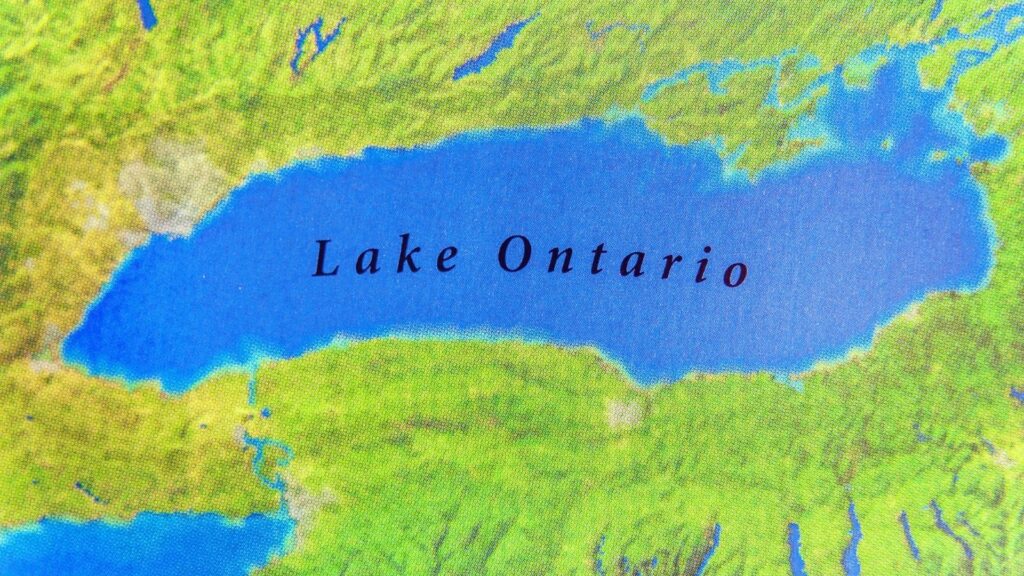
At a campaign rally in northern Kentucky, Donald Trump returned to a dispute that reaches across the Canadian border without moving it an inch. On October 17, the U.S. president told supporters he had renamed Lake Ontario “Lake America,” presenting the decision as an example of the influence he believes he has gained during his second term.
The claim was not invented onstage. Trump signed an executive order in August directing American federal agencies to use the new name, and major mapping companies subsequently changed their U.S. displays. But the lake also lies in Canada, whose government has firmly rejected the new label.
The competing names now illustrate something larger than a disagreement over maps: strained trade relations, competing ideas of national identity and the limits of what one government can decide about a shared landmark.
Trump Brings His Lake America Boast to a Kentucky Rally
Speaking at Truist Arena in Highland Heights on Saturday, October 17, Trump discussed his decision to rename familiar waterways. He had been discussing the Gulf of America when he turned to the Great Lakes. “Well, I also changed the name of a lake in Canada to the Lake America,” he told the Kentucky crowd, referring to Lake Ontario. The remark cast the change as a demonstration of presidential reach rather than a proposal awaiting action.
The appearance was part of Trump’s effort to encourage Republican turnout ahead of the November midterm elections. He was campaigning for candidates including Ed Gallrein, who defeated Representative Thomas Massie in the Republican primary. The lake remark was one part of a wide-ranging speech about his administration and political opponents. Yet it carried particular significance north of the international border: Trump described as Canadian a lake that actually belongs to the geography of both countries.
The Dispute Began With a Threat, Then Became an Executive Order
The latest rally remark followed a sequence of events in August. On August 25, Trump said he was considering renaming Lake Ontario because the United States did not expect to do much business with Ontario in the future. The statement appeared amid a breakdown in bilateral trade negotiations. A day later, he released a video showing himself crossing out Lake Ontario on a printed map and writing Lake America in its place.
On August 27, the president signed Executive Order 14422, instructing federal authorities to adopt the new name. The order was published in the Federal Register on September 2. Its language invoked American history, shipping and the protection of the Great Lakes, arguing that the lake deserved an American designation. This chronology matters because the October campaign boast concerned an action taken. It was neither a new renaming order nor evidence that Canada had agreed to abandon the name.
What the American Renaming Order Actually Changes
The order directs the U.S. interior secretary, working with the Board on Geographic Names, to replace Lake Ontario with Lake America in the federal Geographic Names Information System. It also calls for government maps, contracts and official communications to reflect that change. Federal law gives the secretary and the board authority to standardize geographical names used across federal agencies, so the directive has an administrative purpose.
Its reach nevertheless stops well short of the authority Trump appeared to imply at the rally. A federal naming decision cannot transfer territory, rewrite the international boundary or require the Canadian government to use the same label. The order does not give Washington ownership of the Canadian side of the water. States, private companies and news organizations make their own naming choices. The distinction is straightforward: Lake America is the official U.S. federal name, while Lake Ontario remains the official Canadian one.
Carney, Ford and New York’s Governor Refuse the New Name
Canadian Prime Minister Mark Carney rejected the change when Trump signed the order in August. He noted that the name Lake Ontario was four centuries old and predated both Canadian Confederation and U.S. independence. His response stressed continuity, declaring that Canadians would call it Lake Ontario “then, now and always.” Ontario Premier Doug Ford responded by unveiling a sign at Fifty Point Conservation Area in Grimsby identifying the water as Lake Ontario.
Opposition also came from the American side of the shoreline. New York Governor Kathy Hochul said her state would not use Trump’s new name, even though federal agencies had been instructed to do so. Vermont’s Republican governor, Phil Scott, criticized the decision. The reactions show why the change cannot be described as a settled international decision. Political leaders may disagree about trade and diplomacy, but Canadian authorities have not changed their maps or official geographical records to comply.
Google and Apple Give the Lake Different Names Across the Border
The dispute became visible on smartphones. Google announced on August 29 that its maps would follow the U.S. Geographic Names Information System. U.S. users of Google Maps would see Lake America; Canadian users would see Lake Ontario. Users elsewhere in the world would see both labels. The company described this as its longstanding approach when governments use different names for a shared location.
Apple subsequently adopted Lake America for U.S. users of Apple Maps, while leaving Lake Ontario visible outside the country. Not every mapping company made the same choice. MapQuest said it would retain the lake name and even offered users a customizable alternative. The split illustrates how a government naming change can spread through digital products without achieving universal acceptance. Two people checking the same stretch of water on separate phones can now encounter different labels, depending on the service and where they are located.
The Name Ontario Carries Centuries of Indigenous History
The controversy is not simply about a Canadian provincial name. Ontario has deep roots in Indigenous languages, and the lake’s name predates either modern country. Ontario government material traces the word to Iroquoian language traditions associated with a beautiful lake or beautiful water. The lake later gave its name to the province. That long history helps explain why Canadian leaders have framed the dispute as a matter of cultural memory rather than diplomatic irritation.
The Wendat Nation voiced opposition. Grand Chief Pierre Picard criticized the August decision, arguing that replacing the original historic name disregarded Indigenous heritage. Exact historical spellings and translations can vary between linguistic accounts, but the central point is well documented: the name is deeply connected to First Nations history. A presidential order can alter the terminology in an American government database. It cannot erase the generations of language, relationships and identity attached to the older name.
A Shared Great Lake Still Operates Under Shared Rules
Lake Ontario is the smallest Great Lake by surface area, covering about 7,340 square miles, yet it is deep enough to hold more water than Lake Erie. New York borders its southern and eastern shores; Ontario borders the northern and western shores. Toronto and Rochester are cities connected to this waterway. It also forms the downstream end of the Great Lakes system before water flows into the St. Lawrence River.
Management rests on arrangements older than the renaming dispute. The Boundary Waters Treaty of 1909 established principles for Canada and the United States to cooperate over shared waters. The binational International Joint Commission and the International Lake Ontario–St. Lawrence River Board jointly help oversee matters such as water levels and flows. Those longstanding responsibilities continue regardless of the names printed on official government maps. A different label does not change where the border lies or how water moves.
Trade Tensions Help Explain Why the Lake Became a Target
Trump first raised the idea of Lake America as recent negotiations with Canada were breaking down. His August social media statement linked the proposed change to his expectation of reduced business with Ontario. Reuters reported that talks had collapsed after days of negotiations, with the two governments disagreeing on why a settlement failed. Canadian officials cited disagreements involving trade concessions and domestic policy; American officials rejected aspects of that characterization.
The lake thus became a visible symbol in a dispute with consequences far beyond geography. Tariffs and uncertain market access affect businesses that ship goods between the countries, including manufacturers whose production depends on cross-border supply chains. The renaming order itself did not set a tariff, close a crossing or change a trade agreement. Its importance was political: it turned a familiar Canadian landmark into a statement of American leverage. That context helps explain why Canadian responses were unusually forceful.
The Renaming Fits Trump’s Broader Midterm Campaign Message
In Kentucky, Trump argued that his second term carries greater influence. The rally was intended to protect Republican seats in Congress this November, and Trump encouraged voters to see his record as central to the contest. The Associated Press also reported that the audience’s reaction was mixed when he attacked Thomas Massie, the Republican incumbent defeated by Gallrein in the primary.
Geographical renaming has become a recurring theme in Trump’s public campaign appearances. His administration had already changed the federal name for the Gulf of Mexico, and in a Tennessee rally on October 10 he floated names such as Trump Ocean or Ocean of the Americas for an ocean. These proposals differ in legal status: the lake and gulf changes have federal directives behind them, while the ocean comments were suggestions. Repeating the lake boast onstage again allowed Trump to present a disputed symbolic gesture as a concrete governing achievement.
The Lasting Question Is What the Renaming Accomplishes
For Lake Ontario communities, the executive order has not changed the shoreline, navigation rights or cross-border environmental cooperation. Canadian government records still use Lake Ontario, and the Associated Press has said it will keep that name internationally while explaining the American change. U.S. federal agencies and map users, meanwhile, encounter Lake America. Both descriptions can appear in discussions of the same lake.
That divergence can affect clarity, even if it does not alter the physical waterway. Maps, official documents and public communications work best when their audiences understand which place is being discussed. More importantly, communities and families on both shores share concerns about shipping, safe drinking water, fisheries and seasonal flooding. The governments may continue arguing over a name, but they remain bound by the daily realities of geography and longstanding water-management arrangements. Trump’s Kentucky boast illustrates how far political symbolism can travel, and where its power ends.
