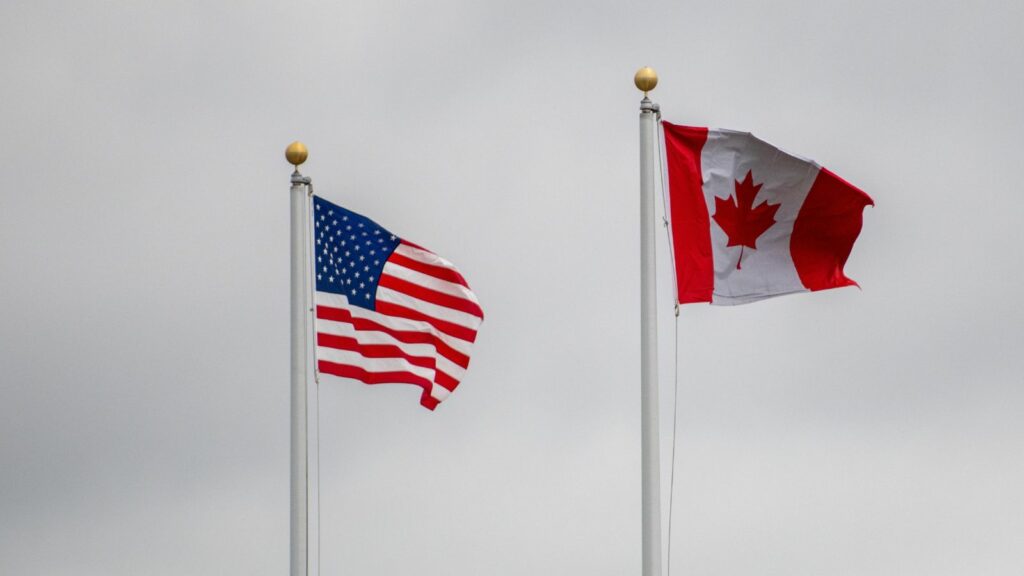
A factory payroll cannot wait for a diplomatic breakthrough. For Canadian companies trying to price exports and protect jobs, Ottawa’s latest message is sobering: do not count on a U.S. trade agreement before November 3, 2026.
CBC News reported on October 20 that federal officials have been telling industry groups an agreement is not expected before the American midterm elections. Its account, based on three sources familiar with the situation, describes continued official contact but little substantive engagement. That leaves businesses navigating existing tariffs, uncertain orders and the possibility of further trade restrictions. The date is not a promised finish line. Even after Americans vote, neither government has guaranteed a settlement.
Businesses Are Being Told to Plan for a Longer Wait
CBC’s reporting describes a message delivered to industry groups over several weeks, rather than a newly announced negotiating deadline. Officials have been managing expectations about the prospects for an agreement before the November 3 vote. The broadcaster’s sources said the White House was absorbed in the election campaign. That offers an explanation for the near-term outlook, but it does not establish that Washington has committed to reopening substantive negotiations immediately afterward.
For businesses, the distinction between remaining in contact and negotiating a workable agreement matters. A conversation between officials cannot provide the certainty of an implemented tariff reduction. Consider a manufacturer preparing a quotation for an American customer: assuming a duty will disappear could leave the order unprofitable if negotiations remain stalled. Ottawa’s reported guidance therefore points toward planning around existing conditions rather than hoped-for relief. It is an assessment of the diplomatic situation, not a guarantee that a breakthrough is impossible or that one will arrive on November 4.
The August Breakdown Left Both Sides Blaming Each Other
The present stalemate traces back to August 21, when Prime Minister Mark Carney suspended negotiations and recalled Canada’s negotiating team from Washington. His explanation was unusually blunt: last-minute American changes had made the proposed terms unfair and economically unacceptable, while raising doubts about their reliability. Those were Ottawa’s assessments, not findings accepted by both governments. The talks had been intended to reduce tariffs affecting important Canadian industries and provide greater stability for cross-border commerce.
Washington offered a sharply different account. U.S. Trade Representative Jamieson Greer accused Canada of introducing new demands and retreating from earlier positions. Canadian Press reporting described negotiations involving Dominic LeBlanc and chief negotiator Janice Charette that had stretched across nearly two weeks in Washington. The disagreement therefore concerns more than a missing meeting date. Both governments publicly dispute why a possible agreement fell apart. For companies waiting for relief, that history explains why renewed conversations alone would not necessarily restore confidence: businesses need terms that survive the final negotiations and are actually implemented.
The Tariff Bills Have Not Stopped Arriving
The absence of an agreement does not freeze the trade dispute. Canada’s Department of Finance records that Washington imposed 50% tariffs on C$27.6 billion worth of selected Canadian goods on August 22. Ottawa’s countermeasures took effect on September 8, covering an equivalent value of American imports. Canadian rates in that package range from 15% to 50%, depending on the product. Washington then announced additional measures, including targeted import bans and restrictions on Canadian access to federal procurement.
These are not interchangeable charges applied uniformly to everything crossing the border. Product coverage, existing sector-specific measures and exemptions matter. Canada’s countermeasures include categories such as appliances, agricultural equipment, electronics and plastics, alongside specified steel and aluminum products. That complexity helps explain why a political headline cannot substitute for the rules governing an individual shipment. A Canadian business importing machinery may face a different exposure from a manufacturer exporting finished goods. Until governments actually change the applicable measures, companies must price orders against the rules in force, rather than assuming an eventual agreement will erase their present costs.
The Next Tariff Threat Extends Beyond Election Day
For the automotive industry, November 3 is not the only date that matters. On August 24, President Donald Trump threatened 50% tariffs on Canadian cars, trucks and auto parts beginning January 1, 2027. The warning came after the summer negotiations collapsed. A threatened increase must be distinguished from duties already being collected; an announcement alone does not resolve questions about implementation, product coverage or exemptions.
Flavio Volpe, president of Canada’s Automotive Parts Manufacturers’ Association, warned that American assembly plants depend on specific Canadian components and could halt without them. That is an industry warning, not evidence that a shutdown has occurred. It nevertheless highlights the difficulty of separating the two countries’ automotive interests. Suppliers also need to quote prices and reserve factory capacity before future tariff details are necessarily settled. The industry’s problem is therefore not just whether negotiations resume after the midterms. It is whether any resulting agreement provides enough clarity, early enough, for companies to make production decisions before January arrives.
Steelworkers Face Consequences That Cannot Wait for Diplomacy
Stelco’s Hamilton operations illustrate what prolonged uncertainty can mean beyond a negotiating room. In late September, owner Cleveland-Cliffs announced plans to idle cold-rolled and coated steel production, citing tariffs and competition from imported steel. Reuters reported that as many as 500 workers could be affected, while Stelco said it would concentrate production at Nanticoke and offer Hamilton employees jobs there. The 500 figure described workers potentially affected, not a final tally of permanent job losses. For affected households, however, uncertainty about the next shift is already a serious concern.
Canadian mills are also finding ways to adapt. Reuters reported on October 16 that demand from mining, energy and data-centre projects was helping parts of the sector. It cited United Steelworkers calculations showing that Canadian-made steel’s share of domestic consumption rose from 41% in 2024 to 51% in 2025. That improvement does not mean every mill can readily replace lost American business. Different facilities make different products, and new customers do not necessarily arrive when existing orders disappear.
New Business Evidence Shows the Cost of Waiting
Bank of Canada findings released on October 19 reveal why the timing of economic evidence matters. Its third-quarter Business Outlook Survey showed some improvement in business conditions, but interviews ran from August 6 to September 2, with about three-quarters completed before negotiations collapsed. A separate monthly Business Leaders’ Pulse captured more of the subsequent deterioration. Treating the earlier quarterly findings as a complete picture of the post-breakdown economy would therefore miss an important change.
The later evidence showed weaker business sentiment and export expectations, while trade tensions placed a greater drag on investment intentions. The central bank cautioned that conditions remained considerably better than during the worst of the 2025 trade shock; this was a setback, not a return to that earlier low. Its findings also indicated that more businesses reported rising input costs than rising selling prices, suggesting some firms were absorbing the pressure. For a business owner, that can mean less room to finance equipment or expand. For employees, delayed investment can matter even before it produces an announced layoff.
American Businesses Are Also Looking for Relief
The costs are reaching companies south of the border, too. On October 20, food importer Gellert Global Group filed a challenge to the new Canadian-goods tariffs in the U.S. Court of International Trade. Its lawyers at the Liberty Justice Center say the family-owned business faces a 50% tariff on Canadian cheese, while its Canadian operations also encounter Ottawa’s retaliatory charges on American products. The lawsuit contests the president’s use of Section 338 of the Tariff Act of 1930. Those legal arguments remain allegations, not a court ruling against the measures.
One example supplied by the company’s lawyers makes the economic connections tangible: a Canadian supplier buys milk from upstate New York, turns it into brie in Canada and ships the cheese to American customers. A tariff on the finished product can therefore affect a chain involving both countries, rather than an exclusively Canadian operation. The Trump administration maintains that its measures respond to discriminatory Canadian trade practices. The disagreement is real, but so is the practical difficulty of separating American and Canadian commercial interests when ingredients, processing and customers sit on different sides of the border.
A Stalled Deal Does Not Mean CUSMA Has Disappeared
The bilateral tariff negotiations should not be confused with the existence of the Canada–United States–Mexico Agreement, known as CUSMA in Canada and USMCA in the United States. At the July 1 joint review, Washington declined to renew the agreement in its current form. USTR nevertheless explicitly said the treaty remained in force. That distinction is crucial: declining to extend its duration is not the same as immediately cancelling the legal framework governing North American trade.
The agreement’s review provisions allow annual reviews when the three countries do not jointly confirm an extension. Its original 16-year term runs to 2036, although a separate withdrawal provision permits a country to leave after giving six months’ written notice. November 3 is therefore neither CUSMA’s expiry date nor an automatic deadline for resolving its future. At the same time, an operating trade agreement does not mean every shipment is free of the separate tariffs currently being imposed. Businesses must navigate both realities: an established continental trading framework and a growing collection of measures that can make particular cross-border transactions considerably more expensive.
Federal Support Can Buy Time, but Cannot Replace Customers
Ottawa has already announced measures intended to help businesses endure a longer confrontation. An August 25 package contained C$7.5 billion in new and enhanced support for workers and companies. It included an additional C$1.5 billion for the Regional Tariff Response Initiative and a new C$500 million lending stream through the Business Development Bank of Canada. The programs address different needs, including immediate cash-flow pressures and adjustment to disrupted trade. Announced funding should not be confused with money already received by every eligible business.
The government is also seeking customers beyond the United States. Reuters reported on October 14 that Canada was working toward completing a trade agreement with India by year-end while pursuing closer European ties. That was a negotiating objective, not an accomplished deal. The two approaches serve different purposes: financing can help a company keep operating, while access to other markets may reduce its dependence on American orders over time. Neither offers an instant substitute for an established customer. For smaller exporters, the central challenge remains matching the speed of financial assistance and new sales opportunities to the speed at which tariffs are eroding existing business.
A Real Breakthrough Will Require More Than a New Date
Ottawa has not publicly closed the door to an agreement. On October 20, Dominic LeBlanc said the two countries remained in contact and that an eventual deal would serve Canada’s economy, according to Reuters. The news agency also reported that no high-level talks had been scheduled since the August breakdown. Carney had earlier said, on September 3, that Canada remained ready for a mutually beneficial agreement, while emphasizing the need for stability and credibility. Those statements preserve the possibility of a settlement without establishing when one might happen.
For businesses, meaningful progress would involve more than a meeting announcement. The practical tests are which tariffs change, which products qualify, when the changes take effect and whether the arrangement reduces the risk of another sudden reversal. An agreement that lowers one charge but leaves important restrictions unresolved could help some companies far more than others. November 3 may change the political setting, but it cannot by itself answer those commercial questions. Until there are dependable terms to work with, Canadian employers and workers face the same immediate challenge: keeping their businesses and livelihoods intact while diplomacy catches up.
