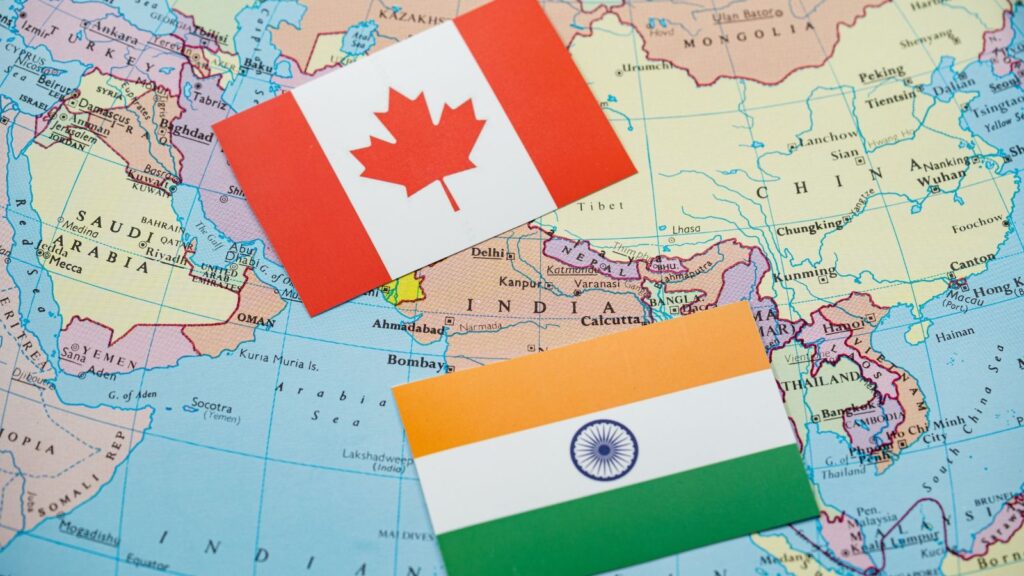
Canada’s push to build stronger trade relationships beyond the United States is gaining momentum, with Ottawa and New Delhi working toward a major economic agreement before the end of 2026. On October 30, Canadian Foreign Affairs Minister Anita Anand and Indian External Affairs Minister Subrahmanyam Jaishankar welcomed progress toward concluding a Comprehensive Economic Partnership Agreement (CEPA). The negotiations are part of Prime Minister Mark Carney’s broader strategy to reduce Canada’s reliance on the American market while expanding opportunities in some of the world’s fastest-growing economies. With bilateral goods and services trade already reaching $30.4 billion in 2025, the potential is substantial. However, important negotiations remain unfinished, and the coming weeks could determine whether both countries can turn their renewed diplomatic relationship into a lasting economic partnership.
October 30 Meeting Keeps the Year-End Deadline in Focus
The latest diplomatic push came on October 30, when Anita Anand met Indian External Affairs Minister Subrahmanyam Jaishankar during the G20 Foreign Ministers’ Meeting in Atlanta. The two ministers discussed the renewed Canada-India strategic partnership, including progress on the proposed trade agreement. Anand welcomed efforts to conclude the agreement by the end of 2026, reinforcing the timeline established earlier this year. Both ministers also identified Indian Prime Minister Narendra Modi’s anticipated December visit to Canada as another opportunity to strengthen the relationship.
The development follows an October 13 conversation between Carney and Modi, during which both leaders reaffirmed their commitment to completing negotiations as soon as possible. However, there is an important difference between reaching a negotiated agreement and having a trade deal formally signed, ratified, and implemented. Canada continues to classify CEPA as under negotiation, meaning businesses cannot yet rely on new tariff reductions or market-access provisions. The coming weeks will test whether the political commitment can produce detailed, enforceable trade rules rather than another extension of discussions.
Canada’s Heavy Dependence on the U.S. Is Driving the Strategy
Canada’s interest in India reflects a much larger economic challenge: an overwhelming concentration of exports in one foreign market. Statistics Canada reported that 71.7% of Canadian merchandise exports went to the United States in 2025, down from 75.9% in 2024. Although the American market remains essential to Canadian prosperity, tariffs and unpredictable trade policies have made that concentration increasingly difficult for businesses to manage. Manufacturers, agricultural exporters, and resource companies face greater uncertainty when their sales depend heavily on decisions made in Washington.
Carney’s government has consequently established a target of doubling Canadian exports to non-U.S. markets by 2035. According to Global Affairs Canada, exports of goods and services to destinations outside the United States increased by 11.1% in 2025, while exports to the American market declined by 3.7%. India represents one important part of that diversification effort. For a Canadian manufacturer accustomed to shipping most of its products south of the border, developing customers in India could provide an additional source of revenue. Nevertheless, replacing established American supply chains would be difficult, making diversification a gradual strategy rather than an immediate substitute for U.S. trade.
Trade Negotiations Follow a Difficult Diplomatic Reset
The renewed trade discussions represent a considerable turnaround from the diplomatic confrontation that disrupted relations in 2023. Tensions escalated after the killing of Canadian Sikh activist Hardeep Singh Nijjar in British Columbia and allegations by Canada’s former government concerning possible Indian involvement. India rejected those allegations, and relations deteriorated further when both governments expelled senior diplomats in October 2024. The dispute interrupted broader efforts to strengthen bilateral cooperation, including trade discussions that had already been underway for years.
The relationship began moving toward normalization after Carney and Modi met during the G7 summit in Alberta in June 2025. Both governments subsequently restored high-level diplomatic representation and agreed to expand discussions involving security, investment, and economic cooperation. In November 2025, the leaders agreed to launch a renewed comprehensive trade negotiation process. Carney’s visit to India in February and March 2026 brought another important development, with both countries signing terms of reference for CEPA negotiations. The agreement now being pursued is therefore part of a broader diplomatic rebuilding effort, although continuing security concerns mean the relationship remains sensitive.
Ottawa Wants Bilateral Trade to Reach $70 Billion by 2030
The economic ambition behind the negotiations is considerable. Canada and India have established a shared objective of increasing annual bilateral goods and services trade to approximately $70 billion by 2030. Global Affairs Canada reported that total two-way trade reached $30.4 billion in 2025, including $13.6 billion in merchandise trade. Reaching the new target would require substantial growth in commercial activity, particularly as Canadian businesses attempt to establish stronger positions in Indian markets that have traditionally been difficult to enter.
The existing merchandise relationship illustrates both the opportunities and the imbalance between the two economies. Canada exported approximately $3.9 billion in goods to India in 2025, including vegetables, mineral fuels, oils, and wood pulp. Merchandise imports from India reached about $9.7 billion, with precious stones and metals, machinery, and pharmaceuticals among the leading categories. The proposed agreement could make some of these trade flows less expensive and more predictable. However, the $70-billion objective remains a government target rather than a guaranteed outcome. Reaching it will require stronger investment, competitive products, efficient transportation networks, and sustained business demand beyond what a trade agreement alone can provide.
Canadian Farmers Could Benefit From More Predictable Access to India
Agriculture stands to be one of the most closely watched areas of the proposed agreement, particularly for producers across Saskatchewan and Alberta. India is a major consumer of pulses, including lentils and dried peas, which are important Canadian agricultural exports. According to Agriculture and Agri-Food Canada, Canadian agri-food and seafood exports to India were worth approximately $1.4 billion in 2024. Dried peas accounted for roughly $789 million, while lentils contributed approximately $604 million. These products connect Prairie farming communities directly to Indian households and food processors, making changes in trade policy especially important to producers.
However, access to the Indian market has not always been predictable. India’s decision to introduce a 30% import duty on yellow peas in November 2025 demonstrated how quickly policy changes can affect international agricultural trade. Canadian exporters have also raised concerns about fumigation requirements, certification procedures, and other regulatory barriers. A comprehensive agreement could establish clearer rules and potentially reduce some of these obstacles. For farmers planning future planting seasons, greater certainty about international demand can be nearly as valuable as lower tariffs, although the final benefits will depend on the concessions negotiated.
A $2.6-Billion Uranium Agreement Shows What Is Already Possible
Energy cooperation has emerged as one of the strongest parts of the renewed Canada-India relationship, offering an example of commercial progress before CEPA is completed. In March 2026, Saskatchewan-based Cameco signed a long-term uranium supply agreement with India’s Department of Atomic Energy. The contract is estimated to be worth approximately C$2.6 billion and covers nearly 22 million pounds of uranium concentrate, with deliveries expected between 2027 and 2035. The arrangement supports India’s nuclear power ambitions while creating a significant long-term customer relationship for a major Canadian resource producer.
Both governments are also exploring broader cooperation involving liquefied natural gas, liquefied petroleum gas, crude oil, potash, and critical minerals. During Carney’s March visit to India, the countries signed memoranda of understanding covering critical mineral supply chains and renewable energy development. These initiatives are separate from the unfinished trade agreement, but they demonstrate why both governments see strategic value in deeper economic cooperation. For Canadian energy and mining companies, India’s growing demand presents opportunities extending beyond conventional commodity sales to long-term supply contracts, technology partnerships, and investment in processing infrastructure.
Education and Technology Make Services a Major Part of the Deal
The trade relationship extends well beyond products shipped through ports. India has become an important market for Canadian services, particularly education, research, and professional activity. Global Affairs Canada’s 2026 State of Trade report identified India as Canada’s second-largest services export destination in 2025, accounting for approximately 6% of total services exports. Education-related spending is a major component, reflecting the economic activity generated when Indian students pay tuition and living expenses while studying at Canadian institutions. These financial connections also support jobs, housing demand, and local businesses near educational campuses.
The two countries are working to expand their relationship beyond traditional international student recruitment. In February 2026, Canada announced a new Talent and Innovation Strategy involving 13 institutional partnerships and participation from more than 20 Canadian educational institutions. A separate research initiative will provide opportunities for 300 eligible Indian students annually over three years, beginning in 2027, through Mitacs research internships. The proposed CEPA could complement these partnerships by improving conditions for professional services, digital trade, and business collaboration. However, education partnerships and immigration permissions remain distinct policy matters, and a trade agreement would not automatically change Canada’s student visa or immigration rules.
Nearly 300 Canadian Delegates Have Already Pursued New Business in India
The government’s trade strategy has already moved beyond diplomatic meetings. In October, International Trade Minister Maninder Sidhu led nearly 300 Canadian delegates to Mumbai and Bengaluru as part of Canada’s largest trade mission to India in approximately three decades. According to Global Affairs Canada, the mission produced 34 commercial agreements, partnerships, and investment arrangements with a combined estimated value approaching $300 million. Participating organizations represented sectors including aerospace, clean technology, information technology, life sciences, and agri-food.
The mission illustrated the practical work required to convert improved government relations into commercial opportunities. Sidhu met representatives of major Indian companies, including Air India and Dynamatic Technologies, while also discussing potential Canadian investment opportunities with Yotta Data Services. These conversations matter because international market expansion often requires local relationships, technical understanding, and sustained engagement before contracts generate revenue. The agreements announced during the mission also represent different kinds of commercial commitments, meaning their combined estimated value should not be confused with completed sales. Nevertheless, the activity provides evidence that Canadian and Indian businesses are already pursuing stronger commercial ties while the broader trade negotiations continue.
Major Trade Barriers and Political Concerns Remain Unresolved
Despite the economic opportunities, negotiators still face substantial obstacles that could complicate the year-end deadline. Global Affairs Canada received 624 submissions during public consultations on the proposed agreement, reflecting interest from businesses, agricultural organizations, provincial governments, and individual Canadians. Exporters identified high Indian tariffs, unpredictable regulatory changes, complicated certification requirements, and inconsistent market-access rules as major concerns. Manufacturing industries also emphasized the importance of technical standards, intellectual property protections, and transparent customs procedures. These issues can determine whether an agreement produces measurable commercial benefits or simply improves diplomatic relations.
Domestic sensitivities create additional challenges. Canada has committed to defending its supply-management system for dairy, poultry, and eggs while pursuing stronger provisions covering labour protections, environmental standards, and government regulation. Some civil society participants also raised human-rights and national-security concerns connected to the countries’ recent diplomatic tensions. India and Canada must therefore balance commercial ambitions against political and regulatory priorities. A successful agreement will require more than broad commitments to cooperation. It must establish clear obligations, workable dispute-resolution mechanisms, and protections that both governments can defend domestically. Those details could prove especially difficult as negotiators approach their self-imposed deadline.
November Negotiations and Modi’s December Visit Could Determine the Outcome
The next phase of negotiations will be particularly important. Canadian and Indian negotiators completed their fifth negotiating round in Ottawa on October 9, with another round planned for New Delhi in early November. The October 30 meeting between Anand and Jaishankar reinforced the intention to complete the agreement before the end of 2026. Modi’s anticipated December visit to Canada provides another diplomatic milestone, although the visit itself does not guarantee that negotiations will be completed. Both governments will need to resolve outstanding disagreements before announcing a final agreement.
Even if negotiations conclude before December 31, the agreement may still require legal review, formal signing, domestic approval procedures, and implementation before businesses receive preferential treatment. Ottawa is also pursuing stronger economic relationships with the European Union, Southeast Asia, and other international partners, demonstrating that the India negotiations form part of a wider strategy rather than an attempt to abandon the American market. For Canadian exporters, the most meaningful measure of success will ultimately be whether these partnerships create dependable customers, reduce unnecessary trade costs, and support long-term investment. An agreement with India could become an important milestone in that transition, but its economic impact will depend on the final terms and how effectively businesses use them.
