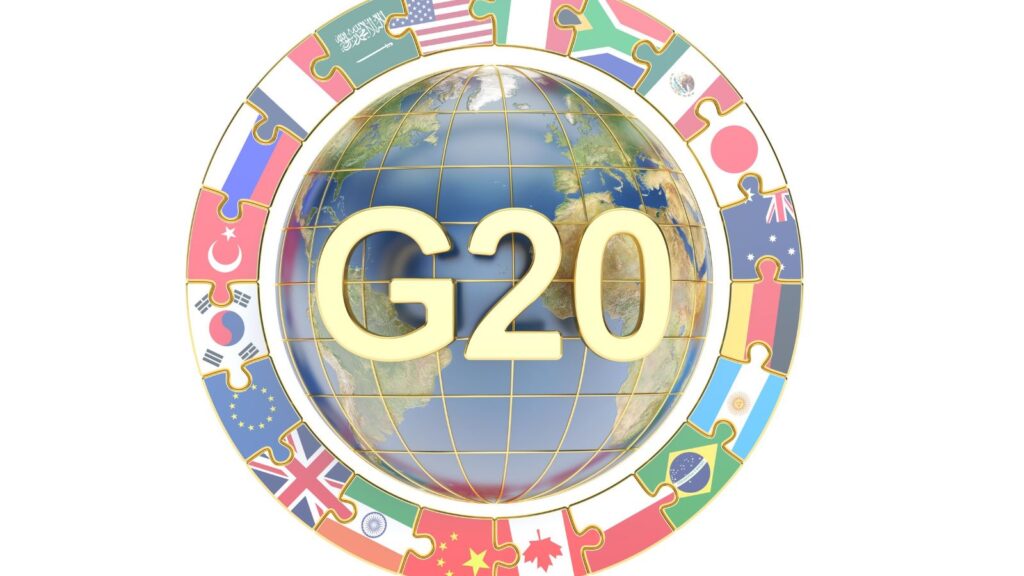
Canada arrived at the U.S.-hosted G20 foreign ministers’ meeting in Atlanta on October 30 amid a diplomatic divide reaching well beyond the conference room. Russia’s foreign minister was at the table, Ukraine was absent, and a planned group photograph had been abandoned after objections from Western delegations.
For Foreign Affairs Minister Anita Anand, the gathering meant balancing a firm defence of Ukraine with practical talks on shipping, food supplies and energy. President Donald Trump’s decision to ease certain Russia-related sanctions while seeking Russian diesel has sharpened tensions with allies.
With major trade and security questions still unresolved, the two-day meeting is an early test of whether the world’s leading economies can cooperate despite increasingly divergent foreign policies.
Atlanta Opens With an Appeal for Cooperation
The United States is chairing the G20 in 2026, making the October 30–31 foreign ministers’ meeting in Atlanta a major stop before the leaders gather in December. Secretary of State Marco Rubio opened the proceedings by describing interconnected threats to international trade, energy supplies and food markets. He urged governments to find practical ways to cooperate, even while serious disagreements remained unresolved. The first plenary focused on freedom of navigation and food security, topics that connect diplomatic disputes to the movement of essential goods.
The difficulty was evident before the talks began. Russia’s war against Ukraine, the conflict involving Iran and disagreements about trade policy were dividing participants whose economies depend on one another. Washington wanted attention on economic resilience and shared interests, but not every government agreed on the causes of today’s disruptions or how they should be addressed. For Canada, the value of attending lay partly in keeping those essential conversations going without suggesting agreement where none existed.
Anand Challenges Lavrov Face to Face
Foreign Affairs Minister Anita Anand reached Atlanta after meetings with European officials in Montréal, missing the opening plenary but joining the discussions later Friday. Her most pointed intervention came across the conference table from Russian Foreign Minister Sergey Lavrov. Anand told The Canadian Press that she had looked him in the eye and accused Russia of grave wrongdoing in Ukraine, including actions that damaged global energy and food supply chains. She also raised the transfer of Ukrainian children and threats to commercial vessels in the Black Sea.
According to Anand, Lavrov responded by repeating Moscow’s arguments and criticizing European actions against vessels carrying Russian oil. The exchange mattered because Canada did not have to choose between refusing contact and accepting Russia’s position. Anand said she did not believe Russia should have been invited, yet used the encounter to challenge its representative directly. It was an example of diplomacy conducted without the comfort of a shared interpretation of the war.
The Missing Family Photo Reveals a Deeper Split
The most visible sign of division was a photograph that never happened. G20 gatherings traditionally include a group portrait intended to show that rival governments can at least share a room. In Atlanta, diplomats from several countries refused to appear alongside Lavrov. A Western diplomat told Reuters that roughly one-third of the participants objected, including representatives of Canada and Australia. German Foreign Minister Johann Wadephul said appearing together would send the wrong impression while Russia continued its war in Ukraine.
Rubio’s team dropped the picture rather than allow a ceremonial moment to overwhelm the working sessions. European officials had discussed separate photographs, one including Lavrov and another excluding him, but that idea also underscored the rift. Similar discomfort surfaced in September when Washington hosted Russian Finance Minister Anton Siluanov at a G20 meeting in North Carolina. The recurring controversy illustrates how symbolic diplomatic gestures can become consequential when governments disagree about whether normal contact legitimizes unacceptable conduct.
Trump’s Russian Diesel Agreement Raises New Questions
The disagreement is about more than a guest list. On October 9, Trump announced an understanding with Vladimir Putin under which Russia would release more than 300,000 metric tons of diesel to American and global markets, with additional quantities planned afterward. His administration presented the move as a way to ease high fuel prices. The U.S. Treasury’s sanctions office issued General License 135, permitting specified transactions involving Russian-origin diesel, including its sale and importation.
On October 16, Trump also issued an executive order waiving measures under a newly enacted Russia and Iran sanctions law. Crucially, the order did not erase every existing U.S. sanction on Moscow. The distinction matters: Washington has eased particular restrictions while maintaining others. Critics worry that expanded Russian fuel sales could generate revenue for its war effort; the administration argues that energy relief and continued dialogue can serve wider interests. That tension helps explain why European governments view the G20 invitation so differently from Washington.
Canada and Europe Present a United Front on Ukraine
Anand’s arrival from Montréal highlighted another diplomatic track unfolding at almost the same moment. At the October 29–30 Canada–European Union summit, Prime Minister Mark Carney met European Council President António Costa and European Commission President Ursula von der Leyen. They launched an Alliance for the Future, designed to strengthen cooperation on economic security, strategic industries and foreign policy. Their joint statement also reiterated support for Ukraine’s sovereignty and pledged continued pressure on Russia and efforts to establish accountability.
The coordination was more than a broad declaration. In a separate meeting, Anand and EU foreign policy chief Kaja Kallas discussed sustaining assistance to Ukraine and responding to the Middle East crisis. For Ottawa, closer ties with Europe create more room to coordinate sanctions, defence and supply-chain policy while preserving its relationship with Washington. But agreement on principles does not automatically settle the harder questions of funding, military assistance or negotiations. Those decisions remain especially consequential for Ukrainians facing continued attacks.
Ukraine Is Absent, Yet a Major Missile Sale Moves Forward
Ukraine did not receive an invitation to the Atlanta ministerial, even though it had attended some earlier G20 gatherings as a guest. U.S. officials said their approach this year was to invite formal members, a rationale that drew scrutiny because Russia was represented and South Africa, itself a member, was excluded. The absence of a Ukrainian delegation left the country at the centre of the dispute without a seat in these particular discussions. Meanwhile, separate U.S.-brokered talks involving Kyiv and Moscow were being considered for November in Abu Dhabi.
The same Friday brought a significant counterpoint to claims that Washington had abandoned all military cooperation with Ukraine. The State Department approved a proposed $2.1-billion sale of 500 Patriot air-defence interceptors. Canada, Germany and Norway were identified as funding partners, rather than the United States paying for the purchase. Approval does not mean every missile has been delivered, but the decision underscored the complexity of U.S. policy: diplomatic accommodation toward Moscow exists alongside authorization of equipment for Ukraine’s defence.
South Africa’s Exclusion Opens Another Dispute
Russia was not the only country whose treatment raised questions about who gets a seat. South Africa, a founding G20 member and the group’s 2025 chair, was not invited by the United States to the Atlanta meeting. The two governments have been at odds, and senior American officials stayed away from South Africa’s G20 gatherings last year. Pretoria emphasized that its absence this time was not voluntary and argued that members should be able to participate on equal terms.
Canada objected to the exclusion. Anand said South Africa belonged at the table and linked its participation to the credibility of an effective, inclusive G20. This was a separate disagreement from Ottawa’s opposition to Russia’s conduct: the issue was whether the host could treat a formal member differently from others. Britain, which takes over the G20 presidency in 2027, has already said it looks forward to South Africa’s full participation. The dispute raises a practical question about whether the forum can remain representative when its rotating chair controls access.
Shipping Routes Make the Wars an Economic Issue
The agenda was not confined to arguments about governments and photographs. Canada’s official briefing identified the Strait of Hormuz, the Bab al-Mandab Strait and the Black Sea as priorities, alongside maritime security in the Indo-Pacific. These routes carry energy, agricultural goods and other essential cargo. Rubio placed navigation and food security at the centre of the opening session because a disruption in one region can quickly become a supply problem elsewhere. That is where geopolitics meets the price of fuel or the cost of moving food.
Anand said attacks on Ukrainian grain vessels were affecting Black Sea shipments relied upon by developing countries, while the conflict involving Iran had sharply constrained movement through Hormuz. She pressed for safe passage for commercial vessels, including ships carrying fertilizer, and encouraged other countries to consider Canada as an energy supplier. Even where ministers disagree over military strategy, protecting shipping can provide a narrow but valuable opening for cooperation. Success, however, depends on whether commitments translate into safer passage.
Trade and Critical Minerals Remain a Possible Meeting Point
Washington also wants the G20 to confront trade imbalances and dependence on concentrated supply chains. Reuters reported that Rubio has promoted the Pax Silica initiative to bring countries together around critical minerals and technologies important to artificial intelligence. Competition with China over rare earths adds urgency to those discussions, although the wars have complicated any attempt at a united strategy. Some ministers have already pursued statements backed by smaller groups when agreement across the whole G20 proved impossible.
Canada has reasons to remain engaged in that economic work. Its new agreement framework with the EU includes cooperation on critical raw materials, digital trade and potential European investment in Canadian projects. In Atlanta, Anand also met India’s foreign minister, Subrahmanyam Jaishankar; Ottawa said they discussed progress toward a comprehensive economic partnership agreement targeted for completion by year’s end. Such bilateral meetings show that even a divided summit can create opportunities for trade diversification and practical partnerships beyond the main negotiating table.
The Harder Test Awaits at December’s Miami Summit
The Atlanta gathering is intended to prepare the way for the G20 leaders’ summit at Trump National Doral in Miami on December 14–15. Washington has invited Putin, although his participation remained unconfirmed as foreign ministers met. His possible appearance would intensify the debate about engaging Moscow while the Ukraine war continues. It also places pressure on leaders to distinguish the act of negotiating from any suggestion that they endorse Russia’s conduct.
A sweeping joint communiqué from Atlanta looked unlikely as the meeting opened, according to diplomats and reporting by Reuters and The Associated Press. Progress may instead take the form of a chair’s summary, smaller coalitions or limited agreements on shipping, energy and economic resilience. Canada’s challenge is to pursue those practical results while maintaining its commitments to Ukraine and an inclusive G20. The measure of success will not be whether every delegation agrees on a closing photograph, but whether cooperation survives the disagreements that made the photograph impossible in the first place.
