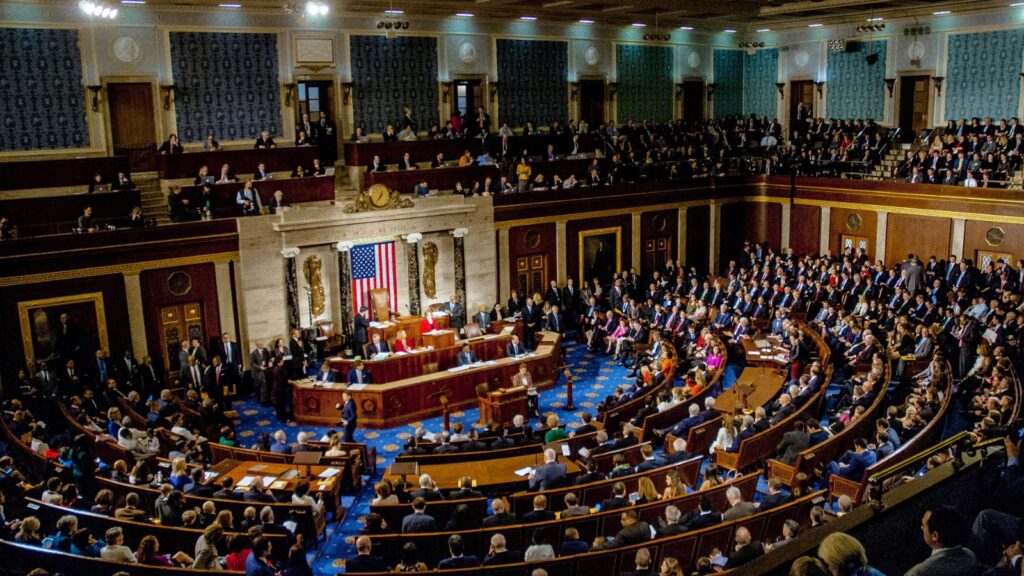
The political balance in Washington has shifted dramatically after Democrats won control of both chambers of Congress in the November 3, 2026, midterm elections, delivering a major setback to President Donald Trump. For Canada, the result creates a new challenge to the administration’s aggressive tariff strategy at a time when trade tensions continue to affect manufacturers, exporters, and consumers on both sides of the border.
Democratic lawmakers are preparing to increase scrutiny of Trump’s trade policies, potentially opening another front in the dispute over tariffs on Canadian products. However, congressional control does not automatically translate into tariff relief. With Trump retaining presidential powers and Canada-U.S. trade negotiations still unresolved, the election has changed the political landscape without ending the economic uncertainty facing Canadian businesses.
Democrats Deliver a Sweeping Defeat to Republicans in Congress
The November 3 midterm elections produced a remarkable political reversal, with Democrats securing majorities in both the House of Representatives and the Senate. The party made substantial gains in traditionally Republican states, including Texas, Kansas, and South Carolina, while capturing more than two dozen Republican-held House seats. The results went beyond the competitive districts that typically determine congressional control, demonstrating widespread dissatisfaction with the administration. For a president who had campaigned heavily for Republican candidates and urged voters to treat the midterms as a referendum on his leadership, the outcome represented a significant political defeat.
The implications extend well beyond domestic American politics. Democrats will assume control of the new Congress in January 2027, gaining the ability to direct committee investigations, determine legislative priorities, and challenge presidential policies more aggressively. The Democratic-controlled Senate will also have greater power over presidential nominations, while the House can use its oversight authority to examine government decisions. For Canadian officials, the outcome introduces influential new political actors into an already complicated trade relationship. However, Trump remains president, meaning the United States is entering a period of divided government rather than a complete reversal of its existing trade policies.
Rising Prices and Economic Frustration Helped Drive the Democratic Victory
Economic concerns played a central role in the election, with Americans expressing frustration over expensive groceries, energy costs, and broader uncertainty about household finances. According to national exit polling reported by Reuters, approximately 70% of voters wanted Congress to provide stronger checks and balances on the president. Half described the election as an opportunity to rebuke Trump. The ongoing conflict with Iran, concerns about government conduct, and dissatisfaction with the cost of living also contributed to Republican losses. Although tariffs were not the only issue shaping the results, their effects on businesses and consumer prices became part of the wider economic debate.
That connection is particularly important for Canada because the two economies remain closely integrated. American manufacturers purchase Canadian metals, energy products, automotive components, and industrial supplies, while Canadian companies depend heavily on American customers. When tariffs raise the cost of imported materials, businesses must decide whether to increase prices, absorb smaller profit margins, or reduce purchases. Research from the Federal Reserve Bank of New York has found that tariffs can also increase prices for domestically manufactured products through higher input costs. These economic effects have given Democratic lawmakers an argument that challenging Canadian tariffs could benefit American households and businesses as well as Canadian exporters.
Democrats Are Preparing to Challenge Trump’s Canadian Tariffs Directly
Canada is emerging as a particularly important target in the Democrats’ proposed trade-policy agenda. Senator Ron Wyden, the leading Democrat on the Senate Finance Committee, identified repealing tariffs on Canadian goods as a priority in comments reported by Reuters before the election. The party has already developed legislative proposals intended to restrict the president’s tariff powers. One example is Senate Bill 5390, introduced by Democratic leader Chuck Schumer in September 2026. Known as the End Trump’s Tariff Tax Act, the proposal seeks to repeal older statutory authorities used for certain presidential tariff measures and provide refunds for duties collected under those provisions.
The proposal is significant because it directly addresses Section 338 of the Tariff Act of 1930, a law Trump has used to impose additional duties on selected Canadian products. It also targets Section 122 of the Trade Act of 1974, which the administration previously used for temporary global tariffs. However, the legislation has not become law, and repealing these authorities would not automatically eliminate tariffs imposed through entirely different statutes. The bill would also need to be reintroduced in the new Congress if it does not pass before the current congressional term ends. Still, Democratic control could move these proposals from limited opposition initiatives into a more prominent legislative debate, with hearings and votes focused specifically on Canada’s treatment.
An Earlier House Vote Revealed Republican Divisions Over Canada Tariffs
Opposition to Trump’s Canadian tariffs was visible even before the midterm elections. On February 11, 2026, the Republican-controlled House of Representatives voted 219 to 211 in favour of a resolution challenging the national emergency declaration used to support tariffs on Canadian goods. Six Republicans joined nearly all Democrats in supporting the measure, demonstrating that resistance to the president’s trade policies was not limited to one political party. The vote was a rare congressional rebuke at a time when Republican leaders generally defended the administration’s approach. Nevertheless, the resolution did not become law and therefore did not produce the tariff relief its supporters were seeking.
That vote also concerned an earlier legal framework, rather than the entire collection of trade measures now affecting Canada. On February 20, the Supreme Court invalidated the administration’s use of the International Emergency Economic Powers Act to impose certain tariffs, but other tariff authorities remained available. The distinction matters because congressional votes against one particular legal measure cannot be treated as the repeal of every tariff affecting Canadian exports. With Democrats now preparing to control both chambers, similar votes could become more frequent. Their political significance could increase as well, particularly if Republicans representing manufacturing, agricultural, or border communities decide that challenging individual tariffs serves their constituents’ interests.
Trump Still Has Powerful Tools to Preserve His Tariff Strategy
Despite the Democratic victory, President Trump retains substantial authority over American trade policy. Congress has constitutional powers over trade and taxation, but lawmakers have delegated significant tariff authority to the executive branch through various statutes. The administration has used these powers to impose import duties, pursue trade investigations, and negotiate with foreign governments. Democrats can attempt to amend or repeal the underlying legislation, yet a bill passed by both chambers can still be vetoed by the president. Overriding that veto requires support from two-thirds of the members voting in each chamber, a threshold the incoming Democratic majorities are not expected to reach on their own.
Where Democrats may achieve more immediate political influence is through congressional oversight. Control of major committees would allow them to question administration officials, examine tariff exemptions, investigate the effects on smaller businesses, and demand greater transparency about trade negotiations. Such investigations could expose situations where tariffs impose unexpected costs on American companies or where exemptions benefit certain businesses but not their competitors. The White House, meanwhile, maintains that its tariff strategy is intended to protect American workers, manufacturers, and farmers from unfair trade practices. Those competing positions suggest the next Congress will produce more public confrontation over tariffs, but not necessarily a rapid change in the administration’s underlying trade objectives.
Canada’s Exporters Still Face a Complex Web of U.S. Tariffs
The tariff measures affecting Canada extend beyond a single rate or product category. On October 29, U.S. Customs and Border Protection issued guidance confirming changes to the products covered by additional 50% duties under Section 338. The revision removed 22 tariff classifications while adding 100 others, effective October 30. Separate tariff measures continue to affect industries including steel, aluminum, and automotive manufacturing. Importantly, these duties apply under different legal authorities and exemptions. The Bank of Canada’s October Monetary Policy Report estimated that the average U.S. tariff rate on Canadian goods had risen to 7.5%, compared with 5% in July, even though much bilateral trade remained tariff-free.
For Canadian companies, that complexity can be almost as challenging as the duties themselves. An exporter may face different rules depending on the product, its origin, the materials used, and whether it qualifies for preferential treatment under the Canada-United States-Mexico Agreement. A manufacturer producing machinery, for example, must understand how its finished equipment and imported components are classified before estimating the cost of reaching an American customer. The uncertainty can complicate negotiations over contracts, delivery schedules, and investment decisions. Democratic lawmakers could investigate how these measures are administered, but removing one tariff authority would not necessarily eliminate duties imposed through national-security or other trade provisions. Canadian exporters therefore still face a complicated regulatory environment.
Canadian Automakers and Industrial Communities Have Much at Stake
Few industries illustrate the importance of Canada-U.S. trade integration more clearly than automotive manufacturing. Vehicle production frequently involves components moving across international borders during different stages of assembly. A part manufactured in Ontario might be shipped to an American assembly plant before the completed vehicle returns to a Canadian dealership. Tariffs imposed at different points can increase costs throughout that process, making it difficult for manufacturers to plan production efficiently. Global Affairs Canada reported that Canadian exports of motor vehicles and parts to the United States fell by approximately $4.6 billion, or 5.9%, in 2025. Although multiple factors influence automotive trade, the figures demonstrate the pressure facing an industry exposed to changing cross-border policies.
The broader Canadian economy remains similarly dependent on American demand. Statistics released on November 4 showed that Canada’s merchandise trade surplus reached approximately $5.4 billion in September, supported heavily by energy and gold exports. Beneath that headline, however, total export volumes declined 4%, while shipments excluding major commodity categories weakened. More than 70% of Canadian merchandise exports were still directed toward the United States. For industrial communities across Ontario, Quebec, and other manufacturing regions, these developments highlight why trade-policy stability matters beyond financial markets. A prolonged tariff dispute can influence factory investment, supplier contracts, hiring decisions, and the financial security of households connected to export industries.
The CUSMA Review Adds Another Layer of Uncertainty
The Democratic victory arrives during an unresolved period for the Canada-United States-Mexico Agreement, known as CUSMA in Canada and USMCA in the United States. The three countries conducted their scheduled joint review on July 1, 2026, but Washington declined to extend the agreement for a new 16-year term in its existing form. That decision did not terminate the trade agreement. CUSMA remains in force, with its current term extending to 2036 unless it is terminated earlier under the agreement’s provisions. Without an agreed extension, the parties must continue reviewing its operation annually. The difference between declining an extension and withdrawing from the agreement is particularly important for businesses that rely on existing preferential trade rules.
A Democratic Congress could become influential in shaping the political discussion surrounding future CUSMA negotiations. Lawmakers may question administration officials about proposed automotive rules, tariff exemptions, market access, and the economic consequences of disrupting integrated North American supply chains. Canadian officials may also find more opportunities to present their concerns directly to congressional committees and representatives from affected American states. Nevertheless, the executive branch remains central to negotiating trade arrangements, and Democrats have not secured the power to independently dictate the president’s bargaining position. The agreement’s future will therefore depend on a combination of negotiations, congressional pressure, business interests, and decisions made by all three participating countries.
Carney Faces a New Political Opening, but No Guaranteed Trade Deal
Prime Minister Mark Carney enters this changed political environment while Canada and the United States are attempting to repair their strained trade relationship. On November 1, Carney described a conversation with Trump as constructive and said negotiating teams would continue working toward a possible agreement. By November 3, both leaders were expressing cautious optimism, although Carney emphasized that significant work remained unfinished. He also indicated that Washington had withdrawn some earlier demands, including a proposal that would have given the United States influence over Canada’s future trade agreements with other countries. Potential relief from tariffs on Canadian steel and automobiles has been under discussion, but no finalized agreement had been announced.
For Ottawa, the incoming Democratic majority offers another channel for explaining how American tariffs affect the wider North American economy. Canadian officials could strengthen relationships with congressional leaders and lawmakers representing states whose manufacturers rely on Canadian materials. At the same time, Carney must continue negotiating with Trump, whose administration will control American trade diplomacy for the remainder of his presidency. Canada is also pursuing greater economic diversification, including stronger cooperation with the European Union and efforts to expand exports beyond the American market. The election may improve Ottawa’s political leverage in certain areas, but it does not remove the need for difficult negotiations or guarantee concessions from Washington.
What Happens Next Could Matter More Than the Election Result Itself
The next important stage begins when the new Congress takes office in January 2027. Democratic committee leaders will be able to determine how aggressively they pursue investigations into tariff policy and whether to prioritize legislation restricting presidential trade powers. Businesses will be watching for hearings, proposed reforms, changes to product exemptions, and any progress in bilateral negotiations. The economic stakes are considerable. Canada’s Parliamentary Budget Officer estimated in October that the existing trade measures, if maintained, could leave Canadian real GDP approximately 1.4% below the level it might otherwise reach over the medium term. That projection underscores the financial importance of achieving greater trade stability.
Consumers also have a direct interest in how the dispute develops. Federal Reserve research has found that tariff increases affect retail prices through both direct import costs and slower increases in domestic production costs. Those effects can continue moving through supply chains months after duties are imposed. For Canadian households, the consequences are more indirect but still significant, particularly when exporters respond to weaker demand by postponing investment or limiting hiring. The Democratic takeover of Congress marks an important change in Washington’s political balance, and Trump’s Canada tariff strategy is likely to face substantially greater scrutiny. Yet the critical question remains whether that pressure produces actual policy changes. Until tariffs are revised, removed, or replaced by negotiated arrangements, Canadian businesses will continue operating with uncertainty despite the election’s dramatic outcome.
