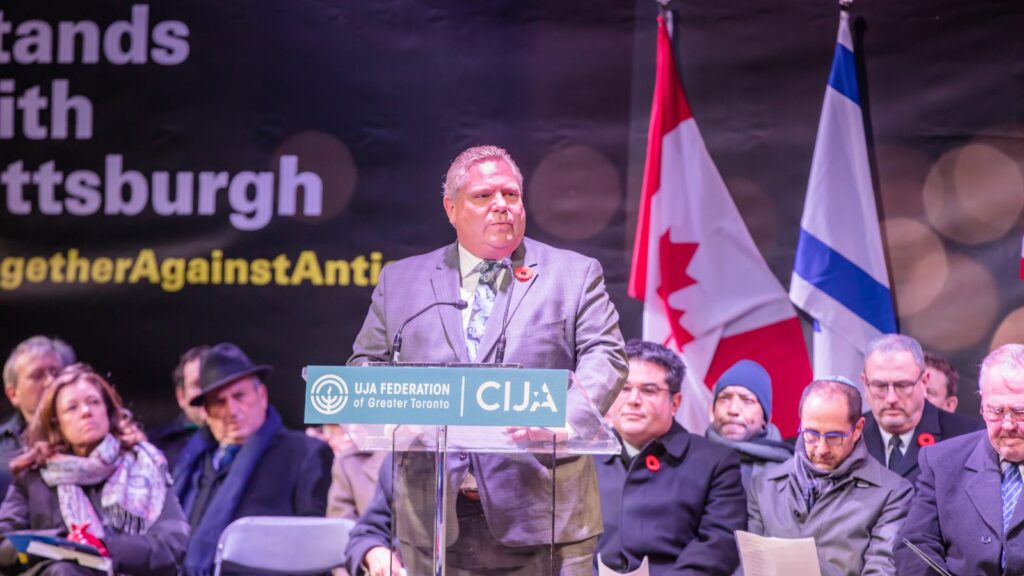
Ontario Premier Doug Ford is moving quickly to build new political relationships in Washington after Democrats captured control of both chambers of Congress in the November 3, 2026, U.S. midterm elections. With President Donald Trump threatening additional tariffs on Canadian goods beginning January 1, 2027, Ford has instructed provincial ministers to contact newly elected American representatives, senators and governors.
The premier welcomed the election results as an opportunity to strengthen Canada’s negotiating position, but warned that the trade conflict remains far from resolved. Ontario’s automotive manufacturers, steel producers and businesses dependent on cross-border trade continue to face considerable uncertainty. For workers and employers whose livelihoods depend on access to the American market, the coming weeks could prove especially important.
Ford Orders Ontario Ministers to Build Relationships With New American Lawmakers
Ford announced his instructions on November 4, just one day after American voters delivered a major political setback to Trump’s Republican Party. Speaking to reporters at Queen’s Park, the premier said Ontario cabinet ministers would begin establishing connections with newly elected members of Congress and state governors. He also wants ministers to travel to the United States after the incoming officials are sworn into office. The objective is to explain how tariffs affect businesses, workers and consumers on both sides of the border while building relationships that could help reduce trade tensions.
The initiative represents a practical shift toward engaging a new group of American political decision-makers rather than relying exclusively on negotiations with the Trump administration. Although the federal government remains responsible for Canada’s international trade negotiations, provincial governments can develop relationships with American state governments and lawmakers. Ford believes these connections could strengthen Ontario’s position as trade discussions continue. However, his proposed cabinet visits would occur after the new officials take office in January, creating an important timing challenge because Trump’s threatened tariff deadline falls at the beginning of that month.
Democratic Victories Create New Opportunities for Ontario
The November 3 midterm elections dramatically changed the political landscape in Washington. Democrats won control of both the House of Representatives and the Senate, ending Republican dominance of Congress and creating a divided government for the remainder of Trump’s presidency. The results were widely interpreted as a rejection of several administration policies, particularly amid growing concerns about affordability, high energy prices and the economic consequences of the war in Iran. For Ford, the outcome creates an opportunity to engage lawmakers who may be more receptive to Canadian concerns about tariffs and cross-border economic cooperation.
However, the transition will not produce immediate changes to American trade policy. Under the U.S. Constitution, the new congressional term begins January 3, 2027, unless lawmakers establish a different convening date. That is two days after Trump’s threatened tariff increase. Newly elected representatives can begin discussing economic priorities before taking office, but they cannot exercise their new congressional voting powers until their terms begin. This timing makes Ford’s outreach important for establishing longer-term political relationships, even if those relationships cannot prevent the January deadline from arriving.
Trump’s January 1 Tariff Threat Raises the Stakes
The urgency behind Ford’s instructions comes from Trump’s August 24 announcement threatening to increase U.S. tariffs on Canadian cars, trucks, automotive parts and steel to 50% beginning January 1, 2027. The announcement followed the collapse of bilateral trade negotiations and represented another escalation in an increasingly difficult relationship. At the time, Canadian-made vehicles were already facing tariffs of 25% on their non-American content under the applicable automotive measures, while many Canadian steel products were already subject to duties of 50%. The proposed January changes would therefore be particularly significant for vehicle manufacturers and parts suppliers.
Importantly, the January measures remain a threat rather than tariffs that have already taken effect. Trump has previously announced trade restrictions that were later modified or delayed, leaving manufacturers uncertain about the final outcome. That uncertainty creates problems of its own. Automakers negotiate supplier contracts, coordinate production schedules and plan investments months or years in advance. A potential 50% tariff complicates decisions about where to build vehicles and purchase components. Ontario officials are attempting to reduce those risks while negotiations remain possible, but there is no guarantee the proposed increases will be withdrawn.
Ford Celebrates the Election Results but Warns the Trade War Is Not Over
Ford responded enthusiastically to the Democratic victories, telling reporters that he was “doing cartwheels” as the election results became clear. He interpreted the outcome as evidence that American voters were unhappy with the direction of Trump’s economic policies. The premier highlighted affordability, gasoline prices and tariffs among the concerns influencing public opinion. His reaction reflected the hope that a less supportive Congress could increase political pressure on the president to reconsider trade restrictions affecting Canada’s manufacturing industries.
Nevertheless, Ford was careful to separate political optimism from economic reality. He warned that Trump continues to possess substantial authority over tariffs and that the January measures remain possible. The premier has also expressed concern that American protectionism could continue beyond Trump’s presidency. During an October 14 speech, he argued that Canada should prepare for a fundamentally changed trading relationship rather than assume the previous system will eventually return. That distinction matters because Democratic politicians do not necessarily oppose every form of import protection. Some support tariffs intended to protect American industries, meaning Ontario must make a persuasive economic case rather than depend entirely on partisan alignment.
Michigan Becomes a Major Focus of Ontario’s Diplomatic Strategy
Michigan is among the most important states in Ford’s outreach strategy because of its longstanding manufacturing relationship with Ontario. The two jurisdictions share automotive production networks that have developed over decades, with components regularly moving between factories on opposite sides of the Detroit-Windsor border. A Michigan government agreement signed with Ontario in 2023 estimated that the province and state together accounted for approximately 22% of North American automotive production. That interconnectedness makes disruptions to Canadian manufacturing a significant concern for American companies operating in the region.
Ford has expressed interest in working with Michigan’s incoming political leadership, including senator-elect Abdul El-Sayed, who won the state’s open Senate seat. The premier sees opportunities to emphasize economic growth, investment and employment as shared priorities. His broader approach also includes states such as Ohio, Georgia, South Carolina and Texas, where manufacturing businesses depend on relationships with Canadian suppliers and customers. The argument is straightforward: tariffs affecting Ontario manufacturers can also increase expenses for American businesses that purchase Canadian materials, components and finished products. By presenting the trade dispute as a shared economic challenge, Ford hopes to build support among officials whose own constituents could benefit from more predictable cross-border commerce.
Ontario’s Automotive and Steel Industries Face Growing Economic Pressure
Ontario’s dependence on American customers helps explain why Ford is treating the tariff dispute as an economic priority. According to federal economic development data published in 2026, Ontario exported approximately $60 billion worth of automobiles and automotive parts to the United States in 2025. Those shipments represented roughly 96% of the province’s automotive exports. The sector also employed more than 95,000 workers, making it an important source of manufacturing employment. Factories in communities such as Windsor, Oshawa, Oakville and Alliston depend on stable production schedules, supplier relationships and access to foreign markets.
The consequences of trade disruptions are already evident in Ontario’s steel industry. In September, Cleveland-Cliffs announced plans to idle finishing operations at Stelco’s Hamilton facility, with up to 500 employees potentially affected. The company cited tariffs and difficult market conditions, although it also indicated that some affected employees could be offered positions at another facility. For manufacturing workers, such announcements create concerns that extend beyond immediate job losses. Reduced shifts can affect household budgets, local businesses and the confidence needed to make long-term financial decisions. Ford’s outreach efforts are intended to address the conditions contributing to these pressures before additional tariffs make them more difficult to manage.
Ottawa Maintains Its Trade Strategy Despite the Political Shift in Washington
While Ford is preparing to strengthen Ontario’s relationships with incoming American officials, Prime Minister Mark Carney’s government is maintaining its existing approach to negotiations. Canada-U.S. Trade Minister Dominic LeBlanc said on November 4 that the Democratic victories would not significantly change Ottawa’s priorities. His comments came amid reports of renewed discussions between Canadian and American officials following the breakdown of formal negotiations in August. LeBlanc indicated that he expected to speak with U.S. Commerce Secretary Howard Lutnick and Trade Representative Jamieson Greer in the coming days.
There have also been cautious signs of diplomatic progress. On November 1, Trump said the two countries had the outline of a possible trade agreement, while Carney described recent discussions as constructive. However, neither side announced a completed deal, and important disagreements remained unresolved. Ottawa continues to pursue trade diversification and domestic industrial investment rather than relying entirely on American political developments. This creates two complementary approaches: the federal government negotiates directly with Washington while Ontario seeks to build support among governors and legislators. Both efforts aim to protect Canadian economic interests, but neither guarantees that the threatened January tariffs will be prevented.
Ford’s Outreach Faces Political Criticism and Diplomatic Risks
Ford’s decision to expand provincial diplomacy has also prompted questions about political responsibility and the best way to represent Canadian interests. Ontario Liberal interim leader John Fraser argued that the premier should follow the federal government’s lead in negotiations with Washington rather than pursue a competing political strategy. Fraser called for a coordinated national response focused on protecting workers and maintaining a clear negotiating position. His criticism reflects a broader challenge: provincial governments have substantial economic interests at stake, but Ottawa holds the primary responsibility for negotiating Canada’s international trade agreements.
The diplomatic environment has become particularly sensitive because of previous American accusations involving Canadian political activity. In October, the U.S. Embassy criticized statements and actions by Canadian officials, including Ford’s earlier anti-tariff advertising campaign, suggesting they could represent attempts to influence American elections. Carney and Ford rejected the suggestion of election interference, while political experts questioned whether the examples presented demonstrated such conduct. With the elections now completed, Ford’s proposed meetings can focus more directly on trade policy and economic cooperation. Nevertheless, maintaining relationships with both Democrats and Republicans will be important if Ontario wants its concerns to be viewed as shared commercial interests rather than partisan political demands.
Ontario and Ottawa Are Investing Billions to Reduce Trade Vulnerability
The diplomatic push comes alongside major government investments intended to strengthen Ontario’s industrial economy. On October 21, Ford and Carney announced an approximately $8.7 billion joint action plan supporting automotive manufacturing, steel production and critical mineral development. The package includes $2.5 billion for automotive manufacturers to modernize equipment and production facilities, with $1.5 billion provided by Ottawa and $1 billion by Ontario. Another $5.22 billion is committed to a joint steel industry fund designed to support modernization, encourage production diversification and develop new markets beyond the United States.
These investments illustrate how both governments are preparing for a future in which American market access may become less predictable. Automotive manufacturers need modern facilities to compete internationally, while steel producers must identify customers capable of replacing lost American sales. The plan also includes cooperation on critical mineral infrastructure in Northern Ontario, potentially strengthening supply chains for batteries, manufacturing and other strategic industries. However, industrial support cannot immediately replace the value of established American customers. The challenge is to protect existing manufacturing employment while encouraging investments that gradually reduce Ontario’s exposure to changes in U.S. trade policy.
The Next Few Months Will Test Whether New Political Relationships Can Influence Trump’s Trade Policy
The arrival of a Democratic-controlled Congress could significantly change the political debate surrounding Trump’s tariffs, but the limits of congressional authority remain important. Although the U.S. Constitution gives Congress responsibility for regulating foreign commerce, lawmakers have delegated substantial tariff powers to presidents through legislation. These include Section 232 of the Trade Expansion Act of 1962 and Section 338 of the Tariff Act of 1930. Democrats could conduct investigations, hold hearings and pursue legislation to restrict those powers. However, Trump could veto legislation intended to reverse his trade measures, and overriding a presidential veto requires a two-thirds majority in both chambers.
For Ontario, this means diplomatic engagement may produce political pressure without delivering immediate tariff relief. The coming months will reveal whether American lawmakers are prepared to challenge restrictions that affect manufacturers and consumers in their own states. Ford’s ministers will have opportunities to build support through discussions about employment, investment and integrated supply chains, while Ottawa continues negotiations with the Trump administration. Ultimately, the most important development will not be the number of meetings Ontario officials secure, but whether those conversations contribute to more stable trading conditions. Until a formal agreement is reached or the threatened tariffs are withdrawn, businesses on both sides of the border must continue planning for uncertainty.
