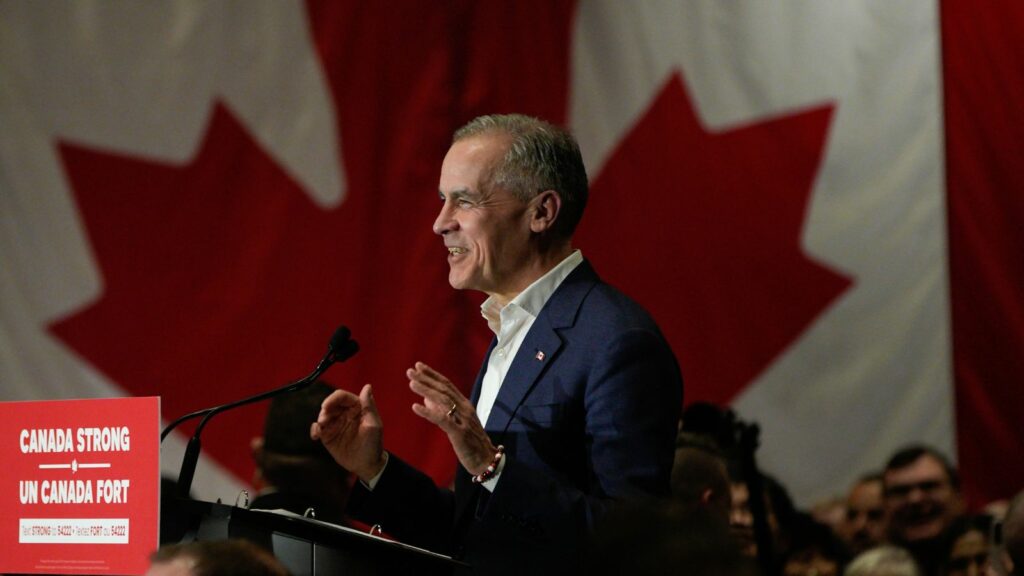
For the first time in more than 15 years, a Canadian federal budget has been released without mentioning foreign aid, international assistance, or international development. The omission in Prime Minister Mark Carney’s November 5, 2026 budget has surprised humanitarian organizations and raised questions about Canada’s changing priorities on the world stage.
A review by The Canadian Press found that every federal budget dating back to 2010 contained references to international assistance. This year’s document breaks that pattern at a time when humanitarian emergencies, geopolitical tensions, and reductions in global aid funding are placing growing pressure on vulnerable communities.
Although Ottawa has not announced additional foreign aid cuts, the silence comes after a previously announced $2.7-billion reduction over four years. Aid organizations now want answers about Canada’s long-term commitments and what the government’s upcoming foreign policy review will reveal.
A Historic Omission From Canada’s Federal Budget
The absence of foreign aid language marks an unusual departure from Canadian budget traditions. The Canadian Press examined federal budgets released since 2010 and found references to foreign aid, international assistance, or international development in every previous document reviewed. Carney’s 2026 budget, titled Masters of Our Destiny, contains none of those familiar references, despite outlining extensive plans for economic growth, national security, infrastructure, and international trade.
The contrast is particularly striking because the budget discusses Canada’s international ambitions. It emphasizes strengthening foreign partnerships, diversifying exports, and protecting Canadian interests during a period of economic uncertainty. Yet humanitarian development funding, historically one of the tools Canada has used to build international relationships, receives no substantive discussion.
Ukraine appears in the budget in connection with drone production, while humanitarian workers are mentioned only in relation to an existing permit system for organizations operating in areas controlled by designated terrorist groups. Neither reference outlines an international development strategy. The omission does not mean Canada has stopped providing aid, but it leaves a noticeable gap in the government’s explanation of its global priorities.
The $2.7-Billion Foreign Aid Reduction Remains in Place
The missing language becomes more significant when viewed alongside the Carney government’s spending decisions from 2025. That year’s federal budget introduced a $2.7-billion reduction to Canada’s International Assistance Envelope over four years, beginning in the 2026–27 fiscal year. The government presented the reduction as an effort to return international development spending to levels more consistent with those before the COVID-19 pandemic.
Global Affairs Canada explained that international assistance funding had expanded substantially to address extraordinary events, including the pandemic and Russia’s invasion of Ukraine. Officials argued that a more constrained fiscal environment required greater efficiency and a stronger emphasis on economic partnerships, security, and measurable outcomes.
Humanitarian organizations welcomed the fact that Budget 2026 did not announce further reductions. However, the previously announced cuts remain a concern. Development programs often depend on funding commitments extending across several years, particularly when supporting health systems, schools, and community infrastructure. Without clear future allocations, organizations face uncertainty about which projects will continue, which will shrink, and whether support for vulnerable communities will remain predictable.
Canada’s International Aid Spending Was Already Under Pressure
Canada remains a significant contributor to international development, but recent figures show that its financial commitment has been under pressure. According to the Organisation for Economic Co-operation and Development, Canada provided approximately US$7.2 billion in official development assistance in 2025, representing 0.32% of gross national income. That placed Canada ninth among the OECD’s Development Assistance Committee members by total volume and sixteenth when measured against national income.
The OECD reported that Canada’s aid spending declined by 2.3% in real terms in 2025. The country also remained below the longstanding United Nations target of allocating 0.7% of gross national income to official development assistance.
Canadian government figures provide another perspective. Ottawa reported $12.5 billion in international assistance during the 2024–25 fiscal year, including significant macroeconomic support to Ukraine. That Canadian-dollar total is not directly comparable with the OECD’s US-dollar figure for 2025 because the periods, classifications, and reporting methods differ. Together, however, the figures demonstrate that Canada’s international assistance commitments remain substantial even as the government moves toward tighter spending limits.
Humanitarian Organizations Say the Silence Sends the Wrong Message
For organizations delivering Canadian-funded programs overseas, the disappointment was not simply about dollars. It was about the absence of a clear commitment. Cooperation Canada, a coalition representing international development and humanitarian organizations, said the federal budget provided little direction on development cooperation at a time when conflict, displacement, and humanitarian emergencies are creating enormous needs.
Results Canada experienced that silence firsthand. Policy director Lindsay Sheridan described how her organization searched the budget for terms associated with its work, including international assistance, vaccines, tuberculosis, and famine, without finding the expected references. The organization even shared an image of a deflated balloon to express its disappointment.
UNICEF Canada also criticized the lack of international development commitments, arguing that investments in children should not end at Canada’s borders. The organization cited polling showing that 82% of Canadians believe the country should do at least as much as other nations, if not more, to help children in the world’s poorest countries. For advocates, the central concern is that humanitarian assistance appears increasingly disconnected from the government’s larger economic and foreign policy narrative.
Foreign Affairs Minister Anita Anand Insists Aid Remains a Priority
Despite the criticism, Foreign Affairs Minister Anita Anand has maintained that Canada’s commitment to international assistance remains intact. Speaking on Parliament Hill on November 6, Anand said development assistance continues to be a priority for Global Affairs Canada. She pointed to humanitarian support provided to Cuba, Lebanon, Gaza, and Sudan during 2026 as evidence that the government is still responding to major international emergencies.
Those commitments are supported by official announcements. In March, Canada announced more than $37.7 million in humanitarian assistance for Lebanon, including support for food, medical services, shelter, and clean water. In June, Ottawa announced another $100 million in humanitarian funding for civilians in Gaza and the West Bank. Canada also announced additional assistance for Cuba and committed funding to address the humanitarian crisis in Sudan.
These examples demonstrate that humanitarian operations continue despite the budget’s lack of discussion. However, emergency announcements do not necessarily provide the predictability needed for long-term development programs. Anand has said an updated foreign policy outlining Canada’s approach to development will arrive within weeks. That document could provide the explanation missing from the federal budget and clarify how humanitarian priorities fit within the government’s broader international strategy.
The Global Humanitarian Crisis Makes the Timing Particularly Significant
The budget’s silence arrives during a difficult period for international humanitarian operations. Global Affairs Canada estimated that more than 239 million people would require humanitarian assistance worldwide in 2026. Conflicts, displacement, food insecurity, and disasters continue to place enormous demands on organizations responsible for delivering essential services. Meanwhile, reductions in international aid by major donor countries have increased pressure on the remaining funding available.
In Sudan, prolonged conflict has displaced families and damaged essential services. In Gaza, humanitarian organizations continue working to address urgent civilian needs. Violence and instability in the Democratic Republic of the Congo have also placed communities under severe pressure. Cooperation Canada identified these emergencies when explaining why sustained international assistance matters.
The practical consequences of funding uncertainty extend far beyond diplomatic discussions in Ottawa. Humanitarian resources support activities such as emergency medical treatment, nutrition programs, safe drinking water, and assistance for displaced families. Long-term development funding can also help maintain schools, train health workers, and strengthen community resilience. For families depending on these services, the distinction between emergency relief and predictable development support can make an enormous difference.
Previous Conservative and Liberal Governments Made Aid a Visible Priority
Canada has a history of making international development a recognizable part of its foreign policy under governments from different political parties. In 2010, former Conservative prime minister Stephen Harper used the G8 summit in Muskoka to champion maternal, newborn, and child health. Canada committed $2.85 billion over five years, including $1.1 billion in new funding, to improve health outcomes in developing countries.
The initiative focused on practical interventions such as maternal care, disease prevention, nutrition, and stronger health systems. It also helped establish a clearly identifiable Canadian priority that could attract support from international partners.
Under former Liberal prime minister Justin Trudeau, Canada similarly used its 2018 G7 presidency to emphasize education for women and girls affected by conflict and crisis. Canada and international partners announced nearly $3.8 billion in combined commitments, including a $400-million Canadian contribution.
Both initiatives demonstrate how governments can use specific development priorities to create international partnerships and measurable commitments. Aid organizations now argue that Carney’s government needs a comparable explanation of where Canada intends to lead, particularly as international cooperation becomes increasingly connected to economic security and geopolitical competition.
Canada’s New Trade Strategy Raises Questions About the Role of Aid
Carney’s 2026 budget places considerable emphasis on economic resilience, foreign investment, trade diversification, and reducing Canada’s dependence on the United States. The government has also indicated that its international assistance policies will increasingly support partnerships that advance Canadian prosperity and security alongside development objectives.
That approach reflects a broader effort to connect diplomacy, trade, and economic cooperation. Supporters of stronger economic partnerships argue that development assistance can encourage investment, strengthen institutions, and create benefits for both Canada and its international partners.
However, humanitarian advocates caution that development assistance must continue prioritizing poverty reduction and vulnerable populations. Canada’s Official Development Assistance Accountability Act requires qualifying assistance to contribute to poverty reduction, consider the perspectives of people experiencing poverty, and remain consistent with international human rights standards.
The ONE Campaign has proposed an annual $5.5-billion official development assistance commitment, alongside stronger economic partnerships with African countries. Its recommendations include aligning development, trade, and investment institutions while protecting global health funding. The debate is therefore not necessarily about choosing humanitarian assistance over economic interests. It is about whether Canada’s new international strategy can advance both without weakening its longstanding development responsibilities.
The Upcoming Foreign Policy Review Has Become a Major Test for Carney
Attention is now shifting toward the federal government’s expected foreign policy update. Anand said on November 6 that the review would be released within weeks and would include Canada’s approach to international development. For humanitarian organizations, that creates an opportunity to obtain answers that were missing from the budget.
The House of Commons Standing Committee on Finance had already called for greater transparency in the International Assistance Envelope. Its pre-budget recommendations urged the government to protect effective official development assistance and ensure that allocations remain guided by poverty and fragility. Those recommendations now provide a benchmark against which the forthcoming policy can be assessed.
Several important questions remain unresolved. Will Ottawa provide a clearer multiyear funding plan? Which global health and development programs will be affected by the existing reductions? How will the government balance humanitarian needs against its growing emphasis on trade, security, and economic partnerships?
Carney’s government has emphasized that Canada must become more independent and influential in a changing world. The challenge ahead is demonstrating how international assistance fits into that vision. For organizations working in vulnerable communities, a clear funding commitment may ultimately matter more than another statement of diplomatic ambition.
