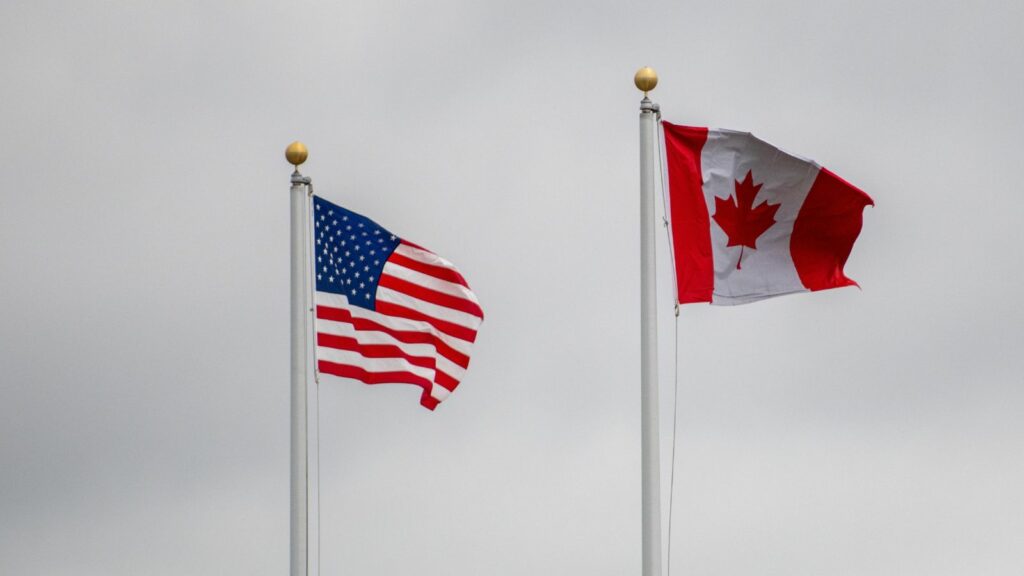
For decades, Canada could count on the United States as its closest economic partner and most important security ally. That confidence has been shaken, and even a sweeping electoral defeat for President Donald Trump’s Republican Party may not be enough to restore it.
Following the November 3, 2026, midterm elections, which handed Democrats control of both chambers of Congress, a senior Canadian official delivered a warning about the future of Canada–U.S. relations. Ottawa is not preparing for a return to business as usual.
The message reflects a fundamental shift in Canadian thinking. Trade agreements, political friendships, and shared history still matter, but they no longer provide the certainty Canadians once expected. With tariffs disrupting industries and Washington’s political direction increasingly unpredictable, Canada is preparing for a future in which its relationship with the United States remains essential but permanently different.
A Senior Canadian Official Delivers a Stark Warning
In a November 7 report by The Washington Post, a senior Canadian official offered a revealing assessment of how Ottawa views the American political landscape after the midterm elections. Speaking anonymously to discuss U.S. political developments candidly, the official expressed reassurance that American democratic institutions had functioned through another contentious election. However, that reassurance did not translate into expectations of a return to the relationship Canada once enjoyed with Washington. The official indicated that Canada would continue pursuing its existing course rather than fundamentally reconsidering its strategy because Democrats had won control of Congress.
The most telling observation was that “Folks here don’t believe the old ways are ever coming back and are conducting themselves accordingly.” The statement was not a formal government announcement, and the official’s identity was not disclosed. Nevertheless, it closely reflects Prime Minister Mark Carney’s publicly stated approach to the United States. Ottawa increasingly treats American political uncertainty as a lasting challenge rather than a temporary disruption. For Canadian businesses, provincial governments, and workers whose livelihoods depend on cross-border trade, that distinction could influence investment decisions for years.
Democrats’ Sweeping Victory Doesn’t Remove Trump From Power
The November 3 midterm elections delivered a major political setback for Trump’s Republican Party. Democrats captured both the House of Representatives and the Senate, gaining influence over legislation, government spending, and congressional oversight. Victories in traditionally Republican territory, including Texas, Kansas, and South Carolina, demonstrated the scale of voter dissatisfaction. Concerns about living costs, the Iran war, and the administration’s economic policies contributed to the result. For many Canadians watching from across the border, the outcome raised hopes that Washington might finally reconsider its confrontational trade policies toward one of its closest economic partners.
However, the election did not remove Trump from the White House. Democrats will take control of Congress in January 2027, while Trump remains president until the end of his term in January 2029. He retains substantial executive authority over trade and foreign policy, along with the power to veto legislation passed by Congress. Overriding a presidential veto requires two-thirds support in both chambers. Democratic leaders have identified reversing Trump’s tariffs as a priority, but accomplishing that goal will require overcoming significant political and legal obstacles. Ottawa understands that a change in congressional leadership does not automatically mean a change in American trade policy.
Canada’s Economic Dependence Makes the Situation Especially Serious
Canada’s relationship with the United States is not simply a diplomatic arrangement between neighbouring governments. It is deeply embedded in the country’s economy. Statistics Canada reported that 71.7% of Canadian merchandise exports went to the United States in 2025, down from 75.9% in 2024. Although that decline signals some diversification, it also demonstrates how dependent Canadian producers remain on American customers. Automobiles, energy products, agricultural goods, machinery, and manufactured components move across the border through supply chains that have developed over generations. For many Canadian businesses, replacing American customers is considerably more complicated than finding a different shipping destination.
The economic relationship works in both directions. U.S. Commerce Department figures show that Canada was the leading export market for 32 American states based on 2024 trade patterns. Manufacturers in Michigan, energy companies in Texas, and agricultural producers throughout the Midwest all have commercial interests tied to Canada. This interdependence explains why trade disputes can create unexpected consequences on both sides of the border. A tariff intended to protect an American manufacturer may simultaneously raise costs for another American company relying on Canadian materials. Yet economic integration does not guarantee political stability. Canadian policymakers are increasingly questioning whether the advantages of geographic proximity outweigh the risks of excessive dependence on a single trading partner.
Trump’s Tariffs Have Already Changed Business Decisions
The consequences of Washington’s trade policies extend well beyond political arguments. The Bank of Canada’s October 2026 monetary policy analysis estimated that the average U.S. tariff rate on Canadian goods had increased to 7.5%, compared with 5% in July. Approximately 80% of Canadian goods exports to the United States still remained tariff-free, but targeted industries faced much heavier restrictions. Steel, aluminum, automotive manufacturing, and forestry businesses have encountered substantial additional costs and uncertainty. For manufacturers operating on narrow profit margins, the possibility of another tariff increase can be enough to delay hiring, postpone equipment purchases, or reconsider where future production should take place.
One particularly revealing example comes from Canadian kitchen cabinet manufacturer Cabico. Reuters reported in November that the company, which had previously shipped about 90% of its production to the United States, experienced a 25% decline in American shipment volumes compared with 2024. It also laid off more than a quarter of its roughly 700 employees. Company president Alain Ouzilleau was considering moving some production to the United States as American tariffs on Canadian cabinets were scheduled to increase to 50% in January 2027. That possibility illustrates a broader danger for Canada. Even if tariffs are eventually reduced, factories, employment opportunities, and capital investments redirected elsewhere may not automatically return.
Ottawa Isn’t Changing Its Strategy Because Democrats Won
Canada’s trade leadership has made clear that the American election results will not produce an immediate strategic reversal. On November 4, Canada–U.S. Trade Minister Dominic LeBlanc told reporters that the Democratic victory would not significantly affect Ottawa’s priorities or ongoing work. He also indicated that he expected to speak with U.S. Commerce Secretary Howard Lutnick and Trade Representative Jamieson Greer in the coming days. The message was carefully balanced: Canada would continue negotiating with Trump’s administration while maintaining its broader objective of reducing its economic vulnerability. Political developments in Washington were important, but they would not dictate every decision made in Ottawa.
Prime Minister Carney reinforced that approach on November 6. He welcomed efforts by congressional Democrats to eliminate tariffs and restore freer trade, arguing that such changes would benefit families and workers in both countries. However, he also acknowledged that he had not spoken directly with Democratic lawmakers about their potential tariff-repeal legislation. His government continued to pursue negotiations aimed at securing an acceptable agreement with the White House. The distinction matters because congressional Democrats can introduce legislation, hold hearings, and pressure the administration, but negotiations with the executive branch remain critical. For Ottawa, the practical objective is to secure better conditions without making Canada’s economic future dependent on the next American election.
The Future of CUSMA Remains a Major Source of Uncertainty
The Canada–United States–Mexico Agreement, known as CUSMA in Canada and USMCA in the United States, remains one of the most important foundations of North American commerce. The agreement entered into force on July 1, 2020, and was designed to provide a more predictable framework for trade among the three countries. However, its first mandatory joint review on July 1, 2026, produced a significant setback. The United States declined to renew the agreement in its existing form, while Canada and Mexico supported extending it. Washington’s decision introduced a new level of uncertainty for companies that depend on stable continental trade rules.
Importantly, the American refusal to extend CUSMA did not immediately terminate the agreement. Its existing provisions remain in effect, and the current term continues until July 2036 unless the agreement is extended or a country formally withdraws. Because the three governments did not unanimously agree to an extension, annual reviews will take place until they reach an agreement or the current term expires. That process creates recurring opportunities for negotiation but also recurring uncertainty. Automobile manufacturers, agricultural exporters, and companies planning major industrial investments must consider the possibility that trade rules could change during the life of their projects. Democratic control of Congress may affect future negotiations, but it does not resolve the underlying disagreement over the agreement’s direction.
Canada Is Investing in a Future Beyond the American Market
Prime Minister Carney’s government has increasingly framed trade diversification as an economic necessity rather than an optional ambition. Budget 2026 outlines approximately $6.6 billion in trade diversification and infrastructure strategies and maintains the objective of doubling Canadian exports to markets outside the United States by the end of 2035. The strategy involves strengthening transportation infrastructure, expanding relationships with international partners, and helping Canadian businesses reach buyers beyond North America. Europe, Asia, and emerging markets represent potential opportunities for Canadian energy, agricultural products, advanced manufacturing, and services. The government views these relationships as important safeguards against future American trade disruptions.
There is already evidence of changing trade patterns. Statistics Canada reported that Canadian merchandise exports to non-U.S. destinations increased 17.2% in 2025, while exports to the United States declined 5.8%. Still, diversification is neither straightforward nor guaranteed. Canada’s September 2026 merchandise trade figures showed non-U.S. destinations accounting for 29.8% of goods exports, illustrating how dominant the American market remains. Shipping goods overseas involves different transportation costs, regulations, customer relationships, and competitive pressures. A Canadian manufacturer cannot necessarily replace an established American customer with a European buyer overnight. The longer-term objective is therefore not to abandon the United States, but to ensure that future American trade disputes cannot threaten such a large portion of Canada’s economic activity.
The Change Extends Beyond Trade Into National Security
Canada’s reassessment of its American relationship also reaches into defence and national security. In October 2026, Ottawa released its Plan for a Stronger Canada, a national security strategy emphasizing sovereignty, strategic autonomy, and resilience. The document acknowledged that the international environment had changed substantially and argued that economic integration, once viewed primarily as a source of strength, could also create vulnerabilities. It called for stronger Canadian capabilities in areas including intelligence, defence production, critical minerals, technology, and Arctic security. The strategy continues to recognize the importance of cooperation with the United States, particularly through the North American Aerospace Defense Command.
Canada is also expanding its defence commitments. The federal government reported reaching NATO’s 2% of gross domestic product defence-spending benchmark in the 2025–26 fiscal year, while NATO members have committed to a broader 5% defence and security investment target by 2035. Budget 2026 additionally proposed $6 billion over ten years, beginning in 2027–28, to expand the capabilities of the Canadian Security Intelligence Service and reduce reliance on foreign partners. These measures do not mean Canada intends to sever its military or intelligence relationships with Washington. Instead, they reflect a growing emphasis on having sufficient domestic capabilities to protect Canadian interests even when decisions made by an ally become difficult to predict.
Canadians Are Changing Their Habits as Trust Erodes
The deterioration in Canada–U.S. relations has also affected ordinary Canadians in ways that extend beyond politics. Statistics Canada found that Canadian-resident return border crossings from the United States declined 25.4% in 2025 compared with 2024. While travel began recovering during parts of 2026, August return trips from the United States remained 23.2% below their August 2024 level. Those figures suggest that travel patterns have not simply returned to where they stood before tensions escalated. Vacation decisions, cross-border shopping habits, and attitudes toward American products have become connected to larger questions about Canada’s relationship with its neighbour.
Interviews conducted by The Canadian Press after the November midterms illustrated how personal those decisions have become. Some Canadians welcomed the Democratic victory while remaining reluctant to resume American vacations or abandon their preference for Canadian-made products. Others expressed hope that congressional opposition could eventually reduce tensions. Polling conducted by the Angus Reid Institute earlier in 2026 found that 79% of surveyed Canadians held an unfavourable view of Trump, although attitudes toward Americans themselves were more nuanced. These distinctions matter. A political disagreement does not necessarily eliminate personal friendships or cross-border family connections, but damaged confidence can influence consumer behaviour long after an election. Rebuilding public trust may prove more difficult than negotiating a reduction in tariffs.
The Next Chapter May Be More Cooperative Without Returning to the Past
There are still powerful reasons for Canada and the United States to improve their relationship. According to the U.S. Department of Commerce, the two countries exchanged more than US$2.5 billion in goods and services daily in 2024. Their economies remain closely connected through manufacturing supply chains, energy infrastructure, investment, and employment. Democratic lawmakers who represent states dependent on Canadian trade have incentives to challenge policies that increase costs for local businesses. Carney has welcomed their efforts, while maintaining that Canada must continue negotiating directly with Washington. These developments create opportunities for cooperation, even if the broader relationship remains more contentious than Canadians would prefer.
The central question is no longer whether Canada and the United States can cooperate. They plainly can, and in many areas they must. The harder question is how much confidence Canada should place in the long-term stability of American commitments. The senior Canadian official’s warning reflects a government increasingly unwilling to assume that political change will restore the certainty of previous decades. Reduced tariffs, a successful trade agreement, or improved diplomatic relations would all be meaningful achievements. None would necessarily erase the lessons Canadian policymakers and businesses have learned. Canada’s emerging strategy is built around preserving the benefits of its American partnership while developing enough independence to withstand the next disruption, regardless of which political party controls Washington.
