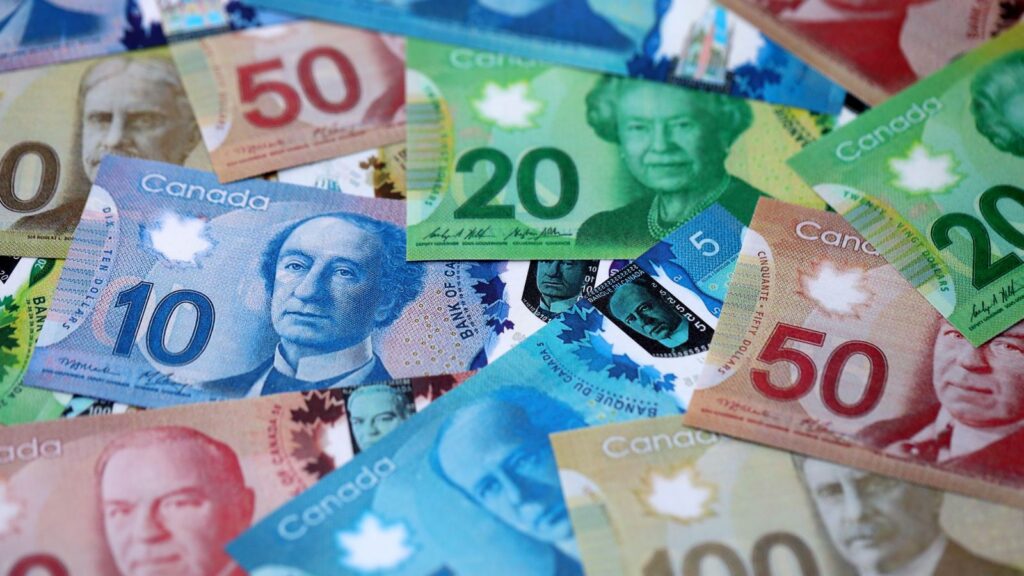
The Canadian dollar is facing renewed pressure as shifting geopolitical tensions, falling oil prices, and weakening domestic economic conditions create fresh challenges for the currency. While the loonie remained relatively stable against the U.S. dollar on November 9, 2026, it underperformed most other major currencies as investors reacted to President Donald Trump’s latest comments about Iran.
Trump’s suggestion that renewed American military strikes were unlikely helped push crude oil prices lower, reducing an important source of support for Canada’s resource-dependent economy. Meanwhile, disappointing Canadian employment figures and stronger U.S. labour market conditions complicated the outlook for interest rates.
Together, these developments highlight how international politics, commodity markets, and economic uncertainty can influence the Canadian dollar, with potential consequences for businesses, consumers, and the broader economy.
Canadian Dollar Stays Near an 18-Day Low Despite Broader Currency Gains
The Canadian dollar showed little movement against its American counterpart on Monday, November 9, trading around C$1.4135 per U.S. dollar, equivalent to approximately 70.75 U.S. cents. That placed the currency close to the 18-day low of C$1.4137 reached the previous Friday. Although the daily movement appeared modest, the broader comparison painted a less encouraging picture. The loonie struggled to benefit from improving global market sentiment, suggesting that domestic economic concerns and weaker commodity prices were limiting demand for Canadian assets.
Among the Group of Ten major currencies, only the Canadian dollar and Swiss franc failed to gain against the U.S. dollar. Other currencies benefited as investors grew more comfortable taking risks following reduced concerns about escalating conflict in the Middle East. For Canada, the divergence was significant. A currency that remains unchanged while competing currencies strengthen can still lose purchasing power against those currencies, creating additional challenges for international purchasing and trade.
Trump’s Comments About Iran Trigger a Major Shift in Oil Markets
President Donald Trump’s latest remarks about Iran became an important catalyst for financial markets. On November 8, Trump indicated that additional American military strikes were highly unlikely if diplomatic negotiations continued making progress. The comments offered investors some reassurance after months of conflict and uncertainty surrounding energy supplies in the Middle East. The following day, Trump met with Qatar’s prime minister and emphasized that regional partners, including Qatar and Saudi Arabia, favoured a peaceful resolution. However, he also maintained that American military forces remained prepared to act if necessary.
The distinction between diplomatic optimism and an actual agreement remains important. The United States has maintained its naval blockade against Iran, while disagreements over nuclear restrictions and other conditions have complicated negotiations. Nevertheless, commodity markets often respond to anticipated developments before concrete changes occur. Trump’s comments reduced expectations of another immediate military escalation, encouraging traders to reassess how much geopolitical risk should be reflected in crude oil prices. That reassessment contributed to a substantial decline in oil futures.
Oil Prices Drop Sharply as Fears of Supply Disruptions Ease
Crude oil prices experienced a significant selloff on November 9 as investors responded to the possibility of reduced hostilities involving Iran. Brent crude futures settled at $92.57 per barrel, down $5.75, or 5.85%, during the session. U.S. West Texas Intermediate futures declined $3.98, or 4.38%, finishing at $86.85 per barrel. Selling continued after the regular settlement, with Brent eventually falling by more than $7 per barrel compared with its previous settlement level. These movements followed an already difficult week for oil markets.
Brent had lost approximately 16% during the preceding week, marking its steepest weekly decline since the beginning of the COVID-19 pandemic. The magnitude of the retreat demonstrated how rapidly market sentiment had shifted from concerns about severe supply disruptions toward hopes of improved regional stability. For oil-producing economies such as Canada, that change carries important financial implications. Lower crude prices can reduce expected export revenues, influence investment decisions by energy companies, and weaken one of the economic factors that traditionally supports the Canadian dollar.
Canada’s Energy Exports Explain Why Falling Oil Prices Matter
Canada’s relationship with crude oil helps explain why developments thousands of kilometres away can influence the value of its currency. According to the Canada Energy Regulator, Canadian crude oil exports reached approximately $140 billion in 2025, with shipments averaging 4.3 million barrels per day. About 90% of those exports went to the United States, demonstrating the close connection between Canadian energy production and American demand. Oil revenues therefore represent an important component of Canada’s international trade, particularly for producing regions such as Alberta and Saskatchewan.
When global crude prices rise, Canadian energy producers can receive more revenue for their exports, potentially increasing demand for Canadian dollars and improving the country’s terms of trade. The Bank of Canada has identified this relationship in its economic modelling. Falling prices can produce the opposite effect by reducing expected export earnings and weakening the currency’s commodity-related support. However, the relationship is not automatic. Interest rates, international investment flows, and broader financial-market conditions can sometimes outweigh movements in oil prices, which helps explain why the loonie’s response may be smaller than the underlying commodity decline.
Global Oil Supply Is Recovering, but Middle East Risks Remain
The recent weakness in oil prices reflects more than changing diplomatic expectations. According to research reported by Reuters, JPMorgan estimated that the global oil market returned to a surplus of approximately 1.1 million barrels per day in September, expanding to 1.4 million barrels per day in October. Recovering Middle Eastern exports, increased production elsewhere, and weaker demand contributed to the shift. HSBC also raised its expectations for Saudi Arabian crude production as regional exports recovered faster than previously anticipated. These developments suggest that some of the severe supply pressures created by the conflict have started to ease.
However, the outlook remains uncertain. The International Energy Agency’s October assessment warned that global oil balances could remain tight through the end of 2026, particularly because of disruptions to diesel and other refined petroleum products. Meanwhile, attacks involving vessels near the Strait of Hormuz have continued, and the American naval blockade remains in place. The difference between improving crude availability and continuing security concerns creates an unpredictable environment. Any renewed escalation could quickly restore some of the geopolitical premium that oil traders have recently removed from prices.
Canada’s Weakening Labour Market Adds Pressure to the Loonie
While international developments captured investors’ attention, Canada’s latest employment figures provided another reason for caution. Statistics Canada’s October Labour Force Survey, released November 6, showed that employment declined by approximately 4,700 positions during the month. Although the decrease was relatively small, it followed losses of 68,000 jobs in September and 42,000 in August. The unemployment rate increased from 6.5% to 6.7%, reaching its highest level since April. Together, those figures indicated that Canada’s labour market was struggling to regain momentum after a difficult period.
The underlying details were equally concerning. Private-sector employment fell by 53,000 positions in October, although a gain of 50,000 public-sector employees offset much of that decline. Youth unemployment climbed to 13.7%, while average hourly wage growth slowed to 2.2% annually from 2.3% in September. These developments matter for currency markets because weaker employment can reduce expectations for additional interest rate increases. For households, the implications are more immediate: fewer opportunities, slower wage growth, and greater uncertainty about future income can all affect consumer confidence and spending decisions.
Stronger U.S. Employment Data Highlights a Growing Economic Divide
The American labour market presented a noticeably different picture during October. According to the U.S. Bureau of Labor Statistics, employers added 165,000 nonfarm payroll jobs, compared with an increase of 60,000 in September. The unemployment rate edged down from 4.2% to 4.1%, while employment gains were concentrated in professional and business services, health care, and transportation and warehousing. Professional and business services alone added approximately 70,000 jobs, indicating that several major industries continued hiring despite concerns about inflation and geopolitical uncertainty.
This contrast matters because foreign-exchange investors closely monitor the relative strength of neighbouring economies. Stronger American employment can support expectations that the Federal Reserve will maintain restrictive monetary policy or increase interest rates further. At the same time, weaker Canadian hiring may encourage a more cautious approach from the Bank of Canada. TD Securities strategists, including Jayati Bharadwaj, indicated that diverging employment conditions could help keep the U.S. dollar above C$1.40. Although exchange rates respond to numerous factors, differences in economic momentum can influence where international investors decide to place their capital.
Bank of Canada Faces Difficult Decisions as Economic Conditions Change
The Bank of Canada is navigating a complicated economic environment in which slowing employment growth and persistent inflation are pulling monetary policy in different directions. On October 28, the central bank increased its benchmark interest rate by 25 basis points to 2.5%, marking its first increase since July 2023. The decision reflected concerns that elevated energy prices could spread through the economy, raising transportation, production, and consumer costs. Policymakers projected that inflation could reach approximately 3.5% by the end of 2026, remaining above the central bank’s long-term 2% target.
However, the latest decline in crude oil prices introduces another consideration. Sustained decreases in energy costs could eventually ease inflationary pressure, potentially reducing the urgency for further rate increases. At the same time, rising unemployment and slowing wage growth raise questions about how much additional borrowing-cost pressure Canadian households and businesses can absorb. The Bank has emphasized that future decisions will depend on incoming economic evidence. This uncertainty makes the Canadian dollar particularly sensitive to employment reports, inflation readings, and signals from policymakers.
Interest Rate Expectations and Bond Markets Reveal Additional Currency Pressure
Financial markets have increasingly focused on the different interest rate outlooks facing Canada and the United States. As of November 9, investors were pricing in approximately a 40% probability that the Bank of Canada would increase interest rates in December. By comparison, the implied probability of a Federal Reserve rate increase was approximately 84%. These estimates are market expectations rather than guaranteed outcomes, and they can change quickly as economic information becomes available. Nevertheless, the difference helps explain why the American currency continued attracting support relative to the Canadian dollar.
The interest rate gap was already substantial. Canada’s policy rate stood at 2.5%, compared with the Federal Reserve’s target range of 3.75% to 4%. Higher American interest rates can make certain U.S.-dollar investments relatively attractive, although currency risk and other considerations also influence returns. Meanwhile, Canada’s government bond market showed mixed movements. The benchmark 10-year bond yield stood around 3.653% during Monday’s trading, after touching a nearly three-month low of 3.608% on Friday. These developments demonstrate how expectations about borrowing costs and future economic growth can affect financial markets beyond the immediate currency exchange rate.
What the Weaker Canadian Dollar Means for Households and Businesses
The Canadian dollar’s struggles extend beyond financial trading screens. When the currency trades near 70.75 U.S. cents, C$1,000 converts to approximately US$707.50 before exchange fees or transaction costs. That exchange rate can influence the affordability of American vacations, cross-border shopping, and products priced in U.S. dollars. Canadian businesses purchasing imported machinery, electronics, and industrial components may also face higher expenses when the loonie weakens. The Bank of Canada has previously identified currency depreciation as a factor contributing to rising import costs and broader inflationary pressure.
However, currency weakness produces different outcomes across the economy. Canadian exporters earning U.S. dollars can benefit when those revenues are converted into Canadian currency, potentially improving their competitiveness. Energy producers face a more complicated situation because a weaker loonie may partially offset lower U.S.-dollar crude prices without necessarily compensating for the decline in oil revenues. Looking ahead, investors will watch the Bank of Canada’s November 10 summary of monetary policy deliberations and the December 9 interest rate decision. The Federal Reserve also meets December 8–9. Ultimately, the loonie’s direction will depend on whether falling oil prices, changing geopolitical risks, and economic conditions begin working together or continue pulling the currency in competing directions.
