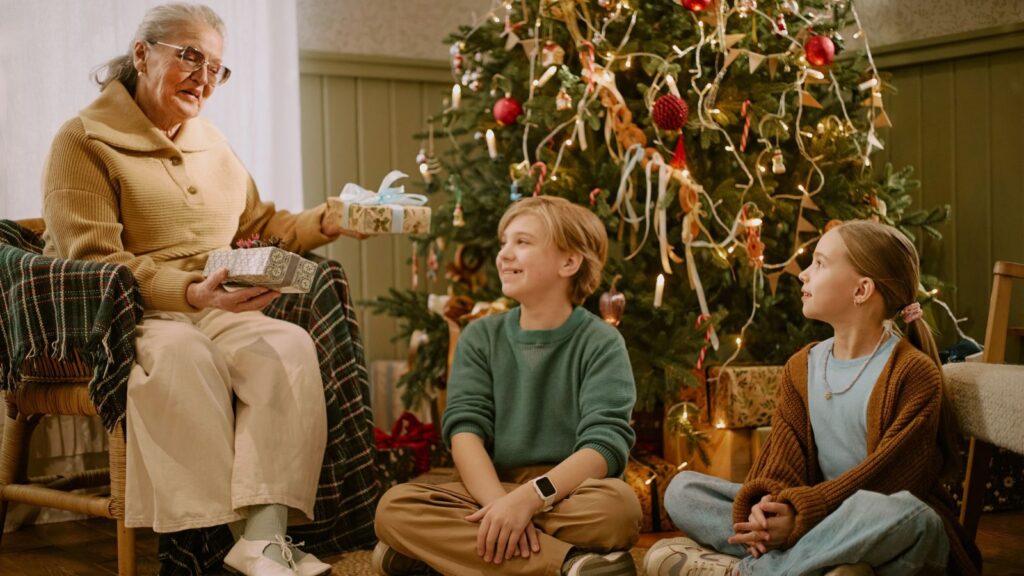
For many Canadian grandparents, retirement is becoming about more than enjoying the savings they spent decades building. It is also about helping adult children pay bills, supporting grandchildren through school, and stepping in when family finances become stretched. New findings from Embark and Angus Reid, released November 24, 2026, reveal that 46% of grandparents who gave money to family in the past year provided more financial support than they had anticipated when planning for retirement. The findings highlight a growing challenge for older Canadians: balancing the desire to give younger generations a financial advantage with the need to protect their own long-term security. As living costs continue to strain household budgets, that balance is becoming increasingly difficult to maintain.
Nearly Half Are Giving More Than Their Retirement Plans Anticipated
The central finding from Embark’s 2026 Grandparent Economy Report is particularly revealing because it separates grandparents who expected to provide financial assistance from those who never anticipated doing so. Among respondents who gave money to family during the previous year, 25% said they had not expected to provide financial help when planning for retirement. Another 21% anticipated offering some assistance but ultimately contributed more than they had envisioned. Combined, these groups account for the headline figure of 46%. By comparison, only 22% said they had planned for the level of financial support they were providing.
The distinction matters because retirement planning generally involves estimating future expenses against available income, savings, and investments. A grandparent who anticipated occasional birthday gifts may find it manageable to contribute a few hundred dollars annually. However, unexpected requests for assistance with rent, education, or household expenses can create additional commitments. The findings do not establish that every grandparent giving more than planned is experiencing financial hardship. They do demonstrate how family obligations can develop beyond initial expectations, potentially requiring older Canadians to reconsider their retirement budgets.
More Than Eight in Ten Grandparents Are Helping Family Financially
Financial assistance to younger generations is remarkably common among the grandparents included in the research. Embark found that 82% had given money to their children or grandchildren during the previous 12 months. Nearly half of all respondents, 46%, reported providing money to both generations. That means support is not necessarily concentrated on one relative or one particular financial goal. Some grandparents are balancing the needs of adult children who are managing household expenses with those of grandchildren who may be saving for education or receiving gifts for special occasions.
Providing assistance to multiple generations can also complicate financial decision-making. A grandparent might contribute toward a grandchild’s education while simultaneously helping an adult child manage an unexpected expense. Both payments may feel reasonable individually, but their combined effect can be more difficult to accommodate within a fixed retirement budget. The findings illustrate how grandparents can become important sources of financial stability within extended families. They also raise questions about whether retirement plans adequately account for family responsibilities that continue long after children reach adulthood.
Financial Gifts Range From Hundreds to Thousands of Dollars
Not every grandparent is providing large amounts of money, and the distribution of financial assistance reveals substantial differences in family circumstances. Among grandparents who gave money, 29% reported contributing less than $500 over the previous year. Another 31% provided between $500 and $1,999, making this the most common reported range. Meanwhile, 18% contributed between $2,000 and $4,999, and 12% gave at least $10,000. The differences suggest that financial support can range from relatively modest gifts to substantial transfers capable of affecting a household’s broader financial planning.
The importance of these amounts depends heavily on the grandparent’s resources. A $1,000 contribution may represent a manageable expense for someone with considerable savings and reliable retirement income. For another person facing higher housing costs or limited monthly income, the same payment could require sacrifices elsewhere. Five-figure contributions deserve particular attention because they can involve money originally reserved for future needs. The research does not reveal exactly how every gift was financed, so it would be misleading to assume all substantial transfers came directly from retirement savings. Nevertheless, the figures demonstrate why financial generosity cannot be evaluated by dollar amounts alone.
Holiday Gifts Remain Common, but Everyday Expenses Also Need Support
Birthday celebrations and holidays remain the leading reasons grandparents provide financial assistance. Embark found that 42% identified birthday or holiday gifts as their most common form of financial help. Education expenses or contributions to Registered Education Savings Plans accounted for 17%, while 13% identified everyday expenses such as groceries, household bills, and childcare. These categories reflect different types of commitments. A holiday gift is generally associated with a particular occasion, while assistance with essential household expenses may become a repeated responsibility when younger family members face persistent financial difficulties.
Earlier research from RBC illustrates how demanding those responsibilities can become. Its 2024 Family Finances Poll found that, among grandparents providing financial support, 70% reported that adult children expected assistance with necessary expenses such as food and clothing. Another 54% said they were providing such support at least monthly. Although RBC and Embark asked different questions and their findings should not be treated as a direct trend comparison, both highlight the importance of understanding recurring family obligations. For grandparents, paying a grocery bill occasionally may be manageable, but a commitment that repeats every month can gradually become a significant part of retirement spending.
Rising Living Costs Are Putting Retirement Plans Under Pressure
Grandparents are not simply giving more money while their own expenses remain unchanged. Embark found that 60% of respondents identified something currently affecting their retirement plans. Rising living costs were the most frequently reported concern, cited by 45%, followed by inflation eroding savings at 25%. Housing expenses, including rent, mortgage payments, and property taxes, were identified by 18%. These pressures can be particularly challenging for retirees who depend on predictable income sources. When essential expenses increase, the money available for discretionary purchases, family gifts, and unexpected financial requests can become more limited.
Separate research reinforces the challenges facing older Canadians. An Ipsos study released November 18, 2026, on behalf of HomeEquity Bank found that 29% of retirees needed more money each month than they had anticipated before retiring. Additionally, 51% reported cutting back on eating out or socializing, while 44% had reduced grocery spending or changed the food they purchased. These findings come from a different study population, but they illustrate a broader concern: retirement expenses do not necessarily unfold as expected. Grandparents who provide financial assistance must account for their own changing costs alongside the needs of their families.
Younger Grandparents and Prairie Families Face Different Pressures
Financial pressures are not distributed evenly among Canadian grandparents. Embark found that 66% of grandparents aged 60 to 69 reported something affecting their retirement plans, compared with 51% of those aged 80 and older. The difference is notable because people in their sixties may still be approaching retirement, adjusting to reduced employment income, or managing the transition from accumulating savings to drawing on them. Those circumstances can make unexpected family commitments particularly difficult to accommodate, although the research does not establish exactly why the age groups reported different levels of pressure.
Geography also matters. In Manitoba and Saskatchewan, 79% of grandparents reported something affecting their retirement plans, with 61% identifying the rising cost of living. The Prairie provinces also stood out in how grandparents provided assistance: 26% identified everyday household expenses as their most common form of support, compared with 13% nationally. Meanwhile, 85% of Ontario grandparents reported giving money to children or grandchildren, above the national figure of 82%. Regional sample sizes warrant caution when interpreting these differences, but the results highlight how families across Canada experience retirement and financial responsibilities differently.
Housing Costs Help Explain Why Younger Generations Need Assistance
The pressure to help younger relatives becomes easier to understand when examining Canada’s housing market. The Canada Mortgage and Housing Corporation’s 2026 Mortgage Consumer Survey found that 23% of homebuyers had received a financial gift toward their purchase, with a median gift amount of $30,000. Among first-time homebuyers, 27% reported receiving gifted money. More significantly, 26% of homebuyers who received financial gifts said they could not have purchased a home meeting their needs without that assistance. These figures demonstrate how family wealth can play an important role in helping some Canadians enter the housing market.
CMHC’s findings do not identify how many of those gifts came specifically from grandparents, so they cannot be directly attributed to the older Canadians in Embark’s research. Nevertheless, they provide important context for why adult children may seek help from relatives with accumulated savings or housing equity. A contribution toward a down payment can make an immediate difference for a younger household, but the same money may represent a considerable portion of an older person’s financial reserves. Such decisions involve more than generosity. They require consideration of whether helping someone purchase a home today could reduce the resources available for the giver’s retirement tomorrow.
More Than Half of Grandparents Have Helped With Education Costs
Education remains an important reason Canadian grandparents contribute money to younger family members. According to Embark, 51% of grandparents had helped with a grandchild’s education in some capacity. That included 26% who had contributed to a Registered Education Savings Plan and 21% who had provided cash or a cheque for education-related costs. These contributions can take different forms depending on a child’s age. Younger grandchildren may receive money intended for long-term savings, while older students may benefit from assistance with tuition, textbooks, transportation, or living expenses.
However, education savings are not necessarily the type of gift grandparents consider most meaningful. When asked to identify the most meaningful holiday gift for a grandchild, 30% selected cash and 24% preferred an experience or trip. Education savings contributions were chosen by 20%. This contrast reflects the different purposes family gifts can serve. A memorable outing creates an immediate experience, while an education contribution may provide benefits years later. For grandparents managing limited budgets, the choice need not involve funding an entire degree. A smaller contribution toward education can still provide practical support without creating an expectation that one family member will cover every future expense.
Education Savings Contributions Can Attract Government Grants
Registered Education Savings Plans offer a way for grandparents to help finance future education costs while taking advantage of government incentives available to eligible children. Under the Canada Education Savings Grant, the federal government generally contributes 20% of the first $2,500 in annual eligible RESP contributions, providing up to $500 in basic grants per year. The lifetime maximum is $7,200 per beneficiary, including additional grants available to qualifying families. For example, a $200 contribution could attract another $40 in basic government funding, provided the child meets eligibility requirements and has sufficient grant room remaining. Children from low-income families may also qualify for the Canada Learning Bond, which provides up to $2,000 without requiring personal contributions.
Embark’s own gifting records demonstrate how grandparents participate in education savings. Between December 2024 and September 2026, grandparents accounted for approximately 48% of the total gift value processed through the company’s gifting feature. In 2025, 61% of the value of gifts made through that feature arrived during the final three months of the year, with December recording an average gift of $342. These figures describe Embark’s platform rather than all Canadian grandparents. Nevertheless, they illustrate how holiday giving and longer-term education savings can overlap, particularly when families coordinate contributions around important occasions.
Most Grandparents Would Rather Give Money While They Are Alive
The traditional idea of transferring family wealth through an inheritance does not reflect the preferences of many Canadian grandparents. Embark found that 63% would rather provide financial assistance to children and grandchildren while they are alive, compared with 18% who preferred leaving money as an inheritance. This preference can reflect the satisfaction of witnessing a contribution make an immediate difference. Helping a grandchild pursue an education, assisting an adult child through a difficult period, or contributing toward a major life milestone can offer a sense of purpose that extends beyond the financial value of the gift.
When respondents were asked to choose between supporting adult children and grandchildren, opinions were almost evenly divided. Overall, 51% preferred giving money to grandchildren, while 49% favoured their adult children. Age influenced these preferences. Among grandparents aged 80 and older, 60% leaned toward grandchildren, while 54% of those aged 60 to 69 preferred supporting their children. These differences suggest that family priorities can evolve throughout retirement. However, preferring to give during one’s lifetime does not necessarily mean wanting to distribute savings without restrictions. Grandparents still need sufficient financial resources to support themselves throughout their later years.
Retirement Security Remains the Priority for Most Grandparents
Despite their willingness to provide financial assistance, most grandparents appear unwilling to place unlimited family obligations ahead of their own retirement security. When Embark asked respondents to choose between enjoying a comfortable retirement and financing at least one grandchild’s post-secondary education, 71% prioritized their retirement. The remaining 29% preferred funding their grandchild’s education. Among grandparents aged 60 to 69, the proportion favouring retirement comfort increased to 74%. These results suggest that many older Canadians recognize the importance of protecting their financial independence, even while making meaningful contributions to younger relatives.
Earlier RBC findings provide additional context about the consequences of giving beyond comfortable limits. In 2024, among grandparents providing financial support to adult children or grandchildren, 54% reported sacrificing their own savings, while 21% had taken on debt. Another 33% worried about running out of money while attempting to support family members and cover their own expenses. Those figures come from a separate study and should not be presented as direct measurements of Embark’s 2026 respondents. Together, however, the research highlights an important distinction between voluntary generosity and financial commitments that begin to threaten a grandparent’s long-term stability.
Financial Planning Can Help Families Balance Generosity With Security
The central challenge is determining how much financial assistance can be provided without compromising retirement needs. The Financial Consumer Agency of Canada specifically identifies support for family members as something Canadians should consider when calculating retirement expenses. Its guidance also emphasizes reviewing spending, estimating future income, and accounting for changing financial circumstances. For grandparents, that could mean examining the amount given to family over the previous year and distinguishing occasional gifts from commitments likely to continue. Establishing a realistic family-support budget can also help create clearer expectations when adult children or grandchildren request additional assistance.
The importance of planning becomes clearer when considering RBC’s earlier findings. Among grandparents providing financial support in its 2024 research, only 37% had reviewed their finances to determine what they could afford to give, while just 20% had considered the effect on retirement plans. Embark’s newer findings offer another reason to revisit those calculations. Its October 2026 research involved 1,020 online respondents aged 55 and older who were grandparents, and the results reflect their reported experiences rather than independently verified financial losses. Ultimately, the message is not that grandparents should stop helping their families. It is that financial generosity is more sustainable when protecting retirement security remains part of the decision.
